
How to Grow and Care for Algerita
Mahonia trifoliolata
Written by Emilio Marruso · last checked
At a glance
Agarita asks for very little: low water and a dry, perfectly drained spot. It blooms in February, and the berries that follow have a distinctive, slightly acidic flavor that is great for jelly, fruit drinks and wine. Just prune it no later than fall, so you keep both the flowers and the fruit.
- Water
Needs little water
- Soil
A dry spot with perfectly drained soil
What the sources say (1)
Watering notes: Requires a dry, perfectly drained position
this species requires a dry, perfectly drained position in full sun
— Mahonia trifoliolata - Useful Temperate Plants [3] - Pruning
Prune no later than fall, or you lose the February flowers and the berries
What the sources say (1)
Pruning: No later than fall, because February bloom and the berries that follow would be affected
Can be pruned to shape, but no later than fall, as February bloom and berries that follow will be affected.
— Berberis trifoliolata - Native Plant Society of Texas [2] - Harvest
Slightly tart berries, great for jelly, fruit drinks and wine
- Propagation
From seed, or by dividing the suckers in spring
- Sowing
Sow as soon as the seed is ripe, or summer to fall; the seeds need 2–3 months of cold
What the sources say (2)
Sowing: As soon as the seed is ripe; or summer to autumn (seed needs 2-3 months cold stratification)
Seed - best sown as soon as it is ripe in a greenhouse
— Mahonia trifoliolata - Useful Temperate Plants [3] The seeds need a cold stratification of two to three months. Therefore, it can be sown through summer or autumn and the seeds then germinate in spring.
— Berberis trifoliolata - Native Plant Society of Texas [2]
Overview
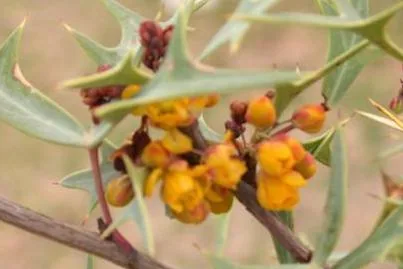
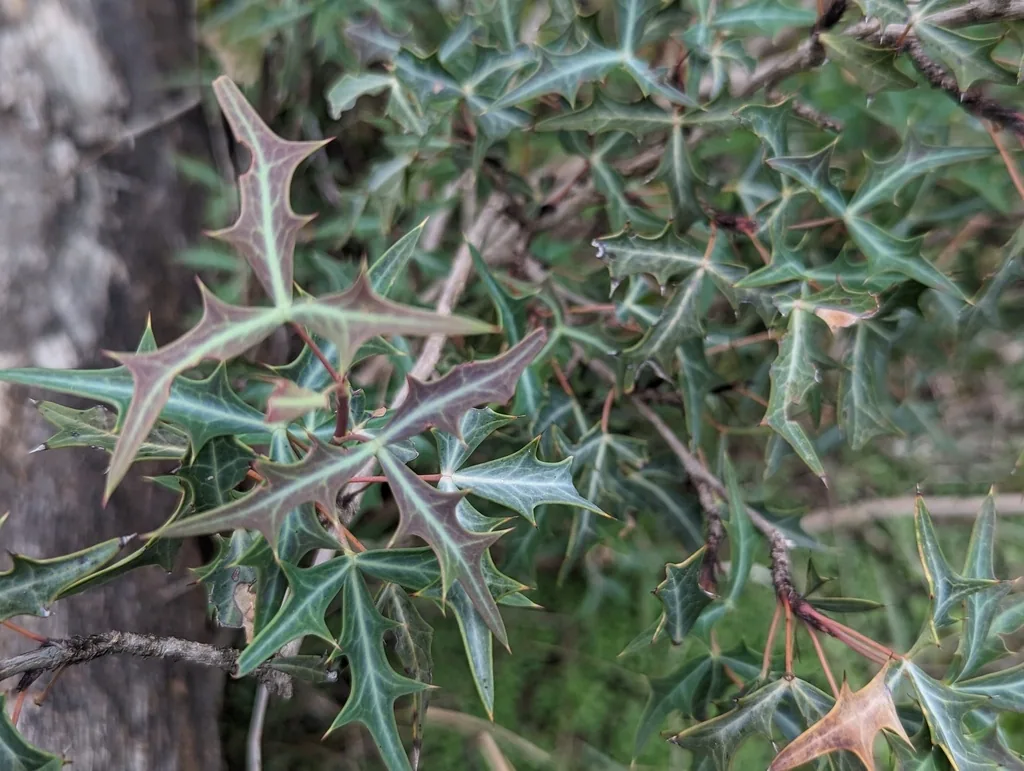
Mahonia trifoliolata, agarita, is an evergreen shrub with trifoliate spiny leaves, yellow spring flowers and red berries, native to the southwestern United States and northern Mexico. [1] The red berries are used for jelly, fruit beverages and wine. [4]
This record is incomplete: the sources we read do not cover every field yet.
Not yet covered by our sources: Hardiness, coldest zone, Hardiness, warmest zone
Algerita care
How to water Algerita
Watering
Low water use
Watering notes
Requires a dry, perfectly drained position
What the sources say (1)
this species requires a dry, perfectly drained position in full sunHow much light Algerita needs
The sources disagree:
this species requires a dry, perfectly drained position in full sun
[3]
How much cold Algerita can take
Hardiness, coldest zone
Not stated in the sources we read.
Hardiness, warmest zone
Not stated in the sources we read.
How to propagate Algerita
Remedies
The sources we checked give no remedies for this plant.
Calendar
As soon as the seed is ripe; or summer to autumn (seed needs 2-3 months cold stratification)
What the sources say (2)
Seed - best sown as soon as it is ripe in a greenhouseThe seeds need a cold stratification of two to three months. Therefore, it can be sown through summer or autumn and the seeds then germinate in spring.No later than fall, because February bloom and the berries that follow would be affected
What the sources say (1)
Can be pruned to shape, but no later than fall, as February bloom and berries that follow will be affected.Months as given by the sources, which are mostly from the United States (northern hemisphere). In the southern hemisphere they shift by about six months.
Edibility
Reported by the source, quoted verbatim. Do not eat a plant on the basis of this page alone: identification mistakes can be dangerous.
Fresh agarita berries have a distinctive, slightly acidic flavor. They’re great for making jelly, fruit beverages and wine.
[4]
Indicative values
Values from a secondary source, not checked word for word like the rest of this page. Use them as a starting point.
- Life cycle
- PerennialIndicative value, adapt it to your climate · Secondary source
- Mature height
- 61-182.9 cm (2-6 ft)Indicative value, adapt it to your climate · Secondary source
- Drought tolerant
- yesIndicative value, adapt it to your climate · Secondary source
- Soil pH
- 6-7.5Indicative value, adapt it to your climate · Secondary source
- USDA hardiness zones
- 7-9 [winter low −17.8 to −1.1 °C (0 to 30 °F)]Indicative value, adapt it to your climate · Secondary source
- Care level
- MediumIndicative value, adapt it to your climate · Secondary source
- Growth rate
- LowIndicative value, adapt it to your climate · Secondary source
Similar plants
- Berberis japonica Mahonia japonica
- Aaron's Beard Hypericum calycinum
- Abies grandis Abies grandis
- Abraham Trachystemon orientalis
- Abyssinian banana Ensete ventricosum
- Acacia longifolia Acacia longifolia
- Acacia retinodes Acacia retinodes
- Acanthus hungaricus Acanthus hungaricus
Sources
Every value above is quoted from these documents. Links lead to the original publisher.
- Lady Bird Johnson Wildflower Center - The University of Texas at Austin · wildflower.org, consulted
- Berberis trifoliolata - Native Plant Society of Texas · npsot.org, consulted
- Mahonia trifoliolata - Useful Temperate Plants · temperate.theferns.info, consulted
- Agarita's Sharp Leaves Guard Red Berries Worth Picking in Texas - Texas Parks & Wildlife Magazine · tpwmagazine.com, consulted
- Alloberberis trifoliolata - Trees and Shrubs Online · treesandshrubsonline.org, consulted
Written by Emilio Marruso · last checked