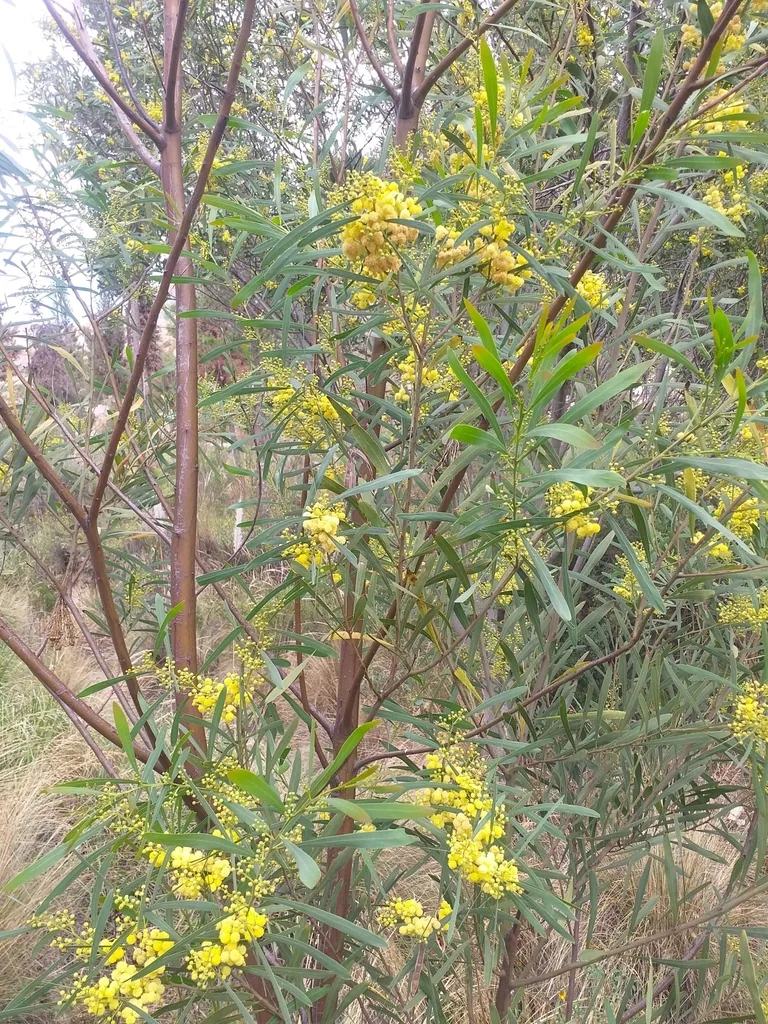
How to Grow and Care for Acacia retinodes
Acacia retinodes
Written by Emilio Marruso · last checked
Toxic to: People · Why
At a glance
This acacia is an easygoing plant: it needs only moderate watering, shrugs off drought and handles wet spells well. Start it from seed in a greenhouse in spring, or from cuttings, then plant it out in late spring or early summer once the frosts are over. Its pollen-rich flowers are eaten cooked, often in fritters.
- Water
Moderate watering; it handles both drought and wet spells and likes soil that drains well
What the sources say (3)
Watering: Moderate; drought tolerant
Light full sun Shade tolerance no shade Water moderate
— Swamp Wattle (Acacia retinodes) — Practical Plants [2] Drought tolerant
— Swamp Wattle (Acacia retinodes) — Practical Plants [2] Watering notes: Prefers well-drained soil; also stands drought and wet well
Prefers a well-drained sandy loam and a very sunny position [1] [11] , but it also stands drought and wet well [11] .
— Swamp Wattle (Acacia retinodes) — Practical Plants [2] - Cold
Survives winters down to 10 °F (−12.2 °C)
Hardy in cold winters · USDA 8 · RHS H5 · Z8
What the sources say (1)
Hardiness, coldest zone: 8 [winter low −12.2 to −6.7 °C (10 to 20 °F)]
Hardiness Zone 8+
— Swamp Wattle (Acacia retinodes) — Practical Plants [2] - Planting
Plant out in late spring or early summer, after the last frosts
What the sources say (1)
Planting: Late spring or early summer, after the last expected frosts (seedlings and cuttings raised in a greenhouse)
Plant them out in late spring or early summer, after the last expected frosts
— Acacia retinodes - Useful Temperate Plants [1] - Harvest
The flowers are eaten cooked, often in fritters; the seeds are edible too
- Propagation
From seed, or from half-ripe cuttings with a bit of the older branch attached
What the sources say (2)
Propagation: Seed (scarified and soaked, sown in a greenhouse); half-ripe wood cuttings with a heel
Seed - best sown as soon as it is ripe in a sunny position in a warm greenhouse
— Acacia retinodes - Useful Temperate Plants [1] Cuttings of half-ripe wood with a heel, mid summer in individual pots in a frame
— Acacia retinodes - Useful Temperate Plants [1] - Sowing
Nick and soak the seeds, then sow them in a warm greenhouse in spring
What the sources say (5)
Sowing: Spring (in a greenhouse)
According to Useful Temperate Plants: Sow the seed in Spring in a greenhouse.
— Acacia retinodes - Useful Temperate Plants [1] stored seed (Practical Plants): Stored seed should be scarified, pre-soaked for 12 hours in warm water and then sown in a warm greenhouse in March.
— Swamp Wattle (Acacia retinodes) — Practical Plants [2] Sow the seed in Spring in a greenhouse.
— Acacia retinodes - Useful Temperate Plants [1] Propagation: Seed (scarified and soaked, sown in a greenhouse); half-ripe wood cuttings with a heel
Seed - best sown as soon as it is ripe in a sunny position in a warm greenhouse
— Acacia retinodes - Useful Temperate Plants [1] Cuttings of half-ripe wood with a heel, mid summer in individual pots in a frame
— Acacia retinodes - Useful Temperate Plants [1] - Safety
The leaves can build up cyanide, especially in dry spells: they are dangerous to eat
Overview
Acacia retinodes is a shrub or small tree reaching about 7 m [23 ft], native to South Australia, Victoria and Tasmania. [4] It is a hardy ornamental that is fast growing but generally short lived. [5] It prefers well-drained sandy loam in a very sunny position and also stands drought and wet well. [2]
This record is incomplete: the sources we read do not cover every field yet.
Not yet covered by our sources: Hardiness, warmest zone, Pruning
Acacia retinodes care
Measurements in square brackets are our conversion into the other unit system; the quoted text is unchanged.
How to water Acacia retinodes
Watering
Moderate; drought tolerant
Watering notes
Prefers well-drained soil; also stands drought and wet well
What the sources say (1)
Prefers a well-drained sandy loam and a very sunny position [1] [11] , but it also stands drought and wet well [11] .How much light Acacia retinodes needs
The sources give different values depending on region, zone or growing conditions.
What each source says
According to Practical Plants: Full sun, no shade
According to Adelaide Botanic Gardens Plant Selector: Full sun, part shade
How much cold Acacia retinodes can take
Hardiness, coldest zone
8 [winter low −12.2 to −6.7 °C (10 to 20 °F)]
What the sources say (1)
Hardiness
Zone 8+Hardiness, warmest zone
Not stated in the sources we read.
How to propagate Acacia retinodes
Seed (scarified and soaked, sown in a greenhouse); half-ripe wood cuttings with a heel
Remedies
The sources we checked give no remedies for this plant.
Is Acacia retinodes poisonous?
Reported by the source, quoted verbatim. This is not medical or veterinary advice: if a person or an animal may have eaten this plant, contact a poison control centre or a veterinarian.
Especially in times of drought, many Acacia species can concentrate high levels of the toxin Hydrogen cyanide in their foliage, making them dangerous for herbivores to eat.
[1]Genus-level warning: refers to the whole genus, not documented for this species
Calendar
Sowing
Spring (in a greenhouse)
What each source says
According to Useful Temperate Plants: Spring, in a greenhouse
stored seed (Practical Plants): March, in a warm greenhouse
What the sources say (3)
According to Useful Temperate Plants: Sow the seed in Spring in a greenhouse.stored seed (Practical Plants): Stored seed should be scarified, pre-soaked for 12 hours in warm water and then sown in a warm greenhouse in March.Sow the seed in Spring in a greenhouse.Planting
Late spring or early summer, after the last expected frosts (seedlings and cuttings raised in a greenhouse)
What the sources say (1)
Plant them out in late spring or early summer, after the last expected frostsPruning
Not stated in the sources we read.
Months as given by the sources, which are mostly from the United States (northern hemisphere). In the southern hemisphere they shift by about six months.
Edibility
Reported by the source, quoted verbatim. Do not eat a plant on the basis of this page alone: identification mistakes can be dangerous.
Similar plants
- Acacia longifolia Acacia longifolia
- Golden wattle Acacia pycnantha
- Koa Acacia koa
- Silver wattle Acacia dealbata
- Aaron's Beard Hypericum calycinum
- Abies grandis Abies grandis
- Abraham Trachystemon orientalis
- Abyssinian banana Ensete ventricosum
Sources
Every value above is quoted from these documents. Links lead to the original publisher.
- Acacia retinodes - Useful Temperate Plants · temperate.theferns.info, consulted
- Swamp Wattle (Acacia retinodes) — Practical Plants · practicalplants.org, consulted
- Acacia retinodes - Trees and Shrubs Online · treesandshrubsonline.org, consulted
- HortFlora · hortflora.rbg.vic.gov.au, consulted
- Acacia retinodes · plantselector.botanicgardens.sa.gov.au, consulted
- Wirilda | VRO | Agriculture Victoria · vro.agriculture.vic.gov.au, consulted
- Wirilda · soilhealth.ccmaknowledgebase.vic.gov.au, consulted
- Wirilda | Biodiversity of the Western Volcanic Plains · bwvp.ecolinc.vic.edu.au, consulted
Written by Emilio Marruso · last checked