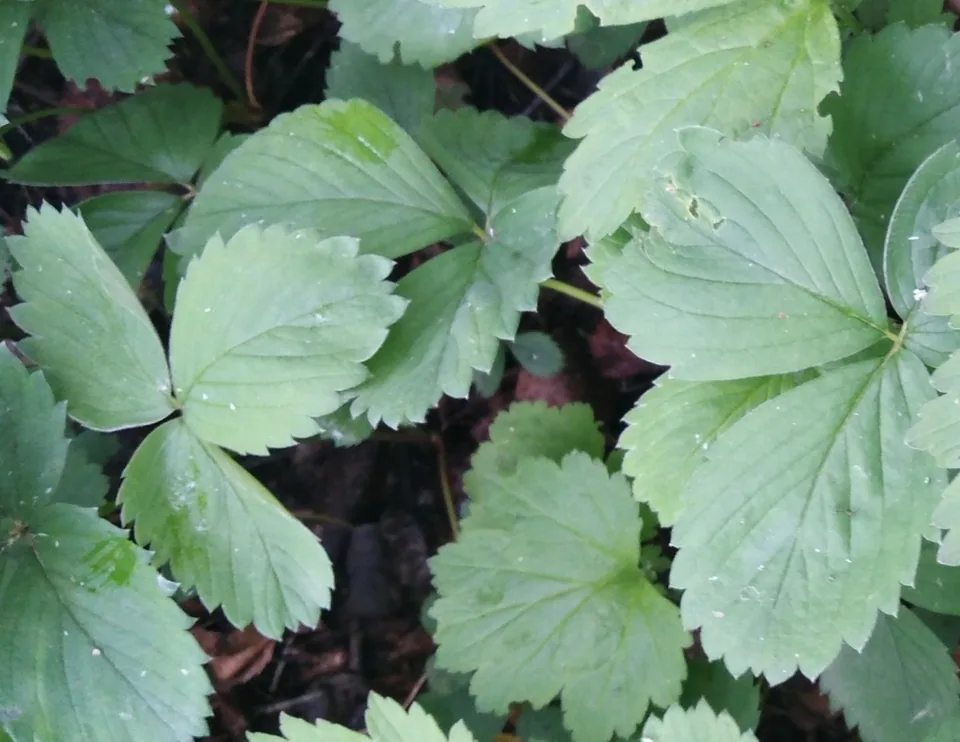
Cómo cultivar y cuidar Frutilla
Fragaria × ananassa
Escrito por Emilio Marruso · última revisión
No tóxica para gatos y perros, según las fuentes · Fuentes
De un vistazo
Las fresas premian un poco de cuidado con frutos que puedes comer crudos o cocinados, y hasta los pétalos de sus flores son comestibles. Dales pleno sol o semisombra y riégalas a menudo, porque sus raíces son cortas. Dan fruto por sí solas y las abejas lo mejoran. A los 90–110 días de plantarlas podrás recoger tus primeras fresas.
- Sol
Pleno sol a semisombra
Qué dicen las fuentes (1)
Luz: Pleno sol a semisombra
Plant strawberries in full sun to partial shade and 1 to 2.5 feet apart in rows that are spaced 3 to 5 feet apart.
— Fragaria x ananassa (Strawberries, Strawberry) | North Carolina Extension Gardener Plant Toolbox [1] - Riego
Riega a menudo: las raíces son cortas; elige un sitio cerca de un punto de riego
Qué dicen las fuentes (3)
Riego: Riega con frecuencia con 1 pulgada [2,5 cm] de agua, ya que las raíces son cortas.
Since the roots of strawberry plants are short, they need to be watered frequently with 1 inch of water.
— Fragaria x ananassa (Strawberries, Strawberry) | North Carolina Extension Gardener Plant Toolbox [1] Notas sobre el riego: El riego es fuertemente recomendado o una necesidad, dependiendo del sistema de producción, debido al sistema radicular poco profundo y al riesgo de heladas primaverales en las flores; elige un sitio cercano a una fuente de riego.
Because of this shallow root system, and because flower blossoms can be killed by spring frosts, irrigation is either strongly recommended or a necessity, depending on the production system.
— Strawberry Production [3] Choose a well-drained site that receives plenty of sun and is close to an irrigation source.
— Strawberry Production [3] - Frío
Aguanta inviernos de hasta −28,9 °C (−20 °F)
Muy rústica · USDA 5a · RHS H7 · Z5
Qué dicen las fuentes (2)
Rusticidad, zona más fría: 5a [mínima invernal de −28,9 a −26,1 °C (de −20 a −15 °F)]
5a, 5b, 6a, 6b, 7a, 7b, 8a, 8b, 9a, 9b
— Fragaria x ananassa (Strawberries, Strawberry) | North Carolina Extension Gardener Plant Toolbox [1] Rusticidad, zona más cálida: 9b [mínima invernal de −3,9 a −1,1 °C (de 25 a 30 °F)]
5a, 5b, 6a, 6b, 7a, 7b, 8a, 8b, 9a, 9b
— Fragaria x ananassa (Strawberries, Strawberry) | North Carolina Extension Gardener Plant Toolbox [1] - Suelo
Suelo ligeramente ácido, pH 6,0–6,5
Qué dicen las fuentes (2)
pH del suelo, mínimo: 6.0
Soil should have a pH of 6.0 to 6.5 and should be tested the fall before planting is intended.
— Strawberry Production [3] pH del suelo, máximo: 6.5
Soil should have a pH of 6.0 to 6.5 and should be tested the fall before planting is intended.
— Strawberry Production [3] - Distancia
90–150 cm entre hileras
Qué dicen las fuentes (2)
Distancia entre hileras: 91-152 cm (3 a 5 pies)
producción en filas acolchadas de tipos de junio (Penn State): In matted-row production, dormant crown strawberry plants are usually planted 18 to 24 inches apart in rows 36 to 48 inches apart.
— Strawberry Production [3] Plant strawberries in full sun to partial shade and 1 to 2.5 feet apart in rows that are spaced 3 to 5 feet apart.
— Fragaria x ananassa (Strawberries, Strawberry) | North Carolina Extension Gardener Plant Toolbox [1] - Plantación
Planta en abril, en cuanto la tierra se pueda trabajar; en Florida, a principios de otoño
Qué dicen las fuentes (9)
Plantación: Coronas latentes en hileras con estolones (matted-row): abril, tan pronto como el suelo pueda trabajarse (Pensilvania); Florida: principios de otoño, norte de Florida del 15 de septiembre al 15 de octubre, centro de Florida del 25 de septiembre al 25 de octubre, sur de Florida del 1 de octubre hasta el primero de diciembre
Florida del Norte: Gardeners in North Florida can plant between September 15–October 15, those in Central Florida between September 25–October 25, and South Florida gardeners can plant between October 1 until the first of December.
— Strawberries – Gardening Solutions [4] Florida central: Gardeners in North Florida can plant between September 15–October 15, those in Central Florida between September 25–October 25, and South Florida gardeners can plant between October 1 until the first of December.
— Strawberries – Gardening Solutions [4] Florida del Sur: Gardeners in North Florida can plant between September 15–October 15, those in Central Florida between September 25–October 25, and South Florida gardeners can plant between October 1 until the first of December.
— Strawberries – Gardening Solutions [4] Producción en filas con acolchado (Pensilvania): These plants should be set in April as soon as the soil can be worked.
— Strawberry Production [3] Plasticultura, plantas de plug, zonas USDA 7a y más cálidas: This is early to mid-September in warmer locations (USDA hardiness zones 7a and warmer) and mid- to late August for colder sites (zone 6b).
— Strawberry Production [3] Plasticultura, plantas de plug, zona 6b: This is early to mid-September in warmer locations (USDA hardiness zones 7a and warmer) and mid- to late August for colder sites (zone 6b).
— Strawberry Production [3] Fresas de día neutro: Planting occurs in late spring rather than summer as with June bearers on plastic
— Strawberry Production [3] These plants should be set in April as soon as the soil can be worked.
— Strawberry Production [3] Gardeners in North Florida can plant between September 15–October 15, those in Central Florida between September 25–October 25, and South Florida gardeners can plant between October 1 until the first of December.
— Strawberries – Gardening Solutions [4] - Cosecha
Recoge cuando al menos 3/4 de la fresa esté roja; primeros frutos a los 90–110 días de plantar
Qué dicen las fuentes (6)
Cosecha: Primeras bayas listas para cosechar 90-110 días después de la siembra (Florida); la fruta madura 26 a 30 días después de la floración (hilera cubierta con mantillo en Pensilvania)
Florida: The first berries should be ready to pick roughly 90-110 days after planting.
— Strawberries – Gardening Solutions [4] Producción en filas con acolchado (Pensilvania): Fruit matures 26 to 30 days after flowering.
— Strawberry Production [3] The first berries should be ready to pick roughly 90-110 days after planting.
— Strawberries – Gardening Solutions [4] Plants flower from April to May, depending on location. Fruit matures 26 to 30 days after flowering.
— Strawberry Production [3] Cómo cosechar: Recoge cuando al menos tres cuartas partes de la superficie se hayan vuelto rojas; las bayas no endulzan después de recogerlas; recoge y manipula con mucho cuidado fruta firme, bien coloreada y libre de podredumbre
Pick berries when at least three-fourths of their surface has turned red. Once picked, the berries will not sweeten any further.
— Strawberries – Gardening Solutions [4] Strawberries must be picked and handled very carefully. Berries are harvested at least three times per week. The fruit must be firm, well-colored, and free from rot.
— Strawberry Production [3] - Polinización
Autofértil, pero insectos como las abejas y los sírfidos mejoran la calidad del fruto
Qué dicen las fuentes (6)
Cuajado: Autofértil: produce fruto con su propio polen
Most commercially bred strawberries are self-fertile but insect pollination is important for fruit quality.
— [6] Qué necesita: Las flores son autofértiles, pero la polinización por insectos es importante para la calidad del fruto: con la autopolinización solamente, la mayoría de los frutos no son comercializables.
Most commercially bred strawberries are self-fertile but insect pollination is important for fruit quality.
— [6] in a case where you only have self pollination, you're gonna get mostly nonmarketable fruits.
— [7] Lo transportan: Insectos y viento
Now if you have open pollination that's gonna allow wind and insects to kind of vector pollen around.
— [7] - Plagas
Gusanos de raíz, chinches, pájaros, ciervos y conejos; vigila la marchitez y las manchas en hojas
Qué dicen las fuentes (8)
Plagas: gusanos que se alimentan de raíces, chinche manchada del tabaco, pájaros, ciervos, conejos
Do not use a site in undisturbed sod because it can harbor root-feeding grubs that can damage the strawberry roots.
— Strawberry Production [3] Nice size, shape, and flavor. Very susceptible to foliar diseases and fruit anthracnose, and attractive to tarnished plant bug.
— Strawberry Production [3] Birds can be a serious problem on many strawberry farms. Netting, chemical repellents, scare tactics, and noise devices may be required to protect the crop.
— Strawberry Production [3] Deer also can cause extensive damage to the plants by trampling and eating the plants and ripening berries.
— Strawberry Production [3] If you have trouble with birds or rabbits stealing fruit, try using netting to protect the plants.
— Strawberries – Gardening Solutions [4] Enfermedades: marchitez por verticillium, estela roja, antracnosis (antracnosis del fruto), mancha angular de la hoja, enfermedades foliares
Growers should purchase cultivars resistant to red stele and verticillum wilt from a reputable nursery (table 1).
— Strawberry Production [3] Nice size, shape, and flavor. Very susceptible to foliar diseases and fruit anthracnose, and attractive to tarnished plant bug.
— Strawberry Production [3] Older cultivar. Productive. Berries light in color and of good size and shape. Susceptible to angular leaf spot.
— Strawberry Production [3] - Atención
Las raíces superficiales compiten mal con las malas hierbas; usa redes para proteger los frutos de los pájaros
- Tamaño
15–30 cm de alto, 30–60 cm de ancho
Qué dicen las fuentes (2)
Altura adulta: 15-30 cm (6 a 12 pulgadas)
They grow 6 to 12 inches high and 1 to 2 feet wide and are generally classed as either June bearing or ever-bearing types.
— Fragaria x ananassa (Strawberries, Strawberry) | North Carolina Extension Gardener Plant Toolbox [1] Anchura adulta: 30-61 cm (1 a 2 pies)
They grow 6 to 12 inches high and 1 to 2 feet wide and are generally classed as either June bearing or ever-bearing types.
— Fragaria x ananassa (Strawberries, Strawberry) | North Carolina Extension Gardener Plant Toolbox [1] - Multiplicación
Los estolones enraízan fácilmente
Qué dicen las fuentes (1)
Propagación: Estolones que enraízan fácilmente
The plants reproduce by sending out runners that easily root.
— Fragaria x ananassa (Strawberries, Strawberry) | North Carolina Extension Gardener Plant Toolbox [1] - Maceta
Crece también en maceta
Qué dicen las fuentes (1)
En maceta: Sí
Strawberries can be grown as a groundcover or a mass planting in beds, in raised beds, or in containers on a sunny patio.
— Fragaria x ananassa (Strawberries, Strawberry) | North Carolina Extension Gardener Plant Toolbox [1] - Seguridad
No es tóxica para gatos, perros ni caballos
Resumen
Las fresas son plantas perennes de hoja ancha, de hoja perenne y formadoras de rosetas, cultivadas por sus dulces frutos rojos. [1] Crecen a pleno sol o sombra parcial en suelo húmedo y bien drenado, y se riegan con frecuencia debido a sus raíces cortas. [1] Las plantas se propagan mediante estolones que enraízan fácilmente, y se pueden cultivar en contenedores. [1]
Citado en inglés, como en la fuente.
Cuidados
Las medidas entre corchetes son nuestra conversión al otro sistema de unidades; el texto citado no cambia.
Riego
Riego
Riega con frecuencia con 1 pulgada [2,5 cm] de agua, ya que las raíces son cortas.
Qué dicen las fuentes (1)
Since the roots of strawberry plants are short, they need to be watered frequently with 1 inch of water.Notas sobre el riego
El riego es fuertemente recomendado o una necesidad, dependiendo del sistema de producción, debido al sistema radicular poco profundo y al riesgo de heladas primaverales en las flores; elige un sitio cercano a una fuente de riego.
Qué dicen las fuentes (2)
Because of this shallow root system, and because flower blossoms can be killed by spring frosts, irrigation is either strongly recommended or a necessity, depending on the production system.Choose a well-drained site that receives plenty of sun and is close to an irrigation source.Luz
Pleno sol a semisombra
Qué dicen las fuentes (1)
Plant strawberries in full sun to partial shade and 1 to 2.5 feet apart in rows that are spaced 3 to 5 feet apart.Clima y frío
Rusticidad, zona más fría
5a [mínima invernal de −28,9 a −26,1 °C (de −20 a −15 °F)]
Qué dicen las fuentes (1)
5a, 5b, 6a, 6b, 7a, 7b, 8a, 8b, 9a, 9bRusticidad, zona más cálida
9b [mínima invernal de −3,9 a −1,1 °C (de 25 a 30 °F)]
Qué dicen las fuentes (1)
5a, 5b, 6a, 6b, 7a, 7b, 8a, 8b, 9a, 9bSuelo
pH del suelo, mínimo
6.0
Qué dicen las fuentes (1)
Soil should have a pH of 6.0 to 6.5 and should be tested the fall before planting is intended.pH del suelo, máximo
6.5
Qué dicen las fuentes (1)
Soil should have a pH of 6.0 to 6.5 and should be tested the fall before planting is intended.Dónde cultivarla
En maceta
Sí
Qué dicen las fuentes (1)
Strawberries can be grown as a groundcover or a mass planting in beds, in raised beds, or in containers on a sunny patio.Distancia de plantación
Las fuentes dan valores distintos según la región, la zona o las condiciones de cultivo.
Lo que dice cada fuente
Según NC State Extension: 30.5-76.2 cm (1 a 2.5 pies) de separación en hileras de 91.4-152.4 cm (3 a 5 pies) de separación
Florida: 25.4-45.7 cm (10-18 pulgadas)
Producción en camas con matted-row, coronas latentes: 45.7-61.0 cm (18-24 pulgadas) de separación en hileras de 91.4-121.9 cm (36-48 pulgadas) de separación
Fresas de día neutro: 12.7-25.4 cm (5-10 pulgadas) de separación en la hilera
Producción con plástico (plasticultura): Hileras dobles a 30.5 cm (12 pulgadas) de separación, plantas escalonadas a 30.5 cm (12 pulgadas) dentro de cada hilera
Qué dicen las fuentes (6)
Según NC State Extension: Plant strawberries in full sun to partial shade and 1 to 2.5 feet apart in rows that are spaced 3 to 5 feet apart.Florida: Buy transplants from local garden centers in late fall or early winter and plant them 10 to 18 inches apart.Producción en camas con matted-row, coronas latentes: In matted-row production, dormant crown strawberry plants are usually planted 18 to 24 inches apart in rows 36 to 48 inches apart.Fresas de día neutro: so day-neutral strawberry plants are planted at a close spacing, with plants 5 to 10 inches apart in the row.Producción con plástico (plasticultura): A good spacing for plants is in double rows 12 inches apart on each bed, with plants staggered 12 inches apart within each row.Plant strawberries in full sun to partial shade and 1 to 2.5 feet apart in rows that are spaced 3 to 5 feet apart.Propagación
Estolones que enraízan fácilmente
Qué dicen las fuentes (1)
The plants reproduce by sending out runners that easily root.Cultivo
La planta
Ciclo de vida
perenne
Lo que dice cada fuente
Florida (UF/IFAS): anual
Qué dicen las fuentes (2)
Florida (UF/IFAS): Strawberries are normally grown as annuals here in Florida because they usually decline once temperatures heat up in the summer.Strawberries are a rosette-forming, broadleaf evergreen perennial in the Rosaceae (rose) family and originated in Europe as an accidental cross between a North American species and one from Chile.Familia
Rosáceas
Qué dicen las fuentes (1)
Strawberries are a rosette-forming, broadleaf evergreen perennial in the Rosaceae (rose) family and originated in Europe as an accidental cross between a North American species and one from Chile.Altura adulta
15-30 cm (6 a 12 pulgadas)
Qué dicen las fuentes (1)
They grow 6 to 12 inches high and 1 to 2 feet wide and are generally classed as either June bearing or ever-bearing types.Anchura adulta
30-61 cm (1 a 2 pies)
Qué dicen las fuentes (1)
They grow 6 to 12 inches high and 1 to 2 feet wide and are generally classed as either June bearing or ever-bearing types.Siembra y crecimiento
Distancia entre hileras
91-152 cm (3 a 5 pies)
Lo que dice cada fuente
producción en filas acolchadas de tipos de junio (Penn State): 91-122 cm (36 a 48 pulgadas)
Qué dicen las fuentes (2)
producción en filas acolchadas de tipos de junio (Penn State): In matted-row production, dormant crown strawberry plants are usually planted 18 to 24 inches apart in rows 36 to 48 inches apart.Plant strawberries in full sun to partial shade and 1 to 2.5 feet apart in rows that are spaced 3 to 5 feet apart.Días hasta la madurez
90-110 días después de la siembra (Florida)
Lo que dice cada fuente
fila acolchada de Pensilvania, contado desde la floración: 26-30 días después de la floración
Qué dicen las fuentes (2)
fila acolchada de Pensilvania, contado desde la floración: Plants flower from April to May, depending on location. Fruit matures 26 to 30 days after flowering.The first berries should be ready to pick roughly 90-110 days after planting.Cosecha y conservación
Cómo cosechar
Recoge cuando al menos tres cuartas partes de la superficie se hayan vuelto rojas; las bayas no endulzan después de recogerlas; recoge y manipula con mucho cuidado fruta firme, bien coloreada y libre de podredumbre
Qué dicen las fuentes (2)
Pick berries when at least three-fourths of their surface has turned red. Once picked, the berries will not sweeten any further.Strawberries must be picked and handled very carefully. Berries are harvested at least three times per week. The fruit must be firm, well-colored, and free from rot.Conservación
Refrigera sin lavar, con las tapas verdes adheridas y cubiertas holgadamente con envoltura de plástico; usa dentro de 3 a 4 días; las bayas sobrantes se pueden congelar
Qué dicen las fuentes (3)
Store in the refrigerator, unwashed, with the green caps attached, and loosely covered with plastic wrap. Rinse gently under slightly warm water just before using.Use within 3 to 4 days because they spoil quickly.Freshly picked strawberries generally keep for only a few days, so be sure to eat them soon after harvest. If you have a surplus of berries, you can freeze them.Plagas y enfermedades
Plagas
gusanos que se alimentan de raíces, chinche manchada del tabaco, pájaros, ciervos, conejos
Qué dicen las fuentes (5)
Do not use a site in undisturbed sod because it can harbor root-feeding grubs that can damage the strawberry roots.Nice size, shape, and flavor. Very susceptible to foliar diseases and fruit anthracnose, and attractive to tarnished plant bug.Birds can be a serious problem on many strawberry farms. Netting, chemical repellents, scare tactics, and noise devices may be required to protect the crop.Deer also can cause extensive damage to the plants by trampling and eating the plants and ripening berries.If you have trouble with birds or rabbits stealing fruit, try using netting to protect the plants.Enfermedades
marchitez por verticillium, estela roja, antracnosis (antracnosis del fruto), mancha angular de la hoja, enfermedades foliares
Qué dicen las fuentes (3)
Growers should purchase cultivars resistant to red stele and verticillum wilt from a reputable nursery (table 1).Nice size, shape, and flavor. Very susceptible to foliar diseases and fruit anthracnose, and attractive to tarnished plant bug.Older cultivar. Productive. Berries light in color and of good size and shape. Susceptible to angular leaf spot.Abonado
Cuándo
Después de la fructificación, cuando los bancales se renuevan (siega, aclareo), para favorecer el nuevo crecimiento.
Qué dicen las fuentes (2)
After fruiting is complete, the beds are renovated (mowed, narrowed, fertilized, and treated with herbicides in conventional production) and the fruiting cycle begins again.Plantings are renovated by mowing off the leaves, thinning the crowns, and resuming watering and fertilization to encourage new growth.Frecuencia
Regularmente.
Qué dicen las fuentes (1)
For best results, put the plants in a rich soil or potting media, water them often, and fertilize regularly with a balanced fertilizer.Abonos minerales
Fertilizante balanceado.
Lo que dice cada fuente
variedades de día neutro: Requerimientos de fertilizante más altos que las variedades de junio.
Qué dicen las fuentes (2)
variedades de día neutro: In cooler areas, plants may produce more consistently throughout the year. Fertilizer requirements are higher than for June bearers.For best results, put the plants in a rich soil or potting media, water them often, and fertilize regularly with a balanced fertilizer.Distancias
Entre plantas
Las fuentes dan valores distintos según la región, la zona o las condiciones de cultivo.
Lo que dice cada fuente
en el suelo, jardín doméstico (Reino Unido): 35-40 cm [14–16 in]
en contenedores: 20 cm [7,9 in]
hileras de jardín (Carolina del Norte): 30.5-76.2 cm [12–30 in]
producción en camas con cobertura vegetal: 45.7-61 cm [18–24 in]
cultivo con plástico, cultivares de día neutro: 30.5 cm [12 in], escalonadas en hileras dobles separadas 30.5 cm [12 in]
trasplantes (Florida): 25.4-45.7 cm [10–18 in]
Qué dicen las fuentes (6)
en el suelo, jardín doméstico (Reino Unido): Space plants 35–40cm (14–16in) apart, in rows about 75cm (30in) apart.en contenedores: Plant with the crown just level with the surface. Space plants about 20cm (8in) apart.hileras de jardín (Carolina del Norte): Plant strawberries in full sun to partial shade and 1 to 2.5 feet apart in rows that are spaced 3 to 5 feet apart.producción en camas con cobertura vegetal: In matted-row production, dormant crown strawberry plants are usually planted 18 to 24 inches apart in rows 36 to 48 inches apart.cultivo con plástico, cultivares de día neutro: A good spacing for plants is in double rows 12 inches apart on each bed, with plants staggered 12 inches apart within each row.trasplantes (Florida): Buy transplants from local garden centers in late fall or early winter and plant them 10 to 18 inches apart.Entre hileras
Las fuentes dan valores distintos según la región, la zona o las condiciones de cultivo.
Lo que dice cada fuente
en el suelo, jardín doméstico (Reino Unido): 75 cm [30 in]
hileras de jardín (Carolina del Norte): 91.4-152 cm [36–60 in]
producción en camas con cobertura vegetal: 91.4-122 cm [36–48 in]
Qué dicen las fuentes (3)
en el suelo, jardín doméstico (Reino Unido): Space plants 35–40cm (14–16in) apart, in rows about 75cm (30in) apart.hileras de jardín (Carolina del Norte): Plant strawberries in full sun to partial shade and 1 to 2.5 feet apart in rows that are spaced 3 to 5 feet apart.producción en camas con cobertura vegetal: In matted-row production, dormant crown strawberry plants are usually planted 18 to 24 inches apart in rows 36 to 48 inches apart.Raíces
Sistema radicular
Sistema radicular extremadamente superficial: las raíces solo alcanzan 15.2 cm [6 in] de profundidad en suelos franco-arcillosos.
Qué dicen las fuentes (1)
The strawberry plant has an extremely shallow root system, with roots extending only about 6 inches deep in clay loam soils.Tras la cosecha
Conservación
En el refrigerador doméstico, sin lavar, con las tapas verdes adheridas y sin quitar.
Lo que dice cada fuente
recién cosechadas, en casa: Solo dura unos pocos días
Qué dicen las fuentes (2)
recién cosechadas, en casa: Freshly picked strawberries generally keep for only a few days, so be sure to eat them soon after harvest.Store in the refrigerator, unwashed, with the green caps attached, and loosely covered with plastic wrap.Calor y sequía
Calor
Las plantas generalmente decaen cuando suben las temperaturas del verano; las altas temperaturas pueden detener la floración o afectar la polinización.
Lo que dice cada fuente
cultivar 'Honeoye': Pierde rápidamente el sabor durante el clima caluroso
Qué dicen las fuentes (3)
cultivar 'Honeoye': Older cultivar. Large fruit, high yields, “perfumy" flavor. Better in cooler regions. Quickly loses flavor during hot weather.Strawberries are normally grown as annuals here in Florida because they usually decline once temperatures heat up in the summer.it is best suited to cooler areas of the region, as high temperatures can cause plants to cease flowering or negatively affect pollination.Sequía
Debido a las raíces superficiales, el riego es muy recomendado o necesario; riega todas las plantas durante los períodos prolongados de sequía en la temporada de crecimiento.
Qué dicen las fuentes (2)
Because of this shallow root system, and because flower blossoms can be killed by spring frosts, irrigation is either strongly recommended or a necessity, depending on the production system.Water new plants regularly while they are establishing, and water all strawberry plants during prolonged dry periods in the growing seasonPolinización
Cuajado
Autofértil: produce fruto con su propio polen
Qué dicen las fuentes (1)
Most commercially bred strawberries are self-fertile but insect pollination is important for fruit quality.Qué necesita
Las flores son autofértiles, pero la polinización por insectos es importante para la calidad del fruto: con la autopolinización solamente, la mayoría de los frutos no son comercializables.
Lo transportan
Insectos y viento
Qué dicen las fuentes (1)
Now if you have open pollination that's gonna allow wind and insects to kind of vector pollen around.Polinizadores
abejas melíferas, moscas sírfidas
Qué dicen las fuentes (2)
So there's a lot of different options but a lot of growers in our region are gonna rely on honey bees.Something like a bumblebee shows very little interest in strawberry flowers. Interestingly, in Japan, they actually use Syrphid flies.Frío invernal
Horas de frío
100–400 horas entre 0 y 7,2 °C [32–45 °F]
Lo que dice cada fuente
especie «Strawberry»: 100–300 horas
especie «Strawberry»: 200–400 horas
Qué dicen las fuentes (6)
especie «Strawberry»: Strawberry Chill hours: 100 to 300 Strawberries grow best with 6 hours per day of sunespecie «Strawberry»: Pecan 300–500 Persimmon 200–400 Plum 400–700 Pomegranate 100–200 Strawberry 200–400Strawberry Chill hours: 100 to 300 Strawberries grow best with 6 hours per day of sunPecan 300–500 Persimmon 200–400 Plum 400–700 Pomegranate 100–200 Strawberry 200–400Chill hours are accumulated from November through February when temperatures are between 32° and 45°F.Different models exist to estimate chilling. One model defines a chill hour as each hour below 45°F starting on October 1.Problemas
Múltiples plagas y enfermedades
Síntoma: Las plantas de fresa tienen múltiples problemas de plagas y enfermedades.
Qué hacer: Consulta la Clave de Diagnóstico de Fresa para una guía visual de diagnóstico; monitorea y controla las plagas, usando selección del sitio, rotación de cultivos y plantas libres de enfermedades.
Qué dicen las fuentes (2)
Strawberry plants have multiple pest and disease problems.
— Fragaria x ananassa (Strawberries, Strawberry) | North Carolina Extension Gardener Plant Toolbox [1] Many pest problems can be avoided or greatly reduced by proper site selection, crop rotation, judicious timing of various operations, and the use of disease-free plants.
— Strawberry Production [3] Aves y conejos
Síntoma: Las aves y los conejos roban la fruta.
Qué hacer: Usa redes para proteger las plantas.
Qué dicen las fuentes (1)
If you have trouble with birds or rabbits stealing fruit, try using netting to protect the plants.
— Strawberries – Gardening Solutions [4] Malezas
Síntoma: Las fresas tienen sistemas de raíces poco profundos y compiten mal con las malas hierbas por el agua y los nutrientes.
Qué hacer: Evita sitios con problemas persistentes de malezas y elimina las malezas antes de plantar; el cultivo superficial controla las malezas después del establecimiento.
Qué dicen las fuentes (1)
Weeds must be controlled, as strawberries have shallow root systems that put them at a disadvantage when competing for water and nutrients.
— Strawberry Production [3]
Remedios
Cada remedio indica qué dicen las fuentes oficiales; los remedios tradicionales sin fuente oficial aparecen marcados. Los perjudiciales están para que sepas evitarlos.
Cuidar la planta
pulgones
fuerte chorro de agua Fuente oficial, sin prueba independiente
Cómo: Las plantas resistentes se pueden rociar con un chorro fuerte de agua para desprender los pulgones de las hojas.
sturdy plants can be sprayed with a strong jet of water to knock aphids from leaves
— plantvillage.psu.edu [10] siembra asociada con ajo, cebollino, capuchinas o cebollas No verificado
Remedio tradicional, no verificado por una fuente oficial.
Cómo: Siembra asociada con ajo, cebollino, capuchinas o cebollas para repeler la colonización.
babosas
trampa de cerveza Fuente oficial, sin prueba independiente
Cómo: Entierra platos poco profundos llenos de cerveza en el suelo para atraer y ahogar a los moluscos.
sink shallow dishes filled with beer into the soil to attract and drown the molluscs
— plantvillage.psu.edu [10] cenizas de madera o cáscaras de huevo trituradas alrededor de las plantas Fuente oficial, sin prueba independiente
Cómo: Esparce cenizas de madera o cáscaras de huevo alrededor de las plantas.
handpick slugs at night to decrease population; spread wood ashes or eggshells around plants
— plantvillage.psu.edu [10] Recolección manual por la noche. Fuente oficial, sin prueba independiente
Cómo: Recoge las babosas a mano por la noche para disminuir la población.
handpick slugs at night to decrease population; spread wood ashes or eggshells around plants
— plantvillage.psu.edu [10]
moho gris
mantillo de paja Funciona en parte
Cómo: Cubre la plantación con paja para mantener las bayas fuera del suelo.
Mulch with straw or plastic mulch to keep berries off moist soil
— thegroundedhomestead.com [11] Qué dicen las pruebas Mulch the planting with straw to keep the berries off the ground. Berries resting on damp or wet soil are more susceptible to gray mold.
— yardandgarden.extension.iastate.edu [12]
arañitas rojas
pulverización de agua sobre las plantas Fuente oficial, sin prueba independiente
Cómo: Rocía las plantas con un chorro fuerte de agua; esto puede ayudar a reducir la acumulación de poblaciones de araña roja.
In the home garden, spraying plants with a strong jet of water can help reduce buildup of spider mite populations
— plantvillage.psu.edu [10]
chinche tarnished
eliminación manual Funciona en parte
Cómo: Dependiendo del número de plantas, la eliminación manual de los insectos puede ser la opción más fácil.
Depending on the number of strawberry plants you have, you may find that hand removal of these insects is the easiest option.
— extension.illinois.edu [13] Qué dicen las pruebas Depending on the number of strawberry plants you have, you may find that hand removal of these insects is the easiest option.
— extension.illinois.edu [13]
Toxicidad
Según la fuente, citada textualmente. No es un consejo médico ni veterinario: si una persona o un animal pudo haber ingerido esta planta, contacta con un centro de toxicología o con un veterinario.
#non-toxic for cats #non-toxic for horses #non-toxic for dogs #edible garden
[1]La fuente señala el riesgo para este animal pero no explica por qué.
Calendario
Plantación
Coronas latentes en hileras con estolones (matted-row): abril, tan pronto como el suelo pueda trabajarse (Pensilvania); Florida: principios de otoño, norte de Florida del 15 de septiembre al 15 de octubre, centro de Florida del 25 de septiembre al 25 de octubre, sur de Florida del 1 de octubre hasta el primero de diciembre
Lo que dice cada fuente
Florida del Norte: 15 de septiembre-15 de octubre
Florida central: 25 de septiembre-25 de octubre
Florida del Sur: 1 de octubre hasta el primero de diciembre
Producción en filas con acolchado (Pensilvania): Abril, tan pronto como el suelo pueda trabajarse
Plasticultura, plantas de plug, zonas USDA 7a y más cálidas: Principios a mediados de septiembre
Plasticultura, plantas de plug, zona 6b: Mediados a finales de agosto
Fresas de día neutro: Fines de la primavera
Qué dicen las fuentes (9)
Florida del Norte: Gardeners in North Florida can plant between September 15–October 15, those in Central Florida between September 25–October 25, and South Florida gardeners can plant between October 1 until the first of December.Florida central: Gardeners in North Florida can plant between September 15–October 15, those in Central Florida between September 25–October 25, and South Florida gardeners can plant between October 1 until the first of December.Florida del Sur: Gardeners in North Florida can plant between September 15–October 15, those in Central Florida between September 25–October 25, and South Florida gardeners can plant between October 1 until the first of December.Producción en filas con acolchado (Pensilvania): These plants should be set in April as soon as the soil can be worked.Plasticultura, plantas de plug, zonas USDA 7a y más cálidas: This is early to mid-September in warmer locations (USDA hardiness zones 7a and warmer) and mid- to late August for colder sites (zone 6b).Plasticultura, plantas de plug, zona 6b: This is early to mid-September in warmer locations (USDA hardiness zones 7a and warmer) and mid- to late August for colder sites (zone 6b).Fresas de día neutro: Planting occurs in late spring rather than summer as with June bearers on plasticThese plants should be set in April as soon as the soil can be worked.Gardeners in North Florida can plant between September 15–October 15, those in Central Florida between September 25–October 25, and South Florida gardeners can plant between October 1 until the first of December.Cosecha
Primeras bayas listas para cosechar 90-110 días después de la siembra (Florida); la fruta madura 26 a 30 días después de la floración (hilera cubierta con mantillo en Pensilvania)
Lo que dice cada fuente
Florida: Primeras bayas listas para cosechar aproximadamente 90-110 días después de la siembra
Producción en filas con acolchado (Pensilvania): La fruta madura 26 a 30 días después de la floración
Qué dicen las fuentes (4)
Florida: The first berries should be ready to pick roughly 90-110 days after planting.Producción en filas con acolchado (Pensilvania): Fruit matures 26 to 30 days after flowering.The first berries should be ready to pick roughly 90-110 days after planting.Plants flower from April to May, depending on location. Fruit matures 26 to 30 days after flowering.Meses tal como los dan las fuentes, en su mayoría de Estados Unidos (hemisferio norte). En el hemisferio sur se desplazan unos seis meses.
Comestibilidad
Según la fuente, citada textualmente. No comas una planta basándote solo en esta página: los errores de identificación pueden ser peligrosos.
Valores orientativos
Valores de una fuente secundaria, no comprobados palabra por palabra como el resto de esta página. Úselos como punto de partida.
- Suelo
- Rico en humus, Bien drenadoValor orientativo, adáptalo a tu clima · Fuente secundaria
- Crecimiento
- AltaValor orientativo, adáptalo a tu clima · Fuente secundaria
- Poda
- Febrero, Marzo, Abril, Marzo, Abril, MayoValor orientativo, adáptalo a tu clima · Fuente secundaria
Plantas similares
- Frutilla Fragaria chiloensis
- Green Strawberry Fragaria viridis
- Fresa de Virginia Fragaria virginiana
- Fresa salvaje Fragaria vesca
- Fresa almizcle Fragaria moschata
- Afghan Cherry Prunus jacquemontii
- Ciruelo Americano Prunus americana
- Manzano silvestre Malus sylvestris
Fuentes
Cada valor anterior se cita de estos documentos. Los enlaces llevan al editor original.
- Fragaria x ananassa (Strawberries, Strawberry) | North Carolina Extension Gardener Plant Toolbox · plants.ces.ncsu.edu, consultado
- Strawberry Basics | Home & Garden Information Center · hgic.clemson.edu, consultado
- Strawberry Production · extension.psu.edu, consultado
- Strawberries – Gardening Solutions · gardeningsolutions.ifas.ufl.edu, consultado
- rhs.org.uk · rhs.org.uk
- uvm.edu · uvm.edu
- extension.psu.edu · extension.psu.edu
- escholarship.org · escholarship.org
- extension.msstate.edu · extension.msstate.edu
- plantvillage.psu.edu · plantvillage.psu.edu
- thegroundedhomestead.com · thegroundedhomestead.com
- yardandgarden.extension.iastate.edu · yardandgarden.extension.iastate.edu
- extension.illinois.edu · extension.illinois.edu
Escrito por Emilio Marruso · última revisión