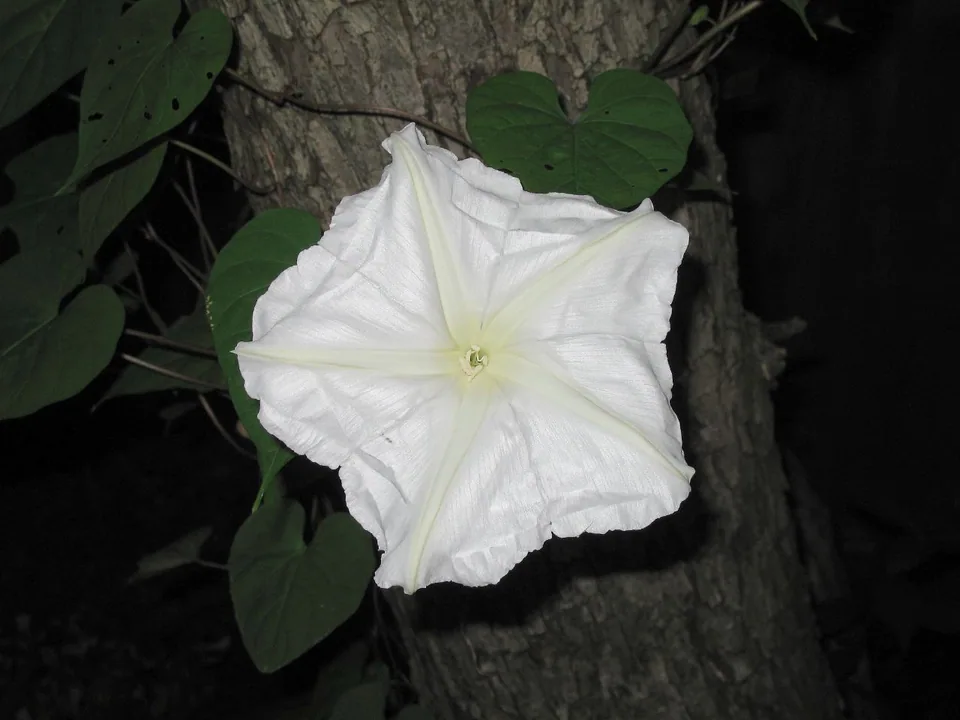
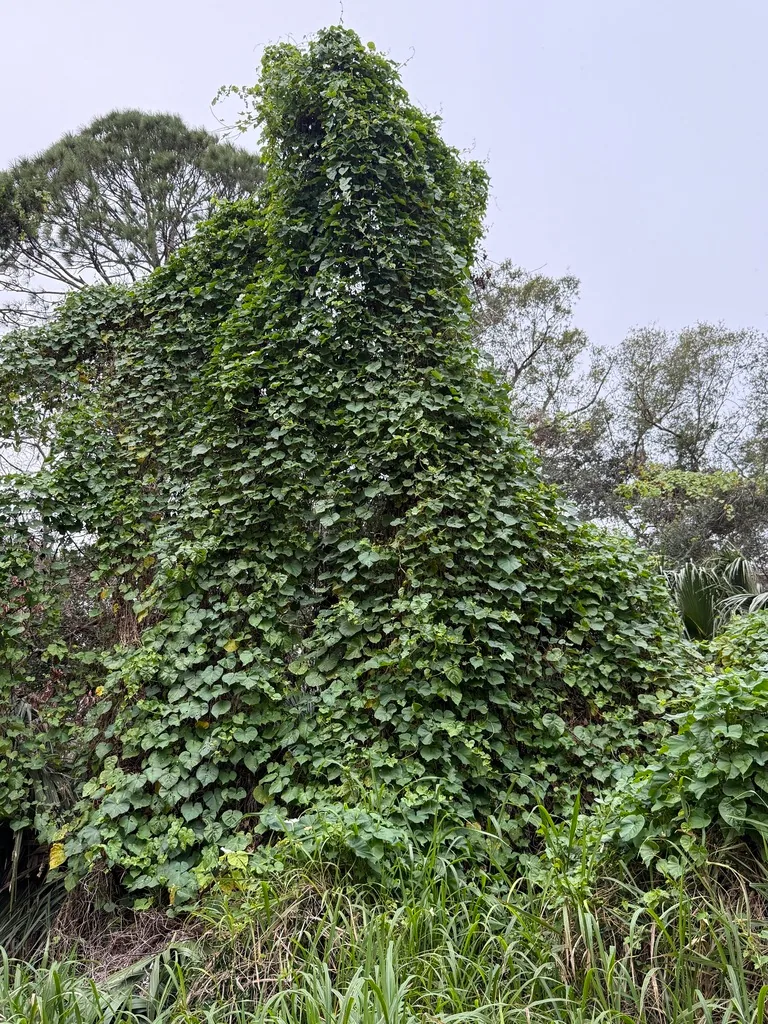

How to Grow and Care for Moonflower
Ipomoea alba
Written by Emilio Marruso · last checked
Toxic to: Cats, Dogs, Horses, People · Why
At a glance
This perennial vine can climb up to 15 feet, and it grows happily in full sun or partial shade, even in a container. Plant it 1–2 weeks after the last frost, keep the soil moist but well drained, and it will reward you with its best blooms. Save the seeds from the mature pods and you can grow it all over again.
- Sun
Full sun to partial shade
What the sources say (2)
Light: Full sun to partial shade
Full sun (6 or more hours of direct sunlight a day) Soil Texture:
— Ipomoea alba (Moonflower, Moonvine, Tropical White Morning Glory) | North Carolina Extension Gardener Plant Toolbox [1] does best in full sun or partial shade with moist, well-drained soils.
— Moonflower – Gardening Solutions [3] - Water
Don't let it get too dry: it blooms best with moist soil
What the sources say (2)
Watering notes: Does best in moist, well-drained soils; blooms best provided it does not get too dry
does best in full sun or partial shade with moist, well-drained soils.
— Moonflower – Gardening Solutions [3] The moonflower blooms best in late summer and early fall, provided it doesn’t get too dry.
— Moonflower [2] - Cold
A perennial vine, grown as an annual in cooler climates
What the sources say (1)
Life cycle: perennial vine, grown as an annual in cooler climates
Moonflower is a tender, low-maintenance, perennial vine grown as an annual in North Carolina.
— Ipomoea alba (Moonflower, Moonvine, Tropical White Morning Glory) | North Carolina Extension Gardener Plant Toolbox [1] - Soil
Moist, well-drained soil
What the sources say (2)
Watering notes: Does best in moist, well-drained soils; blooms best provided it does not get too dry
does best in full sun or partial shade with moist, well-drained soils.
— Moonflower – Gardening Solutions [3] The moonflower blooms best in late summer and early fall, provided it doesn’t get too dry.
— Moonflower [2] - Planting
Plant 1–2 weeks after the last frost, or once the soil warms up in spring
What the sources say (1)
Planting: 1-2 weeks after the last frost, or once the soil warms up in spring
then transfer the plants to their outside location 1-2 weeks after the last frost, or once the soil warms up in the spring.
— Moonflower – Gardening Solutions [3] - Size
Up to 15 ft tall and 3–6 ft wide
What the sources say (4)
Mature height: up to 457 cm (15 ft)
Moonflower can grow to 15 feet in height and 3 to 6 feet in width.
— Ipomoea alba (Moonflower, Moonvine, Tropical White Morning Glory) | North Carolina Extension Gardener Plant Toolbox [1] The vines usually grow up to 15 feet in height and 3 to 6 feet in width in a single season as an annual.
— Moonflower – Gardening Solutions [3] Mature width: 91-183 cm (3 to 6 ft)
Moonflower can grow to 15 feet in height and 3 to 6 feet in width.
— Ipomoea alba (Moonflower, Moonvine, Tropical White Morning Glory) | North Carolina Extension Gardener Plant Toolbox [1] The vines usually grow up to 15 feet in height and 3 to 6 feet in width in a single season as an annual.
— Moonflower – Gardening Solutions [3] - Propagation
From seed or stem cuttings; dry mature pods to collect the seeds
What the sources say (2)
Propagation: Seed, stem cutting
Life Cycle: Annual Perennial Recommended Propagation Strategy: Seed Stem Cutting
— Ipomoea alba (Moonflower, Moonvine, Tropical White Morning Glory) | North Carolina Extension Gardener Plant Toolbox [1] Saving seeds: Collect the mature seed pods and air dry them to remove the seeds; keep the seeds at room temperature in a storage bin such as a plastic container.
You can collect the mature seed pods and air dry them to remove the seeds for future use. It is recommended to keep the seeds at room temperature in a storage bin like a plastic container.
— Moonflower – Gardening Solutions [3] - Containers
Grows in containers too
What the sources say (2)
In containers: Yes
but can also be grown in containers such as hanging baskets.
— Moonflower – Gardening Solutions [3] If you would like to overwinter the plant, then grow it in a large container
— Ipomoea alba (Moonflower, Moonvine, Tropical White Morning Glory) | North Carolina Extension Gardener Plant Toolbox [1] - Safety
Mildly toxic: can cause vomiting; a problem for cats, dogs and horses
Overview
Moonflower is a tender, low-maintenance, perennial vine grown as an annual in North Carolina. [1] It is planted in well-draining soil in full sun and needs a support such as a fence, arbor or trellis. [1] It is propagated by seed, and nicking the seed coat or soaking the seeds overnight in warm water helps germination. [3]
This record is incomplete: the sources we read do not cover every field yet.
Not yet covered by our sources: Watering, Pruning
Moonflower care
Measurements in square brackets are our conversion into the other unit system; the quoted text is unchanged.
How to water Moonflower
Watering
Not stated in the sources we read.
Watering notes
Does best in moist, well-drained soils; blooms best provided it does not get too dry
How much light Moonflower needs
Full sun to partial shade
What the sources say (2)
Full sun (6 or more hours of direct sunlight a day)
Soil Texture:does best in full sun or partial shade with moist, well-drained soils.How much cold Moonflower can take
Hardiness, coldest zone
The sources give different values depending on region, zone or growing conditions.
What each source says
According to NC State Extension: 10a [winter low −1.1 to 1.7 °C (30 to 35 °F)]
According to UF/IFAS Gardening Solutions: 9a [winter low −6.7 to −3.9 °C (20 to 25 °F)]
What the sources say (2)
According to NC State Extension: USDA Plant Hardiness Zone:
10a, 10b, 11a, 11b, 12a, 12bAccording to UF/IFAS Gardening Solutions: The plant is suitable to grow in USDA Zones 11, 10A, 10B, 9A, and 9BHardiness, warmest zone
The sources give different values depending on region, zone or growing conditions.
What each source says
According to NC State Extension: 12b [winter low 12.8 to 15.6 °C (55 to 60 °F)]
According to UF/IFAS Gardening Solutions: 11 [winter low 4.4 to 10 °C (40 to 50 °F)]
What the sources say (2)
According to NC State Extension: USDA Plant Hardiness Zone:
10a, 10b, 11a, 11b, 12a, 12bAccording to UF/IFAS Gardening Solutions: The plant is suitable to grow in USDA Zones 11, 10A, 10B, 9A, and 9BWhere to grow Moonflower
Yes
What the sources say (2)
but can also be grown in containers such as hanging baskets.If you would like to overwinter the plant, then grow it in a large containerHow to propagate Moonflower
Seed, stem cutting
What the sources say (1)
Life Cycle:
Annual
Perennial
Recommended Propagation Strategy:
Seed
Stem CuttingHow to grow Moonflower
The plant
Life cycle
perennial vine, grown as an annual in cooler climates
What the sources say (1)
Moonflower is a tender, low-maintenance, perennial vine grown as an annual in North Carolina.Family
Convolvulaceae
What the sources say (1)
It is a member of the morning glory family (Convolvulaceae).Mature height
up to 457 cm (15 ft)
What the sources say (2)
Moonflower can grow to 15 feet in height and 3 to 6 feet in width.The vines usually grow up to 15 feet in height and 3 to 6 feet in width in a single season as an annual.Mature width
91-183 cm (3 to 6 ft)
What the sources say (2)
Moonflower can grow to 15 feet in height and 3 to 6 feet in width.The vines usually grow up to 15 feet in height and 3 to 6 feet in width in a single season as an annual.Harvest and storage
Saving seeds
Collect the mature seed pods and air dry them to remove the seeds; keep the seeds at room temperature in a storage bin such as a plastic container.
What the sources say (1)
You can collect the mature seed pods and air dry them to remove the seeds for future use. It is recommended to keep the seeds at room temperature in a storage bin like a plastic container.Remedies
Each remedy shows what official sources say about it; traditional remedies without an official source are marked as such. Harmful ones are listed so you know to avoid them.
Treating the plant
aphids
strong blast of water Not verified
Traditional remedy, not verified by an official source.
How: Blast the plant with a strong jet of water from a garden hose to dislodge the aphids.
insecticidal soap spray Works
it’s essential to follow the product instructions carefully and apply them in the evening to avoid harming beneficial insects
— svzoo.org [4] How: Spray with insecticidal soap, following the product instructions and applying in the evening.
Insecticidal soaps and neem oil are effective organic options for controlling aphids
— svzoo.org [4] What the evidence says insecticidal soap is a safe, effective organic insecticide with minimal environmental impact.
— extension.psu.edu [5] neem oil spray Partly works
it’s essential to follow the product instructions carefully and apply them in the evening to avoid harming beneficial insects
— svzoo.org [4] How: Spray with neem oil, following the product instructions and applying in the evening.
Insecticidal soaps and neem oil are effective organic options for controlling aphids
— svzoo.org [4] What the evidence says However, neem oil is not effective against every insect and disease, and often must be frequently reapplied to reach the desired outcome.
— extension.unh.edu [6]
caterpillars
hand-picking caterpillars Works
Outdoors, some larvae may be part of the plant’s pollinator relationships, so identify them before deciding on control.
— houseplantcentral.com [7] How: Some caterpillars can be handpicked from the plant and relocated.
Some caterpillars can be handpicked from the plant and relocated.
— svzoo.org [4] What the evidence says Many insect and disease issues can be solved in the home garden by hand-picking insects or clipping and disposing of diseased plant parts.
— extension.unh.edu [6]
spider mites
misting the foliage with water Not verified
Traditional remedy, not verified by an official source.
How: Regularly mist the foliage with water to raise humidity around the plant.
Is Moonflower toxic to pets?
Reported by the source, quoted verbatim. This is not medical or veterinary advice: if a person or an animal may have eaten this plant, contact a poison control centre or a veterinarian.
Animals
Problems: Problem for Cats Problem for Dogs Problem for Horses
[1]The source flags the risk for this animal but does not explain why.
People
Poison Severity: Low Poison Symptoms: Vomiting, large amounts of seeds may cause hallucinations
[1]- Poisonous parts
Poison Toxic Principle: Indole alkaloids (Lysergic acid, lysergamide, elymoclavine and chanoclavine) Causes Contact Dermatitis: No Poison Part: Seeds
[1]- Toxic principle
Poison Symptoms: Vomiting, large amounts of seeds may cause hallucinations Poison Toxic Principle: Indole alkaloids (Lysergic acid, lysergamide, elymoclavine and chanoclavine)
[1]- Symptoms
Vomiting, large amounts of seeds may cause hallucinations
[1]- Severity
Poison Severity: Low Poison Symptoms: Vomiting, large amounts of seeds may cause hallucinations
[1]
Calendar
Sowing
The sources give different values depending on region, zone or growing conditions.
What each source says
Indoors, fonte: NC State Extension: 4 to 6 weeks before the last spring frost
Indoors, fonte: UF/IFAS Gardening Solutions: 6-8 weeks before the last spring frost
Direct sowing outdoors, fonte: UF/IFAS Gardening Solutions: After the last frost
Outdoors, fonte: University of Arkansas Extension: Once the soil temperature has warmed above 65 degrees Fahrenheit [18 °C]
What the sources say (7)
Indoors, fonte: NC State Extension: Start 4 to 6 weeks before the last spring frost by soaking seeds overnight in warm waterIndoors, fonte: UF/IFAS Gardening Solutions: start the seed indoors about 6-8 weeks before the last spring frost dateDirect sowing outdoors, fonte: UF/IFAS Gardening Solutions: You can also plant the seeds directly in the ground after the last frost instead of starting inside, but flower blooms will be delayed to later in the summer.Outdoors, fonte: University of Arkansas Extension: don’t plant until the soil temperature
has warmed above 65 degrees Fahrenheit.Start 4 to 6 weeks before the last spring frost by soaking seeds overnight in warm waterstart the seed indoors about 6-8 weeks before the last spring frost datedon’t plant until the soil temperature
has warmed above 65 degrees Fahrenheit.Planting
1-2 weeks after the last frost, or once the soil warms up in spring
What the sources say (1)
then transfer the plants to their outside location 1-2 weeks after the last frost, or once the soil warms up in the spring.Pruning
Not stated in the sources we read.
Months as given by the sources, which are mostly from the United States (northern hemisphere). In the southern hemisphere they shift by about six months.
Relative to frost
Less precise estimate: there is no weather station within 300 km.
Find frost dates by ZIP code or city
Sow indoors: 4 to 6 weeks before the last frost
Start 4 to 6 weeks before the last spring frost by soaking seeds overnight in warm water or nick with a file to break the seed coat.
— Ipomoea alba (Moonflower, Moonvine, Tropical White Morning Glory) | North Carolina Extension Gardener Plant Toolbox [1] Sow indoors: 6 to 8 weeks before the last frost
start the seed indoors about 6-8 weeks before the last spring frost date, then transfer the plants to their outside location 1-2 weeks after the last frost
— Moonflower – Gardening Solutions [3] Transplant: 1 to 2 weeks after the last frost
start the seed indoors about 6-8 weeks before the last spring frost date, then transfer the plants to their outside location 1-2 weeks after the last frost
— Moonflower – Gardening Solutions [3] Sow outdoors: around the last frost
You can also plant the seeds directly in the ground after the last frost instead of starting inside
— Moonflower – Gardening Solutions [3]
Count from the average frost dates where you live.
Indicative values
Values from a secondary source, not checked word for word like the rest of this page. Use them as a starting point.
- Hours of sun
- 6-7 hoursIndicative value, adapt it to your climate · Secondary source
- Watering
- AverageIndicative value, adapt it to your climate · Secondary source
- Soil pH
- 6-7.5Indicative value, adapt it to your climate · Secondary source
- Care level
- MediumIndicative value, adapt it to your climate · Secondary source
- Growth rate
- HighIndicative value, adapt it to your climate · Secondary source
- Pruning
- February, March, April, March, April, May, June, July, August, SeptemberIndicative value, adapt it to your climate · Secondary source
Similar plants
- Beach Morning-glory Ipomoea imperati
- Common Morning Glory Ipomoea purpurea
- Cypress Vine Ipomoea quamoclit
- Morning Glory Ipomoea sagittata
- Morning Glory Ipomoea tricolor
- Oceanblue Morning Glory Ipomoea indica
- Scarlet Creeper Ipomoea coccinea
- Spanish Flag Ipomoea lobata
Sources
Every value above is quoted from these documents. Links lead to the original publisher.
- Ipomoea alba (Moonflower, Moonvine, Tropical White Morning Glory) | North Carolina Extension Gardener Plant Toolbox · plants.ces.ncsu.edu, consulted
- Moonflower · uaex.uada.edu, consulted
- Moonflower – Gardening Solutions · gardeningsolutions.ifas.ufl.edu, consulted
- svzoo.org · svzoo.org
- extension.psu.edu · extension.psu.edu
- extension.unh.edu · extension.unh.edu
- houseplantcentral.com · houseplantcentral.com
Written by Emilio Marruso · last checked