

How to Grow and Care for Cypress Vine
Ipomoea quamoclit
Written by Emilio Marruso · last checked
Toxic to: Cats, Dogs, Horses, People · Why
At a glance
This cheerful annual is easy to start: sow the seed in spring once the soil warms, and give it full sun, though it also handles partial shade. It forgives some drought, asks only for a light liquid feed every few weeks and spreads 3–6 ft wide. Go easy on fertilizer, since too much nitrogen means leaves instead of flowers.
- Sun
Full sun; it also tolerates partial shade
What the sources say (2)
Light: Full sun; tolerates partial shade
This plant grows in full sun in average soil and requires good drainage but adequate moisture.
— Ipomoea quamoclit (Cypress Vine, Cypressvine Morningglory) | North Carolina Extension Gardener Plant Toolbox [1] Full sun to partial shade. Moist, well drained soils are best, but this vine will tolerate some dryness.
— Cypress Vine (Ipomoea quamoclit)-Hort Answers - University of Illinois Extension [4] - Water
Water regularly during dry spells; it tolerates some drought
What the sources say (3)
Watering: Adequate moisture with good drainage; tolerates some drought and both wet and dry soil; water regularly during dry spells
This plant grows in full sun in average soil and requires good drainage but adequate moisture. It tolerates deer, some drought, and both wet and dry soil conditions.
— Ipomoea quamoclit (Cypress Vine, Cypressvine Morningglory) | North Carolina Extension Gardener Plant Toolbox [1] Water regularly during dry spells to keep the vine blooming strong, but it generally does not need heavy fertilizing.
— Cypress vine is fast-growing non-native garden highlight | Mississippi State University Extension Service [3] Watering notes: Moist, well-drained soil is best, but it tolerates some dryness
Moist, well drained soils are best, but this vine will tolerate some dryness. Cultivars
— Cypress Vine (Ipomoea quamoclit)-Hort Answers - University of Illinois Extension [4] - Cold
Survives winters down to 40 °F (4.4 °C)
Tender: needs a frost-free greenhouse · USDA 11a · RHS H2 · Z11
What the sources say (2)
Hardiness, coldest zone: 11a [winter low 4.4 to 7.2 °C (40 to 45 °F)]
USDA Plant Hardiness Zone: 11a, 11b, 12a, 12b
— Ipomoea quamoclit (Cypress Vine, Cypressvine Morningglory) | North Carolina Extension Gardener Plant Toolbox [1] Hardiness, warmest zone: 12b [winter low 12.8 to 15.6 °C (55 to 60 °F)]
USDA Plant Hardiness Zone: 11a, 11b, 12a, 12b
— Ipomoea quamoclit (Cypress Vine, Cypressvine Morningglory) | North Carolina Extension Gardener Plant Toolbox [1] - Soil
Moist soil that drains well is best
What the sources say (3)
Watering notes: Moist, well-drained soil is best, but it tolerates some dryness
Moist, well drained soils are best, but this vine will tolerate some dryness. Cultivars
— Cypress Vine (Ipomoea quamoclit)-Hort Answers - University of Illinois Extension [4] Watering: Adequate moisture with good drainage; tolerates some drought and both wet and dry soil; water regularly during dry spells
This plant grows in full sun in average soil and requires good drainage but adequate moisture. It tolerates deer, some drought, and both wet and dry soil conditions.
— Ipomoea quamoclit (Cypress Vine, Cypressvine Morningglory) | North Carolina Extension Gardener Plant Toolbox [1] Water regularly during dry spells to keep the vine blooming strong, but it generally does not need heavy fertilizing.
— Cypress vine is fast-growing non-native garden highlight | Mississippi State University Extension Service [3] - Feeding
A light liquid feed every few weeks; too much nitrogen gives leaves instead of flowers
What the sources say (5)
How often: A light liquid feed every few weeks
A balanced, slow-release fertilizer or a light application of liquid feed every few weeks is usually all it needs.
— Cypress vine is fast-growing non-native garden highlight | Mississippi State University Extension Service [3] Mineral fertilizers: A balanced slow-release fertilizer, or a light liquid feed; no heavy fertilizing
A balanced, slow-release fertilizer or a light application of liquid feed every few weeks is usually all it needs.
— Cypress vine is fast-growing non-native garden highlight | Mississippi State University Extension Service [3] Water regularly during dry spells to keep the vine blooming strong, but it generally does not need heavy fertilizing.
— Cypress vine is fast-growing non-native garden highlight | Mississippi State University Extension Service [3] Avoid: Heavy fertilizing and too much nitrogen
but it generally does not need heavy fertilizing. Too much nitrogen encourages leaf production at the expense of flowers.
— Cypress vine is fast-growing non-native garden highlight | Mississippi State University Extension Service [3] Signs of excess: Leafy growth at the expense of flowers
Too much nitrogen encourages leaf production at the expense of flowers.
— Cypress vine is fast-growing non-native garden highlight | Mississippi State University Extension Service [3] - Pests
No serious pest or disease problems
- Watch out
Reseeds heavily and can pop up anywhere; pull new sprouts by hand in spring
- Size
3 to 6 ft wide
What the sources say (1)
Mature width: 91-183 cm (3 ft 0 in - 6 ft 0 in)
Dimensions: Height: 15 ft. 0 in. - 20 ft. 0 in. Width: 3 ft. 0 in. - 6 ft. 0 in.
— Ipomoea quamoclit (Cypress Vine, Cypressvine Morningglory) | North Carolina Extension Gardener Plant Toolbox [1] - Propagation
Grows from seed
What the sources say (2)
Propagation: Seed
Start it from seed once the soil warms in spring. The seeds have a tough coat
— Cypress vine is fast-growing non-native garden highlight | Mississippi State University Extension Service [3] Germination of seeds is aided by scarifying and soaking in water for 12-24 hours.
— Ipomoea quamoclit (Cypress Vine, Cypressvine Morningglory) | North Carolina Extension Gardener Plant Toolbox [1] - Sowing
Sow in spring, once the soil warms
What the sources say (2)
Sowing: Spring, once the soil warms
the South (grown as an annual): Cypress vine is grown as an annual in most of the South. Start it from seed once the soil warms in spring.
— Cypress vine is fast-growing non-native garden highlight | Mississippi State University Extension Service [3] Start it from seed once the soil warms in spring. The seeds have a tough coat
— Cypress vine is fast-growing non-native garden highlight | Mississippi State University Extension Service [3] - Safety
Toxic to dogs, cats and horses; in people it can cause vomiting, and many seeds can cause hallucinations
Overview
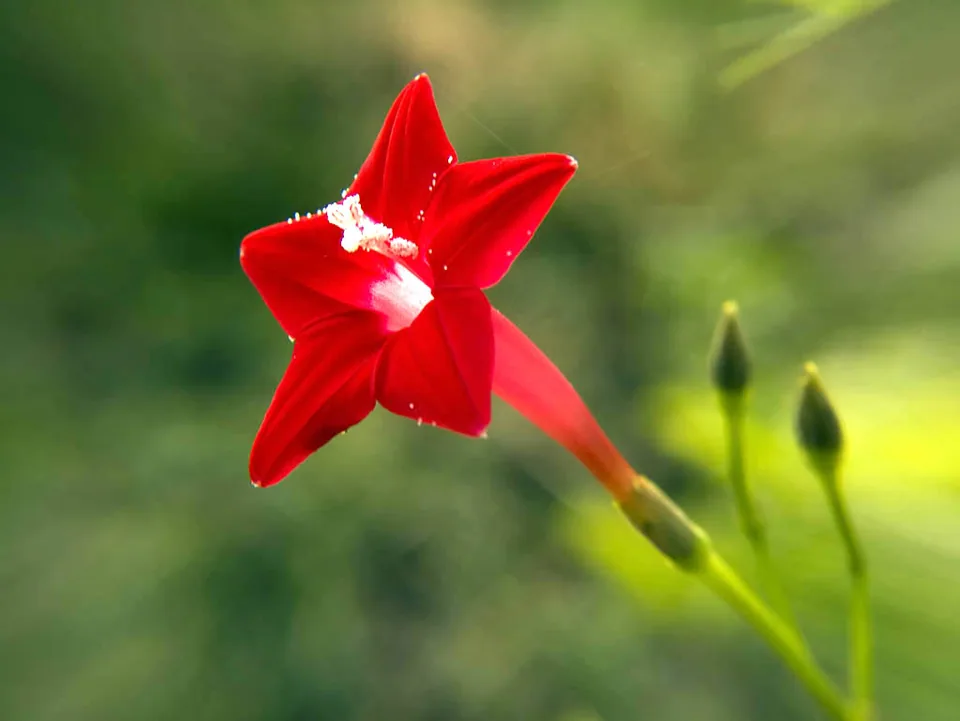
Cypress vine is a fast-growing annual twining vine with fern-like foliage and small scarlet red flowers. [1][3] It grows in full sun with good drainage and adequate moisture, and it self-seeds readily. [1][3] It is reported as toxic to dogs, cats and horses. [1]
This record is incomplete: the sources we read do not cover every field yet.
Not yet covered by our sources: Pruning
Cypress Vine care
How to water Cypress Vine
Watering
Adequate moisture with good drainage; tolerates some drought and both wet and dry soil; water regularly during dry spells
What the sources say (2)
This plant grows in full sun in average soil and requires good drainage but adequate moisture. It tolerates deer, some drought, and both wet and dry soil conditions.Water regularly during dry spells to keep the vine blooming strong, but it generally does not need heavy fertilizing.Watering notes
Moist, well-drained soil is best, but it tolerates some dryness
What the sources say (1)
Moist, well drained soils are best, but this vine will tolerate some dryness.
CultivarsHow much light Cypress Vine needs
Full sun; tolerates partial shade
What the sources say (2)
This plant grows in full sun in average soil and requires good drainage but adequate moisture.Full sun to partial shade. Moist, well drained soils are best, but this vine will tolerate some dryness.How much cold Cypress Vine can take
Hardiness, coldest zone
11a [winter low 4.4 to 7.2 °C (40 to 45 °F)]
What the sources say (1)
USDA Plant Hardiness Zone:
11a, 11b, 12a, 12bHardiness, warmest zone
12b [winter low 12.8 to 15.6 °C (55 to 60 °F)]
What the sources say (1)
USDA Plant Hardiness Zone:
11a, 11b, 12a, 12bHow to propagate Cypress Vine
Seed
What the sources say (2)
Start it from seed once the soil warms in spring. The seeds have a tough coatGermination of seeds is aided by scarifying and soaking in water for 12-24 hours.How to grow Cypress Vine
The plant
Life cycle
annual
What the sources say (1)
Alhough it is an annual, it spreads quickly by self-seeding.Family
Convolvulaceae
What the sources say (1)
This weedy vine is native to the tropics of South Americain the morning glory family (Convolvulaceae).Mature height
Mature width
91-183 cm (3 ft 0 in - 6 ft 0 in)
What the sources say (1)
Dimensions: Height: 15 ft. 0 in. - 20 ft. 0 in. Width: 3 ft. 0 in. - 6 ft. 0 in.Fertilizing
How often
A light liquid feed every few weeks
What the sources say (1)
A balanced, slow-release fertilizer or a light application of liquid feed every few weeks is usually all it needs.Mineral fertilizers
A balanced slow-release fertilizer, or a light liquid feed; no heavy fertilizing
What the sources say (2)
A balanced, slow-release fertilizer or a light application of liquid feed every few weeks is usually all it needs.Water regularly during dry spells to keep the vine blooming strong, but it generally does not need heavy fertilizing.Avoid
Heavy fertilizing and too much nitrogen
What the sources say (1)
but it generally does not need heavy fertilizing. Too much nitrogen encourages leaf production at the expense of flowers.Signs of excess
Leafy growth at the expense of flowers
What the sources say (1)
Too much nitrogen encourages leaf production at the expense of flowers.Cypress Vine pests and problems
Weedy self-seeding
Symptom: Prolific reseeding; can become aggressive and appear in unexpected places
What to do: UF IFAS advises hand pulling new sprouts in spring; sheet mulching can reduce germination
What the sources say (2)
Once it blooms and sets seed, new vines sprout the following spring, sometimes in unexpected places.
— Cypress vine is fast-growing non-native garden highlight | Mississippi State University Extension Service [3] Cultural/Physical Hand pull new sprouts in Spring. Sheet mulching can reduce germination.
— | Center for Aquatic and Invasive Plants | University of Florida, IFAS [2] Pests and diseases
Symptom: No serious problems; can be somewhat weedy
What to do: Not specified in the source
What the sources say (1)
Insects, Diseases, and Other Plant Problems: No serious problems. Can be somewhat weedy.
— Ipomoea quamoclit (Cypress Vine, Cypressvine Morningglory) | North Carolina Extension Gardener Plant Toolbox [1]
Remedies
Each remedy shows what official sources say about it; traditional remedies without an official source are marked as such. Harmful ones are listed so you know to avoid them.
Getting rid of it
weedy self-seeding
hand pulling new sprouts Works
How: Hand pull new sprouts in Spring.
Hand pull new sprouts in Spring. Sheet mulching can reduce germination.
— | Center for Aquatic and Invasive Plants | University of Florida, IFAS [2] What the evidence says Regularly pulling, hoeing or mowing weeds and encouraging grass to grow and out-compete the weeds is an excellent solution.
— extension.usu.edu [6] sheet mulching (weed barrier covered with mulch) Works
How: Sheet mulching can reduce germination.
Hand pull new sprouts in Spring. Sheet mulching can reduce germination.
— | Center for Aquatic and Invasive Plants | University of Florida, IFAS [2] What the evidence says Lay the material down to prevent sunlight from reaching the unwanted plants, and cover with mulch or other plant-resistant material.
— extension.usu.edu [6] cutting back to the ground every two weeks Not verified
Traditional remedy, not verified by an official source.
How: Cut a cypress vine down to the ground with hand clippers and continue to cut it back every two weeks. You can also try pulling it up, which is easiest when the soil is moist.
digging up plants and pulling seedlings Works
How: Dig up the plants and then diligently pull the seedlings that sprouted.
They were controlled by digging them up and then diligently pulling the seedlings that sprouted.
— ajc.com [7] What the evidence says Regularly pulling, hoeing or mowing weeds and encouraging grass to grow and out-compete the weeds is an excellent solution.
— extension.usu.edu [6]
Is Cypress Vine toxic to pets?
Reported by the source, quoted verbatim. This is not medical or veterinary advice: if a person or an animal may have eaten this plant, contact a poison control centre or a veterinarian.
Animals
It is toxic to dogs, cats and horses though.
[1]The source flags the risk for this animal but does not explain why.
People
Poison Severity: Low Poison Symptoms: Vomiting, large amounts of seeds may cause hallucinations
[1]
Calendar
Sowing
Spring, once the soil warms
What each source says
the South (grown as an annual): Spring, once the soil warms
What the sources say (2)
the South (grown as an annual): Cypress vine is grown as an annual in most of the South. Start it from seed once the soil warms in spring.Start it from seed once the soil warms in spring. The seeds have a tough coatPruning
Not stated in the sources we read.
Months as given by the sources, which are mostly from the United States (northern hemisphere). In the southern hemisphere they shift by about six months.
Indicative values
Values from a secondary source, not checked word for word like the rest of this page. Use them as a starting point.
- Hours of sun
- 6-8 hoursIndicative value, adapt it to your climate · Secondary source
- Drought tolerant
- yesIndicative value, adapt it to your climate · Secondary source
- Soil pH
- 6-7.5Indicative value, adapt it to your climate · Secondary source
- Care level
- MediumIndicative value, adapt it to your climate · Secondary source
- Growth rate
- HighIndicative value, adapt it to your climate · Secondary source
- Pruning
- March, April, June, July, AugustIndicative value, adapt it to your climate · Secondary source
Similar plants
- Beach Morning-glory Ipomoea imperati
- Common Morning Glory Ipomoea purpurea
- Moonflower Ipomoea alba
- Morning Glory Ipomoea sagittata
- Morning Glory Ipomoea tricolor
- Oceanblue Morning Glory Ipomoea indica
- Scarlet Creeper Ipomoea coccinea
- Spanish Flag Ipomoea lobata
Sources
Every value above is quoted from these documents. Links lead to the original publisher.
- Ipomoea quamoclit (Cypress Vine, Cypressvine Morningglory) | North Carolina Extension Gardener Plant Toolbox · plants.ces.ncsu.edu, consulted
- | Center for Aquatic and Invasive Plants | University of Florida, IFAS · plant-directory.ifas.ufl.edu, consulted
- Cypress vine is fast-growing non-native garden highlight | Mississippi State University Extension Service · extension.msstate.edu, consulted
- Cypress Vine (Ipomoea quamoclit)-Hort Answers - University of Illinois Extension · web.extension.illinois.edu, consulted
- Ipomoea (Cypress Vine, Morning Glory) | North Carolina Extension Gardener Plant Toolbox · plants.ces.ncsu.edu, consulted
- extension.usu.edu · extension.usu.edu
- ajc.com · ajc.com
Written by Emilio Marruso · last checked