
How to Grow and Care for Beach Morning-glory
Ipomoea imperati
Written by Emilio Marruso · last checked
Toxic to: Cats, Dogs, Horses, People · Why
At a glance
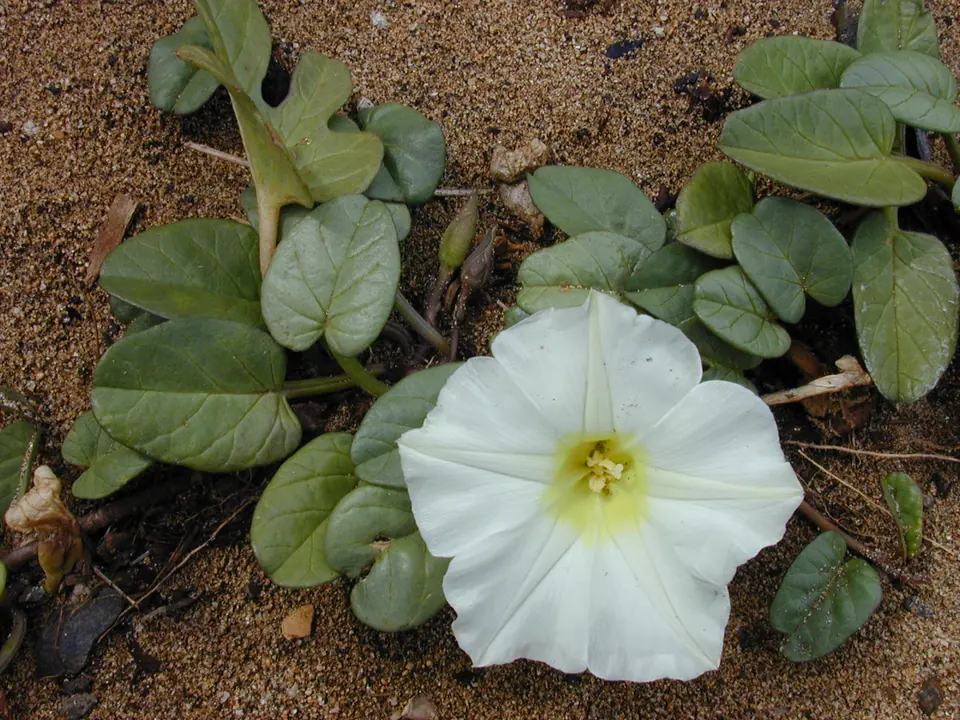
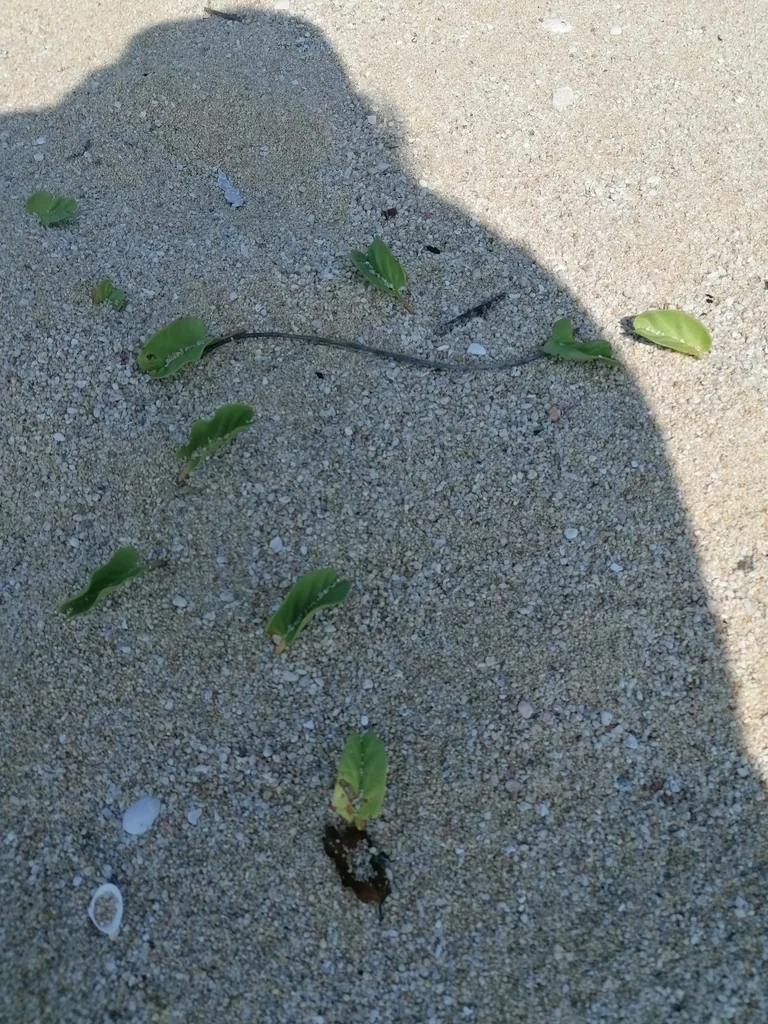
This sun-loving perennial stays low, up to 6 inches tall, yet can spread up to 30 feet wide, like a living carpet over sandy ground. It grows best in full sun on dry to moist sandy soil and tolerates drought well. You can start new plants from seed or by division, so one plant can become many.
- Sun
Full sun
What the sources say (2)
Light: Full sun
Growing best on dry to moist sandy soils in full sun.
— Ipomoea imperati (Beach Morning-glory) | North Carolina Extension Gardener Plant Toolbox [1] Light: Full sun (6 or more hours of direct sunlight a day)
— Ipomoea imperati (Beach Morning-glory) | North Carolina Extension Gardener Plant Toolbox [1] - Water
Likes dry to moist soil and handles drought well
What the sources say (1)
Watering: Grows best on dry to moist sandy soils; tolerant of drought
Growing best on dry to moist sandy soils in full sun. Beach morning-glory is tolerant of heat, drought, and wind, as well as salt spray.
— Ipomoea imperati (Beach Morning-glory) | North Carolina Extension Gardener Plant Toolbox [1] - Cold
Survives winters down to 20 °F (−6.7 °C)
Hardy in average winters · USDA 9a · RHS H4 · Z9
What the sources say (2)
Hardiness, coldest zone: 9a [winter low −6.7 to −3.9 °C (20 to 25 °F)]
USDA Plant Hardiness Zone: 9a, 9b, 10a, 10b
— Ipomoea imperati (Beach Morning-glory) | North Carolina Extension Gardener Plant Toolbox [1] Hardiness, warmest zone: 10b [winter low 1.7 to 4.4 °C (35 to 40 °F)]
USDA Plant Hardiness Zone: 9a, 9b, 10a, 10b
— Ipomoea imperati (Beach Morning-glory) | North Carolina Extension Gardener Plant Toolbox [1] - Soil
Grows best in sandy soil
What the sources say (1)
Watering: Grows best on dry to moist sandy soils; tolerant of drought
Growing best on dry to moist sandy soils in full sun. Beach morning-glory is tolerant of heat, drought, and wind, as well as salt spray.
— Ipomoea imperati (Beach Morning-glory) | North Carolina Extension Gardener Plant Toolbox [1] - Pests
Sometimes bothered by sweet potato weevils and spider mites
What the sources say (1)
Pests: sweet potato weevil, spider mites
Sweet potato weevil and spider mites are occasional problems.
— Ipomoea imperati (Beach Morning-glory) | North Carolina Extension Gardener Plant Toolbox [1] - Size
Up to 6 inches tall and up to 30 feet wide
What the sources say (2)
Mature height: up to 15.24 cm (1/2 ft)
This scrambling, creeping vine trails along the ground reaching great widths of up to 30 feet but is typically no more than 1/2 a foot tall.
— Ipomoea imperati (Beach Morning-glory) | North Carolina Extension Gardener Plant Toolbox [1] Mature width: up to 914.4 cm (30 ft)
This scrambling, creeping vine trails along the ground reaching great widths of up to 30 feet but is typically no more than 1/2 a foot tall.
— Ipomoea imperati (Beach Morning-glory) | North Carolina Extension Gardener Plant Toolbox [1] - Propagation
Grow new plants from seed or by division
What the sources say (1)
Propagation: Seed, division
Propagate this plant by seed or division.
— Ipomoea imperati (Beach Morning-glory) | North Carolina Extension Gardener Plant Toolbox [1] - Safety
Mildly poisonous to people; harmful to dogs, cats and horses
Overview
Beach morning-glory is a perennial vine native to tropical and subtropical coastlines, sprawling along sandy beaches and dunes. [1] It grows best on dry to moist sandy soils in full sun and is tolerant of heat, drought, wind and salt spray. [1] It is used as a groundcover in coastal landscapes and is listed as a low severity poison. [1]
This record is incomplete: the sources we read do not cover every field yet.
Not yet covered by our sources: Pruning
Beach Morning-glory care
How to water Beach Morning-glory
Grows best on dry to moist sandy soils; tolerant of drought
What the sources say (1)
Growing best on dry to moist sandy soils in full sun. Beach morning-glory is tolerant of heat, drought, and wind, as well as salt spray.How much light Beach Morning-glory needs
Full sun
What the sources say (2)
Growing best on dry to moist sandy soils in full sun.Light:
Full sun (6 or more hours of direct sunlight a day)How much cold Beach Morning-glory can take
Hardiness, coldest zone
9a [winter low −6.7 to −3.9 °C (20 to 25 °F)]
What the sources say (1)
USDA Plant Hardiness Zone:
9a, 9b, 10a, 10bHardiness, warmest zone
10b [winter low 1.7 to 4.4 °C (35 to 40 °F)]
What the sources say (1)
USDA Plant Hardiness Zone:
9a, 9b, 10a, 10bHow to propagate Beach Morning-glory
Seed, division
What the sources say (1)
Propagate this plant by seed or division.How to grow Beach Morning-glory
The plant
Life cycle
perennial
What the sources say (1)
Beach morning-glory is a perennail vine in the Convolvulaceae (morning glory) family.Family
Convolvulaceae
What the sources say (1)
Beach morning-glory is a perennail vine in the Convolvulaceae (morning glory) family.Mature height
up to 15.24 cm (1/2 ft)
What the sources say (1)
This scrambling, creeping vine trails along the ground reaching great widths of up to 30 feet but is typically no more than 1/2 a foot tall.Mature width
up to 914.4 cm (30 ft)
What the sources say (1)
This scrambling, creeping vine trails along the ground reaching great widths of up to 30 feet but is typically no more than 1/2 a foot tall.Pests and diseases
Pests
sweet potato weevil, spider mites
What the sources say (1)
Sweet potato weevil and spider mites are occasional problems.Beach Morning-glory pests and problems
Sweet potato weevil and spider mites
Symptom: Occasional problems
What to do: No management given
What the sources say (1)
Sweet potato weevil and spider mites are occasional problems.
— Ipomoea imperati (Beach Morning-glory) | North Carolina Extension Gardener Plant Toolbox [1]
Remedies
Each remedy shows what official sources say about it; traditional remedies without an official source are marked as such. Harmful ones are listed so you know to avoid them.
First aid
First aid: not a substitute for a doctor
swallowed poison
rinse mouth with water Official source, not independently tested
Do not induce vomiting and do not give them anything to drink.
— missouripoisoncenter.org [2] If the person is awake and alert, call the Missouri Poison Center at 1-800-222-1222 for further treatment advice.
— missouripoisoncenter.org [2] How: Wipe out the mouth with a damp cloth or let the person rinse the mouth out with water.
Wipe out their mouth with a damp cloth and or let them rinse their mouth out with water.
— missouripoisoncenter.org [2]
Treating the plant
spider mites
forceful water spray Partly works
How: Use a forceful jet of water from a hose (syringing) regularly.
Regular syringing can keep spider mites under control on most ornamental plants in the landscape. This technique also helps conserve natural predators.
— extension.umaine.edu [3] What the evidence says Spider mite outbreaks can sometimes be deterred by washing foliage with a forceful water spray once per day.
— extension.msstate.edu [4] insecticidal soap Partly works
Treatments such as horticultural oils, neem oil, or insecticidal soaps will control spider mites, but it takes thorough spray coverage, especially to undersides of leaves, and repeated sprays, and there is a risk of spray-induced plant injury.
— extension.msstate.edu [4] How: Apply insecticidal/miticidal soaps in the warm season with thorough coverage of upper and lower leaf surfaces.
Most spider mites can be controlled with insecticidal/miticidal oils and soaps.
— extension.umaine.edu [3] What the evidence says Treatments such as horticultural oils, neem oil, or insecticidal soaps will control spider mites, but it takes thorough spray coverage, especially to undersides of leaves, and repeated sprays, and there is a risk of spray-induced plant injury.
— extension.msstate.edu [4] horticultural oil Partly works
Treatments such as horticultural oils, neem oil, or insecticidal soaps will control spider mites, but it takes thorough spray coverage, especially to undersides of leaves, and repeated sprays, and there is a risk of spray-induced plant injury.
— extension.msstate.edu [4] How: Horticultural oil on perennial and woody ornamentals during the summer, avoiding flowers.
Horticultural oils can be used on perennial and woody ornamentals during the summer but avoid spraying flowers, which can be damaged.
— extension.umaine.edu [3] What the evidence says Treatments such as horticultural oils, neem oil, or insecticidal soaps will control spider mites, but it takes thorough spray coverage, especially to undersides of leaves, and repeated sprays, and there is a risk of spray-induced plant injury.
— extension.msstate.edu [4]
Is Beach Morning-glory toxic to pets?
Reported by the source, quoted verbatim. This is not medical or veterinary advice: if a person or an animal may have eaten this plant, contact a poison control centre or a veterinarian.
Animals
#problem for dogs #problem for horses #problem for cats
[1]The source flags the risk for this animal but does not explain why.
People
Calendar
Pruning
Not stated in the sources we read.
Months as given by the sources, which are mostly from the United States (northern hemisphere). In the southern hemisphere they shift by about six months.
Similar plants
- Common Morning Glory Ipomoea purpurea
- Cypress Vine Ipomoea quamoclit
- Moonflower Ipomoea alba
- Morning Glory Ipomoea sagittata
- Morning Glory Ipomoea tricolor
- Oceanblue Morning Glory Ipomoea indica
- Scarlet Creeper Ipomoea coccinea
- Spanish Flag Ipomoea lobata
Sources
Every value above is quoted from these documents. Links lead to the original publisher.
- Ipomoea imperati (Beach Morning-glory) | North Carolina Extension Gardener Plant Toolbox · plants.ces.ncsu.edu, consulted
- missouripoisoncenter.org · missouripoisoncenter.org
- extension.umaine.edu · extension.umaine.edu
- extension.msstate.edu · extension.msstate.edu
Written by Emilio Marruso · last checked