

How to Grow and Care for Common Morning Glory
Ipomoea purpurea
Written by Emilio Marruso · last checked
Toxic to: Cats, Dogs, Horses, People · Why
At a glance
Morning glory is an easy annual that grows from seed and can reach 6 to 10 feet tall and 3 to 6 feet wide in a single season. Give it full sun and soil that stays moist but drains well, and it will reward you with flowers in early fall. It even sows itself, so new plants may pop up next year.
- Sun
Full sun
What the sources say (1)
Light: Full sun
Common morning glory grows in full sun in most moderately fertile, moist but well-drained soils.
— Ipomoea purpurea (Common Morning Glory, Purple Morning Glory, Tall Morning Glory) | North Carolina Extension Gardener Plant Toolbox [1] - Water
Keep the soil moist, but make sure it drains well
What the sources say (1)
Watering notes: Moist but well-drained soils
Common morning glory grows in full sun in most moderately fertile, moist but well-drained soils.
— Ipomoea purpurea (Common Morning Glory, Purple Morning Glory, Tall Morning Glory) | North Carolina Extension Gardener Plant Toolbox [1] - Pests
Watch for aphids and spider mites; can get powdery mildew and root rot
What the sources say (2)
Pests: aphids, spider mites
Watch for aphids and spider mites. Diseases include powdery mildew and root rot.
— Ipomoea purpurea (Common Morning Glory, Purple Morning Glory, Tall Morning Glory) | North Carolina Extension Gardener Plant Toolbox [1] Diseases: powdery mildew, root rot
Watch for aphids and spider mites. Diseases include powdery mildew and root rot.
— Ipomoea purpurea (Common Morning Glory, Purple Morning Glory, Tall Morning Glory) | North Carolina Extension Gardener Plant Toolbox [1] - Watch out
It sows itself, so new plants can sprout where you didn't plant them
- Size
6 to 10 ft tall and 3 to 6 ft wide
What the sources say (2)
Mature height: 183-305 cm (6-10 ft)
It is a twining annual vine that can reach 6 to 10 feet tall and 3 to 6 feet wide in one season.
— Ipomoea purpurea (Common Morning Glory, Purple Morning Glory, Tall Morning Glory) | North Carolina Extension Gardener Plant Toolbox [1] Mature width: 91-183 cm (3-6 ft)
It is a twining annual vine that can reach 6 to 10 feet tall and 3 to 6 feet wide in one season.
— Ipomoea purpurea (Common Morning Glory, Purple Morning Glory, Tall Morning Glory) | North Carolina Extension Gardener Plant Toolbox [1] - Propagation
Grows from seed
What the sources say (1)
Propagation: Seed
Common morning glory grows in full sun in most moderately fertile, moist but well-drained soils. Prune as needed to control size. Propagation is by seed.
— Ipomoea purpurea (Common Morning Glory, Purple Morning Glory, Tall Morning Glory) | North Carolina Extension Gardener Plant Toolbox [1] - Safety
Toxic: causes vomiting, many seeds can cause hallucinations; harmful to dogs, cats and horses
Overview
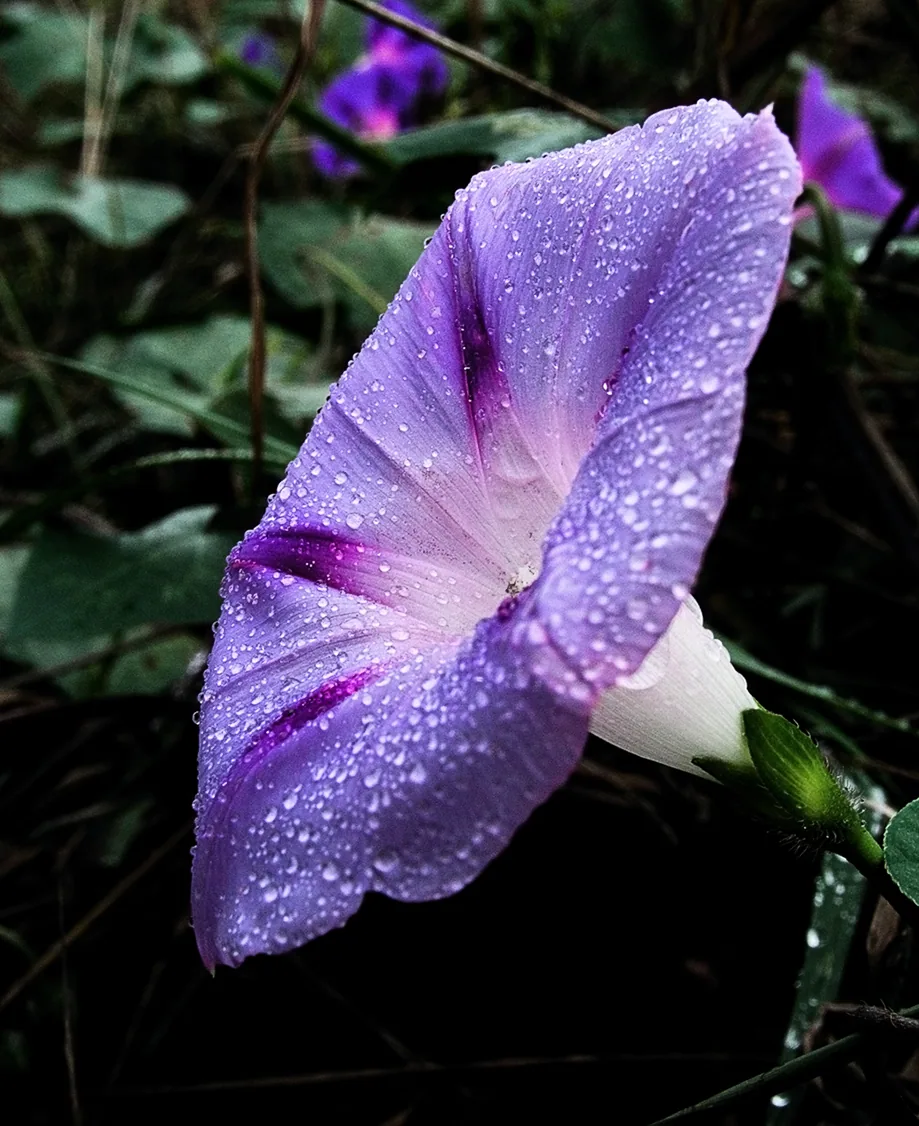
Common morning glory is a twining annual vine native to Mexico and Central America that reaches 6 to 10 feet [1.8–3 m] tall in one season. [1] It grows in full sun in moderately fertile, moist but well-drained soils and is propagated by seed. [1] Its deep purple trumpet-shaped flowers open in the morning and bloom continuously from early summer to fall. [1]
This record is incomplete: the sources we read do not cover every field yet.
Not yet covered by our sources: Watering, Hardiness, coldest zone, Hardiness, warmest zone, Pruning
Common Morning Glory care
Measurements in square brackets are our conversion into the other unit system; the quoted text is unchanged.
How to water Common Morning Glory
Watering
Not stated in the sources we read.
Watering notes
Moist but well-drained soils
What the sources say (1)
Common morning glory grows in full sun in most moderately fertile, moist but well-drained soils.How much light Common Morning Glory needs
Full sun
What the sources say (1)
Common morning glory grows in full sun in most moderately fertile, moist but well-drained soils.How much cold Common Morning Glory can take
Hardiness, coldest zone
Not stated in the sources we read.
Hardiness, warmest zone
Not stated in the sources we read.
How to propagate Common Morning Glory
Seed
What the sources say (1)
Common morning glory grows in full sun in most moderately fertile, moist but well-drained soils. Prune as needed to control size. Propagation is by seed.How to grow Common Morning Glory
The plant
Life cycle
annual
What the sources say (1)
It is a twining annual vine that can reach 6 to 10 feet tall and 3 to 6 feet wide in one season.Family
Convolvulaceae
What the sources say (1)
Common morning glory is in the Convolvulaceae family and is native to Mexico and Central America.Mature height
183-305 cm (6-10 ft)
What the sources say (1)
It is a twining annual vine that can reach 6 to 10 feet tall and 3 to 6 feet wide in one season.Mature width
91-183 cm (3-6 ft)
What the sources say (1)
It is a twining annual vine that can reach 6 to 10 feet tall and 3 to 6 feet wide in one season.Pests and diseases
Pests
aphids, spider mites
What the sources say (1)
Watch for aphids and spider mites. Diseases include powdery mildew and root rot.Diseases
powdery mildew, root rot
What the sources say (1)
Watch for aphids and spider mites. Diseases include powdery mildew and root rot.Common Morning Glory pests and problems
Aphids and spider mites
What to do: Watch for them
What the sources say (1)
Watch for aphids and spider mites. Diseases include powdery mildew and root rot.
— Ipomoea purpurea (Common Morning Glory, Purple Morning Glory, Tall Morning Glory) | North Carolina Extension Gardener Plant Toolbox [1] Powdery mildew and root rot
What the sources say (1)
Watch for aphids and spider mites. Diseases include powdery mildew and root rot.
— Ipomoea purpurea (Common Morning Glory, Purple Morning Glory, Tall Morning Glory) | North Carolina Extension Gardener Plant Toolbox [1]
Remedies
Each remedy shows what official sources say about it; traditional remedies without an official source are marked as such. Harmful ones are listed so you know to avoid them.
Treating the plant
aphids and spider mites
water syringing Not verified
Traditional remedy, not verified by an official source.
How: Knock the pests off with a hard stream of water, repeating twice a week.
insecticidal soap or horticultural oil Not verified
Traditional remedy, not verified by an official source.
How: Soap and oil must make contact with the insects to be effective.
neem oil Not verified
Traditional remedy, not verified by an official source.
How: Use natural pest controls or organic fungicides such as neem oil.
picking off with tweezers Not verified
Traditional remedy, not verified by an official source.
How: Pluck the pests off with tweezers and drop them in soapy water.
Is Common Morning Glory toxic to pets?
Reported by the source, quoted verbatim. This is not medical or veterinary advice: if a person or an animal may have eaten this plant, contact a poison control centre or a veterinarian.
Animals
#self-seeding #problem for dogs #problem for horses #problem for cats #flowers early fall
[1]The source flags the risk for this animal but does not explain why.
People
Poison Symptoms: Vomiting, large amounts of seeds may cause hallucinations
[1]- Toxic principle
Poison Toxic Principle: Indole alkaloids (Lysergic acid, lysergamide, elymoclavine and chanoclavine)
[1]- Symptoms
Poison Symptoms: Vomiting, large amounts of seeds may cause hallucinations
[1]- Severity
Poison Severity: Low Poison Symptoms: Vomiting, large amounts of seeds may cause hallucinations
[1]
Calendar
Pruning
Not stated in the sources we read.
Months as given by the sources, which are mostly from the United States (northern hemisphere). In the southern hemisphere they shift by about six months.
Indicative values
Values from a secondary source, not checked word for word like the rest of this page. Use them as a starting point.
- Hours of sun
- 8-10 hoursIndicative value, adapt it to your climate · Secondary source
- Watering
- AverageIndicative value, adapt it to your climate · Secondary source
- Drought tolerant
- yesIndicative value, adapt it to your climate · Secondary source
- Soil pH
- 6-7.5Indicative value, adapt it to your climate · Secondary source
- USDA hardiness zones
- 2-11 [winter low −45.6 to 10 °C (−50 to 50 °F)]Indicative value, adapt it to your climate · Secondary source
- Care level
- MediumIndicative value, adapt it to your climate · Secondary source
- Growth rate
- HighIndicative value, adapt it to your climate · Secondary source
- Pruning
- FebruaryIndicative value, adapt it to your climate · Secondary source
Similar plants
- Beach Morning-glory Ipomoea imperati
- Cypress Vine Ipomoea quamoclit
- Moonflower Ipomoea alba
- Morning Glory Ipomoea sagittata
- Morning Glory Ipomoea tricolor
- Oceanblue Morning Glory Ipomoea indica
- Scarlet Creeper Ipomoea coccinea
- Spanish Flag Ipomoea lobata
Sources
Every value above is quoted from these documents. Links lead to the original publisher.
- Ipomoea purpurea (Common Morning Glory, Purple Morning Glory, Tall Morning Glory) | North Carolina Extension Gardener Plant Toolbox · plants.ces.ncsu.edu, consulted
Written by Emilio Marruso · last checked