
How to Grow and Care for Oceanblue Morning Glory
Ipomoea indica
Written by Emilio Marruso · last checked
Toxic to: Horses, Cattle, Sheep, Goats, People · Why
At a glance
This perennial morning glory vine is easy to love: give it full sun, lots of water and moist, rich, well-drained soil, and it grows with real enthusiasm. Plant it in spring once the danger of frost has passed, and start new plants easily from stem cuttings. Just keep it in check, because its vines can smother everything nearby.
- Sun
Full sun
What the sources say (1)
Light: Full sun
Plant Care and Propagation | Light Preference | Full Sun | Water Preference | Lots of Water
— NParks | Ipomoea indica [1] - Water
Lots of water; it can also handle damp or dry spells
What the sources say (4)
Watering: Lots of water
Plant Care and Propagation | Light Preference | Full Sun | Water Preference | Lots of Water | Propagation Method | Stem Cutting
— NParks | Ipomoea indica [1] Watering notes: Grows best in moist, nutrient-rich soils; tolerates damp to dry conditions; plant in well-drained soil
It tolerates a wide variety of soil types though it grows best in moist nutrient-rich soils. It does not grow in temperatures below 7ºC.
— NSW WeedWise [4] This species inhabits wetter tropical, sub-tropical and temperate regions and tolerates hot to cool temperatures, and damp to dry conditions.
— Purple Morning Glory, Blue Morning Glory, Blue Dawnflower, Dunny Creeper, Lear’s Morning Glory, Morning Glory - Weeds Australia [5] Nurseries stock perennial morning glories in pots and sell seeds of annuals. Plant in well-drained soil after all danger of frost has passed.
— How to Use Morning Glory Vines – Sunset Magazine [6] - Soil
Moist, rich soil that drains well
What the sources say (3)
Watering notes: Grows best in moist, nutrient-rich soils; tolerates damp to dry conditions; plant in well-drained soil
It tolerates a wide variety of soil types though it grows best in moist nutrient-rich soils. It does not grow in temperatures below 7ºC.
— NSW WeedWise [4] This species inhabits wetter tropical, sub-tropical and temperate regions and tolerates hot to cool temperatures, and damp to dry conditions.
— Purple Morning Glory, Blue Morning Glory, Blue Dawnflower, Dunny Creeper, Lear’s Morning Glory, Morning Glory - Weeds Australia [5] Nurseries stock perennial morning glories in pots and sell seeds of annuals. Plant in well-drained soil after all danger of frost has passed.
— How to Use Morning Glory Vines – Sunset Magazine [6] - Planting
Plant in spring, after all danger of frost has passed
What the sources say (1)
Planting: Spring, after all danger of frost has passed
No matter which variety you choose, spring is the perfect time to plant. Nurseries stock perennial morning glories in pots and sell seeds of annuals. Plant in well-drained soil after all danger of frost has passed.
— How to Use Morning Glory Vines – Sunset Magazine [6] - Pruning
In warm climates, cut it back to 3 ft in January
What the sources say (2)
Pruning: January (cut back to 3 ft [91 cm])
growers near San Diego (Sunset Magazine): To keep the vines in check, the Loziers prune them to 3 feet tall each January.
— How to Use Morning Glory Vines – Sunset Magazine [6] To keep the vines in check, the Loziers prune them to 3 feet tall each January.
— How to Use Morning Glory Vines – Sunset Magazine [6] - Watch out
Invasive: vines smother nearby plants; remove stems, crown and roots and take them off-site
- Propagation
From stem cuttings or seed; stems root wherever they touch the soil
What the sources say (3)
Propagation: Stem cuttings; seed or young plants; stems root at nodes in contact with soil
| Water Preference | Lots of Water | Propagation Method | Stem Cutting ## Foliar
— NParks | Ipomoea indica [1] I. indica blooms in one year from seed, but you can also start with young plants.
— How to Use Morning Glory Vines – Sunset Magazine [6] However, the plant is capable of vegetative propagation by producing new roots from the nodes on stems that contact the soil (Land Protection 2006).
— Purple Morning Glory, Blue Morning Glory, Blue Dawnflower, Dunny Creeper, Lear’s Morning Glory, Morning Glory - Weeds Australia [5] - Safety
Seeds are poisonous: nausea and vision problems; mildly toxic to horses and livestock
Overview
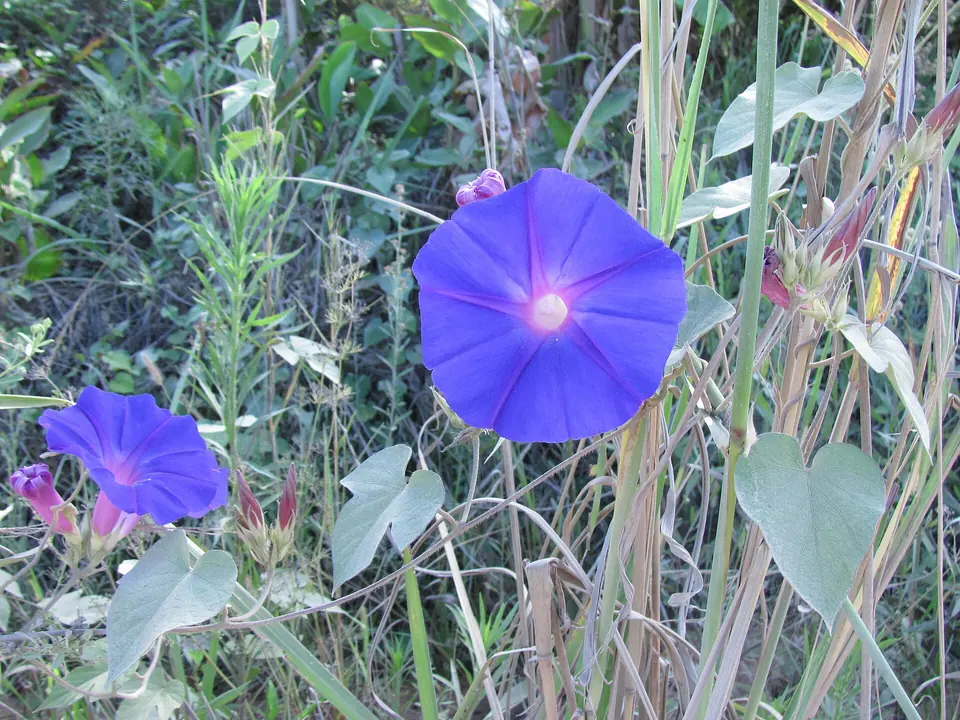
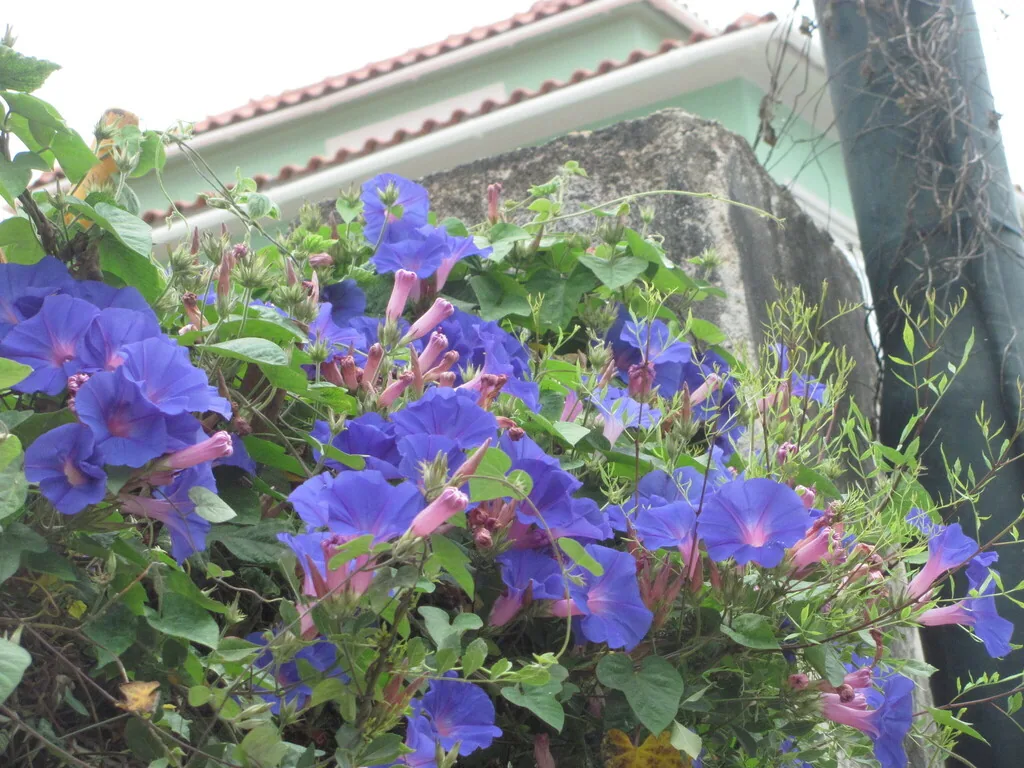
Ipomoea indica is a vigorous perennial twining climber with blue to purple funnel-shaped flowers, reaching up to 15 m [49.2 ft]. [5][1] Widely cultivated as an ornamental, it has naturalised in many coastal areas and is listed as an invasive alien species in Spain. [5][3] It spreads mainly by stems that root at the nodes, so cut stems must be removed from the site. [5]
This record is incomplete: the sources we read do not cover every field yet.
Not yet covered by our sources: Hardiness, coldest zone, Hardiness, warmest zone
Oceanblue Morning Glory care
Measurements in square brackets are our conversion into the other unit system; the quoted text is unchanged.
How to water Oceanblue Morning Glory
Watering
Lots of water
What the sources say (1)
Plant Care and Propagation
| Light Preference
| Full Sun
| Water Preference
| Lots of Water
| Propagation Method
| Stem CuttingWatering notes
Grows best in moist, nutrient-rich soils; tolerates damp to dry conditions; plant in well-drained soil
What the sources say (3)
It tolerates a wide variety of soil types though it grows best in moist nutrient-rich soils. It does not grow in temperatures below 7ºC.This species inhabits wetter tropical, sub-tropical and temperate regions and tolerates hot to cool temperatures, and damp to dry conditions.Nurseries stock perennial morning glories in pots and sell seeds of annuals. Plant in well-drained soil after all danger of frost has passed.How much light Oceanblue Morning Glory needs
Full sun
What the sources say (1)
Plant Care and Propagation
| Light Preference
| Full Sun
| Water Preference
| Lots of WaterHow much cold Oceanblue Morning Glory can take
Hardiness, coldest zone
Not stated in the sources we read.
Hardiness, warmest zone
Not stated in the sources we read.
How to propagate Oceanblue Morning Glory
Stem cuttings; seed or young plants; stems root at nodes in contact with soil
What the sources say (3)
| Water Preference
| Lots of Water
| Propagation Method
| Stem Cutting
## FoliarI. indica blooms in one year from seed, but you can also start with young plants.However, the plant is capable of vegetative propagation by producing new roots from the nodes on stems that contact the soil (Land Protection 2006).How to grow Oceanblue Morning Glory
The plant
Life cycle
perennial
What the sources say (1)
Descripción del hábitat y biología de la especie Planta perenne lianoide. Tallos volubles. Hojas alternas, pecioladasFamily
Convolvulaceae
What the sources say (2)
Orden: Solanales Familia: Convolvulaceae Observaciones taxonómicas Ipomoea indica ha recibido una veintena de nombres científicosFamily: CONVOLVULACEAE Genus: Ipomoea Catalan common name: Campanetes de jardí.Oceanblue Morning Glory pests and problems
Invasive spread
Symptom: Vines smother surrounding vegetation and structures; stem fragments root and form new plants
What to do: Remove stems, crown and roots and dispose of them off-site; mulch heavily to discourage regrowth
What the sources say (1)
Non-chemical control : Purple Morning Glory can be manually removed by pulling up the roots and mulching heavily to discourage regrowth (Land Protection 2006).
— Purple Morning Glory, Blue Morning Glory, Blue Dawnflower, Dunny Creeper, Lear’s Morning Glory, Morning Glory - Weeds Australia [5]
Remedies
Each remedy shows what official sources say about it; traditional remedies without an official source are marked as such. Harmful ones are listed so you know to avoid them.
First aid
First aid: not a substitute for a doctor
ingestion
removing plant pieces from the mouth and rinsing Official source, not independently tested
Call the NSW Poisons Information Centre on 13 11 26 for immediate support. They will give you information about any first aid you need to do and tell you which emergency department to go to.
— schn.health.nsw.gov.au [7] How: Remove plant pieces from the mouth, then rinse with water.
flushing the eyes with clean, running water for 10-15 minutes - removing plant pieces from your child's mouth, then rinsing with water.
— schn.health.nsw.gov.au [7]
Getting rid of it
invasive spread
pulling up roots and heavy mulching Works
care should be taken to remove the stem, crown and roots as it can regrow from them if left in the ground.
— Purple Morning Glory, Blue Morning Glory, Blue Dawnflower, Dunny Creeper, Lear’s Morning Glory, Morning Glory - Weeds Australia [5] How: Pull up the roots and mulch heavily to discourage regrowth, removing the stem, crown and roots; dispose of roots and stems offsite.
Purple Morning Glory can be manually removed by pulling up the roots and mulching heavily to discourage regrowth (Land Protection 2006).
— Purple Morning Glory, Blue Morning Glory, Blue Dawnflower, Dunny Creeper, Lear’s Morning Glory, Morning Glory - Weeds Australia [5] What the evidence says Physical control - Hand-pull roots. - Mulch heavily to prevent regrowth.
— business.qld.gov.au [8] cutting climbing stems and digging out roots Official source, not independently tested
Take care to ensure your own and others safety when trimming or lopping blue morning glory near power lines.
— business.qld.gov.au [8] How: Cut climbing stems and leave them hanging to wither and die, with no cut stems touching the soil; dig out the roots carefully, as they regrow from parts left in the ground.
Climbing stems can be cut and left hanging to wither and die. Make sure no cut stems have contact with the soil. Dig out the roots carefully as they will regrow from parts left in the ground.
— NSW WeedWise [4] disposal of cut plant parts Not verified
Traditional remedy, not verified by an official source.
How: Dispose of all parts (except vines left to die in trees): compost in a composting weed bag or remove to greenwaste or landfill.
Is Oceanblue Morning Glory toxic to pets?
Reported by the source, quoted verbatim. This is not medical or veterinary advice: if a person or an animal may have eaten this plant, contact a poison control centre or a veterinarian.
Animals
Purple morning glory may contain calystegines which are mildly poisonous to horses, cattle, sheep and goats.
[4]- Toxic principle
Purple morning glory may contain calystegines which are mildly poisonous to horses, cattle, sheep and goats.
[4]
People
The seeds are poisonous to humans and can cause nausea and temporary vision problems. However, plants rarely produce seeds in Australia.
[4]- Poisonous parts
The seeds are poisonous to humans and can cause nausea and temporary vision problems. However, plants rarely produce seeds in Australia.
[4]- Symptoms
Purple morning glory is toxic to humans, causing discomfort and irritation but is not life-threatening. The seeds are poisonous if ingested, causing visual distortion, restlessness and nausea.
[5]- Severity
Purple morning glory is toxic to humans, causing discomfort and irritation but is not life-threatening.
[5]
Calendar
Spring, after all danger of frost has passed
What the sources say (1)
No matter which variety you choose, spring is the perfect time to plant. Nurseries stock perennial morning glories in pots and sell seeds of annuals. Plant in well-drained soil after all danger of frost has passed.January (cut back to 3 ft [91 cm])
What each source says
growers near San Diego (Sunset Magazine): January (cut back to 91.4 cm (3 ft))
What the sources say (2)
growers near San Diego (Sunset Magazine): To keep the vines in check, the Loziers prune them to 3 feet tall each January.To keep the vines in check, the Loziers prune them to 3 feet tall each January.Months as given by the sources, which are mostly from the United States (northern hemisphere). In the southern hemisphere they shift by about six months.
Similar plants
- Beach Morning-glory Ipomoea imperati
- Common Morning Glory Ipomoea purpurea
- Cypress Vine Ipomoea quamoclit
- Moonflower Ipomoea alba
- Morning Glory Ipomoea sagittata
- Morning Glory Ipomoea tricolor
- Scarlet Creeper Ipomoea coccinea
- Spanish Flag Ipomoea lobata
Sources
Every value above is quoted from these documents. Links lead to the original publisher.
- NParks | Ipomoea indica · nparks.gov.sg, consulted
- Ipomoea indica (Burm.) Merr. - Herbari Virtual del Mediterrani Occidental · herbarivirtual.uib.cat, consulted
- CATÁLOGO ESPAÑOL DE ESPECIES EXÓTICAS · miteco.gob.es, consulted
- NSW WeedWise · weeds.dpi.nsw.gov.au, consulted
- Purple Morning Glory, Blue Morning Glory, Blue Dawnflower, Dunny Creeper, Lear’s Morning Glory, Morning Glory - Weeds Australia · weeds.org.au, consulted
- How to Use Morning Glory Vines – Sunset Magazine · sunset.com, consulted
- schn.health.nsw.gov.au · schn.health.nsw.gov.au
- business.qld.gov.au · business.qld.gov.au
Written by Emilio Marruso · last checked