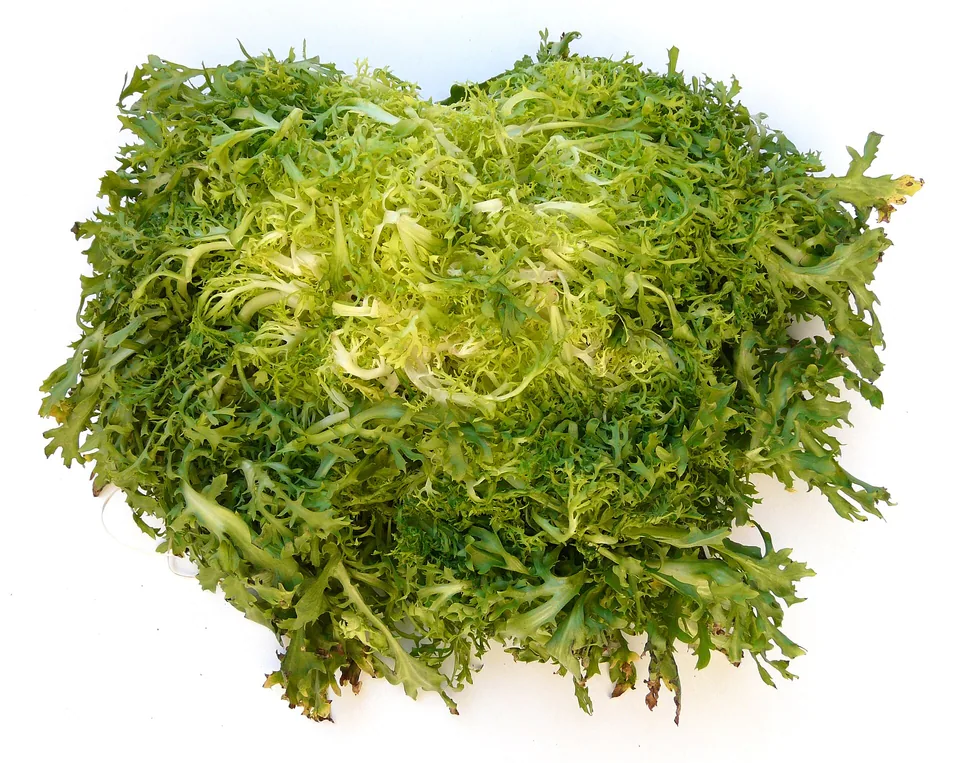


How to Grow and Care for Cultivated endive
Cichorium endivia
Written by Emilio Marruso · last checked
Toxic to: People · Why
At a glance
Endive is an easy, rewarding salad green that grows in full sun or partial shade and tolerates a wide range of soils. Plant it out after the danger of frost has passed, and in 70–100 days you can enjoy its leaves raw or cooked, plus blue flowers for salads. Cover the heads for a few weeks before harvest to soften their bitter bite.
- Sun
Full sun to partial shade
What the sources say (1)
Light: Full sun to partial shade
Light: Full sun (6 or more hours of direct sunlight a day) Partial Shade (Direct sunlight only part of the day, 2-6 hours)
— Cichorium endivia (Batavia, Endive, Escarole, Frisée) | North Carolina Extension Gardener Plant Toolbox [1] - Cold
Survives winters down to −30 °F (−34.4 °C)
Very hardy · USDA 4a · RHS H7 · Z4
What the sources say (2)
Hardiness, coldest zone: 4a [winter low −34.4 to −31.7 °C (−30 to −25 °F)]
4a, 4b, 5a, 5b, 6a, 6b, 7a, 7b, 8a, 8b, 9a, 9b
— Cichorium endivia (Batavia, Endive, Escarole, Frisée) | North Carolina Extension Gardener Plant Toolbox [1] Hardiness, warmest zone: 9b [winter low −3.9 to −1.1 °C (25 to 30 °F)]
4a, 4b, 5a, 5b, 6a, 6b, 7a, 7b, 8a, 8b, 9a, 9b
— Cichorium endivia (Batavia, Endive, Escarole, Frisée) | North Carolina Extension Gardener Plant Toolbox [1] - Soil
Fits most soils, from acidic to alkaline: pH 5.5–8.3
What the sources say (2)
Soil pH, minimum: 5.5
Grow endive after danger of frost in full sun, well-drained pH 5.5-8.3 soil that retains moisture.
— Cichorium endivia (Batavia, Endive, Escarole, Frisée) | North Carolina Extension Gardener Plant Toolbox [1] Soil pH, maximum: 8.3
Grow endive after danger of frost in full sun, well-drained pH 5.5-8.3 soil that retains moisture.
— Cichorium endivia (Batavia, Endive, Escarole, Frisée) | North Carolina Extension Gardener Plant Toolbox [1] - Planting
Plant out after the danger of frost has passed
What the sources say (1)
Planting: After danger of frost
Grow endive after danger of frost in full sun, well-drained pH 5.5-8.3 soil that retains moisture.
— Cichorium endivia (Batavia, Endive, Escarole, Frisée) | North Carolina Extension Gardener Plant Toolbox [1] - Feeding
Give a starter fertilizer solution when you move it into the garden
What the sources say (3)
When: At transplanting into the garden
The seedlings are ready to plant in the garden when they are 2 1/2 to 3 inches high. Use a starter fertilizer solution to establish a fast start and a mature plant before summer heat.
— [3] Mineral fertilizers: Starter fertilizer solution at transplanting
commercial production on organic soils (Florida): Endive, Escarole, and Romaine Lettuce Up to 60 lb N per acre can be applied for crops to be harvested between 15 December and 15 March
— [4] The seedlings are ready to plant in the garden when they are 2 1/2 to 3 inches high. Use a starter fertilizer solution to establish a fast start and a mature plant before summer heat.
— [3] - Harvest
Ready in 70–100 days; eat the leaves raw or cooked, and the blue flowers in salads
What the sources say (1)
Harvest: Growth period of 70-100 days
The growth period of the plant is about 70-100 days.
— Cichorium endivia (Batavia, Endive, Escarole, Frisée) | North Carolina Extension Gardener Plant Toolbox [1] - Watch out
Leaves taste bitter: tie the outer leaves over the head or cover the plant for a few weeks before harvest
- Size
10 in to 2 ft tall and 10 in to 1.5 ft wide
What the sources say (2)
Mature height: 25-61 cm (10 in - 2 ft)
Dimensions: Height: 0 ft. 10 in. - 2 ft. 0 in. Width: 0 ft. 10 in. - 1 ft. 6 in.
— Cichorium endivia (Batavia, Endive, Escarole, Frisée) | North Carolina Extension Gardener Plant Toolbox [1] Mature width: 25-46 cm (10 in - 1 ft 6 in)
Dimensions: Height: 0 ft. 10 in. - 2 ft. 0 in. Width: 0 ft. 10 in. - 1 ft. 6 in.
— Cichorium endivia (Batavia, Endive, Escarole, Frisée) | North Carolina Extension Gardener Plant Toolbox [1] - Propagation
Grows from seed
What the sources say (1)
Propagation: Seed
Life Cycle: Annual Biennial Recommended Propagation Strategy: Seed
— Cichorium endivia (Batavia, Endive, Escarole, Frisée) | North Carolina Extension Gardener Plant Toolbox [1] - Safety
The sap can irritate the skin
Overview
Endive is a bitter-tasting salad green with two forms, curly endive and escarole. [1] It is grown after danger of frost in full sun in well-drained soil that retains moisture. [1] Natural bitterness can be reduced by blanching the plant before harvest. [1]
This record is incomplete: the sources we read do not cover every field yet.
Not yet covered by our sources: Watering, Spacing
Cultivated endive care
How to water Cultivated endive
Under review: our second check questioned this value.
How much light Cultivated endive needs
Full sun to partial shade
What the sources say (1)
Light:
Full sun (6 or more hours of direct sunlight a day)
Partial Shade (Direct sunlight only part of the day, 2-6 hours)How much cold Cultivated endive can take
Hardiness, coldest zone
4a [winter low −34.4 to −31.7 °C (−30 to −25 °F)]
What the sources say (1)
4a, 4b, 5a, 5b, 6a, 6b, 7a, 7b, 8a, 8b, 9a, 9bHardiness, warmest zone
9b [winter low −3.9 to −1.1 °C (25 to 30 °F)]
What the sources say (1)
4a, 4b, 5a, 5b, 6a, 6b, 7a, 7b, 8a, 8b, 9a, 9bBest soil for Cultivated endive
Soil pH, minimum
5.5
What the sources say (1)
Grow endive after danger of frost in full sun, well-drained pH 5.5-8.3 soil that retains moisture.Soil pH, maximum
8.3
What the sources say (1)
Grow endive after danger of frost in full sun, well-drained pH 5.5-8.3 soil that retains moisture.Where to grow Cultivated endive
Not stated in the sources we read.
How to propagate Cultivated endive
Seed
What the sources say (1)
Life Cycle:
Annual
Biennial
Recommended Propagation Strategy:
SeedHow to grow Cultivated endive
The plant
Life cycle
annual, biennial
What the sources say (1)
Genus: Cichorium Species: endivia Family: Asteraceae Life Cycle: Annual Biennial Recommended Propagation Strategy: SeedFamily
Asteraceae
What the sources say (1)
Genus: Cichorium Species: endivia Family: Asteraceae Life Cycle: Annual BiennialMature height
25-61 cm (10 in - 2 ft)
What the sources say (1)
Dimensions: Height: 0 ft. 10 in. - 2 ft. 0 in. Width: 0 ft. 10 in. - 1 ft. 6 in.Mature width
25-46 cm (10 in - 1 ft 6 in)
What the sources say (1)
Dimensions: Height: 0 ft. 10 in. - 2 ft. 0 in. Width: 0 ft. 10 in. - 1 ft. 6 in.Sowing and growth
Days to maturity
70-100 days (growth period)
What the sources say (1)
Grow endive after danger of frost in full sun, well-drained pH 5.5-8.3 soil that retains moisture. The growth period of the plant is about 70-100 days.Fertilizing
When
At transplanting into the garden
What the sources say (1)
The seedlings are ready to plant in the garden when they are 2 1/2 to 3 inches high. Use a starter fertilizer solution to establish a fast start and a mature plant before summer heat.How often
The sources give different values depending on region, zone or growing conditions.
What each source says
commercial production on organic soils (Florida): Reapply nitrogen after 7.62 cm [3 in] of rain or more; up to half the dose (33.6 kg [74 lb] N/ha) after 3.81 to 7.62 cm [1.5–3 in] of rain
What the sources say (1)
commercial production on organic soils (Florida): Nitrogen should be reapplied after rainfall of three inches or more and up to one-half (30 lb N per acre) should be reapplied after 1.5 to 3.0 inches of rainMineral fertilizers
Starter fertilizer solution at transplanting
What each source says
commercial production on organic soils (Florida): Up to 67.3 kg [148.4 lb] N/ha for crops harvested between 15 December and 15 March
What the sources say (2)
commercial production on organic soils (Florida): Endive, Escarole, and Romaine Lettuce Up to 60 lb N per acre can be applied for crops to be harvested between 15 December and 15 MarchThe seedlings are ready to plant in the garden when they are 2 1/2 to 3 inches high. Use a starter fertilizer solution to establish a fast start and a mature plant before summer heat.Micronutrients
The sources give different values depending on region, zone or growing conditions.
What each source says
commercial production on organic soils (Florida): Boron 1.68 kg [3.7 lb]/ha
What the sources say (1)
commercial production on organic soils (Florida): For celery, up to 2.5 lb B per acre should be applied with the preplant fertilizer mix (Sanchez, 1990). For endive, escarole, and romaine, 1.5 lb B per acre should be applied.Cultivated endive pests and problems
Bitterness
Symptom: Natural bitter flavor, caused by chlorophyll production.
What to do: Blanch before harvest by tying the outer leaves over the head in dry conditions or covering each plant with a container to exclude light for several weeks; somewhat self-blanching varieties are available.
What the sources say (2)
The natural bitterness may be reduced by blanching the plant before harvest to slow the production of chlorophyll which causes the bitter flavor.
— Cichorium endivia (Batavia, Endive, Escarole, Frisée) | North Carolina Extension Gardener Plant Toolbox [1] Some ways to blanch include pulling the outer leaves over the head and tie during dry conditions to prevent inner leaf rotting
— Cichorium endivia (Batavia, Endive, Escarole, Frisée) | North Carolina Extension Gardener Plant Toolbox [1] Bolting
Symptom: Both types may bolt and flower with short days and cool weather.
What to do: Not stated in the source.
What the sources say (1)
Endives are more tolerant of high temperatures than lettuce but grow best at temperatures of 60-65 degrees. Both types may bolt and flower with short days and cool weather.
— Cichorium endivia (Batavia, Endive, Escarole, Frisée) | North Carolina Extension Gardener Plant Toolbox [1]
Remedies
Each remedy shows what official sources say about it; traditional remedies without an official source are marked as such. Harmful ones are listed so you know to avoid them.
Treating the plant
slugs
hand-picking slugs at night Works
How: Handpick slugs at night to decrease the population.
handpick slugs at night to decrease population; spread wood ashes or eggshells around plants
— plantvillage.psu.edu [5] What the evidence says Many insect and disease issues can be solved in the home garden by hand-picking insects or clipping and disposing of diseased plant parts.
— extension.unh.edu [6] beer trap Official source, not independently tested
How: Sink shallow dishes filled with beer into the soil to attract and drown the molluscs.
sink shallow dishes filled with beer into the soil to attract and drown the molluscs;
— plantvillage.psu.edu [5] wood ashes or eggshells around plants Official source, not independently tested
How: Spread wood ashes or eggshells around plants.
handpick slugs at night to decrease population; spread wood ashes or eggshells around plants
— plantvillage.psu.edu [5]
aphids
strong jet of water Official source, not independently tested
How: Spray sturdy plants with a strong jet of water to knock aphids from the leaves.
sturdy plants can be sprayed with a strong jet of water to knock aphids from leaves;
— plantvillage.psu.edu [5] insecticidal soap Works
spraying home remedies that contain dish detergent on plants on a sunny day can injure the plant, essentially burning it.
— extension.psu.edu [8] How: Insecticidal soaps or oils such as neem or canola oil are usually the best method of control; check the product label first.
insecticidal soaps or oils such as neem or canola oil are usually the best method of control; always check the labels of the products
— plantvillage.psu.edu [5] What the evidence says insecticidal soap is a safe, effective organic insecticide with minimal environmental impact.
— extension.psu.edu [7] neem oil Partly works
How: Insecticidal soaps or oils such as neem or canola oil are usually the best method of control; check the product label first.
insecticidal soaps or oils such as neem or canola oil are usually the best method of control; always check the labels of the products
— plantvillage.psu.edu [5] What the evidence says Some benefits of neem include low mammalian toxicity and limited persistence in the environment. However, neem oil is not effective against every insect and disease, and often must be frequently reapplied to reach the desired outcome.
— extension.unh.edu [6]
flea beetles
diatomaceous earth Official source, not independently tested
How: Application of diatomaceous earth or oils such as neem oil are effective control methods for organic growers.
application on diamotecoeus earth or oils such as neem oil are effective control methods for organic growers;
— plantvillage.psu.edu [5]
bitterness
blanching Official source, not independently tested
How: Blanch the plant before harvest: pull the outer leaves over the head and tie them during dry conditions to prevent inner leaf rotting, or cover each plant with a container to exclude light for several weeks before harvest.
Some ways to blanch include pulling the outer leaves over the head and tie during dry conditions to prevent inner leaf rotting
— Cichorium endivia (Batavia, Endive, Escarole, Frisée) | North Carolina Extension Gardener Plant Toolbox [1]
Is Cultivated endive poisonous?
Reported by the source, quoted verbatim. This is not medical or veterinary advice: if a person or an animal may have eaten this plant, contact a poison control centre or a veterinarian.
Poison Symptoms: Skin irritation after exposure to sap Poison Toxic Principle: Lactucin and lactucopicrin
[1]
Calendar
Planting
After danger of frost
What the sources say (1)
Grow endive after danger of frost in full sun, well-drained pH 5.5-8.3 soil that retains moisture.Harvest
Growth period of 70-100 days
What the sources say (1)
The growth period of the plant is about 70-100 days.Months as given by the sources, which are mostly from the United States (northern hemisphere). In the southern hemisphere they shift by about six months.
Relative to frost
Less precise estimate: there is no weather station within 300 km.
Find frost dates by ZIP code or city
Plant: around the last frost
Grow endive after danger of frost in full sun, well-drained pH 5.5-8.3 soil that retains moisture.
— Cichorium endivia (Batavia, Endive, Escarole, Frisée) | North Carolina Extension Gardener Plant Toolbox [1]
Count from the average frost dates where you live.
Edibility
Reported by the source, quoted verbatim. Do not eat a plant on the basis of this page alone: identification mistakes can be dangerous.
Similar plants
- Chicory Cichorium intybus
- Cichorium spinosum Cichorium spinosum
- Cichorium pumilum Cichorium pumilum
- Cardoon Cynara cardunculus
- Common Burdock Arctium minus
- Common nipplewort Lapsana communis
- Common sowthistle Sonchus oleraceus
- Crown daisy Glebionis coronaria
Sources
Every value above is quoted from these documents. Links lead to the original publisher.
- Cichorium endivia (Batavia, Endive, Escarole, Frisée) | North Carolina Extension Gardener Plant Toolbox · plants.ces.ncsu.edu, consulted
- Getting to Know Chicory | University of Vermont Extension · uvm.edu, consulted
- uaex.uada.edu · uaex.uada.edu
- edis.ifas.ufl.edu · edis.ifas.ufl.edu
- plantvillage.psu.edu · plantvillage.psu.edu
- extension.unh.edu · extension.unh.edu
- extension.psu.edu · extension.psu.edu
- extension.psu.edu · extension.psu.edu
Written by Emilio Marruso · last checked