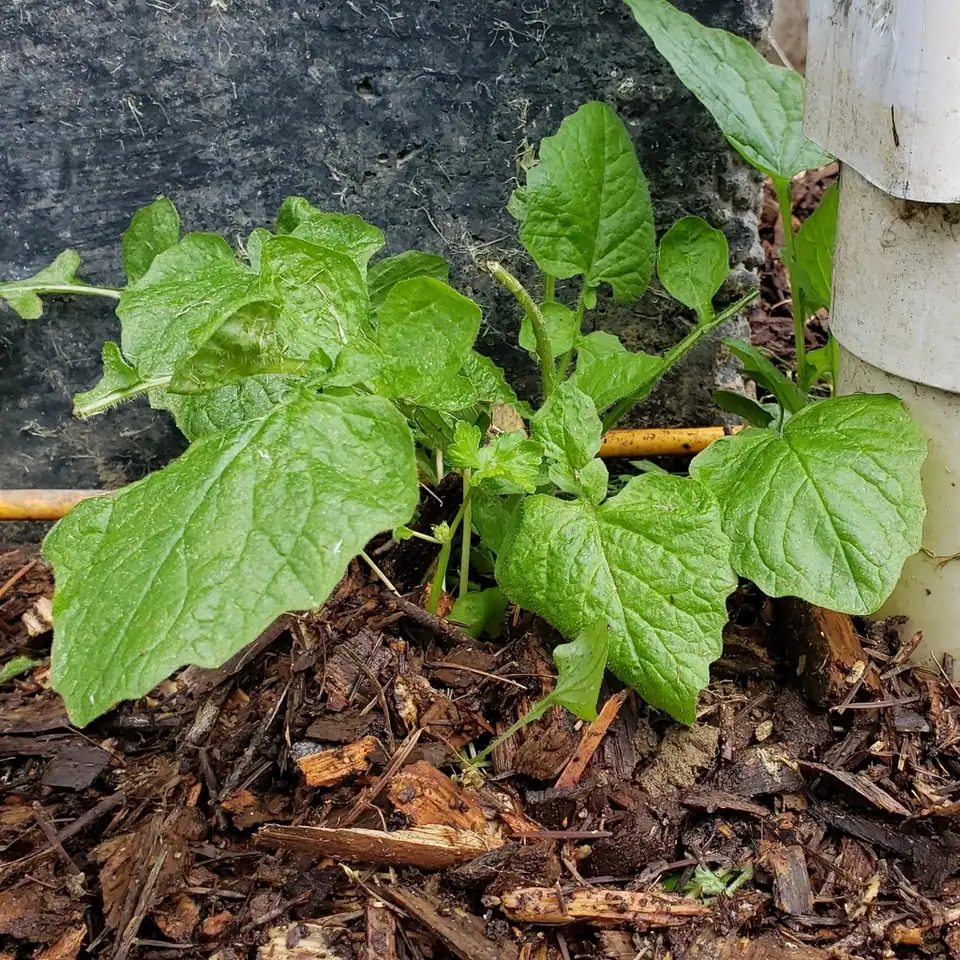
How to Grow and Care for Common nipplewort
Lapsana communis
Written by Emilio Marruso · last checked
At a glance
Nipplewort is an easygoing plant that grows happily in full sun or partial shade. Sow it in spring, or as soon as the seed is ripe, and it will keep coming back by sowing itself. Pick the young leaves before the plant flowers and enjoy them raw or cooked, fresh from your own garden.
- Sun
Full sun to partial shade
What the sources say (1)
Light: Full sun to semi-shade
Waste ground, roadsides and walls, avoiding acid soils, in full sun or semi-shade
— Lapsana communis - Useful Temperate Plants [1] - Harvest
Pick the young leaves before it flowers; eat them raw or cooked
What the sources say (1)
Harvest: Before the plant comes into flower
They are best harvested before the plant comes into flower
— Lapsana communis - Useful Temperate Plants [1] - Propagation
By seed; it sows itself
- Sowing
Sow in spring, or as soon as the seed is ripe
What the sources say (1)
Sowing: Spring, or as soon as the seed is ripe
Seed - sow in situ during the spring or as soon as it is ripe and only just cover the seed.
— Lapsana communis - Useful Temperate Plants [1]
Overview
Nipplewort is a common garden weed that and grows best on loam and clay soils. [2] Its young leaves can be eaten raw or cooked, and it is used as a salad vegetable in Europe. [3] It is raised from seed sown in situ in spring or as soon as the seed is ripe, and self-sows when well sited. [1]
This record is incomplete: the sources we read do not cover every field yet.
Not yet covered by our sources: Hardiness, coldest zone, Hardiness, warmest zone
Common nipplewort care
How much light Common nipplewort needs
Full sun to semi-shade
What the sources say (1)
Waste ground, roadsides and walls, avoiding acid soils, in full sun or semi-shadeHow much cold Common nipplewort can take
Hardiness, coldest zone
Not stated in the sources we read.
Hardiness, warmest zone
Not stated in the sources we read.
How to propagate Common nipplewort
How to grow Common nipplewort
The plant
Family
Asteraceae
What the sources say (1)
Family:
COMPOSITAE (ASTERACEAE)
Genus:
Lapsana
Catalan common name:
Làmpsana.Remedies
Each remedy shows what official sources say about it; traditional remedies without an official source are marked as such. Harmful ones are listed so you know to avoid them.
Getting rid of it
nipplewort
hoeing and cultivation Not verified
Traditional remedy, not verified by an official source.
How: Keep it under control by thorough cultivation and free use of the hoe; prevent seeding.
trimming field margins Not verified
Traditional remedy, not verified by an official source.
How: Trim plants in field margins to prevent seeding.
Calendar
Sowing
Spring, or as soon as the seed is ripe
What the sources say (1)
Seed - sow in situ during the spring or as soon as it is ripe and only just cover the seed.Harvest
Before the plant comes into flower
What the sources say (1)
They are best harvested before the plant comes into flowerMonths as given by the sources, which are mostly from the United States (northern hemisphere). In the southern hemisphere they shift by about six months.
Edibility
Reported by the source, quoted verbatim. Do not eat a plant on the basis of this page alone: identification mistakes can be dangerous.
Similar plants
- American Burnweed Erechtites hieraciifolius
- Autumn Goldenrod Solidago sphacelata
- Blue Wood Aster Symphyotrichum cordifolium
- Bull Thistle Cirsium vulgare
- Bur Marigold Bidens laevis
- Canary Island Marguerite Argyranthemum foeniculaceum
- Cape Marigold Dimorphotheca sinuata
- Cardoon Cynara cardunculus
Sources
Every value above is quoted from these documents. Links lead to the original publisher.
- Lapsana communis - Useful Temperate Plants · temperate.theferns.info, consulted
- Garden Organic | Nipplewort · gardenorganic.org.uk, consulted
- · naturblick.museumfuernaturkunde.berlin, consulted
- Lapsana communis (common nipplewort): Go Botany · gobotany.nativeplanttrust.org, consulted
- Last Updated: 2011-03-10 by Timm Nawrocki · accs.uaa.alaska.edu, consulted
- Lapsana communis L. subsp. communis - Herbari Virtual del Mediterrani Occidental · herbarivirtual.uib.cat, consulted
Written by Emilio Marruso · last checked