
How to Grow and Care for Canary Island Marguerite
Argyranthemum foeniculaceum
Written by Emilio Marruso · last checked
Toxic to: Cats, Dogs, Horses · Why
At a glance
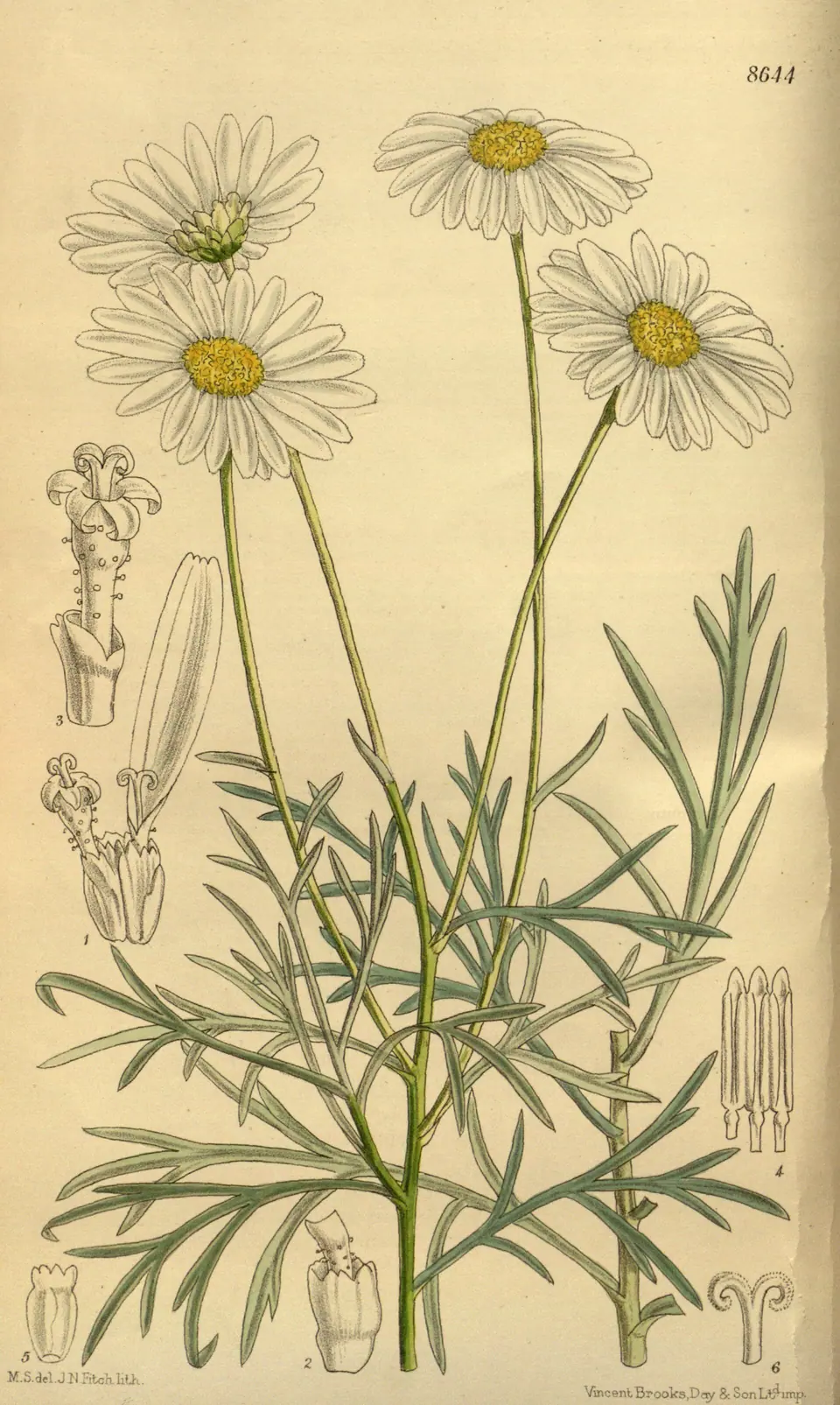
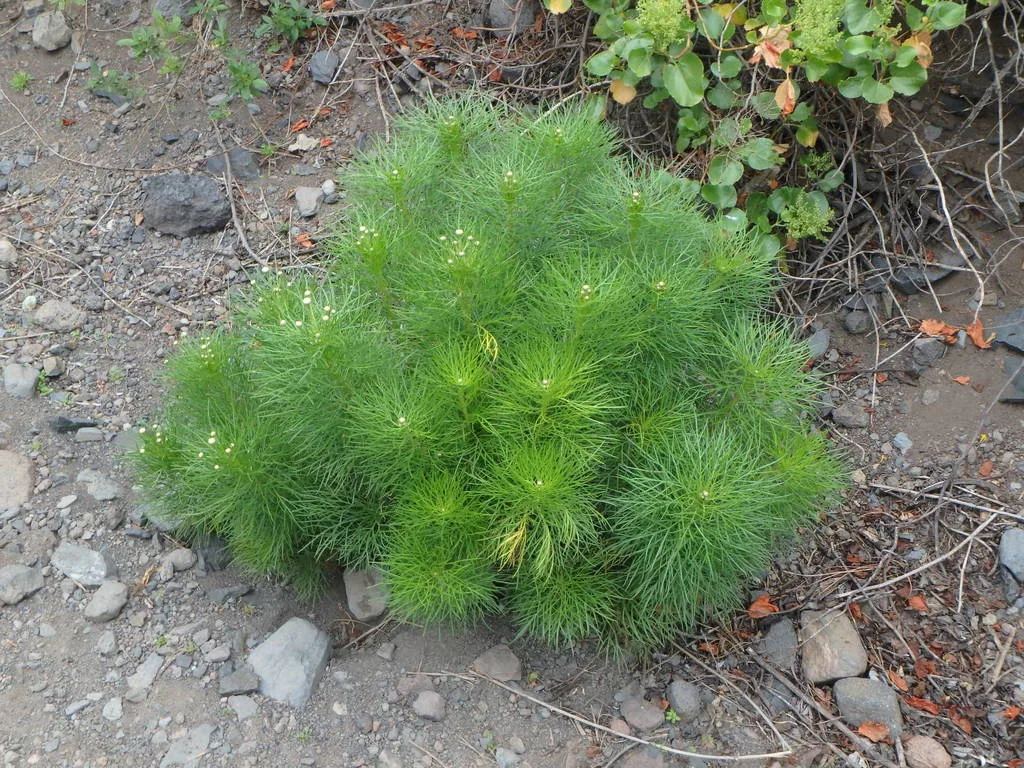
This cheerful plant from the daisy family loves full sun and shrugs off dry spells, so it is an easy pick for beginners. It grows into a tidy mound 2–3 ft tall and wide, and it is just as happy in a container as in the garden. Give it soil that drains well, and it will reward you season after season.
- Sun
Full sun
What the sources say (1)
Light: Full sun
Light: Full sun (6 or more hours of direct sunlight a day)
— Argyranthemum foeniculaceum (Canary Island Marguerite, Dill Daisy, Lance-Leaf Marguerite, Lance-Leaf Marguerite Daisy, Marguerite, Paris Daisy, Summer Daisy, Tenerife Daisy, White Marguerite) | North Carolina Extension Gardener Plant Toolbox [1] - Water
Handles drought; fine in dry or moist spots, but struggles in high humidity
What the sources say (2)
Watering: Drought tolerant; suitable for both dry and moist locations, declines in high humidity
It is suitable for both dry and moist locations, however, it will decline when high humidity is present.
— Argyranthemum foeniculaceum (Canary Island Marguerite, Dill Daisy, Lance-Leaf Marguerite, Lance-Leaf Marguerite Daisy, Marguerite, Paris Daisy, Summer Daisy, Tenerife Daisy, White Marguerite) | North Carolina Extension Gardener Plant Toolbox [1] This drought-tolerant plant cannot grow in shade, full sun is ideal.
— Argyranthemum foeniculaceum (Canary Island Marguerite, Dill Daisy, Lance-Leaf Marguerite, Lance-Leaf Marguerite Daisy, Marguerite, Paris Daisy, Summer Daisy, Tenerife Daisy, White Marguerite) | North Carolina Extension Gardener Plant Toolbox [1] - Cold
Survives winters down to 10 °F (−12.2 °C)
Hardy in cold winters · USDA 8a · RHS H5 · Z8
What the sources say (2)
Hardiness, coldest zone: 8a [winter low −12.2 to −9.4 °C (10 to 15 °F)]
USDA Plant Hardiness Zone: 8a, 8b, 9a, 9b, 10a, 10b, 11a, 11b
— Argyranthemum foeniculaceum (Canary Island Marguerite, Dill Daisy, Lance-Leaf Marguerite, Lance-Leaf Marguerite Daisy, Marguerite, Paris Daisy, Summer Daisy, Tenerife Daisy, White Marguerite) | North Carolina Extension Gardener Plant Toolbox [1] Hardiness, warmest zone: 11b [winter low 7.2 to 10 °C (45 to 50 °F)]
USDA Plant Hardiness Zone: 8a, 8b, 9a, 9b, 10a, 10b, 11a, 11b
— Argyranthemum foeniculaceum (Canary Island Marguerite, Dill Daisy, Lance-Leaf Marguerite, Lance-Leaf Marguerite Daisy, Marguerite, Paris Daisy, Summer Daisy, Tenerife Daisy, White Marguerite) | North Carolina Extension Gardener Plant Toolbox [1] - Soil
Needs soil that drains well: soggy soil brings fungal problems
What the sources say (1)
Watering notes: Poor drainage may lead to fungal problems
Aphids and leaf-mining sawflies are common insects. Poor drainage may lead to fungal problems.
— Argyranthemum foeniculaceum (Canary Island Marguerite, Dill Daisy, Lance-Leaf Marguerite, Lance-Leaf Marguerite Daisy, Marguerite, Paris Daisy, Summer Daisy, Tenerife Daisy, White Marguerite) | North Carolina Extension Gardener Plant Toolbox [1] - Pruning
Prune once all flowering is over
What the sources say (1)
Pruning: After all flowering has completed
This plant can be reshaped by pruning after all flowering has completed.
— Argyranthemum foeniculaceum (Canary Island Marguerite, Dill Daisy, Lance-Leaf Marguerite, Lance-Leaf Marguerite Daisy, Marguerite, Paris Daisy, Summer Daisy, Tenerife Daisy, White Marguerite) | North Carolina Extension Gardener Plant Toolbox [1] - Harvest
The leaves are edible
- Pests
Watch for aphids and leaf-mining sawflies
What the sources say (1)
Pests: aphids, leaf-mining sawflies
Aphids and leaf-mining sawflies are common insects. Poor drainage may lead to fungal problems.
— Argyranthemum foeniculaceum (Canary Island Marguerite, Dill Daisy, Lance-Leaf Marguerite, Lance-Leaf Marguerite Daisy, Marguerite, Paris Daisy, Summer Daisy, Tenerife Daisy, White Marguerite) | North Carolina Extension Gardener Plant Toolbox [1] - Size
2–3 ft tall and 2–3 ft wide
What the sources say (2)
Mature height: 60.96-91.44 cm (2-3 ft)
Dimensions: Height: 2 ft. 0 in. - 3 ft. 0 in. Width: 2 ft. 0 in. - 3 ft. 0 in.
— Argyranthemum foeniculaceum (Canary Island Marguerite, Dill Daisy, Lance-Leaf Marguerite, Lance-Leaf Marguerite Daisy, Marguerite, Paris Daisy, Summer Daisy, Tenerife Daisy, White Marguerite) | North Carolina Extension Gardener Plant Toolbox [1] Mature width: 60.96-91.44 cm (2-3 ft)
Dimensions: Height: 2 ft. 0 in. - 3 ft. 0 in. Width: 2 ft. 0 in. - 3 ft. 0 in.
— Argyranthemum foeniculaceum (Canary Island Marguerite, Dill Daisy, Lance-Leaf Marguerite, Lance-Leaf Marguerite Daisy, Marguerite, Paris Daisy, Summer Daisy, Tenerife Daisy, White Marguerite) | North Carolina Extension Gardener Plant Toolbox [1] - Propagation
Grow new plants from seed or stem cuttings
What the sources say (1)
Propagation: Seed, stem cutting
Recommended Propagation Strategy: Seed Stem Cutting Country Or Region Of Origin:
— Argyranthemum foeniculaceum (Canary Island Marguerite, Dill Daisy, Lance-Leaf Marguerite, Lance-Leaf Marguerite Daisy, Marguerite, Paris Daisy, Summer Daisy, Tenerife Daisy, White Marguerite) | North Carolina Extension Gardener Plant Toolbox [1] - Containers
Grows in containers too
What the sources say (1)
In containers: Yes
Landscape Location: Container Patio Slope/Bank Walkways Landscape Theme:
— Argyranthemum foeniculaceum (Canary Island Marguerite, Dill Daisy, Lance-Leaf Marguerite, Lance-Leaf Marguerite Daisy, Marguerite, Paris Daisy, Summer Daisy, Tenerife Daisy, White Marguerite) | North Carolina Extension Gardener Plant Toolbox [1] - Safety
Harmful to cats, dogs and horses: keep pets away from it
Overview
Argyranthemum foeniculaceum is a bushy, daisy-like plant that is an evergreen perennial in its native range and can be grown as an annual elsewhere. [1] It is drought tolerant, needs full sun and declines in high humidity or poor drainage. [1] In some places it has been declared an environmental weed. [1]
Canary Island Marguerite care
How to water Canary Island Marguerite
Watering
Drought tolerant; suitable for both dry and moist locations, declines in high humidity
What the sources say (2)
It is suitable for both dry and moist locations, however, it will decline when high humidity is present.This drought-tolerant plant cannot grow in shade, full sun is ideal.Watering notes
Poor drainage may lead to fungal problems
What the sources say (1)
Aphids and leaf-mining sawflies are common insects.
Poor drainage may lead to fungal problems.How much light Canary Island Marguerite needs
Full sun
What the sources say (1)
Light:
Full sun (6 or more hours of direct sunlight a day)How much cold Canary Island Marguerite can take
Hardiness, coldest zone
8a [winter low −12.2 to −9.4 °C (10 to 15 °F)]
What the sources say (1)
USDA Plant Hardiness Zone:
8a, 8b, 9a, 9b, 10a, 10b, 11a, 11bHardiness, warmest zone
11b [winter low 7.2 to 10 °C (45 to 50 °F)]
What the sources say (1)
USDA Plant Hardiness Zone:
8a, 8b, 9a, 9b, 10a, 10b, 11a, 11bWhere to grow Canary Island Marguerite
Yes
What the sources say (1)
Landscape Location:
Container
Patio
Slope/Bank
Walkways
Landscape Theme:How to propagate Canary Island Marguerite
Seed, stem cutting
What the sources say (1)
Recommended Propagation Strategy:
Seed
Stem Cutting
Country Or Region Of Origin:How to grow Canary Island Marguerite
The plant
Life cycle
perennial in its native habitat; can be grown as an annual in other locations
What the sources say (1)
grown as an evergreen herbaceous perennial in its native habitat, which includes North Africa and the Canary Islands, primarily on dry cliffs in rock crevices. In other locations, it can be grown as an annual.Family
Asteraceae
What the sources say (1)
Attributes:
Genus:
Argyranthemum
Species:
foeniculaceum
Family:
Asteraceae
Life Cycle:
AnnualMature height
60.96-91.44 cm (2-3 ft)
What the sources say (1)
Dimensions:
Height: 2 ft. 0 in. - 3 ft. 0 in.
Width: 2 ft. 0 in. - 3 ft. 0 in.Mature width
60.96-91.44 cm (2-3 ft)
What the sources say (1)
Dimensions:
Height: 2 ft. 0 in. - 3 ft. 0 in.
Width: 2 ft. 0 in. - 3 ft. 0 in.Pests and diseases
Pests
aphids, leaf-mining sawflies
What the sources say (1)
Aphids and leaf-mining sawflies are common insects.
Poor drainage may lead to fungal problems.Canary Island Marguerite pests and problems
Aphids and leaf-mining sawflies
Symptom: Common insect pests on the plant.
What to do: No management given.
What the sources say (1)
Aphids and leaf-mining sawflies are common insects. Poor drainage may lead to fungal problems.
— Argyranthemum foeniculaceum (Canary Island Marguerite, Dill Daisy, Lance-Leaf Marguerite, Lance-Leaf Marguerite Daisy, Marguerite, Paris Daisy, Summer Daisy, Tenerife Daisy, White Marguerite) | North Carolina Extension Gardener Plant Toolbox [1] Fungal problems from poor drainage
Symptom: Fungal problems.
What to do: Avoid poor drainage.
What the sources say (1)
Aphids and leaf-mining sawflies are common insects. Poor drainage may lead to fungal problems.
— Argyranthemum foeniculaceum (Canary Island Marguerite, Dill Daisy, Lance-Leaf Marguerite, Lance-Leaf Marguerite Daisy, Marguerite, Paris Daisy, Summer Daisy, Tenerife Daisy, White Marguerite) | North Carolina Extension Gardener Plant Toolbox [1]
Remedies
Each remedy shows what official sources say about it; traditional remedies without an official source are marked as such. Harmful ones are listed so you know to avoid them.
Treating the plant
aphids
strong water spray Works
How: A strong blast of water knocks aphids from the plant and rinses off the honeydew; do it early in the day to allow leaves to dry.
Water spray: A strong blast of water knocks aphids from the plant, and most will not return. Water also helps rinse off the honeydew. Do this early in the day to allow leaves to dry and minimize fungal diseases.
— depts.washington.edu [5] What the evidence says A strong blast of water knocks aphids from the plant, and most will not return.
— depts.washington.edu [5] insecticidal soap Official source, not independently tested
Although readily biodegradable, soaps are highly toxic to fish, so avoid runoff or direct application to water.
— depts.washington.edu [5] How: Soap works only by direct contact with the insects; cover both sides of the leaves and repeat within a few days if necessary.
Insecticidal soap is widely recognized as the least-toxic chemical aphid control. Although its effect is temporary, it can help to bring aphid numbers down so that natural enemies can take care of them.
— depts.washington.edu [5] prune out infested shoots into soapy water Official source, not independently tested
How: Where aphids are localized on a few curled leaves or new shoots, prune these areas out and drop them in soapy water.
Where high aphid populations are localized on a few curled leaves or new shoots, prune these areas out and drop in soapy water to kill the aphids.
— depts.washington.edu [5]
Is Canary Island Marguerite toxic to pets?
Reported by the source, quoted verbatim. This is not medical or veterinary advice: if a person or an animal may have eaten this plant, contact a poison control centre or a veterinarian.
#problem for dogs #problem for horses #problem for cats
[1]The source flags the risk for this animal but does not explain why.
Calendar
Pruning
After all flowering has completed
What the sources say (1)
This plant can be reshaped by pruning after all flowering has completed.Months as given by the sources, which are mostly from the United States (northern hemisphere). In the southern hemisphere they shift by about six months.
Edibility
Reported by the source, quoted verbatim. Do not eat a plant on the basis of this page alone: identification mistakes can be dangerous.
Edibility: The leaves are edible. Dimensions: Height: 2 ft.
[1]
Similar plants
- Paris daisy Argyranthemum frutescens
- African Daisy Dimorphotheca pluvialis
- African Marigold Tagetes erecta
- Ageratum Ageratum houstonianum
- Alpine aster Aster alpinus
- American Burnweed Erechtites hieraciifolius
- Appalachian Blazing Star Liatris squarrulosa
- Appalachian Ironweed Vernonia glauca
Sources
Every value above is quoted from these documents. Links lead to the original publisher.
- Argyranthemum foeniculaceum (Canary Island Marguerite, Dill Daisy, Lance-Leaf Marguerite, Lance-Leaf Marguerite Daisy, Marguerite, Paris Daisy, Summer Daisy, Tenerife Daisy, White Marguerite) | North Carolina Extension Gardener Plant Toolbox · plants.ces.ncsu.edu, consulted
- White Marguerite - Argyranthemum foeniculaceum | North Carolina Extension Gardener Plant Toolbox · plants.ces.ncsu.edu, consulted
- Canary Island Marguerite - Argyranthemum foeniculaceum | North Carolina Extension Gardener Plant Toolbox · plants.ces.ncsu.edu, consulted
- Find a Plant | North Carolina Extension Gardener Plant Toolbox · plants.ces.ncsu.edu, consulted
- depts.washington.edu · depts.washington.edu
Written by Emilio Marruso · last checked