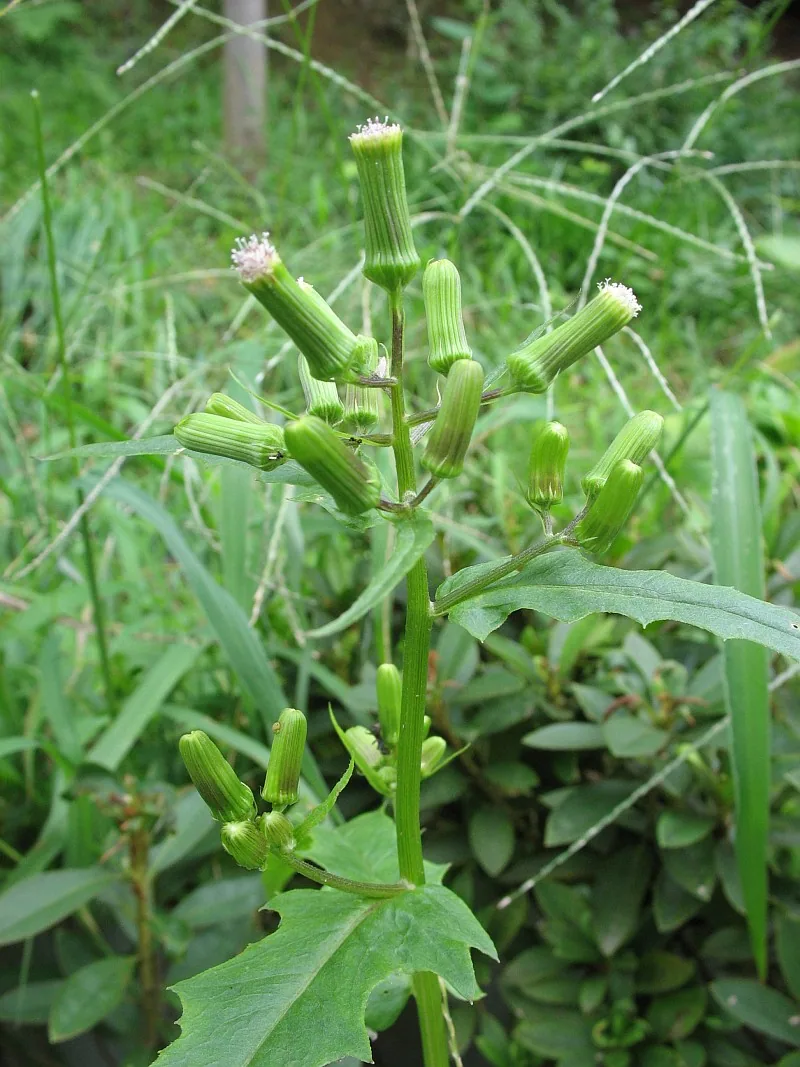
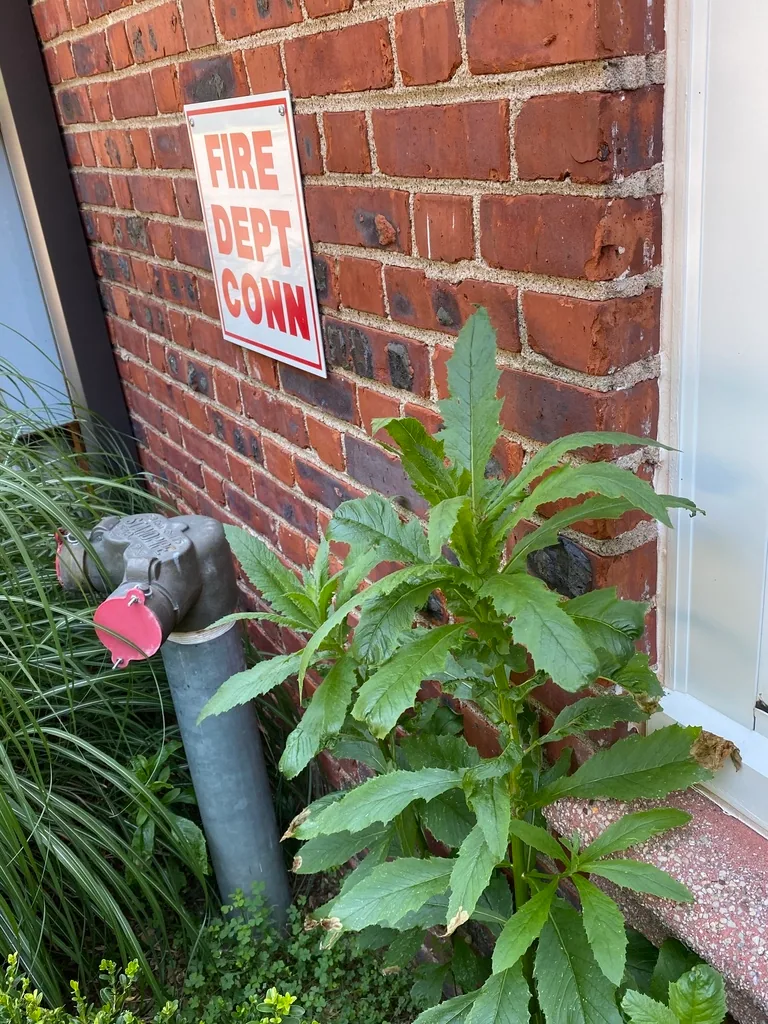

How to Grow and Care for American Burnweed
Erechtites hieraciifolius
Written by Emilio Marruso · last checked
At a glance
This fast-growing annual loves full sun and grows from seed. Its leaves are edible, and the whole plant can be eaten raw or cooked, though its flavor is intense and even deer seem to skip it. Just keep it in check: pull plants before they drop their seeds, since the shallow roots come out easily by hand.
- Sun
Full sun
What the sources say (1)
Light: Full sun
Full sun (6 or more hours of direct sunlight a day)
— Erechtites hieraciifolius (American Burnweed, Butterweed, Eastern Burnweed, Fireweed, Pilewort, White Fireweed) | North Carolina Extension Gardener Plant Toolbox [1] - Harvest
Leaves and whole plant are edible raw or cooked, with an intense flavor
- Pests
Hosts the tarnished plant bug, which misshapes fruit and kills blossoms on vegetables
- Watch out
Spreads like a weed: pull it before it seeds; a 3-inch layer of mulch keeps it away
- Propagation
Grows from seed
What the sources say (1)
Propagation: Seed
Recommended Propagation Strategy: Seed Country Or Region Of Origin:
— Erechtites hieraciifolius (American Burnweed, Butterweed, Eastern Burnweed, Fireweed, Pilewort, White Fireweed) | North Carolina Extension Gardener Plant Toolbox [1]
Overview
American burnweed is a fast-growing native annual weed of disturbed sites, reaching 8 to 10 feet [2.4–3 m] tall. [2][1] It is easily controlled by hand pulling before it sets seed. [4]
This record is incomplete: the sources we read do not cover every field yet.
Not yet covered by our sources: Hardiness, coldest zone, Hardiness, warmest zone
American Burnweed care
Measurements in square brackets are our conversion into the other unit system; the quoted text is unchanged.
How much light American Burnweed needs
Full sun
What the sources say (1)
Full sun (6 or more hours of direct sunlight a day)How much cold American Burnweed can take
Hardiness, coldest zone
Not stated in the sources we read.
Hardiness, warmest zone
Not stated in the sources we read.
How to propagate American Burnweed
Seed
What the sources say (1)
Recommended Propagation Strategy:
Seed
Country Or Region Of Origin:How to grow American Burnweed
The plant
Life cycle
annual
What the sources say (2)
This fast-growing annual has seeds that can withstand harsh conditions and then germinate when conditions are favorable.American burnweed ( Erechtites hieraciifolius) is an annual summer weed.Family
Asteraceae
What the sources say (1)
A daisy (Asteraceae) family member, American burnweed ( Erechtites hieraciifolius ), also known as eastern burnweed, pilewort, and fireweed, is native to North America.American Burnweed pests and problems
Weedy spread
Symptom: Fast-growing clumps of multiple stems appear in landscape beds and gardens; thousands of seeds enter the seed bank.
What to do: Hand removal is possible because the roots are fibrous and shallow; a 3-inch layer of medium to coarse mulch discourages it; remove plants before they release seeds.
What the sources say (2)
Hand removal of this weed is possible because the roots are fibrous and shallow attached to a short taproot.
— Erechtites hieraciifolius (American Burnweed, Butterweed, Eastern Burnweed, Fireweed, Pilewort, White Fireweed) | North Carolina Extension Gardener Plant Toolbox [1] American burnweed is easily hand pulled and can be discouraged in the landscape by applying a 3-inch layer of medium to coarse mulch.
— Weed of the Month- American Burnweed | Home & Garden Information Center [5] Tarnished plant bug host
Symptom: The plant hosts the tarnished plant bug, which can cause misshapen fruit and aborted blossoms on small fruits and vegetables.
What to do: Remove the weed from beds and vegetable gardens.
What the sources say (1)
However, the plant is also a host for the tarnished plant bug, a piecing-sucking insect that can damage small fruits and vegetables
— Weed of the Month- American Burnweed | Home & Garden Information Center [5]
Remedies
Each remedy shows what official sources say about it; traditional remedies without an official source are marked as such. Harmful ones are listed so you know to avoid them.
Getting rid of it
weedy spread
hand pulling Works
the sap can be sticky; sensitive individuals should wear gloves when pulling large amounts.
— plantiary.com [6] How: Hand removal is possible because the roots are fibrous and shallow, attached to a short taproot; remove the plants before they release their seeds.
Hand removal of this weed is possible because the roots are fibrous and shallow attached to a short taproot.
— Erechtites hieraciifolius (American Burnweed, Butterweed, Eastern Burnweed, Fireweed, Pilewort, White Fireweed) | North Carolina Extension Gardener Plant Toolbox [1] What the evidence says American burnweed is easily hand pulled and can be discouraged in the landscape by applying a 3-inch layer of medium to coarse mulch.
— Weed of the Month- American Burnweed | Home & Garden Information Center [5] hoeing Partly works
How: Hoeing or cultivation works on small populations.
Hoeing or cultivation also works on small populations.
— Erechtites hieraciifolius (American Burnweed, Butterweed, Eastern Burnweed, Fireweed, Pilewort, White Fireweed) | North Carolina Extension Gardener Plant Toolbox [1] What the evidence says Hoeing or cultivation also works on small populations.
— Erechtites hieraciifolius (American Burnweed, Butterweed, Eastern Burnweed, Fireweed, Pilewort, White Fireweed) | North Carolina Extension Gardener Plant Toolbox [1] mulch layer Partly works
How: Apply a 3-inch layer of medium to coarse mulch.
American burnweed is easily hand pulled and can be discouraged in the landscape by applying a 3-inch layer of medium to coarse mulch.
— Weed of the Month- American Burnweed | Home & Garden Information Center [5] What the evidence says American burnweed is easily hand pulled and can be discouraged in the landscape by applying a 3-inch layer of medium to coarse mulch.
— Weed of the Month- American Burnweed | Home & Garden Information Center [5]
Edibility
Reported by the source, quoted verbatim. Do not eat a plant on the basis of this page alone: identification mistakes can be dangerous.
Similar plants
- Autumn Goldenrod Solidago sphacelata
- Blue Wood Aster Symphyotrichum cordifolium
- Bull Thistle Cirsium vulgare
- Bur Marigold Bidens laevis
- Canary Island Marguerite Argyranthemum foeniculaceum
- Cape Marigold Dimorphotheca sinuata
- Cardoon Cynara cardunculus
- Chicory Cichorium intybus
Sources
Every value above is quoted from these documents. Links lead to the original publisher.
- Erechtites hieraciifolius (American Burnweed, Butterweed, Eastern Burnweed, Fireweed, Pilewort, White Fireweed) | North Carolina Extension Gardener Plant Toolbox · plants.ces.ncsu.edu, consulted
- American Burnweed, Erechtites hieraciifolius · extension.psu.edu, consulted
- Burnweed - Cooperative Extension: Maine Wild Blueberries - University of Maine Cooperative Extension · extension.umaine.edu, consulted
- Erechtites hieraciifolius: American Burnweed · uaex.uada.edu, consulted
- Weed of the Month- American Burnweed | Home & Garden Information Center · hgic.clemson.edu, consulted
- plantiary.com · plantiary.com
Written by Emilio Marruso · last checked