

How to Grow and Care for Cape Marigold
Dimorphotheca sinuata
Written by Emilio Marruso · last checked
At a glance
This little annual is made for sunny, carefree spots: give it full sun, at least 6 hours a day, and light, sandy soil that drains well. Once settled, it shrugs off dry spells, stays 4 to 12 inches tall and even grows in containers. Work some compost into the bed before sowing, and it will happily reseed itself.
- Sun
Full sun: 6 or more hours a day
What the sources say (1)
Light: Full sun (6 or more hours of direct sunlight a day)
Light: Full sun (6 or more hours of direct sunlight a day)
— Dimorphotheca sinuata (African Daisy, Cape Marigold, Glandular Cape Marigold, Namaqualand Daisy) | North Carolina Extension Gardener Plant Toolbox [1] - Water
Handles dry spells once it is settled in
What the sources say (1)
Watering: Drought-tolerant once established
Prefers full sun and needs well-drained, sandy soils. Once it is established, it is drought-tolerant.
— Dimorphotheca sinuata (African Daisy, Cape Marigold, Glandular Cape Marigold, Namaqualand Daisy) | North Carolina Extension Gardener Plant Toolbox [1] - Cold
Survives winters down to −50 °F (−45.6 °C)
Very hardy · USDA 2a · RHS H7 · Z2
What the sources say (2)
Hardiness, coldest zone: 2a [winter low −45.6 to −42.8 °C (−50 to −45 °F)]
USDA Plant Hardiness Zone: 2a, 2b, 3a, 3b, 4a, 4b, 5a, 5b, 6a, 6b, 7a, 7b, 8a, 8b, 9a, 9b, 10a, 10b, 11a, 11b
— Dimorphotheca sinuata (African Daisy, Cape Marigold, Glandular Cape Marigold, Namaqualand Daisy) | North Carolina Extension Gardener Plant Toolbox [1] Hardiness, warmest zone: 11b [winter low 7.2 to 10 °C (45 to 50 °F)]
USDA Plant Hardiness Zone: 2a, 2b, 3a, 3b, 4a, 4b, 5a, 5b, 6a, 6b, 7a, 7b, 8a, 8b, 9a, 9b, 10a, 10b, 11a, 11b
— Dimorphotheca sinuata (African Daisy, Cape Marigold, Glandular Cape Marigold, Namaqualand Daisy) | North Carolina Extension Gardener Plant Toolbox [1] - Soil
Sandy soil that drains well
What the sources say (1)
Watering notes: Needs well-drained, sandy soils
Prefers full sun and needs well-drained, sandy soils.
— Dimorphotheca sinuata (African Daisy, Cape Marigold, Glandular Cape Marigold, Namaqualand Daisy) | North Carolina Extension Gardener Plant Toolbox [1] - Feeding
Mix compost into the bed before sowing
What the sources say (1)
Natural fertilizers: Compost worked into the beds before sowing
For best results, prepare the beds with compost and remove clods and stones to make a fine bed. They also grow very well in poor, sandy soils.
— [2] - Watch out
Reseeds and spreads on its own; in some places it is considered a weed or invasive
What the sources say (1)
Propagation: Seed (reseeds and colonizes)
Propagated by seeds and will reseed and colonize, thus producing a colorful display year after year.
— Dimorphotheca sinuata (African Daisy, Cape Marigold, Glandular Cape Marigold, Namaqualand Daisy) | North Carolina Extension Gardener Plant Toolbox [1] - Size
4 to 12 inches tall
What the sources say (1)
Mature height: 10-30 cm (4-12 in)
The cape marigold measures 4 to 12 inches tall, with an upright, sprawling habit, reddish stems, light green foliage,
— Dimorphotheca sinuata (African Daisy, Cape Marigold, Glandular Cape Marigold, Namaqualand Daisy) | North Carolina Extension Gardener Plant Toolbox [1] - Propagation
A yearly plant grown from seed; it often reseeds itself
What the sources say (2)
Propagation: Seed (reseeds and colonizes)
Propagated by seeds and will reseed and colonize, thus producing a colorful display year after year.
— Dimorphotheca sinuata (African Daisy, Cape Marigold, Glandular Cape Marigold, Namaqualand Daisy) | North Carolina Extension Gardener Plant Toolbox [1] Life cycle: annual
Family: Asteraceae Uses (Ethnobotany): No known medical uses. Life Cycle: Annual Recommended Propagation Strategy: Seed
— Dimorphotheca sinuata (African Daisy, Cape Marigold, Glandular Cape Marigold, Namaqualand Daisy) | North Carolina Extension Gardener Plant Toolbox [1] - Containers
Grows in containers too
What the sources say (1)
In containers: Yes
#drought tolerant garden #pollinator garden #colonizing #patio #container plant #green leaves
— Dimorphotheca sinuata (African Daisy, Cape Marigold, Glandular Cape Marigold, Namaqualand Daisy) | North Carolina Extension Gardener Plant Toolbox [1]
Overview
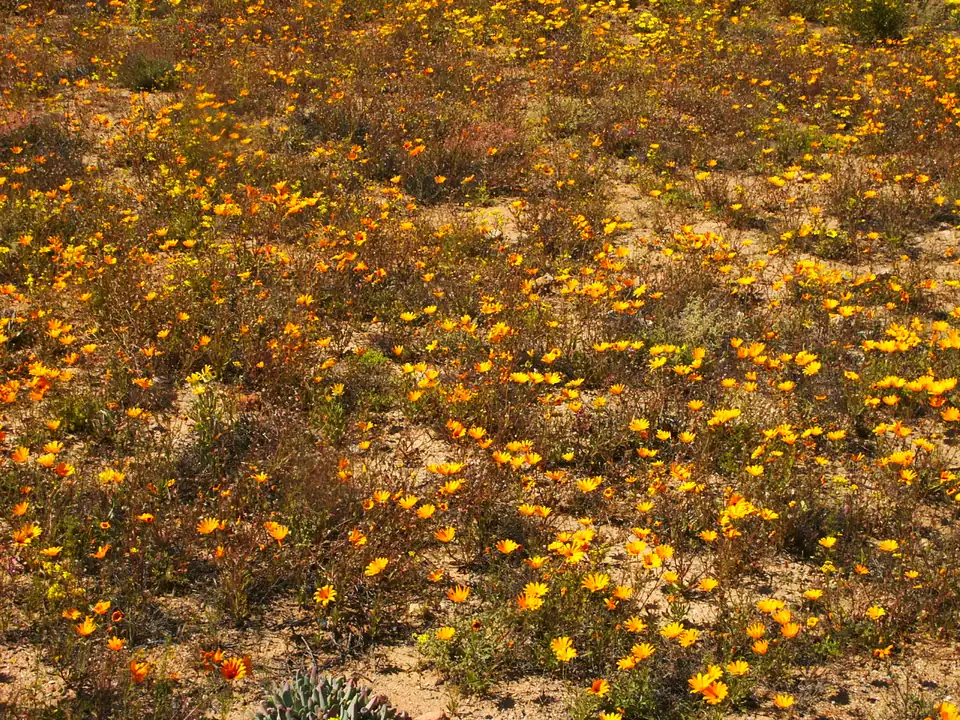
Cape marigold is an ornamental, daisy-like annual from South Africa with orange or yellow flowers. [1] It prefers full sun and well-drained, sandy soils, and is drought-tolerant once established. [1] It is considered a weed in California and Australia and is listed as invasive in the Dominican Republic. [1]
This record is incomplete: the sources we read do not cover every field yet.
Not yet covered by our sources: Pruning
Cape Marigold care
How to water Cape Marigold
Watering
Drought-tolerant once established
What the sources say (1)
Prefers full sun and needs well-drained, sandy soils. Once it is established, it is drought-tolerant.Watering notes
Needs well-drained, sandy soils
What the sources say (1)
Prefers full sun and needs well-drained, sandy soils.How much light Cape Marigold needs
Full sun (6 or more hours of direct sunlight a day)
What the sources say (1)
Light:
Full sun (6 or more hours of direct sunlight a day)How much cold Cape Marigold can take
Hardiness, coldest zone
2a [winter low −45.6 to −42.8 °C (−50 to −45 °F)]
What the sources say (1)
USDA Plant Hardiness Zone:
2a, 2b, 3a, 3b, 4a, 4b, 5a, 5b, 6a, 6b, 7a, 7b, 8a, 8b, 9a, 9b, 10a, 10b, 11a, 11bHardiness, warmest zone
11b [winter low 7.2 to 10 °C (45 to 50 °F)]
What the sources say (1)
USDA Plant Hardiness Zone:
2a, 2b, 3a, 3b, 4a, 4b, 5a, 5b, 6a, 6b, 7a, 7b, 8a, 8b, 9a, 9b, 10a, 10b, 11a, 11bWhere to grow Cape Marigold
Yes
What the sources say (1)
#drought tolerant garden #pollinator garden #colonizing #patio #container plant #green leavesHow to propagate Cape Marigold
Seed (reseeds and colonizes)
What the sources say (1)
Propagated by seeds and will reseed and colonize, thus producing a colorful display year after year.How to grow Cape Marigold
The plant
Life cycle
annual
What the sources say (1)
Family: Asteraceae Uses (Ethnobotany): No known medical uses. Life Cycle: Annual Recommended Propagation Strategy: SeedFamily
Asteraceae
What the sources say (1)
Family: Asteraceae Uses (Ethnobotany): No known medical uses. Life Cycle: Annual Recommended Propagation Strategy: SeedMature height
10-30 cm (4-12 in)
What the sources say (1)
The cape marigold measures 4 to 12 inches tall, with an upright, sprawling habit, reddish stems, light green foliage,Fertilizing
Natural fertilizers
Compost worked into the beds before sowing
What the sources say (1)
For best results, prepare the beds with compost and remove clods and stones to make a fine bed. They also grow very well in poor, sandy soils.Cape Marigold pests and problems
Weediness and invasiveness
Symptom: Reseeds and colonizes; listed as invasive in the Dominican Republic and considered a weed in California and Australia
What to do: No management stated in the source
What the sources say (1)
The Cape Marigold is listed as invasive in the Dominican Republic. In California and Australia, this plant is considered a weed.
— Dimorphotheca sinuata (African Daisy, Cape Marigold, Glandular Cape Marigold, Namaqualand Daisy) | North Carolina Extension Gardener Plant Toolbox [1]
Remedies
Each remedy shows what official sources say about it; traditional remedies without an official source are marked as such. Harmful ones are listed so you know to avoid them.
Treating the plant
aphids
blasting them off with the garden hose Works
How: Blast the swarm off the plants with the garden hose.
If you see a swarm in that area of your plants, blast them off with the garden hose.
— gardeningknowhow.com [3] What the evidence says You can physically knock aphids off plants with a strong spray of water from a garden hose. This will also help wash off any honeydew or sooty mold that may be present.
— extension.umn.edu [4] insecticidal soap spray Works
How: If plants are too tender for the hose, spray with insecticidal soap.
If plants are too tender for this treatment, spray with insecticidal soap, or neem oil .
— gardeningknowhow.com [3] What the evidence says Insecticidal soap, horticultural oil and pyrethrins can be effective at controlling aphids.
— extension.umn.edu [4] neem oil spray Partly works
How: If plants are too tender for the hose, spray with neem oil.
If plants are too tender for this treatment, spray with insecticidal soap, or neem oil .
— gardeningknowhow.com [3] What the evidence says Neem (azadirachtin) is a plant based pesticide that discourages aphid feeding. Insects are not killed quickly, but it makes them stop feeding and they slowly die.
— extension.umn.edu [4] releasing ladybugs Not verified
Traditional remedy, not verified by an official source.
How: Release a stand of ladybugs in the flower beds.
powdery mildew
horticultural soap spray Not verified
Traditional remedy, not verified by an official source.
How: Treat powdery mildew on the leaves with a horticulture soap spray; water at the roots, not the foliage.
Getting rid of it
reseeding and spread
deadheading spent flowers Not verified
Traditional remedy, not verified by an official source.
How: Remove the spent flower stem before the flower loses all of its color.
Calendar
Pruning
Not stated in the sources we read.
Months as given by the sources, which are mostly from the United States (northern hemisphere). In the southern hemisphere they shift by about six months.
Similar plants
- African Daisy Dimorphotheca pluvialis
- Cape Marguerite Dimorphotheca ecklonis
- African Marigold Tagetes erecta
- Ageratum Ageratum houstonianum
- Alpine aster Aster alpinus
- American Burnweed Erechtites hieraciifolius
- Appalachian Blazing Star Liatris squarrulosa
- Appalachian Ironweed Vernonia glauca
Sources
Every value above is quoted from these documents. Links lead to the original publisher.
- Dimorphotheca sinuata (African Daisy, Cape Marigold, Glandular Cape Marigold, Namaqualand Daisy) | North Carolina Extension Gardener Plant Toolbox · plants.ces.ncsu.edu, consulted
- pza.sanbi.org · pza.sanbi.org
- gardeningknowhow.com · gardeningknowhow.com
- extension.umn.edu · extension.umn.edu
Written by Emilio Marruso · last checked