
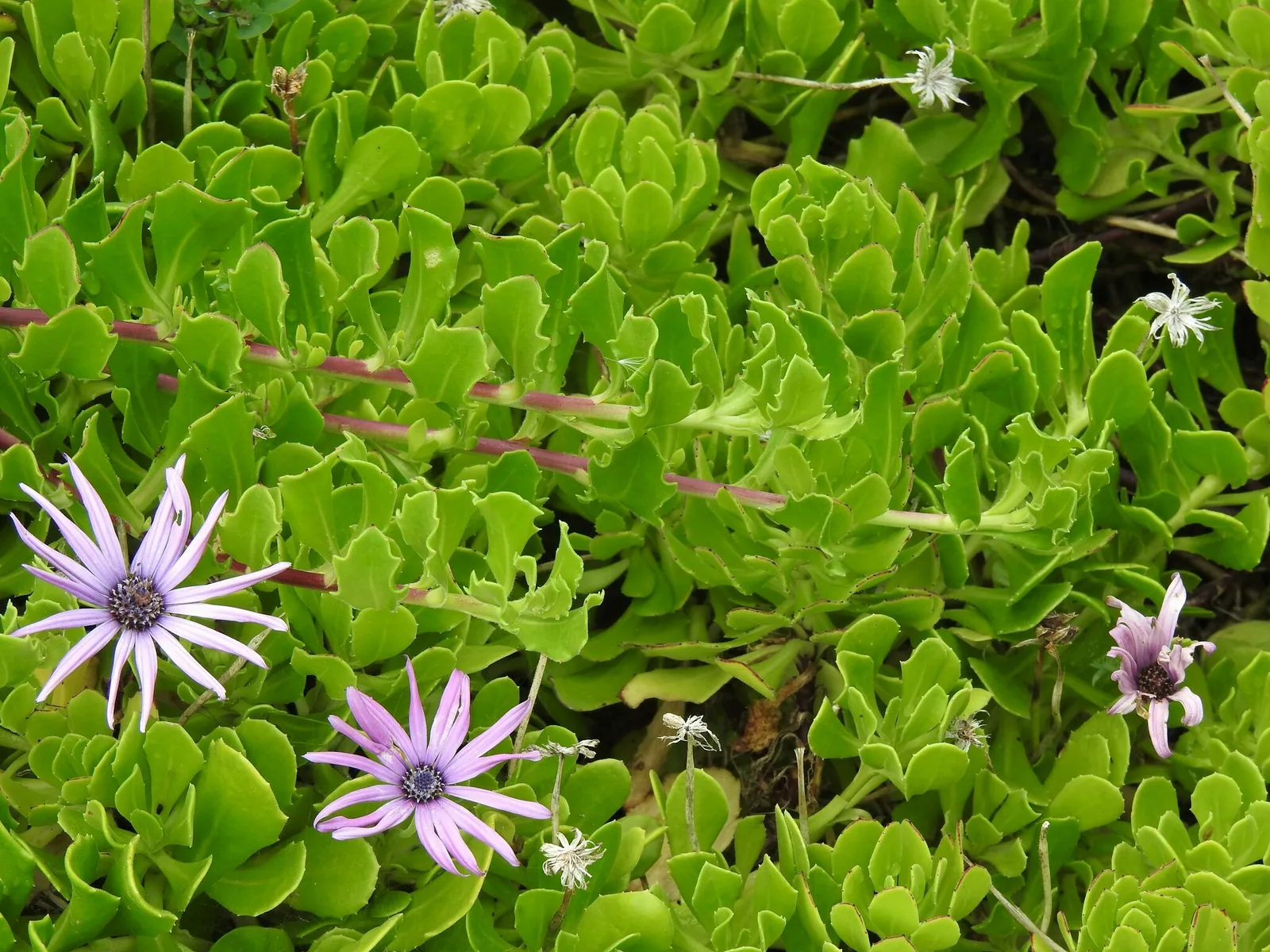

How to Grow and Care for Cape Marguerite
Dimorphotheca ecklonis
Written by Emilio Marruso · last checked
At a glance
The African daisy is a cheerful, easygoing flower that asks for little water. Give it full sun and slightly acidic soil, and it thrives in the garden or in a pot. Start it easily from seed in spring, then trim it after the first flowering in late spring, and it rewards you with a second bloom.
- Sun
Full sun is best; it also handles some shade
What the sources say (2)
Light: Full sun; tolerates some shade
Needs sun for the flowers to open, although it will tolerate some shade.
— Dimorphotheca ecklonis (=Osteospermum ecklonis) (Cape marguerite, Sunday's River daisy) - Plantinfo [4] Dimorphotheca ecklonis needs full sun exposure and a Mediterranean climate. Although it can withstand occasional frosts
— Dimorphotheca ecklonis or Cape marguerite | Care and Growing [3] - Water
Needs little to moderate water
What the sources say (1)
Watering: Low to moderate water needs; water-wise
Water Needs low; moderate water wise ## Perennial; Groundcover ##
— Dimorphotheca ecklonis [1] - Cold
Survives winters down to 20 °F (−6.7 °C)
Hardy in average winters · USDA 9 · RHS H4 · Z9
What the sources say (2)
Hardiness, coldest zone: 9 [winter low −6.7 to −1.1 °C (20 to 30 °F)]
| Hardiness (USDA Zone): | 9-11 | Maintenance:
— How to Grow Cape Daisies (Osteospermum) | Gardener’s Path [7] Hardiness, warmest zone: 11 [winter low 4.4 to 10 °C (40 to 50 °F)]
| Hardiness (USDA Zone): | 9-11 | Maintenance:
— How to Grow Cape Daisies (Osteospermum) | Gardener’s Path [7] - Soil
Slightly acidic soil, pH 5.5–6.5
- Spacing
Thin seedlings to 6 in apart
What the sources say (1)
Spacing: 15 cm (6 in), thinned seedlings
You won’t see any germination for about three weeks, so be patient! Once they’re up, you can thin the seedlings out so there’s about six inches of space between each.
— How to Grow Cape Daisies (Osteospermum) | Gardener’s Path [7] - Pruning
Trim after the first flowering in late spring for a second bloom; cut faded stalks in fall
What the sources say (2)
Pruning: Fall (intensive pruning of wilted flower stalks); late spring after the first flowering for a second bloom
Prune wilted flower stalks and prune intensively in fall to maintain compact growth.
— Dimorphotheca ecklonis or Cape marguerite | Care and Growing [3] Deadheading of spent flowers can help the plant bloom again. You can also prune the plant in late spring after the first set of flowers to encourage a second set of blooms.
— Dimorphotheca ecklonis | South African Daisy - Flowering plants [5] - Propagation
From seed, by dividing the roots, or from soft shoot cuttings without flowers in early spring
What the sources say (2)
Propagation: Seed, root division, cuttings of tender non-flowering shoots in early spring
Propagation is through seeds, or root division. Seeds usually take
— Dimorphotheca ecklonis | South African Daisy - Flowering plants [5] Propagation from seeds sown in spring in their final location is an unsafe process, so it's recommended to cut tender shoots without flowers in early spring.
— Dimorphotheca ecklonis or Cape marguerite | Care and Growing [3] - Sowing
Sow outdoors in spring where it will grow, or indoors 8–10 weeks before the last frost
What the sources say (2)
Sowing: Spring (seeds sown in final location); indoors 8-10 weeks before the last frost date
Propagation from seeds sown in spring in their final location is an unsafe process, so it's recommended to cut tender
— Dimorphotheca ecklonis or Cape marguerite | Care and Growing [3] If you’re growing your osteospermum seedlings indoors, they can be started eight to 10 weeks before the last frost date
— How to Grow Cape Daisies (Osteospermum) | Gardener’s Path [7] - Containers
Grows in containers too
What the sources say (1)
In containers: Yes
Cape marguerite is used in pots, in borders and beds, in rockeries and to cover sunny
— Dimorphotheca ecklonis or Cape marguerite | Care and Growing [3]
Overview
Dimorphotheca ecklonis is a spreading perennial that needs sun for the flowers to open, although it tolerates some shade. [4] It grows in any well-drained soil containing organic matter, and is pruned to keep growth compact. [3] It has escaped cultivation and is considered an invasive weed in some countries. [5]
Cape Marguerite care
How to water Cape Marguerite
Low to moderate water needs; water-wise
What the sources say (1)
Water Needs
low; moderate water wise
## Perennial; Groundcover
##How much light Cape Marguerite needs
Full sun; tolerates some shade
What the sources say (2)
Needs sun for the flowers to open, although it will tolerate some shade.Dimorphotheca ecklonis needs full sun exposure and a Mediterranean climate. Although it can withstand occasional frostsHow much cold Cape Marguerite can take
Hardiness, coldest zone
9 [winter low −6.7 to −1.1 °C (20 to 30 °F)]
What the sources say (1)
| Hardiness (USDA Zone): | 9-11 | Maintenance:Hardiness, warmest zone
11 [winter low 4.4 to 10 °C (40 to 50 °F)]
What the sources say (1)
| Hardiness (USDA Zone): | 9-11 | Maintenance:Best soil for Cape Marguerite
Soil pH, minimum
5.5
What the sources say (1)
| Exposure: | Full sun | Soil pH: | 5.5-6.5Soil pH, maximum
6.5
What the sources say (1)
| Exposure: | Full sun | Soil pH: | 5.5-6.5Where to grow Cape Marguerite
In containers
Yes
What the sources say (1)
Cape marguerite is used in pots, in borders and beds, in rockeries and to cover sunnySpacing
15 cm (6 in), thinned seedlings
What the sources say (1)
You won’t see any germination for about three weeks, so be patient! Once they’re up, you can thin the seedlings out so there’s about six inches of space between each.How to propagate Cape Marguerite
Seed, root division, cuttings of tender non-flowering shoots in early spring
What the sources say (2)
Propagation is through seeds, or root division. Seeds usually takePropagation from seeds sown in spring in their final location is an unsafe process, so it's recommended to cut tender shoots without flowers in early spring.Remedies
The sources we checked give no remedies for this plant.
Calendar
Sowing
Spring (seeds sown in final location); indoors 8-10 weeks before the last frost date
What the sources say (2)
Propagation from seeds sown in spring in their final location is an unsafe process, so it's recommended to cut tenderIf you’re growing your osteospermum seedlings indoors, they can be started eight to 10 weeks before the last frost datePruning
Fall (intensive pruning of wilted flower stalks); late spring after the first flowering for a second bloom
What the sources say (2)
Prune wilted flower stalks and prune intensively in fall to maintain compact growth.Deadheading of spent flowers can help the plant bloom again. You can also prune the plant in late spring after the first set of flowers to encourage a second set of blooms.Months as given by the sources, which are mostly from the United States (northern hemisphere). In the southern hemisphere they shift by about six months.
Similar plants
- African Daisy Dimorphotheca pluvialis
- Cape Marigold Dimorphotheca sinuata
- Abies grandis Abies grandis
- Abraham Trachystemon orientalis
- Abyssinian banana Ensete ventricosum
- Acacia longifolia Acacia longifolia
- Acanthus hungaricus Acanthus hungaricus
- Aconite Aconitum napellus
Sources
Every value above is quoted from these documents. Links lead to the original publisher.
- Dimorphotheca ecklonis · theplantlibrary.co.za, consulted
- Dimorphotheca Plant Growing & Care Guide for Gardeners · gardenershq.com, consulted
- Dimorphotheca ecklonis or Cape marguerite | Care and Growing · consultaplantas.com, consulted
- Dimorphotheca ecklonis (=Osteospermum ecklonis) (Cape marguerite, Sunday's River daisy) - Plantinfo · plantinfo.co.za, consulted
- Dimorphotheca ecklonis | South African Daisy - Flowering plants · greencoverinitiative.com, consulted
- Dimorphotheca ecklonis (Van Staden's River Daisy) · meso.cloud, consulted
- How to Grow Cape Daisies (Osteospermum) | Gardener’s Path · gardenerspath.com, consulted
Written by Emilio Marruso · last checked