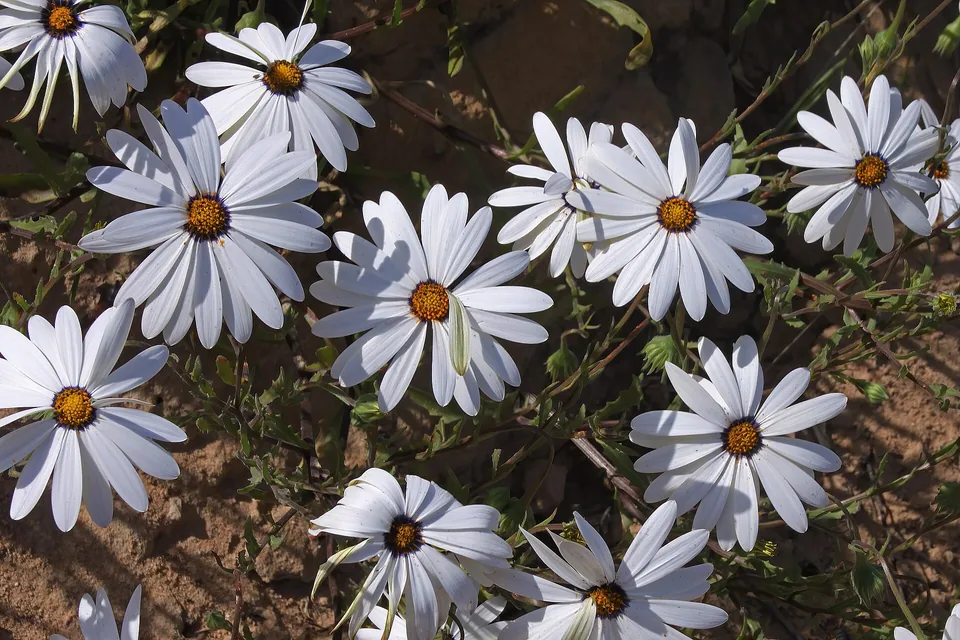


How to Grow and Care for African Daisy
Dimorphotheca pluvialis
Written by Emilio Marruso · last checked
Not toxic to cats and dogs, according to the sources · Sources
At a glance
This cheerful annual is an easy one to start: it grows from seed, loves full sun and stays small, just 12 to 16 inches tall, so it fits happily in a pot. Give it fertile, well-drained soil, water the soil rather than the leaves, and relax: it is safe for cats, dogs and horses.
- Sun
Full sun
What the sources say (2)
Light: Full sun
Light: Full sun (6 or more hours of direct sunlight a day)
— Dimorphotheca pluvialis (African Daisy, Cape Daisy, Cape Marigold, Cape Rain Daisy, Rain Daisy, Weather Profit, White African Daisy) | North Carolina Extension Gardener Plant Toolbox [1] Plant in full sun in fertile well-drained soil. Take care not to get the leaves wet when watering to prevent rot.
— Dimorphotheca pluvialis (African Daisy, Cape Daisy, Cape Marigold, Cape Rain Daisy, Rain Daisy, Weather Profit, White African Daisy) | North Carolina Extension Gardener Plant Toolbox [1] - Water
Water the soil, not the leaves, so they don't rot
What the sources say (1)
Watering notes: Avoid wetting the leaves when watering, to prevent rot; fertile, well-drained soil
Plant in full sun in fertile well-drained soil. Take care not to get the leaves wet when watering to prevent rot.
— Dimorphotheca pluvialis (African Daisy, Cape Daisy, Cape Marigold, Cape Rain Daisy, Rain Daisy, Weather Profit, White African Daisy) | North Carolina Extension Gardener Plant Toolbox [1] - Cold
Survives winters down to 20 °F (−6.7 °C)
Hardy in average winters · USDA 9a · RHS H4 · Z9
What the sources say (2)
Hardiness, coldest zone: 9a [winter low −6.7 to −3.9 °C (20 to 25 °F)]
USDA Plant Hardiness Zone: 9a, 9b, 10a, 10b
— Dimorphotheca pluvialis (African Daisy, Cape Daisy, Cape Marigold, Cape Rain Daisy, Rain Daisy, Weather Profit, White African Daisy) | North Carolina Extension Gardener Plant Toolbox [1] Hardiness, warmest zone: 10b [winter low 1.7 to 4.4 °C (35 to 40 °F)]
USDA Plant Hardiness Zone: 9a, 9b, 10a, 10b
— Dimorphotheca pluvialis (African Daisy, Cape Daisy, Cape Marigold, Cape Rain Daisy, Rain Daisy, Weather Profit, White African Daisy) | North Carolina Extension Gardener Plant Toolbox [1] - Soil
Fertile soil that drains well
What the sources say (1)
Watering notes: Avoid wetting the leaves when watering, to prevent rot; fertile, well-drained soil
Plant in full sun in fertile well-drained soil. Take care not to get the leaves wet when watering to prevent rot.
— Dimorphotheca pluvialis (African Daisy, Cape Daisy, Cape Marigold, Cape Rain Daisy, Rain Daisy, Weather Profit, White African Daisy) | North Carolina Extension Gardener Plant Toolbox [1] - Pests
Leaves rot if they stay wet: keep them dry when you water
- Watch out
Struggles in humid climates; it prefers places with cool summers
- Size
12 to 16 in tall and 6 to 12 in wide
What the sources say (2)
Mature height: 30-41 cm (1 ft 0 in - 1 ft 4 in)
Height: 1 ft. 0 in. - 1 ft. 4 in.
— Dimorphotheca pluvialis (African Daisy, Cape Daisy, Cape Marigold, Cape Rain Daisy, Rain Daisy, Weather Profit, White African Daisy) | North Carolina Extension Gardener Plant Toolbox [1] Mature width: 15-30 cm (6-12 in)
Width: 0 ft. 6 in. - 1 ft. 0 in.
— Dimorphotheca pluvialis (African Daisy, Cape Daisy, Cape Marigold, Cape Rain Daisy, Rain Daisy, Weather Profit, White African Daisy) | North Carolina Extension Gardener Plant Toolbox [1] - Propagation
An annual you grow from seed
What the sources say (2)
Propagation: Seed
Life Cycle: Annual Recommended Propagation Strategy: Seed Country Or Region Of Origin:
— Dimorphotheca pluvialis (African Daisy, Cape Daisy, Cape Marigold, Cape Rain Daisy, Rain Daisy, Weather Profit, White African Daisy) | North Carolina Extension Gardener Plant Toolbox [1] Life cycle: annual
White African Daisy is an annual in the sunflower family that is native to Southern Africa.
— Dimorphotheca pluvialis (African Daisy, Cape Daisy, Cape Marigold, Cape Rain Daisy, Rain Daisy, Weather Profit, White African Daisy) | North Carolina Extension Gardener Plant Toolbox [1] - Containers
Grows in containers too
What the sources say (1)
In containers: Yes
Use this plant in the front of the border, in small groupings, along walkways or in containers.
— Dimorphotheca pluvialis (African Daisy, Cape Daisy, Cape Marigold, Cape Rain Daisy, Rain Daisy, Weather Profit, White African Daisy) | North Carolina Extension Gardener Plant Toolbox [1] - Safety
Not toxic to cats, dogs or horses
Overview
White African daisy is an annual that is best planted in full sun in fertile, well-drained soil. [1] It is listed for USDA zones 9a to 10b and suits borders, walkways and containers. [1] It prefers cool-weather summer areas and has difficulty with the humidity of the southeastern US. [1]
This record is incomplete: the sources we read do not cover every field yet.
Not yet covered by our sources: Watering, Pruning
African Daisy care
How to water African Daisy
Watering
Not stated in the sources we read.
Watering notes
Avoid wetting the leaves when watering, to prevent rot; fertile, well-drained soil
What the sources say (1)
Plant in full sun in fertile well-drained soil. Take care not to get the leaves wet when watering to prevent rot.How much light African Daisy needs
Full sun
What the sources say (2)
Light:
Full sun (6 or more hours of direct sunlight a day)Plant in full sun in fertile well-drained soil. Take care not to get the leaves wet when watering to prevent rot.How much cold African Daisy can take
Hardiness, coldest zone
9a [winter low −6.7 to −3.9 °C (20 to 25 °F)]
What the sources say (1)
USDA Plant Hardiness Zone:
9a, 9b, 10a, 10bHardiness, warmest zone
10b [winter low 1.7 to 4.4 °C (35 to 40 °F)]
What the sources say (1)
USDA Plant Hardiness Zone:
9a, 9b, 10a, 10bWhere to grow African Daisy
Yes
What the sources say (1)
Use this plant in the front of the border, in small groupings, along walkways or in containers.How to propagate African Daisy
Seed
What the sources say (1)
Life Cycle:
Annual
Recommended Propagation Strategy:
Seed
Country Or Region Of Origin:How to grow African Daisy
The plant
Life cycle
annual
What the sources say (1)
White African Daisy is an annual in the sunflower family that is native to Southern Africa.Family
Asteraceae
What the sources say (1)
Genus: Dimorphotheca Species: pluvialis Family: Asteraceae Life Cycle: AnnualMature height
30-41 cm (1 ft 0 in - 1 ft 4 in)
What the sources say (1)
Height: 1 ft. 0 in. - 1 ft. 4 in.Mature width
15-30 cm (6-12 in)
What the sources say (1)
Width: 0 ft. 6 in. - 1 ft. 0 in.African Daisy pests and problems
Leaf rot
Symptom: Rot of the leaves when they are kept wet.
What to do: Take care not to get the leaves wet when watering.
What the sources say (1)
Plant in full sun in fertile well-drained soil. Take care not to get the leaves wet when watering to prevent rot.
— Dimorphotheca pluvialis (African Daisy, Cape Daisy, Cape Marigold, Cape Rain Daisy, Rain Daisy, Weather Profit, White African Daisy) | North Carolina Extension Gardener Plant Toolbox [1] Humid climates
Symptom: Has difficulty with the humidity of the southeastern US.
What to do: Prefers cool-weather summer areas.
What the sources say (1)
It prefers cool-weather summer areas and has difficulty with the humidity of the SE.
— Dimorphotheca pluvialis (African Daisy, Cape Daisy, Cape Marigold, Cape Rain Daisy, Rain Daisy, Weather Profit, White African Daisy) | North Carolina Extension Gardener Plant Toolbox [1]
Remedies
Each remedy shows what official sources say about it; traditional remedies without an official source are marked as such. Harmful ones are listed so you know to avoid them.
Treating the plant
gray mold and crown rot
avoid wetting the foliage Not verified
Traditional remedy, not verified by an official source.
How: Avoid overwatering or wetting the foliage and flowers.
Is African Daisy poisonous?
Reported by the source, quoted verbatim. This is not medical or veterinary advice: if a person or an animal may have eaten this plant, contact a poison control centre or a veterinarian.
#non-toxic for cats #non-toxic for horses #non-toxic for dogs
[1]The source flags the risk for this animal but does not explain why.
Calendar
Pruning
Not stated in the sources we read.
Months as given by the sources, which are mostly from the United States (northern hemisphere). In the southern hemisphere they shift by about six months.
Indicative values
Values from a secondary source, not checked word for word like the rest of this page. Use them as a starting point.
- Hours of sun
- 6-8 hoursIndicative value, adapt it to your climate · Secondary source
- Watering
- MinimumIndicative value, adapt it to your climate · Secondary source
- Drought tolerant
- yesIndicative value, adapt it to your climate · Secondary source
- Soil pH
- 6-7.5Indicative value, adapt it to your climate · Secondary source
- Growth rate
- LowIndicative value, adapt it to your climate · Secondary source
- Pruning
- March, April, March, April, May, June, July, August, SeptemberIndicative value, adapt it to your climate · Secondary source
Similar plants
- Cape Marigold Dimorphotheca sinuata
- Cape Marguerite Dimorphotheca ecklonis
- African Marigold Tagetes erecta
- Ageratum Ageratum houstonianum
- Alpine aster Aster alpinus
- Appalachian Blazing Star Liatris squarrulosa
- Appalachian Ironweed Vernonia glauca
- Appalachian Sunflower Helianthus atrorubens
Sources
Every value above is quoted from these documents. Links lead to the original publisher.
- Dimorphotheca pluvialis (African Daisy, Cape Daisy, Cape Marigold, Cape Rain Daisy, Rain Daisy, Weather Profit, White African Daisy) | North Carolina Extension Gardener Plant Toolbox · plants.ces.ncsu.edu, consulted
- Cape Daisy - Dimorphotheca pluvialis | North Carolina Extension Gardener Plant Toolbox · plants.ces.ncsu.edu, consulted
Written by Emilio Marruso · last checked