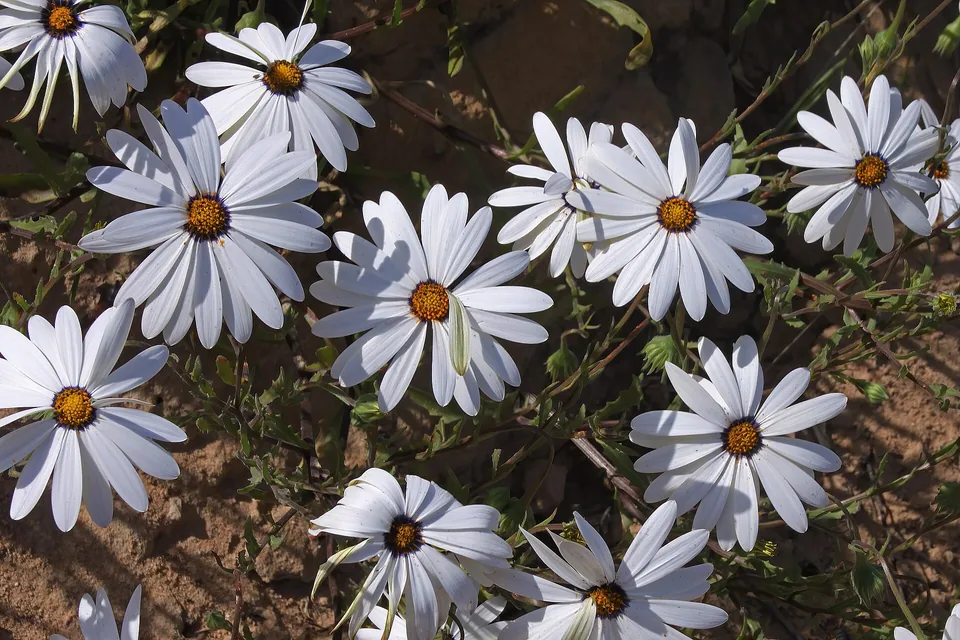


Cómo cultivar y cuidar African Daisy
Dimorphotheca pluvialis
Escrito por Emilio Marruso · última revisión
No tóxica para gatos y perros, según las fuentes · Fuentes
De un vistazo
Esta alegre planta anual es fácil de empezar: crece de semilla, adora el sol pleno y se queda pequeña, de 30 a 41 cm de alto, así que cabe sin problema en una maceta. Dale un suelo fértil y bien drenado, riega la tierra y no las hojas, y quédate tranquilo: no es tóxica para gatos, perros ni caballos.
- Sol
Sol pleno
Qué dicen las fuentes (2)
Luz: Pleno sol
Light: Full sun (6 or more hours of direct sunlight a day)
— Dimorphotheca pluvialis (African Daisy, Cape Daisy, Cape Marigold, Cape Rain Daisy, Rain Daisy, Weather Profit, White African Daisy) | North Carolina Extension Gardener Plant Toolbox [1] Plant in full sun in fertile well-drained soil. Take care not to get the leaves wet when watering to prevent rot.
— Dimorphotheca pluvialis (African Daisy, Cape Daisy, Cape Marigold, Cape Rain Daisy, Rain Daisy, Weather Profit, White African Daisy) | North Carolina Extension Gardener Plant Toolbox [1] - Riego
Riega la tierra, no las hojas, para que no se pudran
Qué dicen las fuentes (1)
Notas sobre el riego: Evita mojar las hojas al regar, para prevenir la pudrición; tierra fértil y bien drenada
Plant in full sun in fertile well-drained soil. Take care not to get the leaves wet when watering to prevent rot.
— Dimorphotheca pluvialis (African Daisy, Cape Daisy, Cape Marigold, Cape Rain Daisy, Rain Daisy, Weather Profit, White African Daisy) | North Carolina Extension Gardener Plant Toolbox [1] - Frío
Aguanta inviernos de hasta −6,7 °C (20 °F)
Rústica en inviernos normales · USDA 9a · RHS H4 · Z9
Qué dicen las fuentes (2)
Rusticidad, zona más fría: 9a [mínima invernal de −6,7 a −3,9 °C (de 20 a 25 °F)]
USDA Plant Hardiness Zone: 9a, 9b, 10a, 10b
— Dimorphotheca pluvialis (African Daisy, Cape Daisy, Cape Marigold, Cape Rain Daisy, Rain Daisy, Weather Profit, White African Daisy) | North Carolina Extension Gardener Plant Toolbox [1] Rusticidad, zona más cálida: 10b [mínima invernal de 1,7 a 4,4 °C (de 35 a 40 °F)]
USDA Plant Hardiness Zone: 9a, 9b, 10a, 10b
— Dimorphotheca pluvialis (African Daisy, Cape Daisy, Cape Marigold, Cape Rain Daisy, Rain Daisy, Weather Profit, White African Daisy) | North Carolina Extension Gardener Plant Toolbox [1] - Suelo
Suelo fértil y bien drenado
Qué dicen las fuentes (1)
Notas sobre el riego: Evita mojar las hojas al regar, para prevenir la pudrición; tierra fértil y bien drenada
Plant in full sun in fertile well-drained soil. Take care not to get the leaves wet when watering to prevent rot.
— Dimorphotheca pluvialis (African Daisy, Cape Daisy, Cape Marigold, Cape Rain Daisy, Rain Daisy, Weather Profit, White African Daisy) | North Carolina Extension Gardener Plant Toolbox [1] - Plagas
Las hojas se pudren si se quedan mojadas: mantenlas secas al regar
- Atención
Sufre en climas húmedos; prefiere zonas con veranos frescos
- Tamaño
De 30 a 41 cm de alto y de 15 a 30 cm de ancho
Qué dicen las fuentes (2)
Altura adulta: 30-41 cm (1 ft 0 in - 1 ft 4 in)
Height: 1 ft. 0 in. - 1 ft. 4 in.
— Dimorphotheca pluvialis (African Daisy, Cape Daisy, Cape Marigold, Cape Rain Daisy, Rain Daisy, Weather Profit, White African Daisy) | North Carolina Extension Gardener Plant Toolbox [1] Anchura adulta: 15-30 cm (6-12 pulgadas)
Width: 0 ft. 6 in. - 1 ft. 0 in.
— Dimorphotheca pluvialis (African Daisy, Cape Daisy, Cape Marigold, Cape Rain Daisy, Rain Daisy, Weather Profit, White African Daisy) | North Carolina Extension Gardener Plant Toolbox [1] - Multiplicación
Una planta anual que se cultiva de semilla
Qué dicen las fuentes (2)
Propagación: Semilla
Life Cycle: Annual Recommended Propagation Strategy: Seed Country Or Region Of Origin:
— Dimorphotheca pluvialis (African Daisy, Cape Daisy, Cape Marigold, Cape Rain Daisy, Rain Daisy, Weather Profit, White African Daisy) | North Carolina Extension Gardener Plant Toolbox [1] Ciclo de vida: anual
White African Daisy is an annual in the sunflower family that is native to Southern Africa.
— Dimorphotheca pluvialis (African Daisy, Cape Daisy, Cape Marigold, Cape Rain Daisy, Rain Daisy, Weather Profit, White African Daisy) | North Carolina Extension Gardener Plant Toolbox [1] - Maceta
Crece también en maceta
Qué dicen las fuentes (1)
En maceta: Sí
Use this plant in the front of the border, in small groupings, along walkways or in containers.
— Dimorphotheca pluvialis (African Daisy, Cape Daisy, Cape Marigold, Cape Rain Daisy, Rain Daisy, Weather Profit, White African Daisy) | North Carolina Extension Gardener Plant Toolbox [1] - Seguridad
No es tóxica para gatos, perros ni caballos
Resumen
La margarita africana blanca es una anual que se planta mejor a pleno sol en suelo fértil y bien drenado. [1] Está catalogada para las zonas USDA 9a a 10b y es adecuada para bordes, caminos y contenedores. [1] Prefiere zonas de verano con clima fresco y tiene dificultades con la humedad del sureste de los Estados Unidos. [1]
Citado en inglés, como en la fuente.
Esta ficha está incompleta: las fuentes consultadas aún no cubren todos los campos.
Aún no cubierto por nuestras fuentes: Riego, Poda
Cuidados
Riego
Riego
No figura en las fuentes consultadas.
Notas sobre el riego
Evita mojar las hojas al regar, para prevenir la pudrición; tierra fértil y bien drenada
Qué dicen las fuentes (1)
Plant in full sun in fertile well-drained soil. Take care not to get the leaves wet when watering to prevent rot.Luz
Pleno sol
Qué dicen las fuentes (2)
Light:
Full sun (6 or more hours of direct sunlight a day)Plant in full sun in fertile well-drained soil. Take care not to get the leaves wet when watering to prevent rot.Clima y frío
Rusticidad, zona más fría
9a [mínima invernal de −6,7 a −3,9 °C (de 20 a 25 °F)]
Qué dicen las fuentes (1)
USDA Plant Hardiness Zone:
9a, 9b, 10a, 10bRusticidad, zona más cálida
10b [mínima invernal de 1,7 a 4,4 °C (de 35 a 40 °F)]
Qué dicen las fuentes (1)
USDA Plant Hardiness Zone:
9a, 9b, 10a, 10bDónde cultivarla
Sí
Qué dicen las fuentes (1)
Use this plant in the front of the border, in small groupings, along walkways or in containers.Propagación
Semilla
Qué dicen las fuentes (1)
Life Cycle:
Annual
Recommended Propagation Strategy:
Seed
Country Or Region Of Origin:Cultivo
La planta
Ciclo de vida
anual
Qué dicen las fuentes (1)
White African Daisy is an annual in the sunflower family that is native to Southern Africa.Familia
Asteraceae
Qué dicen las fuentes (1)
Genus: Dimorphotheca Species: pluvialis Family: Asteraceae Life Cycle: AnnualAltura adulta
30-41 cm (1 ft 0 in - 1 ft 4 in)
Qué dicen las fuentes (1)
Height: 1 ft. 0 in. - 1 ft. 4 in.Anchura adulta
15-30 cm (6-12 pulgadas)
Qué dicen las fuentes (1)
Width: 0 ft. 6 in. - 1 ft. 0 in.Problemas
Pudrición de la hoja.
Síntoma: Pudrición de las hojas cuando se mantienen húmedas.
Qué hacer: Ten cuidado de no mojar las hojas al regar.
Qué dicen las fuentes (1)
Plant in full sun in fertile well-drained soil. Take care not to get the leaves wet when watering to prevent rot.
— Dimorphotheca pluvialis (African Daisy, Cape Daisy, Cape Marigold, Cape Rain Daisy, Rain Daisy, Weather Profit, White African Daisy) | North Carolina Extension Gardener Plant Toolbox [1] Climas húmedos
Síntoma: Tiene dificultades con la humedad del sureste de los Estados Unidos.
Qué hacer: Prefiere zonas de verano con clima fresco.
Qué dicen las fuentes (1)
It prefers cool-weather summer areas and has difficulty with the humidity of the SE.
— Dimorphotheca pluvialis (African Daisy, Cape Daisy, Cape Marigold, Cape Rain Daisy, Rain Daisy, Weather Profit, White African Daisy) | North Carolina Extension Gardener Plant Toolbox [1]
Remedios
Cada remedio indica qué dicen las fuentes oficiales; los remedios tradicionales sin fuente oficial aparecen marcados. Los perjudiciales están para que sepas evitarlos.
Cuidar la planta
moho gris y pudrición de la corona
evita mojar el follaje No verificado
Remedio tradicional, no verificado por una fuente oficial.
Cómo: Evita regar en exceso o mojar el follaje y las flores.
Toxicidad
Según la fuente, citada textualmente. No es un consejo médico ni veterinario: si una persona o un animal pudo haber ingerido esta planta, contacta con un centro de toxicología o con un veterinario.
#non-toxic for cats #non-toxic for horses #non-toxic for dogs
[1]La fuente señala el riesgo para este animal pero no explica por qué.
Calendario
Poda
No figura en las fuentes consultadas.
Meses tal como los dan las fuentes, en su mayoría de Estados Unidos (hemisferio norte). En el hemisferio sur se desplazan unos seis meses.
Valores orientativos
Valores de una fuente secundaria, no comprobados palabra por palabra como el resto de esta página. Úselos como punto de partida.
- Horas de sol
- 6-8 horasValor orientativo, adáptalo a tu clima · Fuente secundaria
- Riego
- MínimoValor orientativo, adáptalo a tu clima · Fuente secundaria
- Resiste la sequía
- SíValor orientativo, adáptalo a tu clima · Fuente secundaria
- pH del suelo
- 6-7.5Valor orientativo, adáptalo a tu clima · Fuente secundaria
- Crecimiento
- BajoValor orientativo, adáptalo a tu clima · Fuente secundaria
- Poda
- Marzo, abril, marzo, abril, mayo, junio, julio, agosto, septiembreValor orientativo, adáptalo a tu clima · Fuente secundaria
Plantas similares
- Cape Marigold Dimorphotheca sinuata
- Matacabras Dimorphotheca ecklonis
- Cempasúchil Tagetes erecta
- Ageratum Ageratum houstonianum
- Alpine aster Aster alpinus
- Appalachian Blazing Star Liatris squarrulosa
- Appalachian Ironweed Vernonia glauca
- Appalachian Sunflower Helianthus atrorubens
Fuentes
Cada valor anterior se cita de estos documentos. Los enlaces llevan al editor original.
- Dimorphotheca pluvialis (African Daisy, Cape Daisy, Cape Marigold, Cape Rain Daisy, Rain Daisy, Weather Profit, White African Daisy) | North Carolina Extension Gardener Plant Toolbox · plants.ces.ncsu.edu, consultado
- Cape Daisy - Dimorphotheca pluvialis | North Carolina Extension Gardener Plant Toolbox · plants.ces.ncsu.edu, consultado
Escrito por Emilio Marruso · última revisión