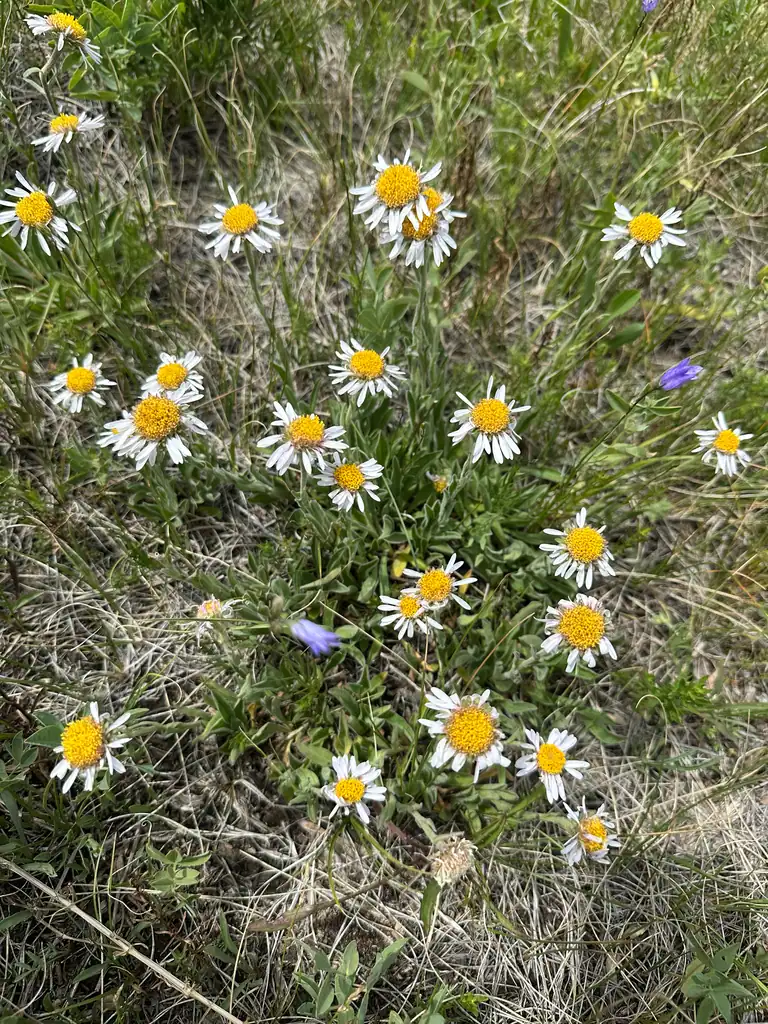
Cómo cultivar y cuidar Alpine aster
Aster alpinus
Escrito por Emilio Marruso · última revisión
De un vistazo
El áster alpino es una planta perenne, así que vuelve año tras año, y le encanta el sol pleno. Planta las plántulas después de la última helada de primavera, a 30 cm de distancia, en un suelo bien drenado con pH 6,0–7,5. También crece feliz en maceta, y puedes sacar plantas nuevas por semilla, esquejes o división.
- Sol
Sol pleno
- Riego
Mantén la tierra húmeda de forma constante hasta que arraigue; en maceta necesita más agua
Qué dicen las fuentes (2)
Notas sobre el riego: Mantén una humedad uniforme hasta que los trasplantes se establezcan; las plantas en contenedor necesitan más agua
As with the propagation phase, maintain even moisture until your transplants become established.
— How to Grow and Care for Alpine Aster | Gardener's Path [3] Water needs are low once established, but higher for container plants
— How to Grow and Care for Alpine Aster | Gardener's Path [3] - Suelo
Suelo bien drenado, pH 6,0–7,5
- Distancia
30 cm entre plantas
Qué dicen las fuentes (1)
Distancia de plantación: 30.5 cm (12 pulgadas)
Space your seeds, seedlings, cuttings, or divisions at least 12 inches apart to accommodate mature dimensions and allow for adequate air flow.
— How to Grow and Care for Alpine Aster | Gardener's Path [3] - Plantación
Planta las plántulas después de la última helada de primavera
Qué dicen las fuentes (1)
Plantación: Después de la fecha promedio de la última helada de primavera (plántulas)
Transplant seedlings to their permanent location after the last average spring frost date.
— How to Grow and Care for Alpine Aster | Gardener's Path [3] - Plagas
El exceso de humedad trae oídio, roya, babosas y caracoles; dale buen drenaje y espacio
- Multiplicación
Multiplícala por semilla, esquejes o división; divide las plantas maduras cada pocos años
Qué dicen las fuentes (1)
Propagación: Semilla, esquejes, división
This species grows from seeds, cuttings, and divided plants.
— How to Grow and Care for Alpine Aster | Gardener's Path [3] - Maceta
Crece también en maceta; riégala más a menudo
Qué dicen las fuentes (3)
En maceta: Sí
You may also grow this type in well-draining containers , either alone or with companions of a similar culture.
— How to Grow and Care for Alpine Aster | Gardener's Path [3] Notas sobre el riego: Mantén una humedad uniforme hasta que los trasplantes se establezcan; las plantas en contenedor necesitan más agua
As with the propagation phase, maintain even moisture until your transplants become established.
— How to Grow and Care for Alpine Aster | Gardener's Path [3] Water needs are low once established, but higher for container plants
— How to Grow and Care for Alpine Aster | Gardener's Path [3]
Resumen
El aster alpino es una herbácea perenne de vida corta y clima frío que crece a pleno sol con suelo bien drenado. [3] Se utiliza en jardines de rocas y parterres alpinos. [1]
Citado en inglés, como en la fuente.
Esta ficha está incompleta: las fuentes consultadas aún no cubren todos los campos.
Aún no cubierto por nuestras fuentes: Riego, Rusticidad, zona más fría, Rusticidad, zona más cálida, Poda
Cuidados
Riego
Riego
No figura en las fuentes consultadas.
Notas sobre el riego
Mantén una humedad uniforme hasta que los trasplantes se establezcan; las plantas en contenedor necesitan más agua
Qué dicen las fuentes (2)
As with the propagation phase, maintain even moisture until your transplants become established.Water needs are low once established, but higher for container plantsLuz
Clima y frío
Rusticidad, zona más fría
No figura en las fuentes consultadas.
Rusticidad, zona más cálida
No figura en las fuentes consultadas.
Suelo
pH del suelo, mínimo
6.0
Dónde cultivarla
En maceta
Sí
Qué dicen las fuentes (1)
You may also grow this type in well-draining containers , either alone or with companions of a similar culture.Distancia de plantación
30.5 cm (12 pulgadas)
Qué dicen las fuentes (1)
Space your seeds, seedlings, cuttings, or divisions at least 12 inches apart to accommodate mature dimensions and allow for adequate air flow.Propagación
Semilla, esquejes, división
Qué dicen las fuentes (1)
This species grows from seeds, cuttings, and divided plants.Cultivo
La planta
Ciclo de vida
perenne
Qué dicen las fuentes (1)
Habit: Small perennial herb, 6–15 cm tall. Stems:Familia
Asteraceae
Qué dicen las fuentes (1)
Aster alpinus L. subsp. alpinus
Common name:
Alpine Aster
Family:
AsteraceaeProblemas
Enfermedades fúngicas y plagas por exceso de humedad
Síntoma: El exceso de humedad más la mala circulación del aire hace que las plantas sean vulnerables al mildiu polvoriento, la roya, el fusarium o la marchitez por verticillium, el tizón blanco; babosas, caracoles y nematodos
Qué hacer: Asegura un drenaje y un espaciamiento adecuados, y divide las plantas maduras cada pocos años.
Qué dicen las fuentes (1)
too much moisture plus inadequate air circulation due to poor spacing may make plants vulnerable to fungal conditions like powdery mildew, rust, fusarium or verticillium wilt, or white smut.
— How to Grow and Care for Alpine Aster | Gardener's Path [3]
Remedios
Cada remedio indica qué dicen las fuentes oficiales; los remedios tradicionales sin fuente oficial aparecen marcados. Los perjudiciales están para que sepas evitarlos.
Cuidar la planta
mildiu polvoriento
Elimina los restos de plantas y las plantas infectadas No verificado
Remedio tradicional, no verificado por una fuente oficial.
Cómo: Elimina cualquier resto de planta y desecha las plantas infectadas. Mantén las áreas alrededor de los ásteres libres de malezas y plantas voluntarias.
Calendario
Plantación
Después de la fecha promedio de la última helada de primavera (plántulas)
Qué dicen las fuentes (1)
Transplant seedlings to their permanent location after the last average spring frost date.Poda
No figura en las fuentes consultadas.
Meses tal como los dan las fuentes, en su mayoría de Estados Unidos (hemisferio norte). En el hemisferio sur se desplazan unos seis meses.
Valores orientativos
Valores de una fuente secundaria, no comprobados palabra por palabra como el resto de esta página. Úselos como punto de partida.
- Riego
- MínimoValor orientativo, adáptalo a tu clima · Fuente secundaria
- Resiste la sequía
- SíValor orientativo, adáptalo a tu clima · Fuente secundaria
- Nivel de cuidado
- MedioValor orientativo, adáptalo a tu clima · Fuente secundaria
- Crecimiento
- ModeradoValor orientativo, adáptalo a tu clima · Fuente secundaria
- Poda
- Marzo, Abril, AgostoValor orientativo, adáptalo a tu clima · Fuente secundaria
- Plagas
- Mildiu, Babosas, Caracoles, Marchitez, Resistente a plagas, Resistente a enfermedades, Resistente a conejos, Resistente a la sequíaValor orientativo, adáptalo a tu clima · Fuente secundaria
Plantas similares
- Japanese Aster Aster iinumae
- European Michaelmas-daisy Aster amellus
- Tatarian Aster Aster tataricus
- African Daisy Dimorphotheca pluvialis
- Cempasúchil Tagetes erecta
- Ageratum Ageratum houstonianum
- Appalachian Blazing Star Liatris squarrulosa
- Appalachian Ironweed Vernonia glauca
Fuentes
Cada valor anterior se cita de estos documentos. Los enlaces llevan al editor original.
- Aster alpinus L. subsp. alpinus – Giardino della Flora Appenninica · giardinocapracotta.unimol.it, consultado
- Aster alpinus L. · infoflora.ch, consultado
- How to Grow and Care for Alpine Aster | Gardener's Path · gardenerspath.com, consultado
- Aster alpinus (Alpine Aster) - World of Flowering Plants · worldoffloweringplants.com, consultado
- alpine aster - KPU Plant DB · plantdatabase.kpu.ca, consultado
- Aster alpinus ( Alpine Aster ) - Professional Gardening Tips · backyardgardener.com, consultado
Escrito por Emilio Marruso · última revisión