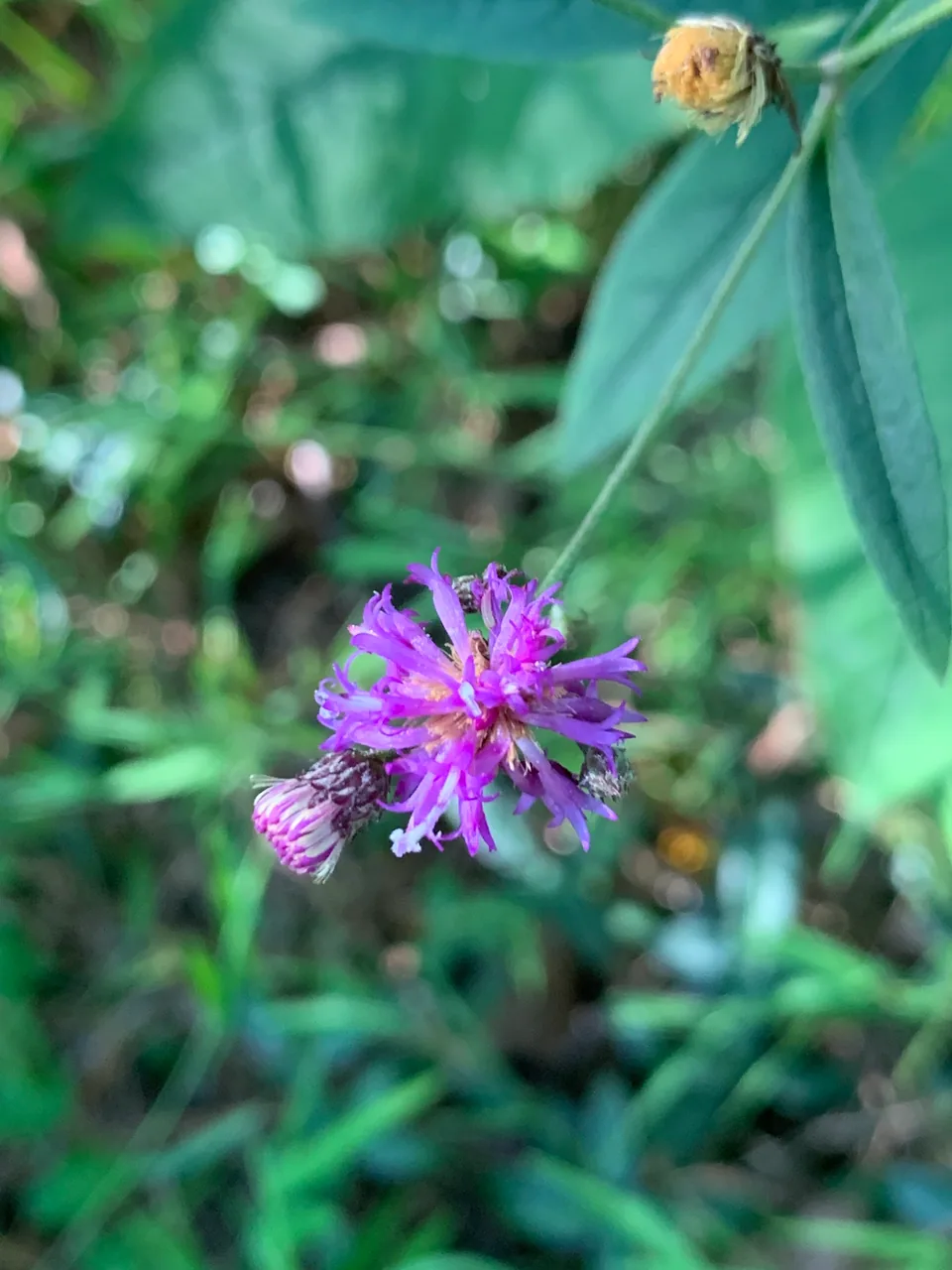
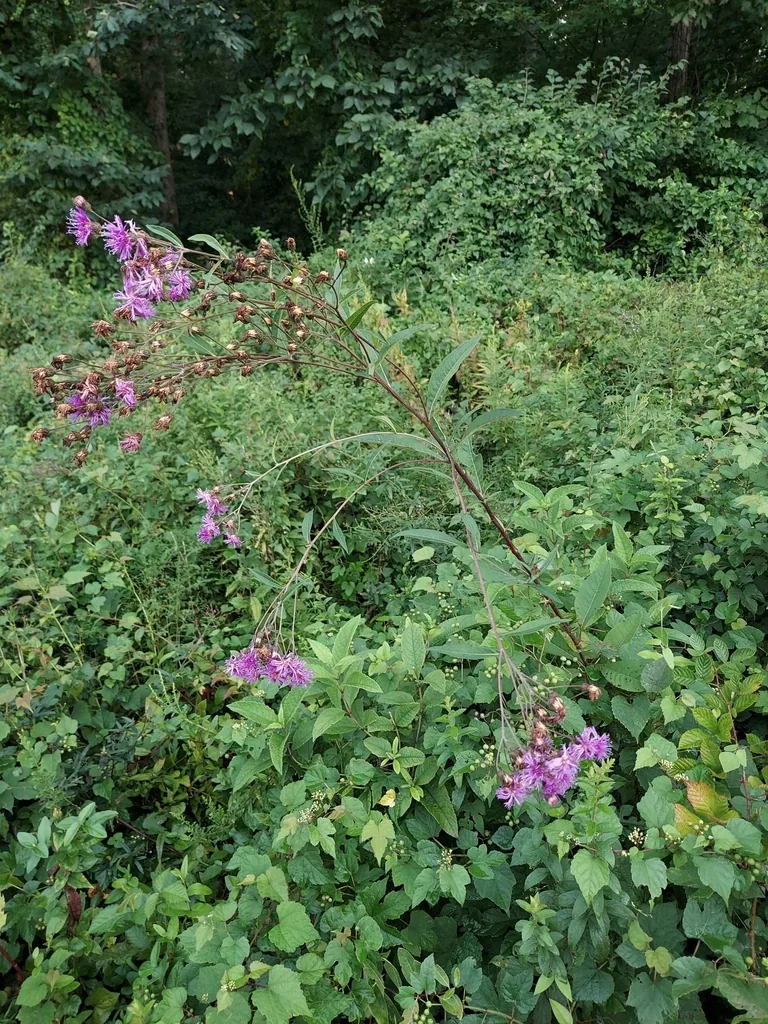

Cómo cultivar y cuidar Appalachian Ironweed
Vernonia glauca
Escrito por Emilio Marruso · última revisión
De un vistazo
Esta vivaz de la familia de las margaritas vuelve cada año y pide muy poco. Alcanza 0,9–1,5 m de alto a pleno sol o en semisombra, y aguanta la tierra seca mejor que sus parientes, así que le basta un riego entre moderado y escaso. Multiplícala por semilla o por esquejes de tallo tierno, y pódala en primavera.
- Sol
Sol pleno o semisombra
Qué dicen las fuentes (1)
Luz: Pleno sol a semisombra
Light: Full sun (6 or more hours of direct sunlight a day) Partial Shade (Direct sunlight only part of the day, 2-6 hours)
— Vernonia glauca (Appalachian Ironweed, Broadleaf Ironweed, Tawny Ironweed, Upland Ironweed) | North Carolina Extension Gardener Plant Toolbox [1] - Riego
Tierra entre húmeda y seca; aguanta la sequía mejor que sus parientes
Qué dicen las fuentes (2)
Riego: Humedad promedio a seca
Tolerant of all soils and prefers average to dry moisture in full sun. Prune in the spring to promote additional flowering stems and to maintain a shorter height.
— Vernonia glauca (Appalachian Ironweed, Broadleaf Ironweed, Tawny Ironweed, Upland Ironweed) | North Carolina Extension Gardener Plant Toolbox [1] Notas sobre el riego: Más tolerante a suelos secos que otras especies del género
Due to habitat loss, it is endangered in some states, like Pennsylvania. It is more tolerant of dry soils than other species in this genus.
— Vernonia glauca (Appalachian Ironweed, Broadleaf Ironweed, Tawny Ironweed, Upland Ironweed) | North Carolina Extension Gardener Plant Toolbox [1] - Frío
Aguanta inviernos de hasta −40 °C (−40 °F)
Muy rústica · USDA 3a · RHS H7 · Z3
Qué dicen las fuentes (2)
Rusticidad, zona más fría: 3a [mínima invernal de −40 a −37,2 °C (de −40 a −35 °F)]
USDA Plant Hardiness Zone: 3a, 3b, 4a, 4b, 5a, 5b, 6a, 6b, 7a, 7b, 8a, 8b
— Vernonia glauca (Appalachian Ironweed, Broadleaf Ironweed, Tawny Ironweed, Upland Ironweed) | North Carolina Extension Gardener Plant Toolbox [1] Rusticidad, zona más cálida: 8b [mínima invernal de −9,4 a −6,7 °C (de 15 a 20 °F)]
USDA Plant Hardiness Zone: 3a, 3b, 4a, 4b, 5a, 5b, 6a, 6b, 7a, 7b, 8a, 8b
— Vernonia glauca (Appalachian Ironweed, Broadleaf Ironweed, Tawny Ironweed, Upland Ironweed) | North Carolina Extension Gardener Plant Toolbox [1] - Poda
Pódala en primavera
Qué dicen las fuentes (1)
Poda: Primavera
Prune in the spring to promote additional flowering stems and to maintain a shorter height. Propagate by seed or soft stem cutting.
— Vernonia glauca (Appalachian Ironweed, Broadleaf Ironweed, Tawny Ironweed, Upland Ironweed) | North Carolina Extension Gardener Plant Toolbox [1] - Plagas
Puede sufrir oídio y roya
Qué dicen las fuentes (1)
Enfermedades: mildiú polvoriento, roya
Although it is pest-resistant, deer are attracted to this plant. It can be affected by powdery mildew and rust.
— Vernonia glauca (Appalachian Ironweed, Broadleaf Ironweed, Tawny Ironweed, Upland Ironweed) | North Carolina Extension Gardener Plant Toolbox [1] - Atención
Atrae a los ciervos, que se la comen
- Tamaño
0,9–1,5 m de alto y 0,9 m de ancho
Qué dicen las fuentes (2)
Altura adulta: 91.44-152.4 cm (3-5 pies)
At maturity, it reaches 3 to 5 feet in height and approximately 3 feet in width.
— Vernonia glauca (Appalachian Ironweed, Broadleaf Ironweed, Tawny Ironweed, Upland Ironweed) | North Carolina Extension Gardener Plant Toolbox [1] Anchura adulta: 91.44 cm (3 pies)
At maturity, it reaches 3 to 5 feet in height and approximately 3 feet in width.
— Vernonia glauca (Appalachian Ironweed, Broadleaf Ironweed, Tawny Ironweed, Upland Ironweed) | North Carolina Extension Gardener Plant Toolbox [1] - Multiplicación
Por semilla o por esquejes de tallo tierno
Qué dicen las fuentes (1)
Propagación: Semilla, esqueje de tallo blando
Prune in the spring to promote additional flowering stems and to maintain a shorter height. Propagate by seed or soft stem cutting.
— Vernonia glauca (Appalachian Ironweed, Broadleaf Ironweed, Tawny Ironweed, Upland Ironweed) | North Carolina Extension Gardener Plant Toolbox [1]
Resumen
La hierba de hierro de los Apalaches es una perenne herbácea nativa del sureste de los Estados Unidos. [1] Crece a pleno sol o semisombra y prefiere humedad promedio a seca. [1] Se usa al fondo de los bordes y en jardines de rocas, de lluvia y de polinizadores. [1]
Citado en inglés, como en la fuente.
Cuidados
Riego
Riego
Humedad promedio a seca
Qué dicen las fuentes (1)
Tolerant of all soils and prefers average to dry moisture in full sun. Prune in the spring to promote additional flowering stems and to maintain a shorter height.Notas sobre el riego
Más tolerante a suelos secos que otras especies del género
Qué dicen las fuentes (1)
Due to habitat loss, it is endangered in some states, like Pennsylvania. It is more tolerant of dry soils than other species in this genus.Luz
Pleno sol a semisombra
Qué dicen las fuentes (1)
Light:
Full sun (6 or more hours of direct sunlight a day)
Partial Shade (Direct sunlight only part of the day, 2-6 hours)Clima y frío
Rusticidad, zona más fría
3a [mínima invernal de −40 a −37,2 °C (de −40 a −35 °F)]
Qué dicen las fuentes (1)
USDA Plant Hardiness Zone:
3a, 3b, 4a, 4b, 5a, 5b, 6a, 6b, 7a, 7b, 8a, 8bRusticidad, zona más cálida
8b [mínima invernal de −9,4 a −6,7 °C (de 15 a 20 °F)]
Qué dicen las fuentes (1)
USDA Plant Hardiness Zone:
3a, 3b, 4a, 4b, 5a, 5b, 6a, 6b, 7a, 7b, 8a, 8bPropagación
Semilla, esqueje de tallo blando
Qué dicen las fuentes (1)
Prune in the spring to promote additional flowering stems and to maintain a shorter height. Propagate by seed or soft stem cutting.Cultivo
La planta
Ciclo de vida
perenne
Qué dicen las fuentes (1)
Appalachian ironweed is an herbaceous perennial in the daisy family (Asteraceae) native in the southeast United States and north to Pennsylvania.Familia
Asteraceae
Qué dicen las fuentes (1)
Appalachian ironweed is an herbaceous perennial in the daisy family (Asteraceae) native in the southeast United States and north to Pennsylvania.Altura adulta
91.44-152.4 cm (3-5 pies)
Qué dicen las fuentes (1)
At maturity, it reaches 3 to 5 feet in height and approximately 3 feet in width.Anchura adulta
91.44 cm (3 pies)
Qué dicen las fuentes (1)
At maturity, it reaches 3 to 5 feet in height and approximately 3 feet in width.Plagas y enfermedades
Enfermedades
mildiú polvoriento, roya
Qué dicen las fuentes (1)
Although it is pest-resistant, deer are attracted to this plant. It can be affected by powdery mildew and rust.Problemas
Ramoneo por ciervos
Síntoma: Los ciervos se sienten atraídos por esta planta.
Qué dicen las fuentes (1)
Although it is pest-resistant, deer are attracted to this plant. It can be affected by powdery mildew and rust.
— Vernonia glauca (Appalachian Ironweed, Broadleaf Ironweed, Tawny Ironweed, Upland Ironweed) | North Carolina Extension Gardener Plant Toolbox [1] Mildiu polvoriento y roya
Síntoma: La planta puede verse afectada por mildiu polvoriento y roya.
Qué dicen las fuentes (1)
Although it is pest-resistant, deer are attracted to this plant. It can be affected by powdery mildew and rust.
— Vernonia glauca (Appalachian Ironweed, Broadleaf Ironweed, Tawny Ironweed, Upland Ironweed) | North Carolina Extension Gardener Plant Toolbox [1]
Remedios
Cada remedio indica qué dicen las fuentes oficiales; los remedios tradicionales sin fuente oficial aparecen marcados. Los perjudiciales están para que sepas evitarlos.
Cuidar la planta
roya
arranca las hojas infectadas Fuente oficial, sin prueba independiente
Cómo: Arranca las hojas infectadas con roya y retíralas del jardín, sin quitar más de 1/3 del follaje a la vez.
Pinch off rust infected leaves and remove them from the garden. Do not remove more than 1/3 of the plant’s foliage at any one time.
— extension.umn.edu [2] Riega en la base de la planta. Fuente oficial, sin prueba independiente
Cómo: Reduce la humedad en las hojas regando la base de la planta.
Rust is caused by a fungus that needs water on the surface of leaves to start growing, so reduce moisture on plant leaves by watering at the base of the plant.
— extension.umn.edu [2]
mildiu polvoriento
Poda para aclarar el follaje. Fuente oficial, sin prueba independiente
Cómo: Poda para aclarar el follaje y aumentar el flujo de aire y la luz a través de la planta.
Prune to thin the foliage. This increases airflow and light throughout the plant.
— extension.umn.edu [3] aceite hortícola Fuente oficial, sin prueba independiente
Cómo: Los aceites hortícolas se mencionan entre las opciones de bajo impacto para el mildiu polvoriento.
Low impact fungicides like sulfur, potassium bicarbonate and horticultural oils are recommended.
— extension.umn.edu [3]
Calendario
Poda
Primavera
Qué dicen las fuentes (1)
Prune in the spring to promote additional flowering stems and to maintain a shorter height. Propagate by seed or soft stem cutting.Meses tal como los dan las fuentes, en su mayoría de Estados Unidos (hemisferio norte). En el hemisferio sur se desplazan unos seis meses.
Plantas similares
- Giant Ironweed Vernonia gigantea
- Ironweed Vernonia acaulis
- Ironweed Vernonia angustifolia
- Ironweed Vernonia lettermannii
- Ironweed Vernonia noveboracensis
- Baldwin's ironweed Vernonia baldwinii
- African Daisy Dimorphotheca pluvialis
- Cempasúchil Tagetes erecta
Fuentes
Cada valor anterior se cita de estos documentos. Los enlaces llevan al editor original.
- Vernonia glauca (Appalachian Ironweed, Broadleaf Ironweed, Tawny Ironweed, Upland Ironweed) | North Carolina Extension Gardener Plant Toolbox · plants.ces.ncsu.edu, consultado
- extension.umn.edu · extension.umn.edu
- extension.umn.edu · extension.umn.edu
Escrito por Emilio Marruso · última revisión