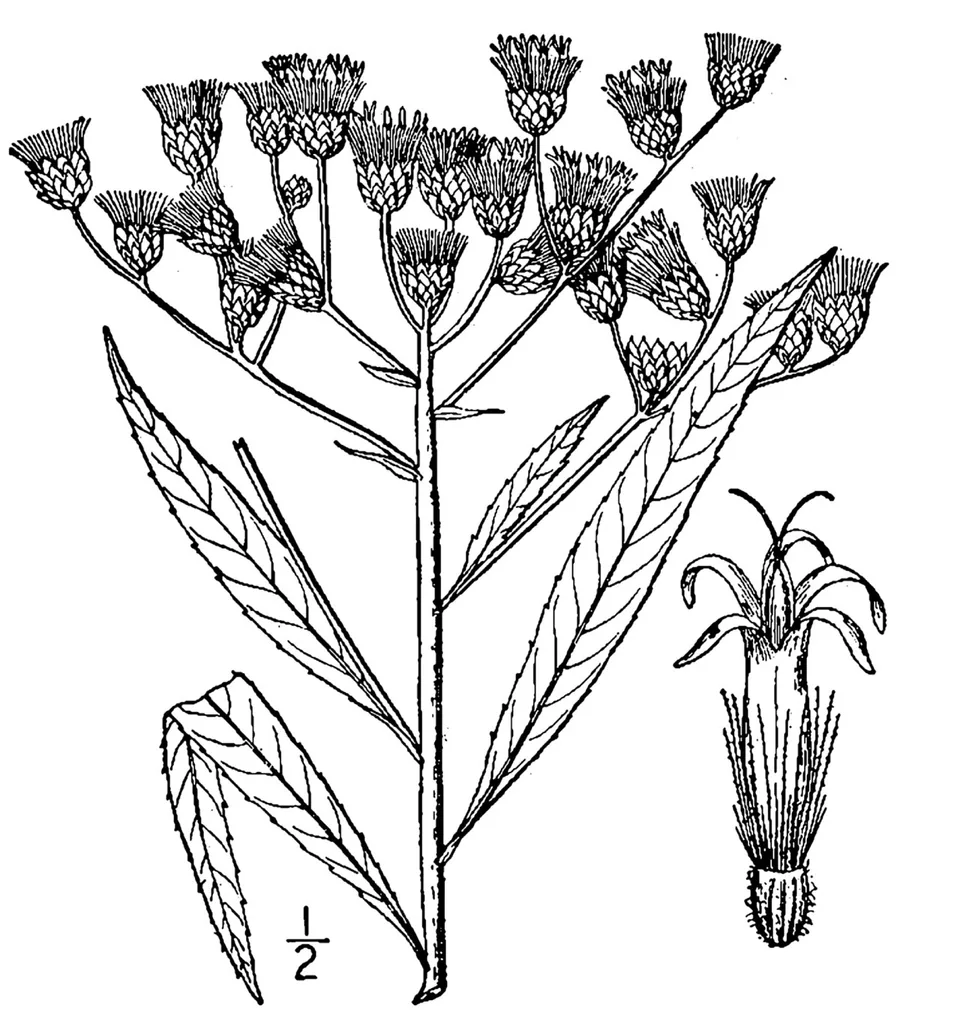
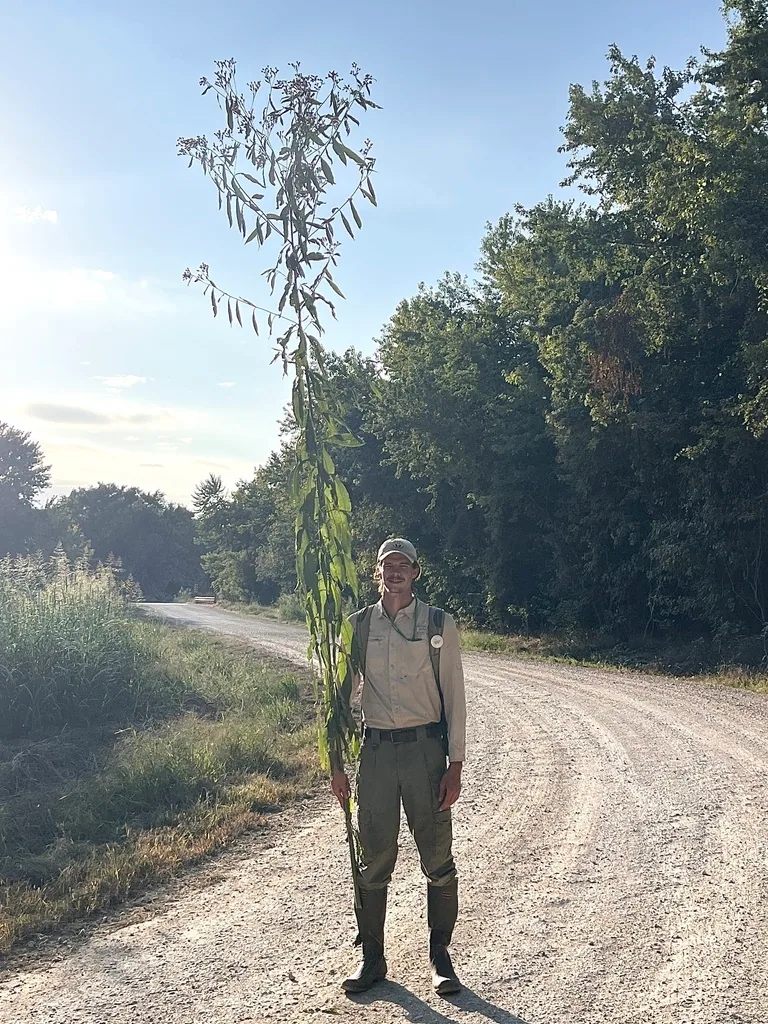
Cómo cultivar y cuidar Giant Ironweed
Vernonia gigantea
Escrito por Emilio Marruso · última revisión
De un vistazo
La vernonia gigante es una planta perenne que crece a gusto a pleno sol o en semisombra. Le encanta la tierra húmeda o muy húmeda que drene bien, así que puede llenar un rincón húmedo de tu jardín. Puedes multiplicarla por semilla o dividiendo la mata, y un recorte al principio de la temporada la mantiene más baja y ordenada.
- Sol
Pleno sol o semisombra
Qué dicen las fuentes (2)
Luz: Pleno sol a semisombra
Giant ironweed prefers full sun to partial shade and well-drained moist to wet soils.
— Vernonia gigantea (Giant Ironweed, Tall Ironweed) | North Carolina Extension Gardener Plant Toolbox [1] It grows though most of the state—zones 8b to 10b—and can be planted in areas with full sun to partial shade.
— Ironweed – Gardening Solutions [3] - Riego
Le gusta la tierra húmeda o muy húmeda que drene bien
Qué dicen las fuentes (2)
Notas sobre el riego: Prefiere suelos bien drenados, húmedos o mojados
Giant ironweed prefers full sun to partial shade and well-drained moist to wet soils.
— Vernonia gigantea (Giant Ironweed, Tall Ironweed) | North Carolina Extension Gardener Plant Toolbox [1] Ironweed prefers full sun to light shade and moist conditions.
— You can never have too much IRONWEED! Part 1. | BYGL [2] - Poda
Recórtala desde finales del invierno hasta el principio de la temporada para que quede más baja
Qué dicen las fuentes (2)
Poda: Finales de invierno o principios de la temporada
In the garden, plants can be maintained at a shorter height by pruning them in late winter.
— Ironweed – Gardening Solutions [3] Cutting back the plant early in the season will reduce its height.
— Vernonia gigantea (Giant Ironweed, Tall Ironweed) | North Carolina Extension Gardener Plant Toolbox [1] - Atención
Puede extenderse por semilla y quitar sitio a otras plantas; sus raíces cuestan de arrancar
- Multiplicación
Multiplícala por semilla o dividiendo la mata
Qué dicen las fuentes (1)
Propagación: Semilla y división
This plant is easily propagated by seed or division.
— Vernonia gigantea (Giant Ironweed, Tall Ironweed) | North Carolina Extension Gardener Plant Toolbox [1]
Resumen
La hierba de hierro gigante es una flor silvestre herbácea perenne nativa que crece de 3 a 5 pies [0,9–1,5 m] de altura y atrae abejas y mariposas. [1] Prefiere pleno sol a semisombra y suelos húmedos a mojados con buen drenaje, y se propaga fácilmente por semilla o división. [1] Compite fuertemente en el jardín y puede volverse maleza si no se controla. [3][1]
Citado en inglés, como en la fuente.
Esta ficha está incompleta: las fuentes consultadas aún no cubren todos los campos.
Aún no cubierto por nuestras fuentes: Riego
Cuidados
Las medidas entre corchetes son nuestra conversión al otro sistema de unidades; el texto citado no cambia.
Riego
Riego
No figura en las fuentes consultadas.
Notas sobre el riego
Prefiere suelos bien drenados, húmedos o mojados
Qué dicen las fuentes (2)
Giant ironweed prefers full sun to partial shade and well-drained moist to wet soils.Ironweed prefers full sun to light shade and moist conditions.Luz
Pleno sol a semisombra
Qué dicen las fuentes (2)
Giant ironweed prefers full sun to partial shade and well-drained moist to wet soils.It grows though most of the state—zones 8b to 10b—and can be planted in areas with full sun to partial shade.Clima y frío
Rusticidad, zona más fría
Las fuentes dan valores distintos según la región, la zona o las condiciones de cultivo.
Lo que dice cada fuente
Según NC State Extension: 5a [mínima invernal de −28,9 a −26,1 °C (de −20 a −15 °F)]
Florida: 8b [mínima invernal de −9,4 a −6,7 °C (de 15 a 20 °F)]
Qué dicen las fuentes (2)
Según NC State Extension: USDA Plant Hardiness Zone:
5a, 5b, 6a, 6b, 7a, 7b, 8a, 8bFlorida: It grows though most of the state—zones 8b to 10b—and can be planted in areas with full sun to partial shade.Rusticidad, zona más cálida
Las fuentes dan valores distintos según la región, la zona o las condiciones de cultivo.
Lo que dice cada fuente
Según NC State Extension: 8b [mínima invernal de −9,4 a −6,7 °C (de 15 a 20 °F)]
Florida: 10b [mínima invernal de 1,7 a 4,4 °C (de 35 a 40 °F)]
Qué dicen las fuentes (2)
Según NC State Extension: USDA Plant Hardiness Zone:
5a, 5b, 6a, 6b, 7a, 7b, 8a, 8bFlorida: It grows though most of the state—zones 8b to 10b—and can be planted in areas with full sun to partial shade.Propagación
Semilla y división
Qué dicen las fuentes (1)
This plant is easily propagated by seed or division.Cultivo
La planta
Ciclo de vida
perenne
Qué dicen las fuentes (1)
Giant ironweed is a native herbaceous perennial wildflower in the Asteraceae or daisy family.Familia
Asteraceae
Qué dicen las fuentes (1)
Giant ironweed is a native herbaceous perennial wildflower in the Asteraceae or daisy family.Problemas
Maleza
Síntoma: Compite con otras plantas en el jardín y puede volverse maleza; las raíces son difíciles de desenterrar; puede producir muchas semillas que se dispersan.
Qué hacer: Corta la planta a principios de la temporada para reducir su altura; mantenla.
Qué dicen las fuentes (2)
Ironweed strongly competes in the garden and can become weedy if not maintained.
— Ironweed – Gardening Solutions [3] Cutting back the plant early in the season will reduce its height.
— Vernonia gigantea (Giant Ironweed, Tall Ironweed) | North Carolina Extension Gardener Plant Toolbox [1]
Remedios
Cada remedio indica qué dicen las fuentes oficiales; los remedios tradicionales sin fuente oficial aparecen marcados. Los perjudiciales están para que sepas evitarlos.
Cuidar la planta
altura excesiva
Poda a principios de la temporada. Funciona
Cómo: Poda la planta a principios de la temporada para reducir su altura.
Cutting back the plant early in the season will reduce its height.
— Vernonia gigantea (Giant Ironweed, Tall Ironweed) | North Carolina Extension Gardener Plant Toolbox [1] Qué dicen las pruebas Cutting back the plant early in the season will reduce its height.
— Vernonia gigantea (Giant Ironweed, Tall Ironweed) | North Carolina Extension Gardener Plant Toolbox [1]
Cómo eliminarla
hierba de hierro maleza
Elimina todo el follaje nuevo pronto. No verificado
Remedio tradicional, no verificado por una fuente oficial.
Ironweed was given this name for a reason; even with gardening tools it is difficult to remove the taproots and thick rhizomes of this plant.
— kentuckyliving.com [4] Cómo: Elimina todo el follaje en cuanto aparezca el nuevo crecimiento, para evitar la floración y las semillas; elimina las raíces al voltear el suelo.
siega repetida del rebrote Funciona en parte
Mowing or clipping pasture fields, which is often performed once per year, can also lead to more multi-stemmed tall ironweed plants.
— grazer.mgcafe.uky.edu [6] Cómo: Siega temprano, luego siega repetidamente cada vez que el rebrote alcance de 6 a 8 pulgadas.
western ironweed that was mowed early (May 20) then mowed repeatedly whenever the regrowth reached 6 to 8 inches resulted in 19 to 87% stand reduction
— ag.purdue.edu [5] Qué dicen las pruebas Mowing alone can help suppress top growth of tall ironweed plants, but does not reduce plant populations.
— grazer.mgcafe.uky.edu [6] aplicación puntual de vinagre No verificado
Remedio tradicional, no verificado por una fuente oficial.
make sure it does not come into contact with other plant material in the bed.
— kentuckyliving.com [4] Cómo: La aplicación puntual con vinagre puede ayudar con las raíces pivotantes; mantenlo alejado de otro material vegetal en el lecho.
agua hirviendo No verificado
Remedio tradicional, no verificado por una fuente oficial.
make sure it does not come into contact with other plant material in the bed.
— kentuckyliving.com [4] Cómo: Vierte agua hirviendo para ayudar con las raíces pivotantes; mantenla alejada de otro material vegetal en el lecho.
harina de gluten de maíz No verificado
Remedio tradicional, no verificado por una fuente oficial.
but it will also stop wanted seeds from sprouting as well.
— kentuckyliving.com [4] Cómo: La harina de gluten de maíz y otros productos orgánicos preemergentes evitan que las semillas germinen.
Calendario
Poda
Finales de invierno o principios de la temporada
Qué dicen las fuentes (2)
In the garden, plants can be maintained at a shorter height by pruning them in late winter.Cutting back the plant early in the season will reduce its height.Meses tal como los dan las fuentes, en su mayoría de Estados Unidos (hemisferio norte). En el hemisferio sur se desplazan unos seis meses.
Valores orientativos
Valores de una fuente secundaria, no comprobados palabra por palabra como el resto de esta página. Úselos como punto de partida.
- Riego
- FrecuenteValor orientativo, adáptalo a tu clima · Fuente secundaria
- pH del suelo
- 5.5-7Valor orientativo, adáptalo a tu clima · Fuente secundaria
- Crecimiento
- AltaValor orientativo, adáptalo a tu clima · Fuente secundaria
Plantas similares
- Appalachian Ironweed Vernonia glauca
- Ironweed Vernonia acaulis
- Ironweed Vernonia angustifolia
- Ironweed Vernonia lettermannii
- Ironweed Vernonia noveboracensis
- Baldwin's ironweed Vernonia baldwinii
- African Daisy Dimorphotheca pluvialis
- Cempasúchil Tagetes erecta
Fuentes
Cada valor anterior se cita de estos documentos. Los enlaces llevan al editor original.
- Vernonia gigantea (Giant Ironweed, Tall Ironweed) | North Carolina Extension Gardener Plant Toolbox · plants.ces.ncsu.edu, consultado
- You can never have too much IRONWEED! Part 1. | BYGL · bygl.osu.edu, consultado
- Ironweed – Gardening Solutions · gardeningsolutions.ifas.ufl.edu, consultado
- kentuckyliving.com · kentuckyliving.com
- ag.purdue.edu · ag.purdue.edu
- grazer.mgcafe.uky.edu · grazer.mgcafe.uky.edu
Escrito por Emilio Marruso · última revisión