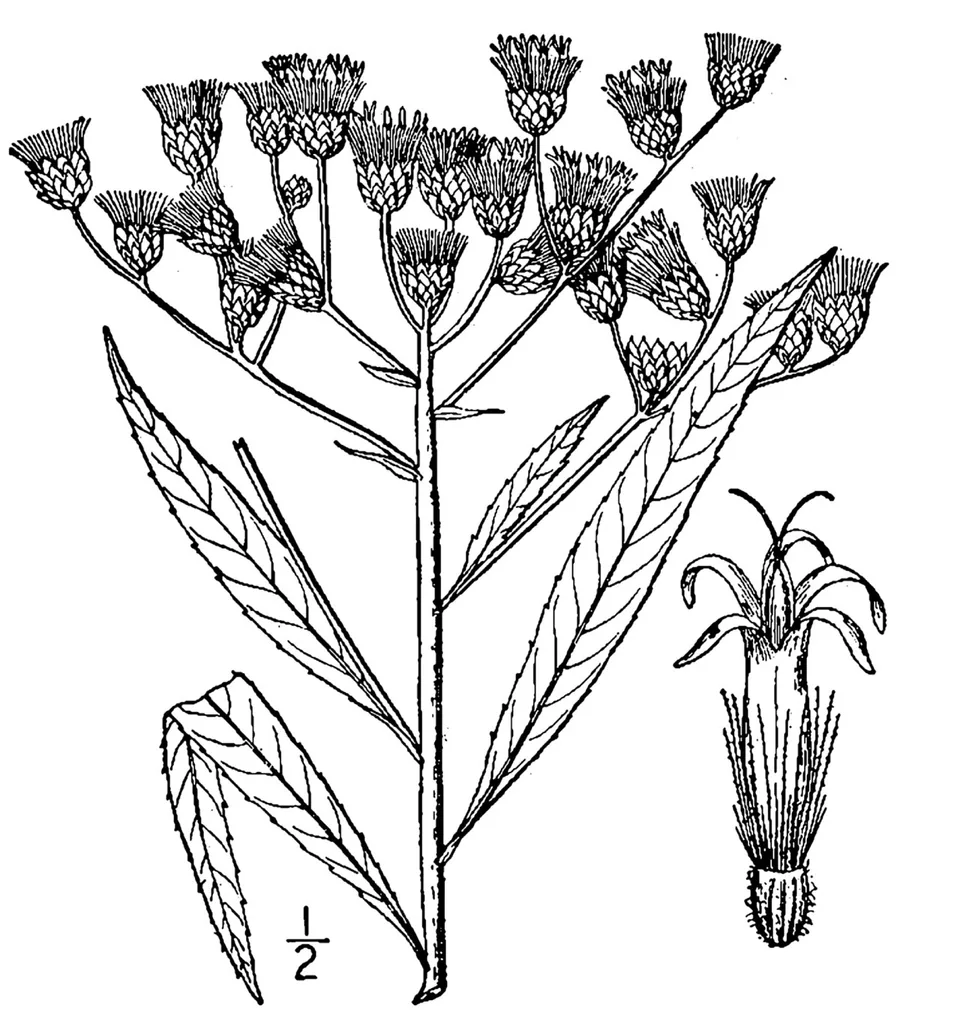
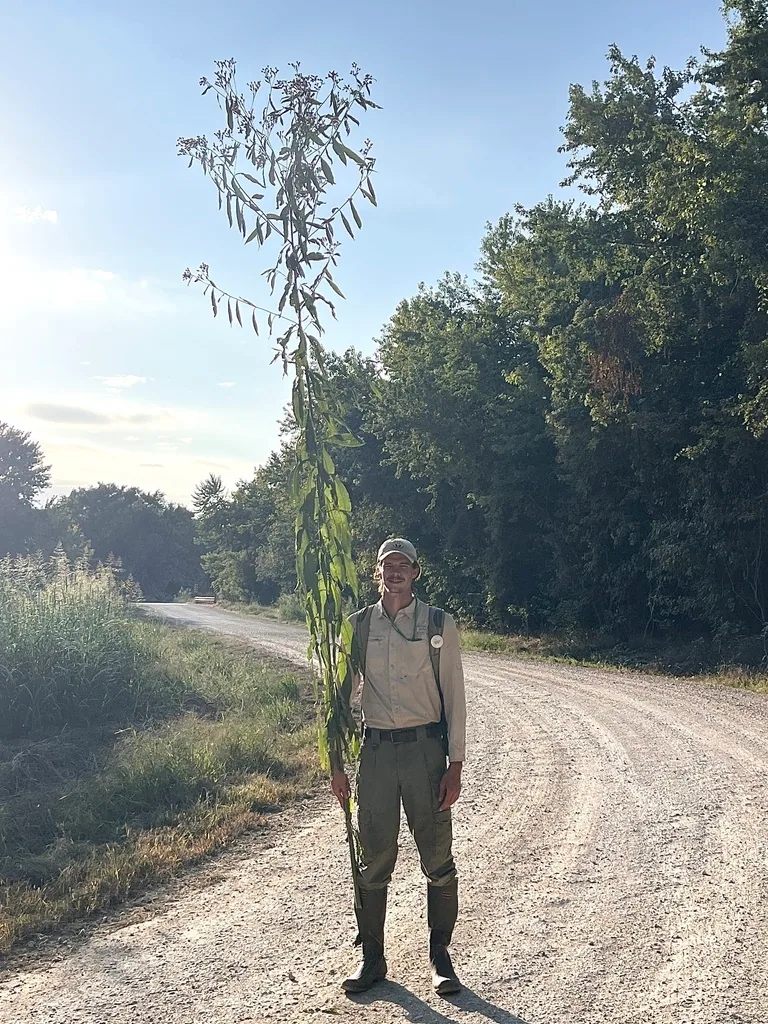
How to Grow and Care for Giant Ironweed
Vernonia gigantea
Written by Emilio Marruso · last checked
At a glance
Giant ironweed is a perennial that is happy in full sun or partial shade. It loves moist to wet soil that still drains well, so it can fill a damp corner of your garden. You can grow new plants from seed or by dividing a clump, and a trim early in the season keeps it shorter and tidy.
- Sun
Full sun to partial shade
What the sources say (2)
Light: Full sun to partial shade
Giant ironweed prefers full sun to partial shade and well-drained moist to wet soils.
— Vernonia gigantea (Giant Ironweed, Tall Ironweed) | North Carolina Extension Gardener Plant Toolbox [1] It grows though most of the state—zones 8b to 10b—and can be planted in areas with full sun to partial shade.
— Ironweed – Gardening Solutions [3] - Water
Likes moist to wet soil that still drains well
What the sources say (2)
Watering notes: Prefers well-drained moist to wet soils
Giant ironweed prefers full sun to partial shade and well-drained moist to wet soils.
— Vernonia gigantea (Giant Ironweed, Tall Ironweed) | North Carolina Extension Gardener Plant Toolbox [1] Ironweed prefers full sun to light shade and moist conditions.
— You can never have too much IRONWEED! Part 1. | BYGL [2] - Pruning
Cut it back from late winter to early in the season to keep it shorter
What the sources say (2)
Pruning: Late winter to early in the season
In the garden, plants can be maintained at a shorter height by pruning them in late winter.
— Ironweed – Gardening Solutions [3] Cutting back the plant early in the season will reduce its height.
— Vernonia gigantea (Giant Ironweed, Tall Ironweed) | North Carolina Extension Gardener Plant Toolbox [1] - Watch out
Can spread by seed and crowd other plants; its roots are hard to dig up
- Propagation
Grow new plants from seed or by dividing a clump
What the sources say (1)
Propagation: Seed and division
This plant is easily propagated by seed or division.
— Vernonia gigantea (Giant Ironweed, Tall Ironweed) | North Carolina Extension Gardener Plant Toolbox [1]
Overview
Giant ironweed is a native herbaceous perennial wildflower that grows 3 to 5 feet [0.9–1.5 m] tall and attracts bees and butterflies. [1] It prefers full sun to partial shade and well-drained moist to wet soils, and is easily propagated by seed or division. [1] It competes strongly in the garden and can become weedy if not controlled. [3][1]
This record is incomplete: the sources we read do not cover every field yet.
Not yet covered by our sources: Watering
Giant Ironweed care
Measurements in square brackets are our conversion into the other unit system; the quoted text is unchanged.
How to water Giant Ironweed
Watering
Not stated in the sources we read.
Watering notes
Prefers well-drained moist to wet soils
What the sources say (2)
Giant ironweed prefers full sun to partial shade and well-drained moist to wet soils.Ironweed prefers full sun to light shade and moist conditions.How much light Giant Ironweed needs
Full sun to partial shade
What the sources say (2)
Giant ironweed prefers full sun to partial shade and well-drained moist to wet soils.It grows though most of the state—zones 8b to 10b—and can be planted in areas with full sun to partial shade.How much cold Giant Ironweed can take
Hardiness, coldest zone
The sources give different values depending on region, zone or growing conditions.
What each source says
According to NC State Extension: 5a [winter low −28.9 to −26.1 °C (−20 to −15 °F)]
Florida: 8b [winter low −9.4 to −6.7 °C (15 to 20 °F)]
What the sources say (2)
According to NC State Extension: USDA Plant Hardiness Zone:
5a, 5b, 6a, 6b, 7a, 7b, 8a, 8bFlorida: It grows though most of the state—zones 8b to 10b—and can be planted in areas with full sun to partial shade.Hardiness, warmest zone
The sources give different values depending on region, zone or growing conditions.
What each source says
According to NC State Extension: 8b [winter low −9.4 to −6.7 °C (15 to 20 °F)]
Florida: 10b [winter low 1.7 to 4.4 °C (35 to 40 °F)]
What the sources say (2)
According to NC State Extension: USDA Plant Hardiness Zone:
5a, 5b, 6a, 6b, 7a, 7b, 8a, 8bFlorida: It grows though most of the state—zones 8b to 10b—and can be planted in areas with full sun to partial shade.How to propagate Giant Ironweed
Seed and division
What the sources say (1)
This plant is easily propagated by seed or division.How to grow Giant Ironweed
The plant
Life cycle
perennial
What the sources say (1)
Giant ironweed is a native herbaceous perennial wildflower in the Asteraceae or daisy family.Family
Asteraceae
What the sources say (1)
Giant ironweed is a native herbaceous perennial wildflower in the Asteraceae or daisy family.Giant Ironweed pests and problems
Weediness
Symptom: Competes with other plants in the garden and can become weedy; roots are difficult to dig up; may produce lots of seeds that spread.
What to do: Cut back the plant early in the season to reduce its height; keep it maintained.
What the sources say (2)
Ironweed strongly competes in the garden and can become weedy if not maintained.
— Ironweed – Gardening Solutions [3] Cutting back the plant early in the season will reduce its height.
— Vernonia gigantea (Giant Ironweed, Tall Ironweed) | North Carolina Extension Gardener Plant Toolbox [1]
Remedies
Each remedy shows what official sources say about it; traditional remedies without an official source are marked as such. Harmful ones are listed so you know to avoid them.
Treating the plant
excessive height
cut back early in the season Works
How: Cutting back the plant early in the season reduces its height.
Cutting back the plant early in the season will reduce its height.
— Vernonia gigantea (Giant Ironweed, Tall Ironweed) | North Carolina Extension Gardener Plant Toolbox [1] What the evidence says Cutting back the plant early in the season will reduce its height.
— Vernonia gigantea (Giant Ironweed, Tall Ironweed) | North Carolina Extension Gardener Plant Toolbox [1]
Getting rid of it
weedy ironweed
remove all new foliage early Not verified
Traditional remedy, not verified by an official source.
Ironweed was given this name for a reason; even with gardening tools it is difficult to remove the taproots and thick rhizomes of this plant.
— kentuckyliving.com [4] How: Remove all foliage as soon as new growth appears, to prevent flowering and seed; remove roots when turning the soil.
repeated mowing of regrowth Partly works
Mowing or clipping pasture fields, which is often performed once per year, can also lead to more multi-stemmed tall ironweed plants.
— grazer.mgcafe.uky.edu [6] How: Mow early, then mow repeatedly whenever the regrowth reaches 6 to 8 inches.
western ironweed that was mowed early (May 20) then mowed repeatedly whenever the regrowth reached 6 to 8 inches resulted in 19 to 87% stand reduction
— ag.purdue.edu [5] What the evidence says Mowing alone can help suppress top growth of tall ironweed plants, but does not reduce plant populations.
— grazer.mgcafe.uky.edu [6] vinegar spot spray Not verified
Traditional remedy, not verified by an official source.
make sure it does not come into contact with other plant material in the bed.
— kentuckyliving.com [4] How: Spot spraying with vinegar can help with the taproots; keep it away from other plant material in the bed.
boiling water Not verified
Traditional remedy, not verified by an official source.
make sure it does not come into contact with other plant material in the bed.
— kentuckyliving.com [4] How: Pouring boiling water can help with the taproots; keep it away from other plant material in the bed.
corn gluten meal Not verified
Traditional remedy, not verified by an official source.
but it will also stop wanted seeds from sprouting as well.
— kentuckyliving.com [4] How: Corn gluten meal and other organic pre-emergent products prevent the seeds from germinating.
Calendar
Pruning
Late winter to early in the season
What the sources say (2)
In the garden, plants can be maintained at a shorter height by pruning them in late winter.Cutting back the plant early in the season will reduce its height.Months as given by the sources, which are mostly from the United States (northern hemisphere). In the southern hemisphere they shift by about six months.
Indicative values
Values from a secondary source, not checked word for word like the rest of this page. Use them as a starting point.
- Watering
- FrequentIndicative value, adapt it to your climate · Secondary source
- Soil pH
- 5.5-7Indicative value, adapt it to your climate · Secondary source
- Growth rate
- HighIndicative value, adapt it to your climate · Secondary source
Similar plants
- Appalachian Ironweed Vernonia glauca
- Ironweed Vernonia acaulis
- Ironweed Vernonia angustifolia
- Ironweed Vernonia lettermannii
- Ironweed Vernonia noveboracensis
- Baldwin's ironweed Vernonia baldwinii
- African Daisy Dimorphotheca pluvialis
- African Marigold Tagetes erecta
Sources
Every value above is quoted from these documents. Links lead to the original publisher.
- Vernonia gigantea (Giant Ironweed, Tall Ironweed) | North Carolina Extension Gardener Plant Toolbox · plants.ces.ncsu.edu, consulted
- You can never have too much IRONWEED! Part 1. | BYGL · bygl.osu.edu, consulted
- Ironweed – Gardening Solutions · gardeningsolutions.ifas.ufl.edu, consulted
- kentuckyliving.com · kentuckyliving.com
- ag.purdue.edu · ag.purdue.edu
- grazer.mgcafe.uky.edu · grazer.mgcafe.uky.edu
Written by Emilio Marruso · last checked