

How to Grow and Care for Ironweed
Vernonia acaulis
Written by Emilio Marruso · last checked
At a glance
This perennial from the daisy family comes back year after year and asks for very little. It is happy in full sun or partial shade and does well in sandy soil that drains well, even when that soil stays dry. Grow it from seed and watch it climb to 36–42 inches tall, a lovely height for any garden bed.
- Sun
Full sun to partial shade
What the sources say (1)
Light: Full sun to partial shade
Light: Full sun (6 or more hours of direct sunlight a day) Partial Shade (Direct sunlight only part of the day, 2-6 hours)
— Vernonia acaulis (Ironweed, Leafless Ironweed, Stemless Ironweed) | North Carolina Extension Gardener Plant Toolbox [1] - Soil
Sandy soil that drains well; it even does fine in dry soil
What the sources say (1)
Watering notes: Performs well in well-drained to dry, sandy soils
It performs well at the edge of a woods in well-drained to dry, sandy soils and in meadows and woodland landscapes
— Vernonia acaulis (Ironweed, Leafless Ironweed, Stemless Ironweed) | North Carolina Extension Gardener Plant Toolbox [1] - Size
36–42 inches tall
What the sources say (1)
Mature height: 91.44-106.68 cm (36-42 in)
Stemless ironweed forms a basal rosette of leaves with 36-42” tall stems rising from its center.
— Vernonia acaulis (Ironweed, Leafless Ironweed, Stemless Ironweed) | North Carolina Extension Gardener Plant Toolbox [1] - Propagation
Grow new plants from seed
What the sources say (1)
Propagation: Seed
Recommended Propagation Strategy: Seed Country Or Region Of Origin: SE North America
— Vernonia acaulis (Ironweed, Leafless Ironweed, Stemless Ironweed) | North Carolina Extension Gardener Plant Toolbox [1]
Overview
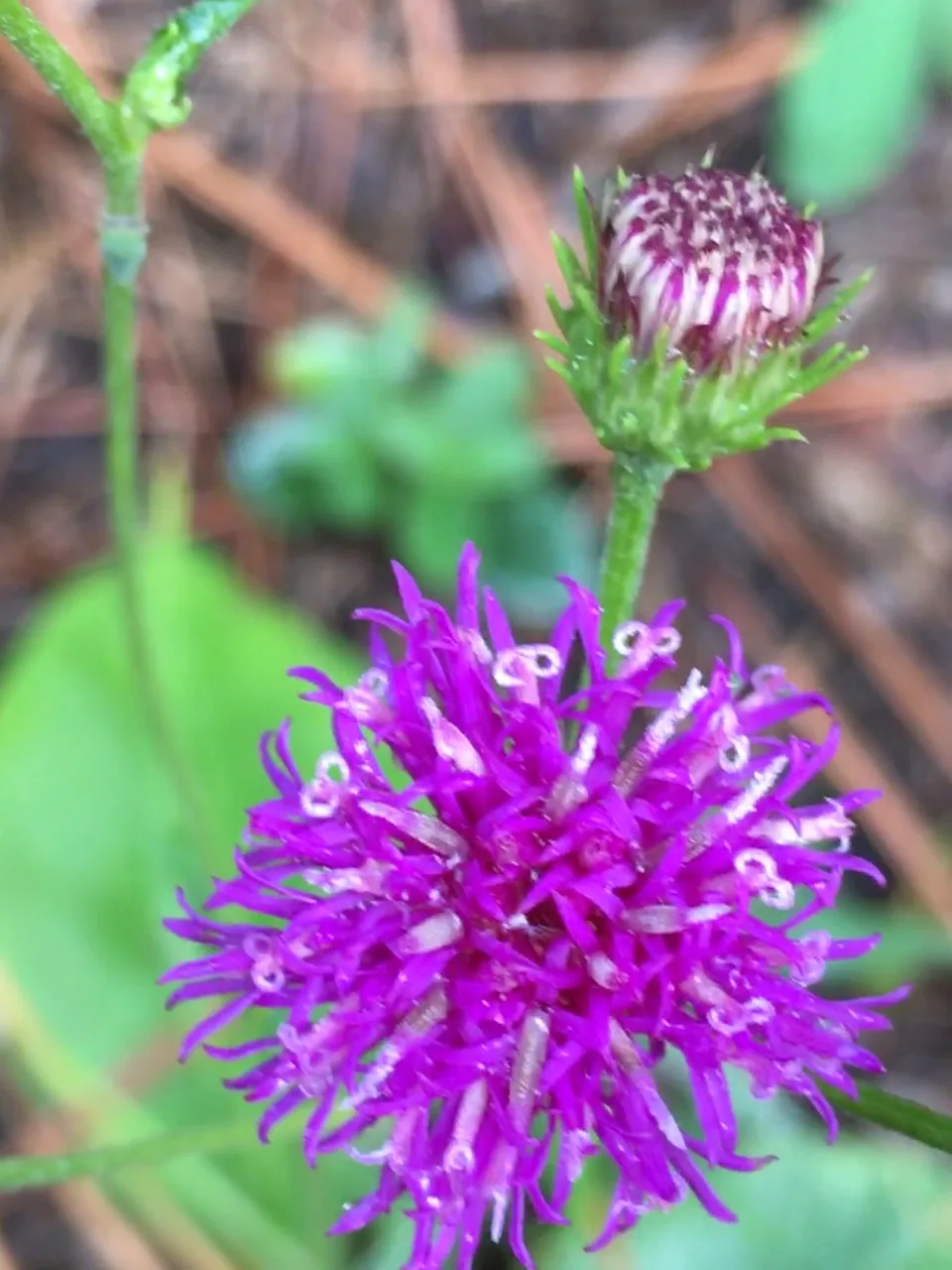
Stemless ironweed is a wildflower native to NC, SC and Georgia that forms a basal rosette of leaves. [1] It performs well at woodland edges in well-drained to dry sandy soils and in meadows. [1] Purple-fuchsia flowers appear from late June through August and are attractive to bees. [1]
This record is incomplete: the sources we read do not cover every field yet.
Not yet covered by our sources: Watering, Hardiness, coldest zone, Hardiness, warmest zone, Pruning
Ironweed care
How to water Ironweed
Watering
Not stated in the sources we read.
Watering notes
Performs well in well-drained to dry, sandy soils
What the sources say (1)
It performs well at the edge of a woods in well-drained to dry, sandy soils and in meadows and woodland landscapesHow much light Ironweed needs
Full sun to partial shade
What the sources say (1)
Light:
Full sun (6 or more hours of direct sunlight a day)
Partial Shade (Direct sunlight only part of the day, 2-6 hours)How much cold Ironweed can take
Hardiness, coldest zone
Not stated in the sources we read.
Hardiness, warmest zone
Not stated in the sources we read.
How to propagate Ironweed
Seed
What the sources say (1)
Recommended Propagation Strategy:
Seed
Country Or Region Of Origin:
SE North AmericaHow to grow Ironweed
The plant
Life cycle
perennial
What the sources say (1)
Genus:
Vernonia
Species:
acaulis
Family:
Asteraceae
Life Cycle:
PerennialFamily
Asteraceae
What the sources say (1)
Genus:
Vernonia
Species:
acaulis
Family:
Asteraceae
Life Cycle:
PerennialMature height
91.44-106.68 cm (36-42 in)
What the sources say (1)
Stemless ironweed forms a basal rosette of leaves with 36-42” tall stems rising from its center.Remedies
Each remedy shows what official sources say about it; traditional remedies without an official source are marked as such. Harmful ones are listed so you know to avoid them.
Treating the plant
powdery mildew
pruning to thin the foliage Official source, not independently tested
How: Prune to thin the foliage; this increases airflow and light throughout the plant.
Prune to thin the foliage. This increases airflow and light throughout the plant.
— extension.umn.edu [4] organic mulch Official source, not independently tested
How: Mulch the soil around the plants with wood chips or other organic mulch.
Mulch the soil around the plants with wood chips or other organic mulch.
— extension.umn.edu [4]
Calendar
Pruning
Not stated in the sources we read.
Months as given by the sources, which are mostly from the United States (northern hemisphere). In the southern hemisphere they shift by about six months.
Similar plants
- Appalachian Ironweed Vernonia glauca
- Giant Ironweed Vernonia gigantea
- Ironweed Vernonia angustifolia
- Ironweed Vernonia lettermannii
- Ironweed Vernonia noveboracensis
- Baldwin's ironweed Vernonia baldwinii
- African Daisy Dimorphotheca pluvialis
- African Marigold Tagetes erecta
Sources
Every value above is quoted from these documents. Links lead to the original publisher.
- Vernonia acaulis (Ironweed, Leafless Ironweed, Stemless Ironweed) | North Carolina Extension Gardener Plant Toolbox · plants.ces.ncsu.edu, consulted
- "Pollinator Paradise" Demonstration Garden - Growing Small Farms | NC State Extension · growingsmallfarms.ces.ncsu.edu, consulted
- "Pollinator Paradise" Demonstration Garden - Growing Small Farms | NC State Extension · growingsmallfarms.ces.ncsu.edu, consulted
- extension.umn.edu · extension.umn.edu
Written by Emilio Marruso · last checked