
How to Grow and Care for Appalachian Ironweed
Vernonia glauca
Written by Emilio Marruso · last checked
At a glance
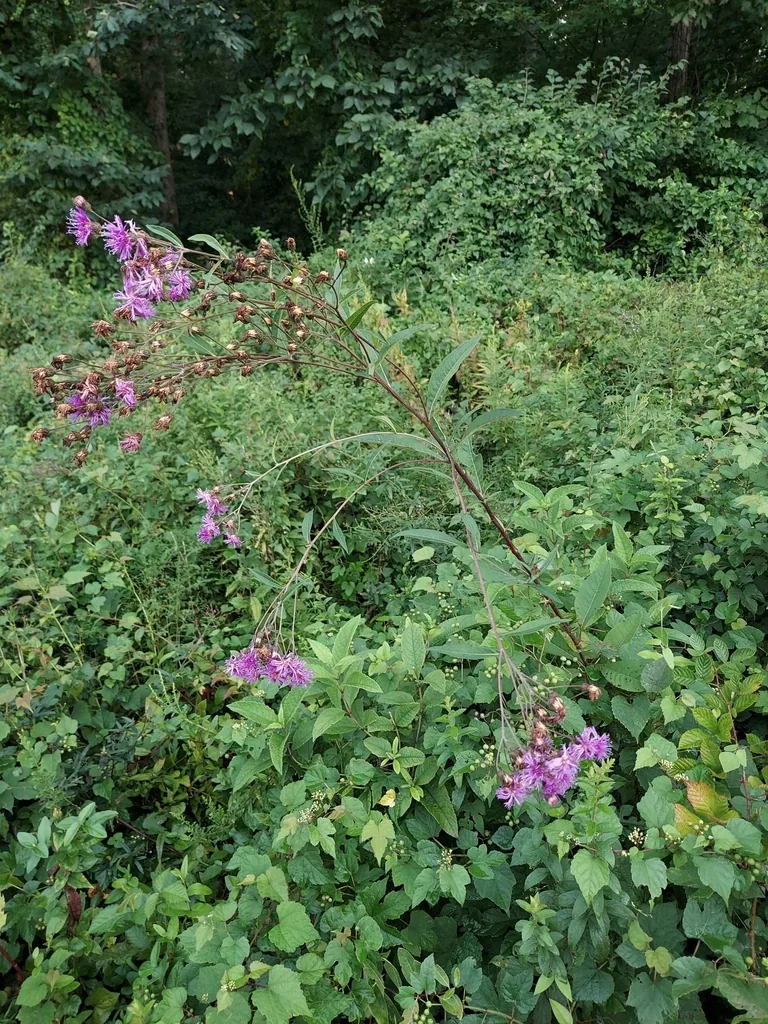
This easygoing perennial from the daisy family comes back year after year and asks for very little. It grows 3–5 ft tall in full sun or partial shade, and it handles dry soil better than its relatives, so average to dry watering is all it needs. Start new plants from seed or soft stem cuttings, and give it a tidy-up in spring.
- Sun
Full sun to partial shade
What the sources say (1)
Light: Full sun to partial shade
Light: Full sun (6 or more hours of direct sunlight a day) Partial Shade (Direct sunlight only part of the day, 2-6 hours)
— Vernonia glauca (Appalachian Ironweed, Broadleaf Ironweed, Tawny Ironweed, Upland Ironweed) | North Carolina Extension Gardener Plant Toolbox [1] - Water
Average to dry soil; it handles dry spells better than its relatives
What the sources say (2)
Watering: Average to dry moisture
Tolerant of all soils and prefers average to dry moisture in full sun. Prune in the spring to promote additional flowering stems and to maintain a shorter height.
— Vernonia glauca (Appalachian Ironweed, Broadleaf Ironweed, Tawny Ironweed, Upland Ironweed) | North Carolina Extension Gardener Plant Toolbox [1] Watering notes: More tolerant of dry soils than other species in the genus
Due to habitat loss, it is endangered in some states, like Pennsylvania. It is more tolerant of dry soils than other species in this genus.
— Vernonia glauca (Appalachian Ironweed, Broadleaf Ironweed, Tawny Ironweed, Upland Ironweed) | North Carolina Extension Gardener Plant Toolbox [1] - Cold
Survives winters down to −40 °F (−40 °C)
Very hardy · USDA 3a · RHS H7 · Z3
What the sources say (2)
Hardiness, coldest zone: 3a [winter low −40 to −37.2 °C (−40 to −35 °F)]
USDA Plant Hardiness Zone: 3a, 3b, 4a, 4b, 5a, 5b, 6a, 6b, 7a, 7b, 8a, 8b
— Vernonia glauca (Appalachian Ironweed, Broadleaf Ironweed, Tawny Ironweed, Upland Ironweed) | North Carolina Extension Gardener Plant Toolbox [1] Hardiness, warmest zone: 8b [winter low −9.4 to −6.7 °C (15 to 20 °F)]
USDA Plant Hardiness Zone: 3a, 3b, 4a, 4b, 5a, 5b, 6a, 6b, 7a, 7b, 8a, 8b
— Vernonia glauca (Appalachian Ironweed, Broadleaf Ironweed, Tawny Ironweed, Upland Ironweed) | North Carolina Extension Gardener Plant Toolbox [1] - Pruning
Prune in spring
What the sources say (1)
Pruning: Spring
Prune in the spring to promote additional flowering stems and to maintain a shorter height. Propagate by seed or soft stem cutting.
— Vernonia glauca (Appalachian Ironweed, Broadleaf Ironweed, Tawny Ironweed, Upland Ironweed) | North Carolina Extension Gardener Plant Toolbox [1] - Pests
Can get powdery mildew and rust
What the sources say (1)
Diseases: powdery mildew, rust
Although it is pest-resistant, deer are attracted to this plant. It can be affected by powdery mildew and rust.
— Vernonia glauca (Appalachian Ironweed, Broadleaf Ironweed, Tawny Ironweed, Upland Ironweed) | North Carolina Extension Gardener Plant Toolbox [1] - Watch out
Deer love to nibble it
- Size
3–5 ft tall and 3 ft wide
What the sources say (2)
Mature height: 91.44-152.4 cm (3-5 ft)
At maturity, it reaches 3 to 5 feet in height and approximately 3 feet in width.
— Vernonia glauca (Appalachian Ironweed, Broadleaf Ironweed, Tawny Ironweed, Upland Ironweed) | North Carolina Extension Gardener Plant Toolbox [1] Mature width: 91.44 cm (3 ft)
At maturity, it reaches 3 to 5 feet in height and approximately 3 feet in width.
— Vernonia glauca (Appalachian Ironweed, Broadleaf Ironweed, Tawny Ironweed, Upland Ironweed) | North Carolina Extension Gardener Plant Toolbox [1] - Propagation
From seed or soft stem cuttings
What the sources say (1)
Propagation: Seed, soft stem cutting
Prune in the spring to promote additional flowering stems and to maintain a shorter height. Propagate by seed or soft stem cutting.
— Vernonia glauca (Appalachian Ironweed, Broadleaf Ironweed, Tawny Ironweed, Upland Ironweed) | North Carolina Extension Gardener Plant Toolbox [1]
Overview
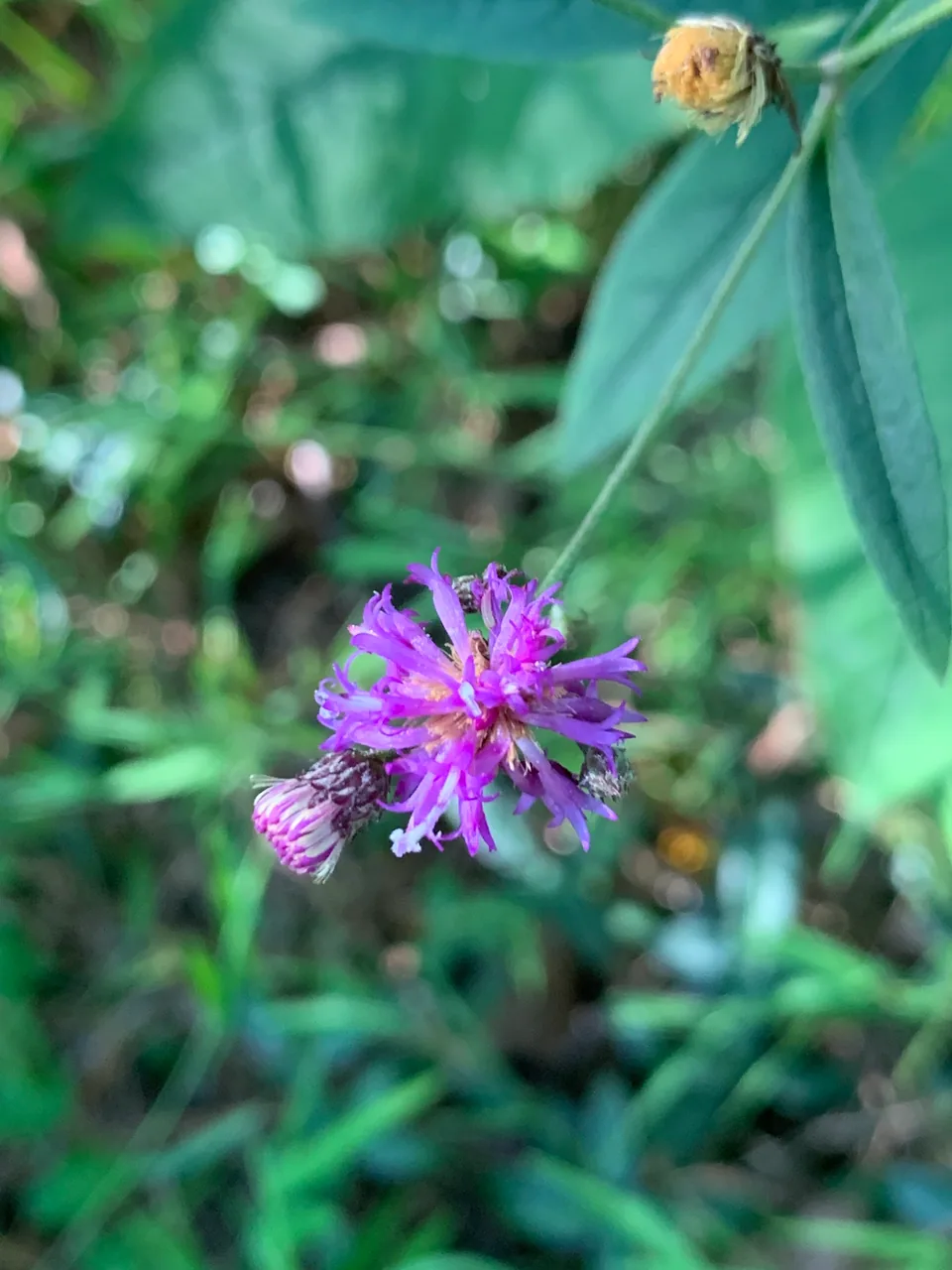
Appalachian ironweed is an herbaceous perennial native to the southeast United States. [1] It grows in full sun to partial shade and prefers average to dry moisture. [1] It is used at the back of borders and in rock, rain and pollinator gardens. [1]
Appalachian Ironweed care
How to water Appalachian Ironweed
Watering
Average to dry moisture
What the sources say (1)
Tolerant of all soils and prefers average to dry moisture in full sun. Prune in the spring to promote additional flowering stems and to maintain a shorter height.Watering notes
More tolerant of dry soils than other species in the genus
What the sources say (1)
Due to habitat loss, it is endangered in some states, like Pennsylvania. It is more tolerant of dry soils than other species in this genus.How much light Appalachian Ironweed needs
Full sun to partial shade
What the sources say (1)
Light:
Full sun (6 or more hours of direct sunlight a day)
Partial Shade (Direct sunlight only part of the day, 2-6 hours)How much cold Appalachian Ironweed can take
Hardiness, coldest zone
3a [winter low −40 to −37.2 °C (−40 to −35 °F)]
What the sources say (1)
USDA Plant Hardiness Zone:
3a, 3b, 4a, 4b, 5a, 5b, 6a, 6b, 7a, 7b, 8a, 8bHardiness, warmest zone
8b [winter low −9.4 to −6.7 °C (15 to 20 °F)]
What the sources say (1)
USDA Plant Hardiness Zone:
3a, 3b, 4a, 4b, 5a, 5b, 6a, 6b, 7a, 7b, 8a, 8bHow to propagate Appalachian Ironweed
Seed, soft stem cutting
What the sources say (1)
Prune in the spring to promote additional flowering stems and to maintain a shorter height. Propagate by seed or soft stem cutting.How to grow Appalachian Ironweed
The plant
Life cycle
perennial
What the sources say (1)
Appalachian ironweed is an herbaceous perennial in the daisy family (Asteraceae) native in the southeast United States and north to Pennsylvania.Family
Asteraceae
What the sources say (1)
Appalachian ironweed is an herbaceous perennial in the daisy family (Asteraceae) native in the southeast United States and north to Pennsylvania.Mature height
91.44-152.4 cm (3-5 ft)
What the sources say (1)
At maturity, it reaches 3 to 5 feet in height and approximately 3 feet in width.Mature width
91.44 cm (3 ft)
What the sources say (1)
At maturity, it reaches 3 to 5 feet in height and approximately 3 feet in width.Pests and diseases
Diseases
powdery mildew, rust
What the sources say (1)
Although it is pest-resistant, deer are attracted to this plant. It can be affected by powdery mildew and rust.Appalachian Ironweed pests and problems
Deer browsing
Symptom: Deer are attracted to this plant.
What the sources say (1)
Although it is pest-resistant, deer are attracted to this plant. It can be affected by powdery mildew and rust.
— Vernonia glauca (Appalachian Ironweed, Broadleaf Ironweed, Tawny Ironweed, Upland Ironweed) | North Carolina Extension Gardener Plant Toolbox [1] Powdery mildew and rust
Symptom: The plant can be affected by powdery mildew and rust.
What the sources say (1)
Although it is pest-resistant, deer are attracted to this plant. It can be affected by powdery mildew and rust.
— Vernonia glauca (Appalachian Ironweed, Broadleaf Ironweed, Tawny Ironweed, Upland Ironweed) | North Carolina Extension Gardener Plant Toolbox [1]
Remedies
Each remedy shows what official sources say about it; traditional remedies without an official source are marked as such. Harmful ones are listed so you know to avoid them.
Treating the plant
rust
pinch off infected leaves Official source, not independently tested
How: Pinch off rust infected leaves and remove them from the garden, without removing more than 1/3 of the foliage at once.
Pinch off rust infected leaves and remove them from the garden. Do not remove more than 1/3 of the plant’s foliage at any one time.
— extension.umn.edu [2] watering at the base of the plant Official source, not independently tested
How: Reduce moisture on the leaves by watering at the base of the plant.
Rust is caused by a fungus that needs water on the surface of leaves to start growing, so reduce moisture on plant leaves by watering at the base of the plant.
— extension.umn.edu [2]
powdery mildew
prune to thin the foliage Official source, not independently tested
How: Prune to thin the foliage to increase airflow and light through the plant.
Prune to thin the foliage. This increases airflow and light throughout the plant.
— extension.umn.edu [3] horticultural oil Official source, not independently tested
How: Horticultural oils are named among the low impact options for powdery mildew.
Low impact fungicides like sulfur, potassium bicarbonate and horticultural oils are recommended.
— extension.umn.edu [3]
Calendar
Pruning
Spring
What the sources say (1)
Prune in the spring to promote additional flowering stems and to maintain a shorter height. Propagate by seed or soft stem cutting.Months as given by the sources, which are mostly from the United States (northern hemisphere). In the southern hemisphere they shift by about six months.
Similar plants
- Giant Ironweed Vernonia gigantea
- Ironweed Vernonia acaulis
- Ironweed Vernonia angustifolia
- Ironweed Vernonia lettermannii
- Ironweed Vernonia noveboracensis
- Baldwin's ironweed Vernonia baldwinii
- African Daisy Dimorphotheca pluvialis
- African Marigold Tagetes erecta
Sources
Every value above is quoted from these documents. Links lead to the original publisher.
- Vernonia glauca (Appalachian Ironweed, Broadleaf Ironweed, Tawny Ironweed, Upland Ironweed) | North Carolina Extension Gardener Plant Toolbox · plants.ces.ncsu.edu, consulted
- extension.umn.edu · extension.umn.edu
- extension.umn.edu · extension.umn.edu
Written by Emilio Marruso · last checked