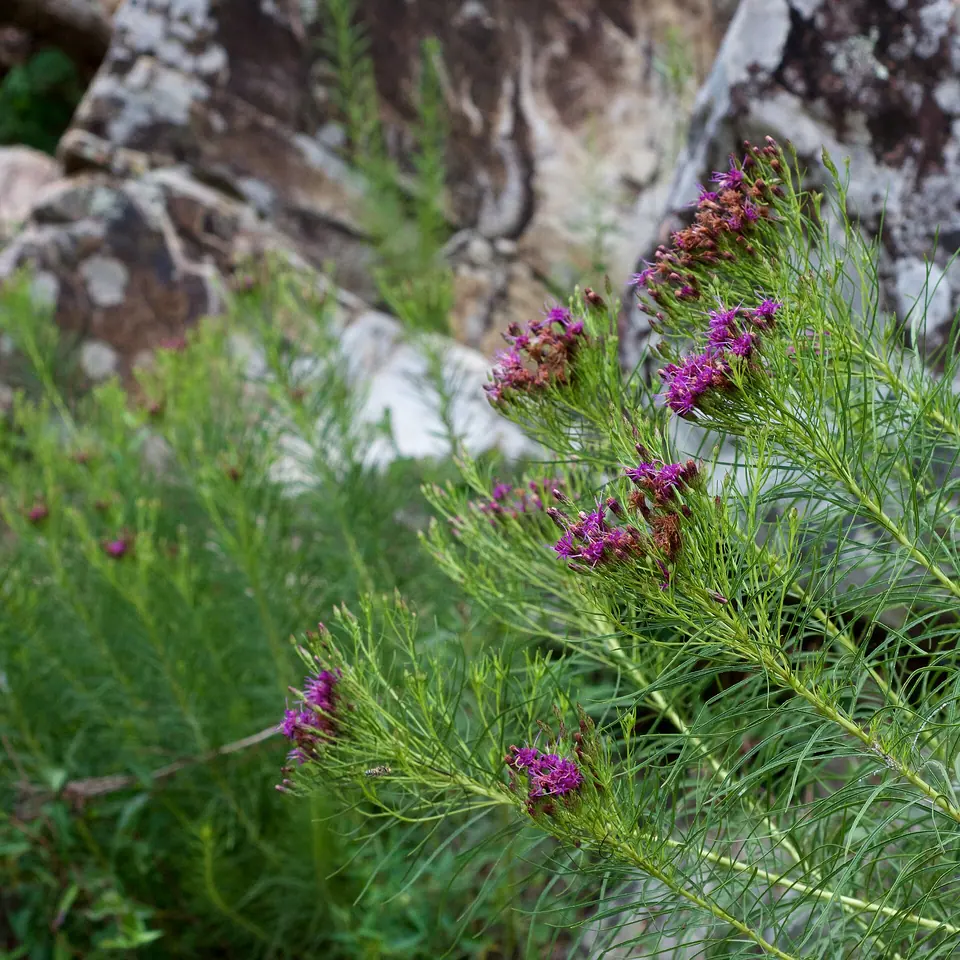

How to Grow and Care for Ironweed
Vernonia lettermannii
Written by Emilio Marruso · last checked
At a glance
This ironweed is a tough perennial that asks for very little: give it full sun and moist, well-drained soil, and it rewards you with its best flowering. Once settled in, it handles occasional flooding and drought, and no major pests or diseases have been reported. It grows to 2 feet tall, a cheerful, easy plant for a sunny spot.
- Sun
Full sun
What the sources say (2)
Light: Full sun
For best flowering and to maintain the erect stems, plant in full sun with moist, well-drained soil.
— Vernonia lettermannii (Ironweed, Letterman's Ironweed) | North Carolina Extension Gardener Plant Toolbox [1] It should be grown in full sun in any reasonable garden soil.
— Vernonia lettermannii, Threadleaf Ironweed [2] - Water
Keep the soil moist; once settled, it handles occasional flooding and drought
What the sources say (2)
Watering: Tolerates occasional flooding and drought once established
Once established, it will tolerate occasional flooding and drought.
— Vernonia lettermannii (Ironweed, Letterman's Ironweed) | North Carolina Extension Gardener Plant Toolbox [1] Watering notes: Plant with moist, well-drained soil for best flowering
For best flowering and to maintain the erect stems, plant in full sun with moist, well-drained soil.
— Vernonia lettermannii (Ironweed, Letterman's Ironweed) | North Carolina Extension Gardener Plant Toolbox [1] - Cold
Survives winters down to −30 °F (−34.4 °C)
Very hardy · USDA 4a · RHS H7 · Z4
What the sources say (2)
Hardiness, coldest zone: 4a [winter low −34.4 to −31.7 °C (−30 to −25 °F)]
USDA Plant Hardiness Zone: 4a, 4b, 5a, 5b, 6a, 6b, 7a, 7b, 8a, 8b, 9a, 9b
— Vernonia lettermannii (Ironweed, Letterman's Ironweed) | North Carolina Extension Gardener Plant Toolbox [1] Hardiness, warmest zone: 9b [winter low −3.9 to −1.1 °C (25 to 30 °F)]
USDA Plant Hardiness Zone: 4a, 4b, 5a, 5b, 6a, 6b, 7a, 7b, 8a, 8b, 9a, 9b
— Vernonia lettermannii (Ironweed, Letterman's Ironweed) | North Carolina Extension Gardener Plant Toolbox [1] - Soil
Moist, well-drained soil, pH 6.0–8.0
What the sources say (3)
Soil pH, minimum: 6.0
Soil pH: Neutral (6.0-8.0)
— Vernonia lettermannii (Ironweed, Letterman's Ironweed) | North Carolina Extension Gardener Plant Toolbox [1] Soil pH, maximum: 8.0
Soil pH: Neutral (6.0-8.0)
— Vernonia lettermannii (Ironweed, Letterman's Ironweed) | North Carolina Extension Gardener Plant Toolbox [1] Watering notes: Plant with moist, well-drained soil for best flowering
For best flowering and to maintain the erect stems, plant in full sun with moist, well-drained soil.
— Vernonia lettermannii (Ironweed, Letterman's Ironweed) | North Carolina Extension Gardener Plant Toolbox [1] - Pruning
Prune in late winter or early spring
What the sources say (1)
Pruning: Late winter or early spring
Prune in late winter or early spring.
— Vernonia lettermannii (Ironweed, Letterman's Ironweed) | North Carolina Extension Gardener Plant Toolbox [1] - Pests
No major pests or diseases reported
- Watch out
In very rich soil the stems can bend and flop; full sun helps keep them upright
- Size
2 ft tall
What the sources say (2)
Mature height: 60.96 cm (2 ft)
The upright plant can be 2 feet tall and wide.
— Vernonia lettermannii (Ironweed, Letterman's Ironweed) | North Carolina Extension Gardener Plant Toolbox [1] Narrowleaf ironweed is typically two feet tall and three feet wide;
— Vernonia lettermannii, Threadleaf Ironweed [2] - Propagation
Divide the clump, take root cuttings or sow seed
What the sources say (2)
Propagation: Division, root cutting, seed
Propagate by division or seeds.
— Vernonia lettermannii (Ironweed, Letterman's Ironweed) | North Carolina Extension Gardener Plant Toolbox [1] Recommended Propagation Strategy: Root Cutting Seed
— Vernonia lettermannii (Ironweed, Letterman's Ironweed) | North Carolina Extension Gardener Plant Toolbox [1]
Overview
Letterman's Ironweed is a herbaceous perennial native to Arkansas and Oklahoma, about 2 feet [61 cm] tall and wide. [1] It flowers best in full sun with moist, well-drained soil and tolerates occasional flooding and drought once established. [1] Its purple summer blooms are visited by butterflies, hummingbirds and bees. [1]
Ironweed care
Measurements in square brackets are our conversion into the other unit system; the quoted text is unchanged.
How to water Ironweed
Watering
Tolerates occasional flooding and drought once established
What the sources say (1)
Once established, it will tolerate occasional flooding and drought.Watering notes
Plant with moist, well-drained soil for best flowering
What the sources say (1)
For best flowering and to maintain the erect stems, plant in full sun with moist, well-drained soil.How much light Ironweed needs
Full sun
What the sources say (2)
For best flowering and to maintain the erect stems, plant in full sun with moist, well-drained soil.It should be grown in full sun in any reasonable garden soil.How much cold Ironweed can take
Hardiness, coldest zone
4a [winter low −34.4 to −31.7 °C (−30 to −25 °F)]
What the sources say (1)
USDA Plant Hardiness Zone:
4a, 4b, 5a, 5b, 6a, 6b, 7a, 7b, 8a, 8b, 9a, 9bHardiness, warmest zone
9b [winter low −3.9 to −1.1 °C (25 to 30 °F)]
What the sources say (1)
USDA Plant Hardiness Zone:
4a, 4b, 5a, 5b, 6a, 6b, 7a, 7b, 8a, 8b, 9a, 9bBest soil for Ironweed
Soil pH, minimum
6.0
What the sources say (1)
Soil pH:
Neutral (6.0-8.0)Soil pH, maximum
8.0
What the sources say (1)
Soil pH:
Neutral (6.0-8.0)How to propagate Ironweed
Division, root cutting, seed
What the sources say (2)
Propagate by division or seeds.Recommended Propagation Strategy:
Root Cutting
SeedHow to grow Ironweed
The plant
Life cycle
perennial
What the sources say (1)
is a herbaceous perennial native to Arkansas and Oklahoma in the aster family (Asteraceae).Family
Asteraceae
What the sources say (1)
is a herbaceous perennial native to Arkansas and Oklahoma in the aster family (Asteraceae).Mature height
60.96 cm (2 ft)
Ironweed pests and problems
Pests and diseases
Symptom: No major problems reported.
What the sources say (1)
Insects, Diseases, and Other Plant Problems: No major pest or disease problems.
— Vernonia lettermannii (Ironweed, Letterman's Ironweed) | North Carolina Extension Gardener Plant Toolbox [1] Floppy stems
Symptom: Fertile soils may cause bending and arching stems.
What to do: Plant in full sun with moist, well-drained soil.
What the sources say (1)
Fertile soils may cause bending and arching stems.
— Vernonia lettermannii (Ironweed, Letterman's Ironweed) | North Carolina Extension Gardener Plant Toolbox [1]
Remedies
Each remedy shows what official sources say about it; traditional remedies without an official source are marked as such. Harmful ones are listed so you know to avoid them.
Treating the plant
powdery mildew
baking soda spray Not verified
Traditional remedy, not verified by an official source.
Just be aware that baking soda can burn plants, and it can build up in your soil, potentially causing deficiencies in calcium, magnesium, and iron.
— almanac.com [3] How: Mix 1 tablespoon baking soda with 1 tablespoon vegetable oil and 1 teaspoon dish soap in 1 gallon of water.
milk spray Not verified
Traditional remedy, not verified by an official source.
How: Mix 1 part milk with 10 parts water.
foliar diseases
thinning stems to improve air flow Not verified
Traditional remedy, not verified by an official source.
How: Thin the crowns by selectively removing stems in spring.
Calendar
Pruning
Late winter or early spring
What the sources say (1)
Prune in late winter or early spring.Months as given by the sources, which are mostly from the United States (northern hemisphere). In the southern hemisphere they shift by about six months.
Similar plants
- Appalachian Ironweed Vernonia glauca
- Giant Ironweed Vernonia gigantea
- Ironweed Vernonia acaulis
- Ironweed Vernonia angustifolia
- Ironweed Vernonia noveboracensis
- Baldwin's ironweed Vernonia baldwinii
- African Daisy Dimorphotheca pluvialis
- African Marigold Tagetes erecta
Sources
Every value above is quoted from these documents. Links lead to the original publisher.
- Vernonia lettermannii (Ironweed, Letterman's Ironweed) | North Carolina Extension Gardener Plant Toolbox · plants.ces.ncsu.edu, consulted
- Vernonia lettermannii, Threadleaf Ironweed · uaex.uada.edu, consulted
- almanac.com · almanac.com
Written by Emilio Marruso · last checked