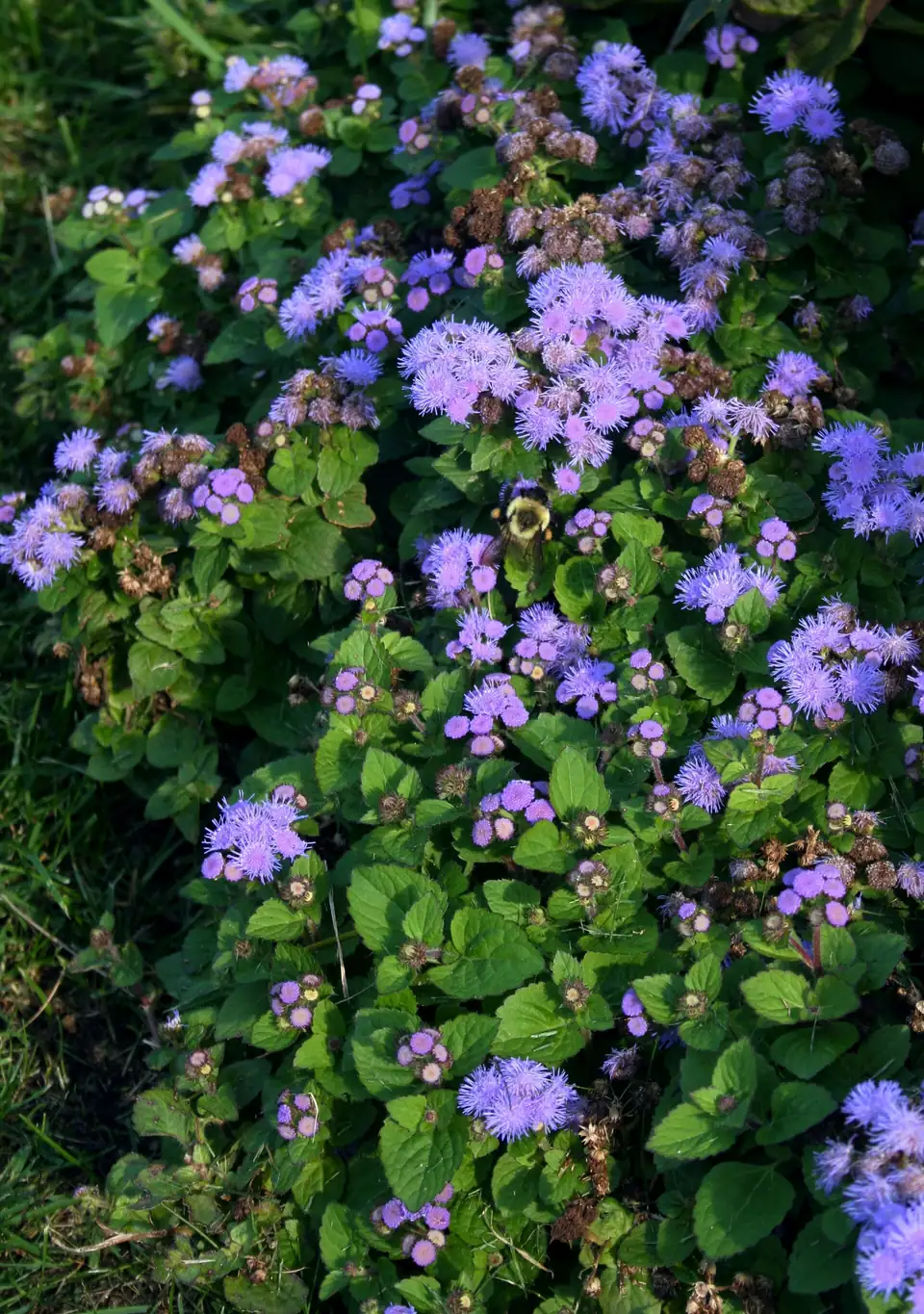


Cómo cultivar y cuidar Ageratum
Ageratum houstonianum
Escrito por Emilio Marruso · última revisión
De un vistazo
El agérato es una anual fácil de empezar desde semilla: siémbralo en interior 8–10 semanas antes de la última helada de primavera, casi sin cubrir, y germina en 7–21 días. Trasplántalo cuando ya no haya riesgo de heladas, a pleno sol o en semisombra. Aguanta bien la sequía, crece feliz en maceta y ocupa solo 25–30 cm de ancho.
- Sol
Sol pleno o semisombra
Qué dicen las fuentes (2)
Luz: Pleno sol a semisombra
Full sun (6 or more hours of direct sunlight a day) Partial Shade (Direct sunlight only part of the day, 2-6 hours)
— Ageratum houstonianum (Ageratum, Blue Billygoatweed, Bluemink, Floss Flower, Mexican Ageratum) | North Carolina Extension Gardener Plant Toolbox [1] Prefers full sun, but tolerates very light shade. Likes soil that is moist yet well-drained.
— Ageratum (Ageratum houstonianum)-Hort Answers - University of Illinois Extension [2] - Riego
Prefiere la tierra húmeda, pero aguanta la sequía
Qué dicen las fuentes (2)
Riego: Prefiere suelo húmedo y bien drenado; tolera moderadamente la sequía y soporta condiciones secas
This plant is moderately drought tolerance but prefers rich, moist, well-drained soil as well as full sun.
— Ageratum houstonianum (Ageratum, Blue Billygoatweed, Bluemink, Floss Flower, Mexican Ageratum) | North Carolina Extension Gardener Plant Toolbox [1] Ageratum prefers a moist, well drained soil but tolerates dry conditions.
— Ageratum, Ageratum houstonianum – Wisconsin Horticulture [3] - Frío
Aguanta inviernos de hasta −45,6 °C (−50 °F)
Muy rústica · USDA 2a · RHS H7 · Z2
Qué dicen las fuentes (2)
Rusticidad, zona más fría: 2a [mínima invernal de −45,6 a −42,8 °C (de −50 a −45 °F)]
USDA Plant Hardiness Zone: 2a, 2b, 3a, 3b, 4a, 4b, 5a, 5b, 6a, 6b, 7a, 7b, 8a, 8b, 9a, 9b, 10a, 10b, 11a, 11b
— Ageratum houstonianum (Ageratum, Blue Billygoatweed, Bluemink, Floss Flower, Mexican Ageratum) | North Carolina Extension Gardener Plant Toolbox [1] Rusticidad, zona más cálida: 11b [mínima invernal de 7,2 a 10 °C (de 45 a 50 °F)]
USDA Plant Hardiness Zone: 2a, 2b, 3a, 3b, 4a, 4b, 5a, 5b, 6a, 6b, 7a, 7b, 8a, 8b, 9a, 9b, 10a, 10b, 11a, 11b
— Ageratum houstonianum (Ageratum, Blue Billygoatweed, Bluemink, Floss Flower, Mexican Ageratum) | North Carolina Extension Gardener Plant Toolbox [1] - Suelo
Suelo húmedo y con buen drenaje
Qué dicen las fuentes (2)
Riego: Prefiere suelo húmedo y bien drenado; tolera moderadamente la sequía y soporta condiciones secas
This plant is moderately drought tolerance but prefers rich, moist, well-drained soil as well as full sun.
— Ageratum houstonianum (Ageratum, Blue Billygoatweed, Bluemink, Floss Flower, Mexican Ageratum) | North Carolina Extension Gardener Plant Toolbox [1] Ageratum prefers a moist, well drained soil but tolerates dry conditions.
— Ageratum, Ageratum houstonianum – Wisconsin Horticulture [3] - Plantación
Trasplanta cuando ya no haya ningún riesgo de heladas
Qué dicen las fuentes (2)
Plantación: Después de que pase todo peligro de heladas
Move outside to harden off and transplant into the garden when all risk of frost has passed.
— Ageratum, Ageratum houstonianum – Wisconsin Horticulture [3] Plant after all danger of frost is past. Needs fertile soils to continue to bloom through the summer.
— Ageratum (Ageratum houstonianum)-Hort Answers - University of Illinois Extension [2] - Poda
Quita las flores marchitas para ayudar a evitar enfermedades
- Plagas
Oídio, podredumbre gris y araña roja; dale buena ventilación
Qué dicen las fuentes (4)
Plagas: ácaros araña
Ageratum generally do not have serious insect or disease problems , although sometimes spider mites can affect the plants, especially in hot, dry weather.
— Ageratum, Ageratum houstonianum – Wisconsin Horticulture [3] Enfermedades: mildiu polvoriento, botrytis (moho gris), pudriciones de raíz, pudrición de la corona
Additional pests and problems that may affect this plant: None that are destructive. Powdery mildew, botrytis, root rots.
— Ageratum (Ageratum houstonianum)-Hort Answers - University of Illinois Extension [2] Mulching too close to the stem can cause crown rots to develop.
— Ageratum (Ageratum houstonianum)-Hort Answers - University of Illinois Extension [2] Insect Pests, Diseases, and Other Plant Problems: susceptible to powdery mildew. Some cultivars have shown excellent resistance to phytophthora.
— Ageratum houstonianum (Ageratum, Blue Billygoatweed, Bluemink, Floss Flower, Mexican Ageratum) | North Carolina Extension Gardener Plant Toolbox [1] - Atención
Aleja el acolchado del tallo o se puede pudrir el cuello de la planta
- Tamaño
25–30 cm de ancho
Qué dicen las fuentes (1)
Anchura adulta: 25-30 cm (10-12 pulgadas)
Height: 0 ft. 6 in. - 1 ft. 0 in. Width: 0 ft. 10 in. - 1 ft. 0 in.
— Ageratum houstonianum (Ageratum, Blue Billygoatweed, Bluemink, Floss Flower, Mexican Ageratum) | North Carolina Extension Gardener Plant Toolbox [1] - Multiplicación
Se multiplica por semilla
Qué dicen las fuentes (1)
Propagación: Semilla
Start ageratum seeds indoors 8 to 10 weeks before the last expected spring frost. Surface sow, barely covering with media or vermiculite
— Ageratum, Ageratum houstonianum – Wisconsin Horticulture [3] - Siembra
Siembra en interior 8–10 semanas antes de la última helada, casi sin cubrir; germina en 7–21 días
Qué dicen las fuentes (3)
Siembra: En interiores, de 8 a 10 semanas antes de la última helada esperada en primavera
Start ageratum seeds indoors 8 to 10 weeks before the last expected spring frost.
— Ageratum, Ageratum houstonianum – Wisconsin Horticulture [3] Profundidad de siembra: 0 cm [0 in] (siembra superficial, apenas cubierta)
Surface sow, barely covering with media or vermiculite or just gently firm seeds into the potting mix, as light aids germination.
— Ageratum, Ageratum houstonianum – Wisconsin Horticulture [3] Días de germinación: 7-21
Surface sow, barely covering with media or vermiculite or just gently firm seeds into the potting mix, as light aids germination. Germination usually takes 7 to 21 days.
— Ageratum, Ageratum houstonianum – Wisconsin Horticulture [3] - Maceta
Crece también en maceta
Qué dicen las fuentes (2)
En maceta: Sí
It is good for beds and containers, blooming from spring to frost.
— Ageratum houstonianum (Ageratum, Blue Billygoatweed, Bluemink, Floss Flower, Mexican Ageratum) | North Carolina Extension Gardener Plant Toolbox [1] it is best used for edging or borders of beds, in rock gardens, and in containers .
— Ageratum, Ageratum houstonianum – Wisconsin Horticulture [3]
Resumen
Ageratum houstonianum es una anual herbácea sensible a las heladas que forma montículos bajos de flores esponjosas, mayormente azules. [1][3] Prefiere pleno sol y suelo húmedo y bien drenado, y tolera condiciones secas. [2][3] Se utiliza para borduras, parterres y contenedores, y las semillas se siembran en interiores antes de la última helada de primavera. [3]
Citado en inglés, como en la fuente.
Esta ficha está incompleta: las fuentes consultadas aún no cubren todos los campos.
Aún no cubierto por nuestras fuentes: Poda
Cuidados
Riego
Prefiere suelo húmedo y bien drenado; tolera moderadamente la sequía y soporta condiciones secas
Qué dicen las fuentes (2)
This plant is moderately drought tolerance but prefers rich, moist, well-drained soil as well as full sun.Ageratum prefers a moist, well drained soil but tolerates dry conditions.Luz
Pleno sol a semisombra
Qué dicen las fuentes (2)
Full sun (6 or more hours of direct sunlight a day) Partial Shade (Direct sunlight only part of the day, 2-6 hours)Prefers full sun, but tolerates very light shade. Likes soil that is moist yet well-drained.Clima y frío
Rusticidad, zona más fría
2a [mínima invernal de −45,6 a −42,8 °C (de −50 a −45 °F)]
Qué dicen las fuentes (1)
USDA Plant Hardiness Zone: 2a, 2b, 3a, 3b, 4a, 4b, 5a, 5b, 6a, 6b, 7a, 7b, 8a, 8b, 9a, 9b, 10a, 10b, 11a, 11bRusticidad, zona más cálida
11b [mínima invernal de 7,2 a 10 °C (de 45 a 50 °F)]
Qué dicen las fuentes (1)
USDA Plant Hardiness Zone: 2a, 2b, 3a, 3b, 4a, 4b, 5a, 5b, 6a, 6b, 7a, 7b, 8a, 8b, 9a, 9b, 10a, 10b, 11a, 11bDónde cultivarla
En maceta
Sí
Qué dicen las fuentes (2)
It is good for beds and containers, blooming from spring to frost.it is best used for edging or borders of beds, in rock gardens, and in containers .Distancia de plantación
Las fuentes dan valores distintos según la región, la zona o las condiciones de cultivo.
Lo que dice cada fuente
Según NC State Extension: 25.4-30.5 cm (10-12 pulgadas)
Según University of Wisconsin-Madison Extension: 15.2-20.3 cm (6-8 pulgadas)
Qué dicen las fuentes (2)
Según NC State Extension: flowers that should be planted with 10-12 inches of space. Genus name comes from the GreekSegún University of Wisconsin-Madison Extension: transplant into the garden when all risk of frost has passed. Plant 6 to 8 inches apart in a sunny spot.Propagación
Semilla
Qué dicen las fuentes (1)
Start ageratum seeds indoors 8 to 10 weeks before the last expected spring frost. Surface sow, barely covering with media or vermiculiteCultivo
La planta
Ciclo de vida
anual
Qué dicen las fuentes (2)
A frost-tender herbaceous annual to 1/2-1' tall, mounding with clusters of fluffy, aster-like flowers that should be planted with 10-12 inches of space.One species, A. houstonianum from Mexico, named for William Houston (1695-1733), a Scottish physician who collected the first plants, is commonly used as a bedding plant. The flowers on this tender annual come mostly in shades of blueFamilia
Asteraceae
Qué dicen las fuentes (1)
These annual or tender perennial herbaceous plants and shrubs are in the plant family Compositae (Asteraceae) are all native to Central and South America.Altura adulta
Anchura adulta
25-30 cm (10-12 pulgadas)
Qué dicen las fuentes (1)
Height: 0 ft. 6 in. - 1 ft. 0 in.
Width: 0 ft. 10 in. - 1 ft. 0 in.Siembra y crecimiento
Días de germinación
7-21
Qué dicen las fuentes (1)
Surface sow, barely covering with media or vermiculite or just gently firm seeds into the potting mix, as light aids germination. Germination usually takes 7 to 21 days.Profundidad de siembra
0 cm [0 in] (siembra superficial, apenas cubierta)
Qué dicen las fuentes (1)
Surface sow, barely covering with media or vermiculite or just gently firm seeds into the potting mix, as light aids germination.Días hasta la madurez
Las fuentes dan valores distintos según la región, la zona o las condiciones de cultivo.
Lo que dice cada fuente
cultivar 'Blue Horizon': 12-15 semanas desde la siembra hasta la floración
Qué dicen las fuentes (1)
cultivar 'Blue Horizon': is a vigorous, triploid F1 hybrid that is suitable for landscape or cut flower use. Purplish-blue 3 inch flower clusters are produced on 30 inch tall stems. Plants flower 12 to 15 weeks from sowing.Plagas y enfermedades
Plagas
ácaros araña
Qué dicen las fuentes (1)
Ageratum generally do not have serious insect or disease problems , although sometimes spider mites can affect the plants, especially in hot, dry weather.Enfermedades
mildiu polvoriento, botrytis (moho gris), pudriciones de raíz, pudrición de la corona
Qué dicen las fuentes (3)
Additional pests and problems that may affect this plant:
None that are destructive. Powdery mildew, botrytis, root rots.Mulching too close to the stem can cause crown rots to develop.Insect Pests, Diseases, and Other Plant Problems: susceptible to powdery mildew. Some cultivars have shown excellent resistance to phytophthora.Problemas
Mildiu polvoriento y otras enfermedades fúngicas
Síntoma: Susceptible al mildiu polvoriento; también se mencionan botritis y pudriciones de raíz.
Qué hacer: Necesita buena circulación de aire para prevenir problemas de enfermedades fúngicas; quita las flores marchitas para reducir enfermedades.
Qué dicen las fuentes (2)
Insect Pests, Diseases, and Other Plant Problems: susceptible to powdery mildew. Some cultivars have shown excellent resistance to phytophthora.
— Ageratum houstonianum (Ageratum, Blue Billygoatweed, Bluemink, Floss Flower, Mexican Ageratum) | North Carolina Extension Gardener Plant Toolbox [1] Needs good air circulation to prevent fungal disease problems
— Ageratum (Ageratum houstonianum)-Hort Answers - University of Illinois Extension [2] Pudrición de la corona por mantillo
Síntoma: Las pudriciones de la corona pueden desarrollarse cuando el mantillo se coloca demasiado cerca del tallo.
Qué hacer: No pongas mantillo demasiado cerca del tallo.
Qué dicen las fuentes (1)
Mulching too close to the stem can cause crown rots to develop.
— Ageratum (Ageratum houstonianum)-Hort Answers - University of Illinois Extension [2]
Remedios
Cada remedio indica qué dicen las fuentes oficiales; los remedios tradicionales sin fuente oficial aparecen marcados. Los perjudiciales están para que sepas evitarlos.
Cuidar la planta
mildiu polvoriento
rociado con bicarbonato de sodio No verificado
Remedio tradicional, no verificado por una fuente oficial.
Test homemade sprays on a small portion of the plant before applying it to the entire surface. Monitor the plant’s response for a couple of days to check for burning.
— finegardening.com [6] Cómo: Mezcla 2 cucharaditas de bicarbonato de sodio y 1/2 cucharadita de jabón líquido o jabón de aceite Murphy en 2 cuartos de galón de agua; la fuente lo aplica a los rosales.
aspirina en spray No verificado
Remedio tradicional, no verificado por una fuente oficial.
Test homemade sprays on a small portion of the plant before applying it to the entire surface. Monitor the plant’s response for a couple of days to check for burning.
— finegardening.com [6] Cómo: Dos tabletas de aspirina sin recubrir (325 miligramos cada una) disueltas en 1 cuarto de galón de agua, usadas como spray foliar.
enfermedad fúngica
rociado de ajo No verificado
Remedio tradicional, no verificado por una fuente oficial.
Test homemade sprays on a small portion of the plant before applying it to the entire surface. Monitor the plant’s response for a couple of days to check for burning.
— finegardening.com [6] Cómo: Haz puré con dos dientes de ajo, agrega lentamente 1 cuarto de galón de agua y sigue licuando unos seis minutos, cuela y añade 1/8 de cucharadita de jabón líquido.
ácaros araña
spray de suero de leche y harina No verificado
Remedio tradicional, no verificado por una fuente oficial.
Test homemade sprays on a small portion of the plant before applying it to the entire surface. Monitor the plant’s response for a couple of days to check for burning.
— finegardening.com [6] Cómo: Combina 1/4 de taza de suero de leche y 2 tazas de harina de trigo en 2-1/2 galones de agua y rocía las plantas.
spray de jabón para platos Perjudicial
Test homemade sprays on a small portion of the plant before applying it to the entire surface. Monitor the plant’s response for a couple of days to check for burning.
— finegardening.com [6] Cómo: Mezcla 1 cucharada de jabón para lavar platos con 1 galón de agua.
is the one remedy that works 100% of the time on mites – those pesky insects that were mentioned earlier in the article. Mix 1 Tblsp. of the dish washing liquid with 1 gallon of water.
— fransorin.com [7] Qué dicen las pruebas Most dish soaps are not naturally occurring substances nor are they biodegradable. They can contain detergents and degreasers that are harmful to groundwater and aquatic and soil organisms.
— ucanr.edu [8] alcohol isopropílico No verificado
Remedio tradicional, no verificado por una fuente oficial.
Wear rubber gloves when using any sprays containing peppers, alcohol, citrus concentrates, mint oils, or anything else that could irritate your skin. And when spraying outdoors in breezy conditions, wear eye and nose protection.
— finegardening.com [6] Cómo: Frota la zona infectada con bolas de algodón y alcohol isopropílico.
pulgones
chorro fuerte de agua No verificado
Remedio tradicional, no verificado por una fuente oficial.
Cómo: Desaloja pulgones, ácaros y plagas similares con un chorro fuerte de agua.
Calendario
Siembra
En interiores, de 8 a 10 semanas antes de la última helada esperada en primavera
Qué dicen las fuentes (1)
Start ageratum seeds indoors 8 to 10 weeks before the last expected spring frost.Plantación
Después de que pase todo peligro de heladas
Qué dicen las fuentes (2)
Move outside to harden off and transplant into the garden when all risk of frost has passed.Plant after all danger of frost is past. Needs fertile soils to continue to bloom through the summer.Poda
No figura en las fuentes consultadas.
Meses tal como los dan las fuentes, en su mayoría de Estados Unidos (hemisferio norte). En el hemisferio sur se desplazan unos seis meses.
Respecto a las heladas
Estimación menos precisa: no hay ninguna estación meteorológica a menos de 300 km.
Busca las fechas de heladas por código postal o ciudad
Siembra en interior: de 8 a 10 semanas antes de la última helada
Start ageratum seeds indoors 8 to 10 weeks before the last expected spring frost.
— Ageratum, Ageratum houstonianum – Wisconsin Horticulture [3] Trasplante: hacia la última helada
Move outside to harden off and transplant into the garden when all risk of frost has passed.
— Ageratum, Ageratum houstonianum – Wisconsin Horticulture [3] Plantación: hacia la última helada
Plant after all danger of frost is past. Needs fertile soils to continue to bloom through the summer.
— Ageratum (Ageratum houstonianum)-Hort Answers - University of Illinois Extension [2]
Cuenta desde las fechas medias de las heladas de tu zona.
Valores orientativos
Valores de una fuente secundaria, no comprobados palabra por palabra como el resto de esta página. Úselos como punto de partida.
- Horas de sol
- 4-6 horasValor orientativo, adáptalo a tu clima · Fuente secundaria
- Resiste la sequía
- SíValor orientativo, adáptalo a tu clima · Fuente secundaria
- Suelo
- Bien drenadoValor orientativo, adáptalo a tu clima · Fuente secundaria
- pH del suelo
- 6-7Valor orientativo, adáptalo a tu clima · Fuente secundaria
- Nivel de cuidado
- MedioValor orientativo, adáptalo a tu clima · Fuente secundaria
- Crecimiento
- BajoValor orientativo, adáptalo a tu clima · Fuente secundaria
- Poda
- Mayo, junio, julioValor orientativo, adáptalo a tu clima · Fuente secundaria
Plantas similares
- African Daisy Dimorphotheca pluvialis
- Cempasúchil Tagetes erecta
- Alpine aster Aster alpinus
- Appalachian Blazing Star Liatris squarrulosa
- Appalachian Ironweed Vernonia glauca
- Appalachian Sunflower Helianthus atrorubens
- Aromatic Aster Symphyotrichum oblongifolium
- Margarita de Oregón Erigeron speciosus
Fuentes
Cada valor anterior se cita de estos documentos. Los enlaces llevan al editor original.
- Ageratum houstonianum (Ageratum, Blue Billygoatweed, Bluemink, Floss Flower, Mexican Ageratum) | North Carolina Extension Gardener Plant Toolbox · plants.ces.ncsu.edu, consultado
- Ageratum (Ageratum houstonianum)-Hort Answers - University of Illinois Extension · web.extension.illinois.edu, consultado
- Ageratum, Ageratum houstonianum – Wisconsin Horticulture · hort.extension.wisc.edu, consultado
- Ageratum - Ageratum houstonianum | North Carolina Extension Gardener Plant Toolbox · plants.ces.ncsu.edu, consultado
- Mexican Ageratum - Ageratum houstonianum | North Carolina Extension Gardener Plant Toolbox · plants.ces.ncsu.edu, consultado
- finegardening.com · finegardening.com
- fransorin.com · fransorin.com
- ucanr.edu · ucanr.edu
Escrito por Emilio Marruso · última revisión