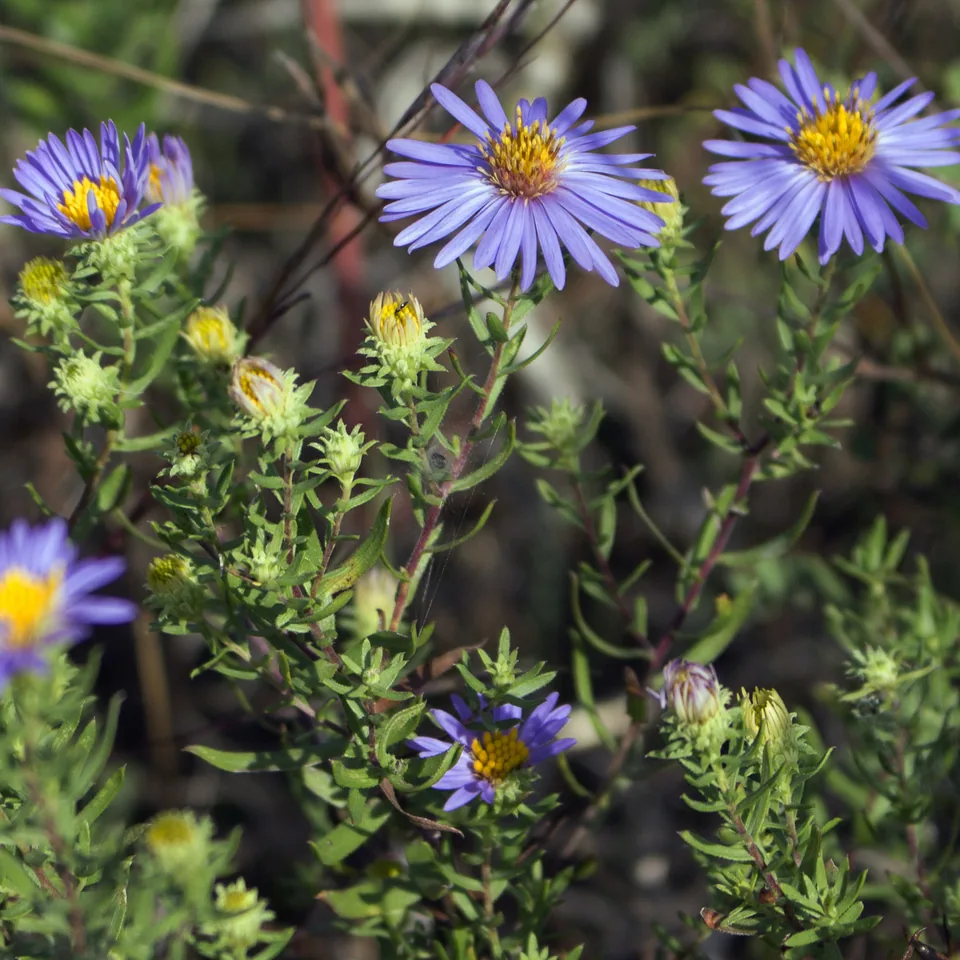
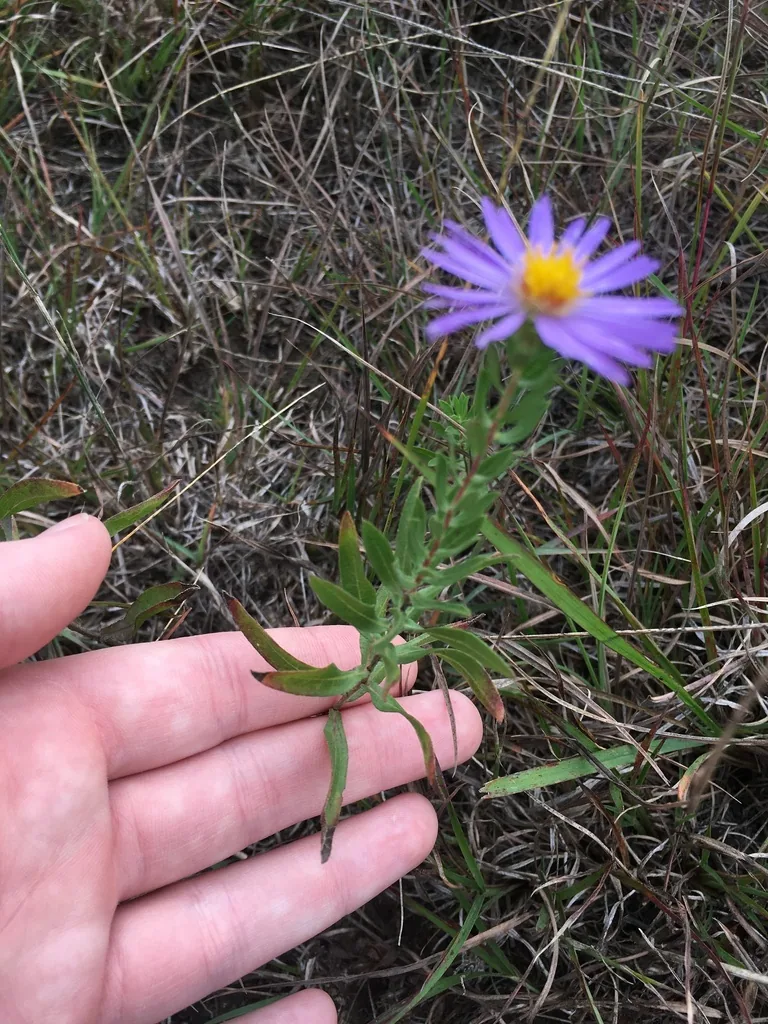

Cómo cultivar y cuidar Aromatic Aster
Symphyotrichum oblongifolium
Escrito por Emilio Marruso · última revisión
De un vistazo
Este áster perenne adora el sol pleno y aguanta bien la sequía en un suelo con buen drenaje. Forma una mata generosa de 90 cm de alto y otros tantos de ancho, y puedes sacar plantas nuevas de semilla o de sus estolones. Dale buen drenaje y aire a su alrededor, y se mantendrá sana y volverá año tras año.
- Sol
Sol pleno
Qué dicen las fuentes (2)
Luz: Pleno sol
Light: Full sun (6 or more hours of direct sunlight a day)
— Symphyotrichum oblongifolium (Aromatic Aster, Eastern Aromatic Aster) | North Carolina Extension Gardener Plant Toolbox [1] Plant in the full sun with well-drained soil.
— Symphyotrichum oblongifolium (Aromatic Aster, Eastern Aromatic Aster) | North Carolina Extension Gardener Plant Toolbox [1] - Riego
Aguanta bien la sequía; necesita poco riego
Qué dicen las fuentes (1)
Riego: Tolerante a la sequía
This plant is resistant to browsing by deer and rabbits and is both drought-tolerant
— Symphyotrichum oblongifolium (Aromatic Aster, Eastern Aromatic Aster) | North Carolina Extension Gardener Plant Toolbox [1] - Frío
Aguanta inviernos de hasta −40 °C (−40 °F)
Muy rústica · USDA 3a · RHS H7 · Z3
Qué dicen las fuentes (2)
Rusticidad, zona más fría: 3a [mínima invernal de −40 a −37,2 °C (de −40 a −35 °F)]
USDA Plant Hardiness Zone: 3a, 3b, 4a, 4b, 5a, 5b, 6a, 6b, 7a, 7b, 8a, 8b
— Symphyotrichum oblongifolium (Aromatic Aster, Eastern Aromatic Aster) | North Carolina Extension Gardener Plant Toolbox [1] Rusticidad, zona más cálida: 8b [mínima invernal de −9,4 a −6,7 °C (de 15 a 20 °F)]
USDA Plant Hardiness Zone: 3a, 3b, 4a, 4b, 5a, 5b, 6a, 6b, 7a, 7b, 8a, 8b
— Symphyotrichum oblongifolium (Aromatic Aster, Eastern Aromatic Aster) | North Carolina Extension Gardener Plant Toolbox [1] - Suelo
Suelo con buen drenaje
Qué dicen las fuentes (1)
Notas sobre el riego: Suelo bien drenado
Plant in the full sun with well-drained soil.
— Symphyotrichum oblongifolium (Aromatic Aster, Eastern Aromatic Aster) | North Carolina Extension Gardener Plant Toolbox [1] - Plagas
Oídio y marchitez del áster; mejora el drenaje y la ventilación para evitarlos
Qué dicen las fuentes (1)
Enfermedades: mildiu polvoriento, marchitez del áster
Asters can have some susceptibility to powdery mildew and aster wilt. Poorly-drained clay soils and poor air circulation can contribute to this.
— Symphyotrichum oblongifolium (Aromatic Aster, Eastern Aromatic Aster) | North Carolina Extension Gardener Plant Toolbox [1] - Tamaño
90 cm de alto y 90 cm de ancho
Qué dicen las fuentes (2)
Altura adulta: 91.4 cm (3 pies)
Reaching a mature height and width of 3 feet, aromatic aster creates dense, low mounds.
— Symphyotrichum oblongifolium (Aromatic Aster, Eastern Aromatic Aster) | North Carolina Extension Gardener Plant Toolbox [1] Anchura adulta: 91.4 cm (3 pies)
Reaching a mature height and width of 3 feet, aromatic aster creates dense, low mounds.
— Symphyotrichum oblongifolium (Aromatic Aster, Eastern Aromatic Aster) | North Carolina Extension Gardener Plant Toolbox [1] - Multiplicación
Por semilla o por sus estolones
Qué dicen las fuentes (2)
Propagación: Semilla; estolones
It propagates by its wind-dispersed seeds or it can spread by stolons.
— Symphyotrichum oblongifolium (Aromatic Aster, Eastern Aromatic Aster) | North Carolina Extension Gardener Plant Toolbox [1] Species: oblongifolium Family: Asteraceae Life Cycle: Perennial Recommended Propagation Strategy: Seed
— Symphyotrichum oblongifolium (Aromatic Aster, Eastern Aromatic Aster) | North Carolina Extension Gardener Plant Toolbox [1]
Resumen
El aster aromático es una flor silvestre perenne nativa con pequeñas flores moradas vistosas desde finales del verano hasta la primera helada. [1] Se cultiva a pleno sol con suelo bien drenado y es tolerante a la sequía. [1]
Citado en inglés, como en la fuente.
Esta ficha está incompleta: las fuentes consultadas aún no cubren todos los campos.
Aún no cubierto por nuestras fuentes: Poda
Cuidados
Riego
Riego
Tolerante a la sequía
Qué dicen las fuentes (1)
This plant is resistant to browsing by deer and rabbits and is both drought-tolerantNotas sobre el riego
Suelo bien drenado
Qué dicen las fuentes (1)
Plant in the full sun with well-drained soil.Luz
Pleno sol
Qué dicen las fuentes (2)
Light:
Full sun (6 or more hours of direct sunlight a day)Plant in the full sun with well-drained soil.Clima y frío
Rusticidad, zona más fría
3a [mínima invernal de −40 a −37,2 °C (de −40 a −35 °F)]
Qué dicen las fuentes (1)
USDA Plant Hardiness Zone:
3a, 3b, 4a, 4b, 5a, 5b, 6a, 6b, 7a, 7b, 8a, 8bRusticidad, zona más cálida
8b [mínima invernal de −9,4 a −6,7 °C (de 15 a 20 °F)]
Qué dicen las fuentes (1)
USDA Plant Hardiness Zone:
3a, 3b, 4a, 4b, 5a, 5b, 6a, 6b, 7a, 7b, 8a, 8bPropagación
Semilla; estolones
Qué dicen las fuentes (2)
It propagates by its wind-dispersed seeds or it can spread by stolons.Species:
oblongifolium
Family:
Asteraceae
Life Cycle:
Perennial
Recommended Propagation Strategy:
SeedCultivo
La planta
Ciclo de vida
perenne
Qué dicen las fuentes (1)
Aromatic aster is a native perennial wildflower in the Asteraceae (daisy) family. In nature it is found on rock outcrops and dry woodlands over limestone and calcareous shale.Familia
Asteraceae
Qué dicen las fuentes (1)
Aromatic aster is a native perennial wildflower in the Asteraceae (daisy) family. In nature it is found on rock outcrops and dry woodlands over limestone and calcareous shale.Altura adulta
91.4 cm (3 pies)
Qué dicen las fuentes (1)
Reaching a mature height and width of 3 feet, aromatic aster creates dense, low mounds.Anchura adulta
91.4 cm (3 pies)
Qué dicen las fuentes (1)
Reaching a mature height and width of 3 feet, aromatic aster creates dense, low mounds.Plagas y enfermedades
Enfermedades
mildiu polvoriento, marchitez del áster
Qué dicen las fuentes (1)
Asters can have some susceptibility to powdery mildew and aster wilt. Poorly-drained clay soils and poor air circulation can contribute to this.Problemas
Oídio y marchitez del áster
Síntoma: Enfermedades foliares.
Qué hacer: Mejora el drenaje y la circulación del aire
Qué dicen las fuentes (1)
Asters can have some susceptibility to powdery mildew and aster wilt. Poorly-drained clay soils and poor air circulation can contribute to this. Improving drainage and good air circulation helps reduce the incidence of foliar diseases.
— Symphyotrichum oblongifolium (Aromatic Aster, Eastern Aromatic Aster) | North Carolina Extension Gardener Plant Toolbox [1]
Remedios
Cada remedio indica qué dicen las fuentes oficiales; los remedios tradicionales sin fuente oficial aparecen marcados. Los perjudiciales están para que sepas evitarlos.
Cuidar la planta
tíngidos
un chorro fuerte de agua limpia Funciona
Cómo: Quita los tíngidos de la planta con un chorro fuerte de agua limpia de la manguera de jardín.
they can be hosed off of the plant with a strong spray of plain water from a garden hose.
— ask.extension.org [3] Qué dicen las pruebas they can be hosed off of the plant with a strong spray of plain water from a garden hose.
— ask.extension.org [3] jabón insecticida Funciona en parte
Do not apply either while temperatures are above 85 degrees, or it will risk plant tissue damage. Follow all product label directions for use, and do not spray open flowers.
— ask.extension.org [3] Cómo: Rocía con jabón insecticida si es necesario un pesticida para reducir una población alta; no lo apliques a más de 85 grados y no rocíes flores abiertas.
If a pesticide becomes necessary to knock-down a high population, you could consider spraying with either horticultural oil or insecticidal soap. Do not apply either while temperatures are above 85 degrees, or it will risk plant tissue damage.
— ask.extension.org [3] Qué dicen las pruebas If a pesticide becomes necessary to knock-down a high population, you could consider spraying with either horticultural oil or insecticidal soap. Do not apply either while temperatures are above 85 degrees, or it will risk plant tissue damage.
— ask.extension.org [3] aceite hortícola Funciona en parte
Do not apply either while temperatures are above 85 degrees, or it will risk plant tissue damage. Follow all product label directions for use, and do not spray open flowers.
— ask.extension.org [3] Cómo: Rocía con aceite hortícola si es necesario un pesticida para reducir una población alta; no lo apliques a más de 85 grados y no rocíes flores abiertas.
If a pesticide becomes necessary to knock-down a high population, you could consider spraying with either horticultural oil or insecticidal soap. Do not apply either while temperatures are above 85 degrees, or it will risk plant tissue damage.
— ask.extension.org [3] Qué dicen las pruebas If a pesticide becomes necessary to knock-down a high population, you could consider spraying with either horticultural oil or insecticidal soap. Do not apply either while temperatures are above 85 degrees, or it will risk plant tissue damage.
— ask.extension.org [3] Limpia los restos de plantas Fuente oficial, sin prueba independiente
Cómo: Alrededor de las plantas que hayan tenido brotes, una limpieza a fondo de los restos vegetales puede ayudar a limitar la población que pasa el invierno.
a through clean-up of plant debris may help to limit the overwintering population.
— ask.extension.org [4] Poda drásticamente las plantas muy dañadas. Fuente oficial, sin prueba independiente
Cómo: Si las plantas están demasiado dañadas, poda drásticamente las plantas; deberían volver a crecer, y esto reduce la población de tíngidos sin rociar.
you have little to lose by cutting the plants back drastically. They should regrow and be fine
— ask.extension.org [4]
Calendario
Poda
No figura en las fuentes consultadas.
Meses tal como los dan las fuentes, en su mayoría de Estados Unidos (hemisferio norte). En el hemisferio sur se desplazan unos seis meses.
Valores orientativos
Valores de una fuente secundaria, no comprobados palabra por palabra como el resto de esta página. Úselos como punto de partida.
- Horas de sol
- 6-8 horasValor orientativo, adáptalo a tu clima · Fuente secundaria
- Resiste la sequía
- SíValor orientativo, adáptalo a tu clima · Fuente secundaria
- pH del suelo
- 6-7.5Valor orientativo, adáptalo a tu clima · Fuente secundaria
- Nivel de cuidado
- MedioValor orientativo, adáptalo a tu clima · Fuente secundaria
- Crecimiento
- BajoValor orientativo, adáptalo a tu clima · Fuente secundaria
- Poda
- AgostoValor orientativo, adáptalo a tu clima · Fuente secundaria
Plantas similares
- Aster Symphyotrichum lateriflorum
- Barrens Silky Aster Symphyotrichum pratense
- Blue Wood Aster Symphyotrichum cordifolium
- Bushy Aster Symphyotrichum dumosum
- Crooked-stemmed Aster Symphyotrichum prenanthoides
- Eastern Silvery Aster Symphyotrichum concolor
- Frost Aster Symphyotrichum pilosum
- Georgia Aster Symphyotrichum georgianum
Fuentes
Cada valor anterior se cita de estos documentos. Los enlaces llevan al editor original.
- Symphyotrichum oblongifolium (Aromatic Aster, Eastern Aromatic Aster) | North Carolina Extension Gardener Plant Toolbox · plants.ces.ncsu.edu, consultado
- Symphyotrichum (Aster, Michaelmas daisy) | North Carolina Extension Gardener Plant Toolbox · plants.ces.ncsu.edu, consultado
- ask.extension.org · ask.extension.org
- ask.extension.org · ask.extension.org
Escrito por Emilio Marruso · última revisión