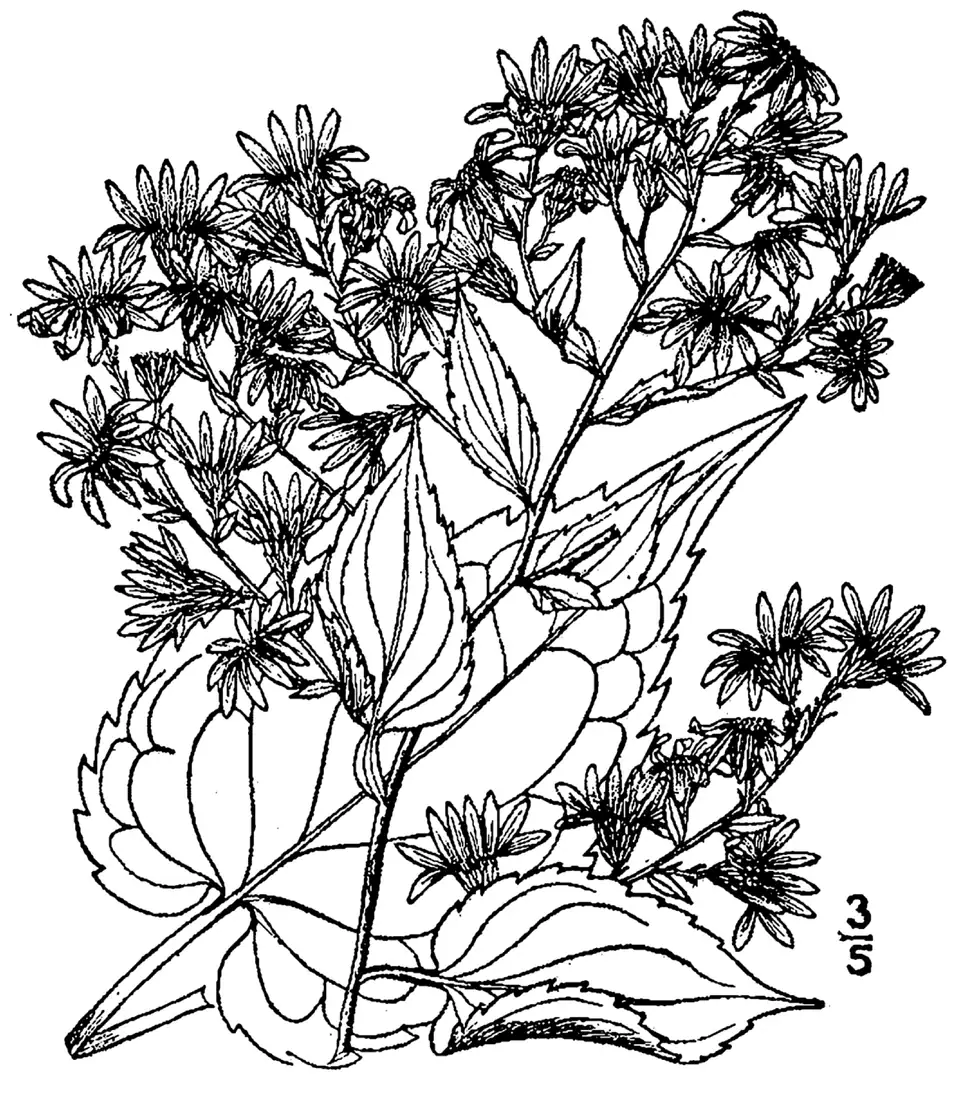


Cómo cultivar y cuidar Blue Wood Aster
Symphyotrichum cordifolium
Escrito por Emilio Marruso · última revisión
De un vistazo
Este áster perenne se adapta a la luz tamizada, a la semisombra o al sol pleno, y alcanza de 30 cm a 1,2 m de alto. Dale un suelo con buen drenaje, húmedo o más bien seco, y buena ventilación entre las hojas. Despunta los tallos para que crezca más tupido y córtalo a ras de suelo a finales del verano, cuando el follaje decae.
- Sol
Mejor en semisombra; también a luz tamizada o a pleno sol
Qué dicen las fuentes (2)
Luz: Luz filtrada, pleno sol o semisombra (prefiere semisombra)
It prefers partial shady conditions in well-drained moist to dry soils.
— Symphyotrichum cordifolium (Blue Wood Aster, Common Blue Wood Aster, Heart-leaved Aster) | North Carolina Extension Gardener Plant Toolbox [1] Light: Dappled Sunlight (Shade through upper canopy all day) Full sun (6 or more hours of direct sunlight a day) Partial Shade (Direct sunlight only part of the day, 2-6 hours)
— Symphyotrichum cordifolium (Blue Wood Aster, Common Blue Wood Aster, Heart-leaved Aster) | North Carolina Extension Gardener Plant Toolbox [1] - Riego
Le va el suelo de húmedo a seco, siempre que drene bien
Qué dicen las fuentes (1)
Riego: Prefiere suelos bien drenados, de húmedos a secos
It prefers partial shady conditions in well-drained moist to dry soils.
— Symphyotrichum cordifolium (Blue Wood Aster, Common Blue Wood Aster, Heart-leaved Aster) | North Carolina Extension Gardener Plant Toolbox [1] - Frío
Aguanta inviernos de hasta −40 °C (−40 °F)
Muy rústica · USDA 3a · RHS H7 · Z3
Qué dicen las fuentes (2)
Rusticidad, zona más fría: 3a [mínima invernal de −40 a −37,2 °C (de −40 a −35 °F)]
USDA Plant Hardiness Zone: 3a, 3b, 4a, 4b, 5a, 5b, 6a, 6b, 7a, 7b, 8a, 8b
— Symphyotrichum cordifolium (Blue Wood Aster, Common Blue Wood Aster, Heart-leaved Aster) | North Carolina Extension Gardener Plant Toolbox [1] Rusticidad, zona más cálida: 8b [mínima invernal de −9,4 a −6,7 °C (de 15 a 20 °F)]
USDA Plant Hardiness Zone: 3a, 3b, 4a, 4b, 5a, 5b, 6a, 6b, 7a, 7b, 8a, 8b
— Symphyotrichum cordifolium (Blue Wood Aster, Common Blue Wood Aster, Heart-leaved Aster) | North Carolina Extension Gardener Plant Toolbox [1] - Suelo
Evita los suelos arcillosos que se encharcan: favorecen la marchitez del áster
Qué dicen las fuentes (1)
Notas sobre el riego: El marchitamiento del áster puede ocurrir en suelos arcillosos con mal drenaje
Aster wilt can also be an occasional problem if plants are grown in poorly-drained clay soils.
— Symphyotrichum cordifolium (Blue Wood Aster, Common Blue Wood Aster, Heart-leaved Aster) | North Carolina Extension Gardener Plant Toolbox [1] - Poda
Córtalo a ras de suelo a finales del verano; despunta los tallos para que sea más tupido
Qué dicen las fuentes (1)
Poda: Finales del verano, cuando el follaje declina (cortar al ras del suelo)
The foliage tends to decline by late summer and it can be cut to the ground to avoid any self-seeding and also to help with appearance.
— Symphyotrichum cordifolium (Blue Wood Aster, Common Blue Wood Aster, Heart-leaved Aster) | North Carolina Extension Gardener Plant Toolbox [1] - Plagas
Oídio, manchas en las hojas y roya; una buena ventilación ayuda
Qué dicen las fuentes (1)
Enfermedades: Mildiu polvoriento, manchas foliares, roya, marchitez del áster
Some susceptibility to powdery mildew, leaf spots, or rust. Aster wilt can also be an occasional problem if plants are grown in poorly-drained clay soils.
— Symphyotrichum cordifolium (Blue Wood Aster, Common Blue Wood Aster, Heart-leaved Aster) | North Carolina Extension Gardener Plant Toolbox [1] - Atención
Se resiembra con facilidad y puede volverse invasivo; las plantas altas pueden necesitar tutor
- Tamaño
De 30 cm a 1,2 m de alto y 45–60 cm de ancho
Qué dicen las fuentes (2)
Altura adulta: 30.48-121.92 cm (1-4 pies)
Dimensions: Height: 1 ft. 0 in. - 4 ft. 0 in. Width: 1 ft. 6 in. - 2 ft. 0 in.
— Symphyotrichum cordifolium (Blue Wood Aster, Common Blue Wood Aster, Heart-leaved Aster) | North Carolina Extension Gardener Plant Toolbox [1] Anchura adulta: 45.72-60.96 cm (1 pie 6 pulg - 2 pies)
Dimensions: Height: 1 ft. 0 in. - 4 ft. 0 in. Width: 1 ft. 6 in. - 2 ft. 0 in.
— Symphyotrichum cordifolium (Blue Wood Aster, Common Blue Wood Aster, Heart-leaved Aster) | North Carolina Extension Gardener Plant Toolbox [1] - Multiplicación
Se multiplica por semilla
Qué dicen las fuentes (1)
Propagación: Semilla
Recommended Propagation Strategy: Seed Country Or Region Of Origin: Canada to U.S.A
— Symphyotrichum cordifolium (Blue Wood Aster, Common Blue Wood Aster, Heart-leaved Aster) | North Carolina Extension Gardener Plant Toolbox [1]
Resumen
Symphyotrichum cordifolium es una herbácea perenne nativa del este y centro de Norteamérica que crece hasta 4 pies [1,2 m] de alto y 2 pies [61 cm] de ancho. [1] Prefiere semisombra en suelos bien drenados, húmedos a secos, y produce flores azul claro desde finales del verano hasta el otoño. [1] Se resiembra fácilmente y puede volverse maleza. [1]
Citado en inglés, como en la fuente.
Cuidados
Las medidas entre corchetes son nuestra conversión al otro sistema de unidades; el texto citado no cambia.
Riego
Riego
Prefiere suelos bien drenados, de húmedos a secos
Qué dicen las fuentes (1)
It prefers partial shady conditions in well-drained moist to dry soils.Notas sobre el riego
El marchitamiento del áster puede ocurrir en suelos arcillosos con mal drenaje
Qué dicen las fuentes (1)
Aster wilt can also be an occasional problem if plants are grown in poorly-drained clay soils.Luz
Luz filtrada, pleno sol o semisombra (prefiere semisombra)
Qué dicen las fuentes (2)
It prefers partial shady conditions in well-drained moist to dry soils.Light:
Dappled Sunlight (Shade through upper canopy all day)
Full sun (6 or more hours of direct sunlight a day)
Partial Shade (Direct sunlight only part of the day, 2-6 hours)Clima y frío
Rusticidad, zona más fría
3a [mínima invernal de −40 a −37,2 °C (de −40 a −35 °F)]
Qué dicen las fuentes (1)
USDA Plant Hardiness Zone:
3a, 3b, 4a, 4b, 5a, 5b, 6a, 6b, 7a, 7b, 8a, 8bRusticidad, zona más cálida
8b [mínima invernal de −9,4 a −6,7 °C (de 15 a 20 °F)]
Qué dicen las fuentes (1)
USDA Plant Hardiness Zone:
3a, 3b, 4a, 4b, 5a, 5b, 6a, 6b, 7a, 7b, 8a, 8bPropagación
Semilla
Qué dicen las fuentes (1)
Recommended Propagation Strategy:
Seed
Country Or Region Of Origin:
Canada to U.S.ACultivo
La planta
Ciclo de vida
perenne
Qué dicen las fuentes (1)
Blue wood aster is a herbaceous perennial in the daisy famiy (Asteraceae) native to eastern and central North America.Familia
Asteraceae
Qué dicen las fuentes (1)
Blue wood aster is a herbaceous perennial in the daisy famiy (Asteraceae) native to eastern and central North America.Altura adulta
30.48-121.92 cm (1-4 pies)
Qué dicen las fuentes (1)
Dimensions: Height: 1 ft. 0 in. - 4 ft. 0 in. Width: 1 ft. 6 in. - 2 ft. 0 in.Anchura adulta
45.72-60.96 cm (1 pie 6 pulg - 2 pies)
Qué dicen las fuentes (1)
Dimensions: Height: 1 ft. 0 in. - 4 ft. 0 in. Width: 1 ft. 6 in. - 2 ft. 0 in.Plagas y enfermedades
Enfermedades
Mildiu polvoriento, manchas foliares, roya, marchitez del áster
Qué dicen las fuentes (1)
Some susceptibility to powdery mildew, leaf spots, or rust. Aster wilt can also be an occasional problem if plants are grown in poorly-drained clay soils.Problemas
Mildiu polvoriento, manchas foliares, roya
Síntoma: Cierta susceptibilidad al mildiu polvoriento, manchas foliares o roya
Qué hacer: Una buena circulación de aire ayuda a reducir la incidencia de enfermedades foliares
Qué dicen las fuentes (2)
Some susceptibility to powdery mildew, leaf spots, or rust. Aster wilt can also be an occasional problem if plants are grown in poorly-drained clay soils.
— Symphyotrichum cordifolium (Blue Wood Aster, Common Blue Wood Aster, Heart-leaved Aster) | North Carolina Extension Gardener Plant Toolbox [1] Good air circulation helps reduce the incidence of foliar diseases.
— Symphyotrichum cordifolium (Blue Wood Aster, Common Blue Wood Aster, Heart-leaved Aster) | North Carolina Extension Gardener Plant Toolbox [1] Marchitamiento del áster
Síntoma: Problema ocasional en suelos arcillosos con mal drenaje
Qué hacer: Evita los suelos arcillosos con mal drenaje
Qué dicen las fuentes (1)
Aster wilt can also be an occasional problem if plants are grown in poorly-drained clay soils.
— Symphyotrichum cordifolium (Blue Wood Aster, Common Blue Wood Aster, Heart-leaved Aster) | North Carolina Extension Gardener Plant Toolbox [1] Resiembra y entutorado
Síntoma: Se resiembra fácilmente y puede volverse invasora; las plantas más altas pueden necesitar soporte
Qué hacer: Corta hasta el suelo para evitar la resiembra; pellizca los tallos para obtener una planta más frondosa
Qué dicen las fuentes (2)
The foliage tends to decline by late summer and it can be cut to the ground to avoid any self-seeding and also to help with appearance.
— Symphyotrichum cordifolium (Blue Wood Aster, Common Blue Wood Aster, Heart-leaved Aster) | North Carolina Extension Gardener Plant Toolbox [1] Pinching back the stems will lead to a bushier plant and hopefully avoid the need for staking.
— Symphyotrichum cordifolium (Blue Wood Aster, Common Blue Wood Aster, Heart-leaved Aster) | North Carolina Extension Gardener Plant Toolbox [1]
Remedios
Cada remedio indica qué dicen las fuentes oficiales; los remedios tradicionales sin fuente oficial aparecen marcados. Los perjudiciales están para que sepas evitarlos.
Cuidar la planta
mildiu polvoriento
bicarbonato de sodio y aceite hortícola en spray Funciona
Cómo: Bicarbonato de sodio (1½ cucharadas) y un aceite hortícola ligero (a base de parafina) (3 cucharadas) en agua (1 galón); aplica cada siete a 14 días desde la brotación hasta que la humedad disminuya.
A combination of baking soda (1½ tablespoons) and a light weight (i.e., paraffin-based) horticultural oil (3 tablespoons) in water (1 gallon) has also been shown to be effective.
— hort.extension.wisc.edu [5] Qué dicen las pruebas A combination of baking soda (1½ tablespoons) and a light weight (i.e., paraffin-based) horticultural oil (3 tablespoons) in water (1 gallon) has also been shown to be effective.
— hort.extension.wisc.edu [5]
tíngidos
spray de jabón insecticida Funciona en parte
Cómo: Los jabones insecticidas y los aceites hortícolas son tóxicos para las ninfas y los adultos, pero no matan los huevos y no ofrecen control residual.
Insecticidal soaps and horticultural oils are toxic to nymphs and adults, but they do not kill eggs nor do they provide any residual control
— content.ces.ncsu.edu [6] Qué dicen las pruebas Insecticidal soaps and horticultural oils are toxic to nymphs and adults, but they do not kill eggs nor do they provide any residual control
— content.ces.ncsu.edu [6] Corta las plantas a ras del suelo Funciona en parte
Cómo: Si las plantas están demasiado dañadas, córtalas drásticamente; deberían volver a crecer, aunque la floración puede retrasarse o impedirse ese año.
If plants become too heavily damaged, where they may not flower well anyway, then you have little to lose by cutting the plants back drastically.
— ask.extension.org [7] Qué dicen las pruebas cutting the plants back drastically. They should regrow and be fine (although, depending on when this is done, blooming may be delayed or prevented for that year)
— ask.extension.org [7] Limpia los restos de plantas Funciona en parte
Cómo: Limpia a fondo los restos de plantas alrededor de las que tuvieron brotes, para limitar los adultos que pasan el invierno.
around plants that have had outbreaks of pests or diseases, a through clean-up of plant debris may help to limit the overwintering population.
— ask.extension.org [7] Qué dicen las pruebas around plants that have had outbreaks of pests or diseases, a through clean-up of plant debris may help to limit the overwintering population.
— ask.extension.org [7]
autosiembra
Corta el follaje hasta el suelo y quita las flores marchitas. Funciona
Cómo: Corta la planta hasta el suelo a fines del verano para evitar que se resiembre; quita las flores marchitas para que no se vuelva demasiado invasora.
This self-sowing native aster can be cut to the ground to prohibit seeding and to maintain a tidy appearance in the landscape in late summer. Deadheading spent flowers will also help prevent it from becoming too weedy.
— gardeningknowhow.com [8] Qué dicen las pruebas The foliage tends to decline by late summer and it can be cut to the ground to avoid any self-seeding and also to help with appearance.
— Symphyotrichum cordifolium (Blue Wood Aster, Common Blue Wood Aster, Heart-leaved Aster) | North Carolina Extension Gardener Plant Toolbox [1]
Cómo eliminarla
propagación no deseada del áster
arrancado a mano No verificado
Remedio tradicional, no verificado por una fuente oficial.
Cómo: Arranca cuando el suelo esté húmedo.
Calendario
Poda
Finales del verano, cuando el follaje declina (cortar al ras del suelo)
Qué dicen las fuentes (1)
The foliage tends to decline by late summer and it can be cut to the ground to avoid any self-seeding and also to help with appearance.Meses tal como los dan las fuentes, en su mayoría de Estados Unidos (hemisferio norte). En el hemisferio sur se desplazan unos seis meses.
Valores orientativos
Valores de una fuente secundaria, no comprobados palabra por palabra como el resto de esta página. Úselos como punto de partida.
- Horas de sol
- 6-8 horasValor orientativo, adáptalo a tu clima · Fuente secundaria
- Resiste la sequía
- SíValor orientativo, adáptalo a tu clima · Fuente secundaria
- Suelo
- Arenoso Limoso ArcillosoValor orientativo, adáptalo a tu clima · Fuente secundaria
- pH del suelo
- 5.5-7.5Valor orientativo, adáptalo a tu clima · Fuente secundaria
- Nivel de cuidado
- MedioValor orientativo, adáptalo a tu clima · Fuente secundaria
- Crecimiento
- BajoValor orientativo, adáptalo a tu clima · Fuente secundaria
Plantas similares
- Aromatic Aster Symphyotrichum oblongifolium
- Aster Symphyotrichum lateriflorum
- Barrens Silky Aster Symphyotrichum pratense
- Bushy Aster Symphyotrichum dumosum
- Crooked-stemmed Aster Symphyotrichum prenanthoides
- Eastern Silvery Aster Symphyotrichum concolor
- Frost Aster Symphyotrichum pilosum
- Georgia Aster Symphyotrichum georgianum
Fuentes
Cada valor anterior se cita de estos documentos. Los enlaces llevan al editor original.
- Symphyotrichum cordifolium (Blue Wood Aster, Common Blue Wood Aster, Heart-leaved Aster) | North Carolina Extension Gardener Plant Toolbox · plants.ces.ncsu.edu, consultado
- Symphyotrichum (Aster, Michaelmas daisy) | North Carolina Extension Gardener Plant Toolbox · plants.ces.ncsu.edu, consultado
- Heart-leaved Aster - Symphyotrichum cordifolium | North Carolina Extension Gardener Plant Toolbox · plants.ces.ncsu.edu, consultado
- Blue Wood Aster - Symphyotrichum cordifolium | North Carolina Extension Gardener Plant Toolbox · plants.ces.ncsu.edu, consultado
- hort.extension.wisc.edu · hort.extension.wisc.edu
- content.ces.ncsu.edu · content.ces.ncsu.edu
- ask.extension.org · ask.extension.org
- gardeningknowhow.com · gardeningknowhow.com
Escrito por Emilio Marruso · última revisión