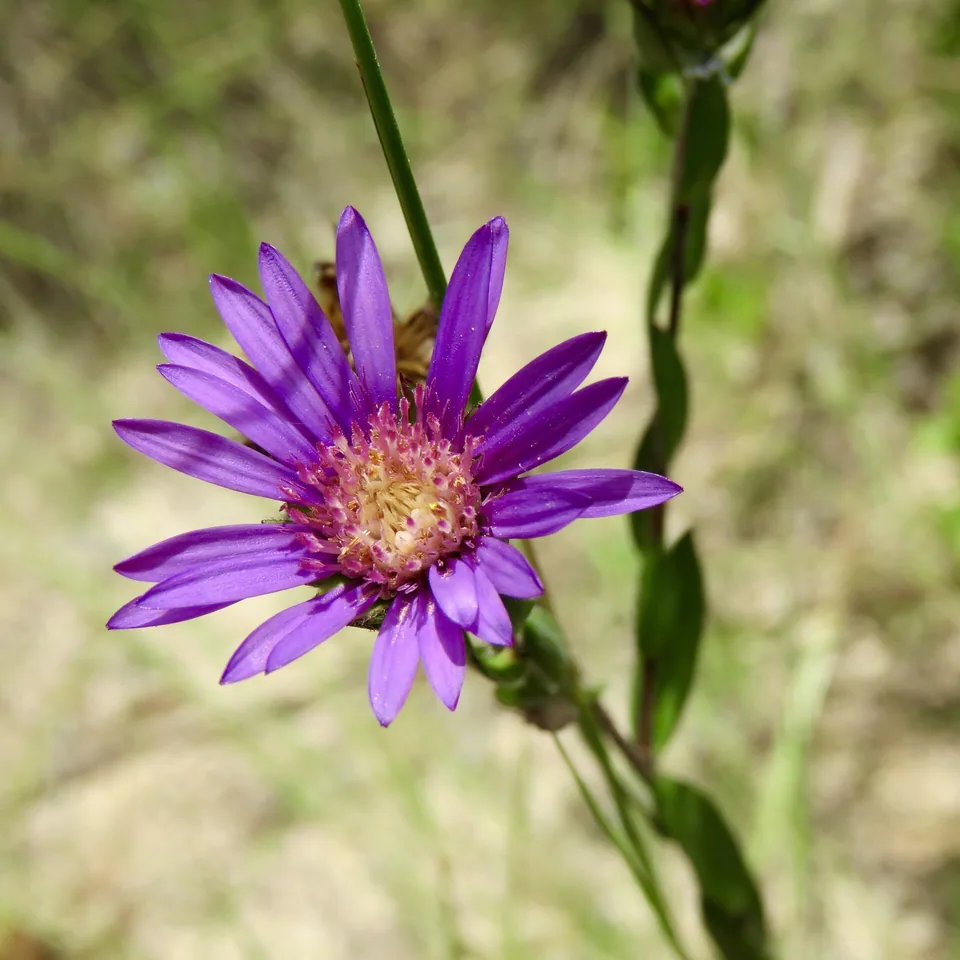


Cómo cultivar y cuidar Barrens Silky Aster
Symphyotrichum pratense
Escrito por Emilio Marruso · última revisión
De un vistazo
Este áster perenne vuelve año tras año y pide muy poco: sol pleno o semisombra y un suelo normal, bien drenado, de seco a algo húmedo. Alcanza 60–90 cm de alto, y puedes conseguir más plantas dividiéndola, sembrando sus semillas o enraizando esquejes de tallo. Solo dale buena ventilación para ayudar a evitar el oídio.
- Sol
Sol pleno o semisombra
Qué dicen las fuentes (1)
Luz: Pleno sol a semisombra
It is easily grown in average, dry to medium, well-drained soil in full sun to part shade.
— Symphyotrichum pratense (Barrens Silky Aster, Meadow Aster, Spreading Aster) | North Carolina Extension Gardener Plant Toolbox [1] - Riego
Le va bien un suelo de seco a algo húmedo
Qué dicen las fuentes (1)
Notas sobre el riego: Crece en suelo promedio, seco a medio, bien drenado
It is easily grown in average, dry to medium, well-drained soil in full sun to part shade. It withstands a wide variety of soil types.
— Symphyotrichum pratense (Barrens Silky Aster, Meadow Aster, Spreading Aster) | North Carolina Extension Gardener Plant Toolbox [1] - Frío
Aguanta inviernos de hasta −34,4 °C (−30 °F)
Muy rústica · USDA 4a · RHS H7 · Z4
Qué dicen las fuentes (2)
Rusticidad, zona más fría: 4a [mínima invernal de −34,4 a −31,7 °C (de −30 a −25 °F)]
USDA Plant Hardiness Zone: 4a, 4b, 5a, 5b, 6a, 6b, 7a, 7b, 8a, 8b
— Symphyotrichum pratense (Barrens Silky Aster, Meadow Aster, Spreading Aster) | North Carolina Extension Gardener Plant Toolbox [1] Rusticidad, zona más cálida: 8b [mínima invernal de −9,4 a −6,7 °C (de 15 a 20 °F)]
USDA Plant Hardiness Zone: 4a, 4b, 5a, 5b, 6a, 6b, 7a, 7b, 8a, 8b
— Symphyotrichum pratense (Barrens Silky Aster, Meadow Aster, Spreading Aster) | North Carolina Extension Gardener Plant Toolbox [1] - Suelo
Suelo normal y bien drenado
Qué dicen las fuentes (1)
Notas sobre el riego: Crece en suelo promedio, seco a medio, bien drenado
It is easily grown in average, dry to medium, well-drained soil in full sun to part shade. It withstands a wide variety of soil types.
— Symphyotrichum pratense (Barrens Silky Aster, Meadow Aster, Spreading Aster) | North Carolina Extension Gardener Plant Toolbox [1] - Plagas
Vigila el oídio; una buena ventilación ayuda a evitarlo
Qué dicen las fuentes (1)
Enfermedades: mildiu polvoriento
Insects, Diseases, and Other Plant Problems: Watch for powdery mildew. Allow good air circulation to help prevent.
— Symphyotrichum pratense (Barrens Silky Aster, Meadow Aster, Spreading Aster) | North Carolina Extension Gardener Plant Toolbox [1] - Tamaño
De 60 a 90 cm de alto
Qué dicen las fuentes (1)
Altura adulta: 61 a 91 cm (2 a 3 pies)
It will grow 2 to 3 feet tall and wide with some stems ascending and some erect.
— Symphyotrichum pratense (Barrens Silky Aster, Meadow Aster, Spreading Aster) | North Carolina Extension Gardener Plant Toolbox [1] - Multiplicación
Divide la mata, siembra semillas o enraíza esquejes de tallo
Qué dicen las fuentes (1)
Propagación: División, semilla, esqueje de tallo
Recommended Propagation Strategy: Division Seed Stem Cutting Country Or Region Of Origin: Central and southeastern U.S.A.
— Symphyotrichum pratense (Barrens Silky Aster, Meadow Aster, Spreading Aster) | North Carolina Extension Gardener Plant Toolbox [1]
Resumen
El aster sedoso de los páramos es una perenne de la familia de las margaritas, nativa del centro y sureste de los EE. UU. [1] Se cultiva fácilmente en suelo promedio, seco a medio, bien drenado, a pleno sol o semisombra y produce flores con rayos púrpuras en el otoño. [1]
Citado en inglés, como en la fuente.
Esta ficha está incompleta: las fuentes consultadas aún no cubren todos los campos.
Aún no cubierto por nuestras fuentes: Riego, Poda
Cuidados
Riego
Riego
No figura en las fuentes consultadas.
Notas sobre el riego
Crece en suelo promedio, seco a medio, bien drenado
Qué dicen las fuentes (1)
It is easily grown in average, dry to medium, well-drained soil in full sun to part shade. It withstands a wide variety of soil types.Luz
Pleno sol a semisombra
Qué dicen las fuentes (1)
It is easily grown in average, dry to medium, well-drained soil in full sun to part shade.Clima y frío
Rusticidad, zona más fría
4a [mínima invernal de −34,4 a −31,7 °C (de −30 a −25 °F)]
Qué dicen las fuentes (1)
USDA Plant Hardiness Zone:
4a, 4b, 5a, 5b, 6a, 6b, 7a, 7b, 8a, 8bRusticidad, zona más cálida
8b [mínima invernal de −9,4 a −6,7 °C (de 15 a 20 °F)]
Qué dicen las fuentes (1)
USDA Plant Hardiness Zone:
4a, 4b, 5a, 5b, 6a, 6b, 7a, 7b, 8a, 8bPropagación
División, semilla, esqueje de tallo
Qué dicen las fuentes (1)
Recommended Propagation Strategy:
Division
Seed
Stem Cutting
Country Or Region Of Origin:
Central and southeastern U.S.A.Cultivo
La planta
Ciclo de vida
perenne
Qué dicen las fuentes (1)
Genus: Symphyotrichum Species: pratense Family: Asteraceae Life Cycle: Perennial Recommended Propagation Strategy: Division Seed Stem CuttingFamilia
Asteraceae
Qué dicen las fuentes (1)
Genus: Symphyotrichum Species: pratense Family: Asteraceae Life Cycle: Perennial Recommended Propagation Strategy: Division Seed Stem CuttingAltura adulta
61 a 91 cm (2 a 3 pies)
Qué dicen las fuentes (1)
It will grow 2 to 3 feet tall and wide with some stems ascending and some erect.Plagas y enfermedades
Enfermedades
mildiu polvoriento
Qué dicen las fuentes (1)
Insects, Diseases, and Other Plant Problems: Watch for powdery mildew. Allow good air circulation to help prevent.Problemas
Mildiu polvoriento
Síntoma: Listado como un problema a tener en cuenta
Qué hacer: Permite una buena circulación de aire para ayudar a prevenir
Qué dicen las fuentes (1)
Watch for powdery mildew. Allow good air circulation to help prevent.
— Symphyotrichum pratense (Barrens Silky Aster, Meadow Aster, Spreading Aster) | North Carolina Extension Gardener Plant Toolbox [1]
Remedios
Cada remedio indica qué dicen las fuentes oficiales; los remedios tradicionales sin fuente oficial aparecen marcados. Los perjudiciales están para que sepas evitarlos.
Cuidar la planta
mildiu polvoriento
eliminación de partes afectadas de la planta Fuente oficial, sin prueba independiente
Cómo: Retira las partes afectadas de la planta durante la temporada de crecimiento y mantén la humedad al mínimo.
Remove affected plant parts during the growing season.
— pnwhandbooks.org [3] spray de bicarbonato de potasio Fuente oficial, sin prueba independiente
Cómo: Usa productos a base de bicarbonato cuando se observe el mildiu polvoriento por primera vez, con cobertura completa; no los mezcles con agentes acidificantes.
Bicarbonate-based products (85% potassium bicarbonate). Might supplement a normal program when powdery mildew is first observed. Do not mix with acidifying agents.
— pnwhandbooks.org [3]
Calendario
Poda
No figura en las fuentes consultadas.
Meses tal como los dan las fuentes, en su mayoría de Estados Unidos (hemisferio norte). En el hemisferio sur se desplazan unos seis meses.
Plantas similares
- Aromatic Aster Symphyotrichum oblongifolium
- Aster Symphyotrichum lateriflorum
- Blue Wood Aster Symphyotrichum cordifolium
- Bushy Aster Symphyotrichum dumosum
- Crooked-stemmed Aster Symphyotrichum prenanthoides
- Eastern Silvery Aster Symphyotrichum concolor
- Frost Aster Symphyotrichum pilosum
- Georgia Aster Symphyotrichum georgianum
Fuentes
Cada valor anterior se cita de estos documentos. Los enlaces llevan al editor original.
- Symphyotrichum pratense (Barrens Silky Aster, Meadow Aster, Spreading Aster) | North Carolina Extension Gardener Plant Toolbox · plants.ces.ncsu.edu, consultado
- Symphyotrichum (Aster, Michaelmas daisy) | North Carolina Extension Gardener Plant Toolbox · plants.ces.ncsu.edu, consultado
- pnwhandbooks.org · pnwhandbooks.org
Escrito por Emilio Marruso · última revisión