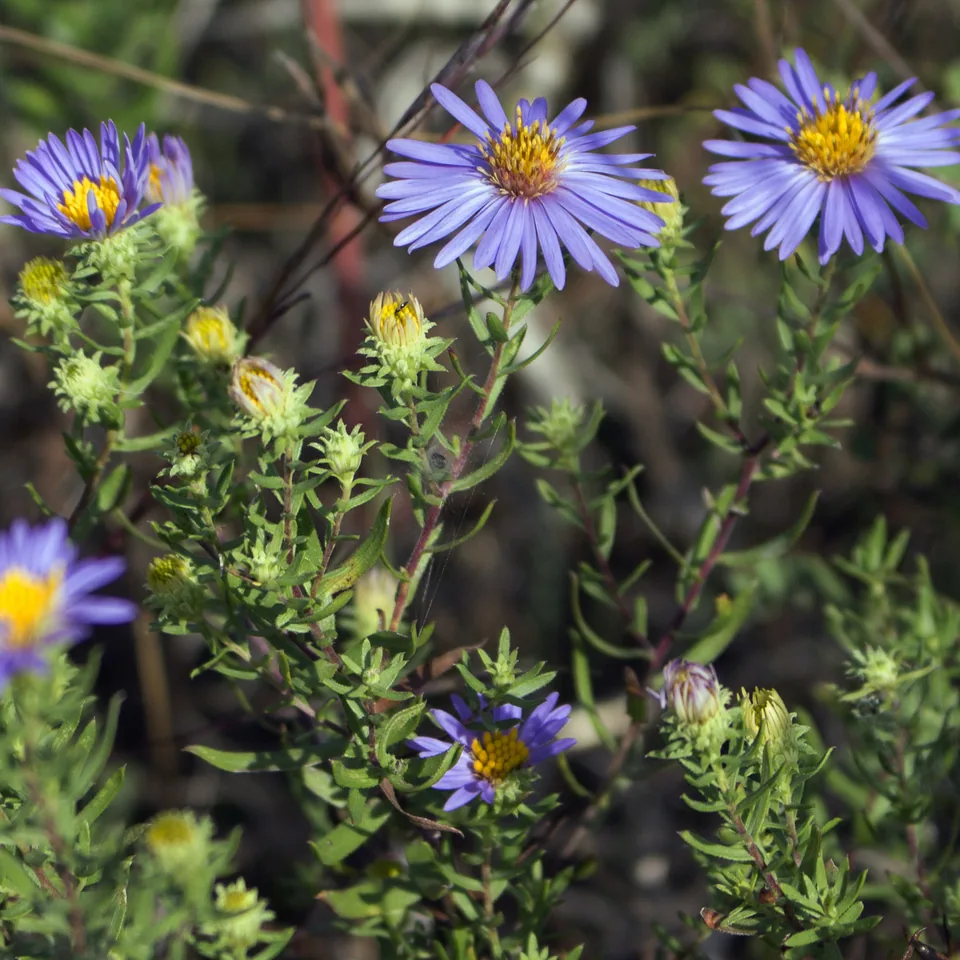
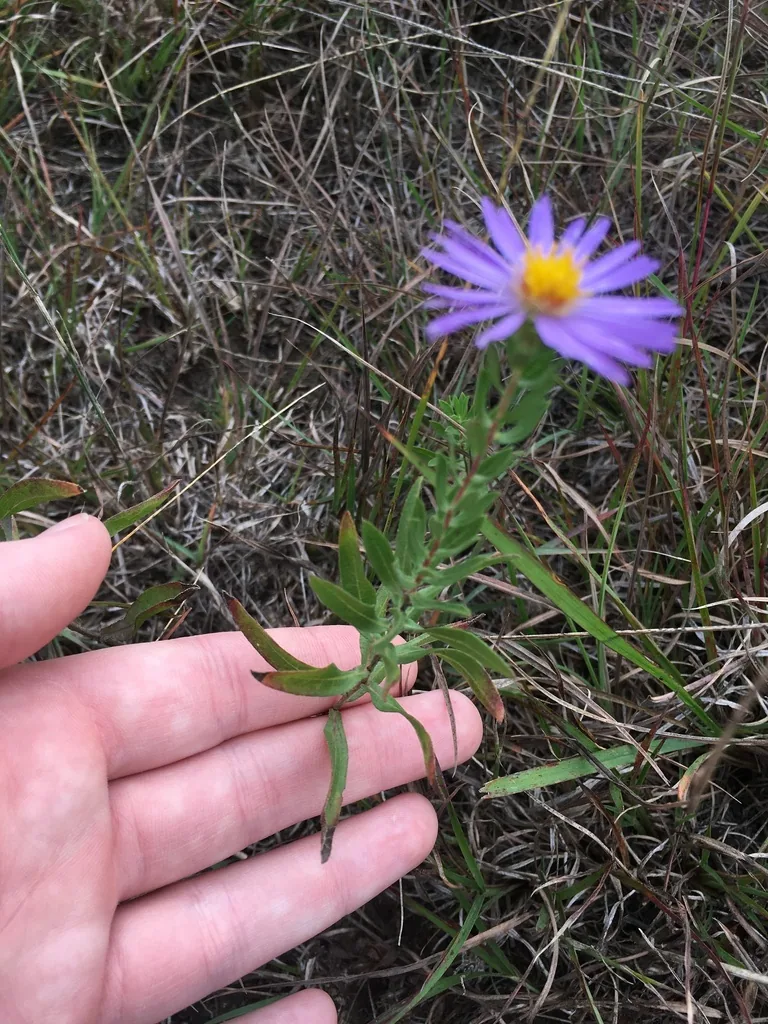

How to Grow and Care for Aromatic Aster
Symphyotrichum oblongifolium
Written by Emilio Marruso · last checked
At a glance
This perennial aster loves full sun and shrugs off dry spells in well-drained soil. It grows into a generous plant 3 feet tall and just as wide, and you can start new ones from seed or from its creeping runners. Give it good drainage and plenty of airflow, and it will stay healthy and come back year after year.
- Sun
Full sun
What the sources say (2)
Light: Full sun
Light: Full sun (6 or more hours of direct sunlight a day)
— Symphyotrichum oblongifolium (Aromatic Aster, Eastern Aromatic Aster) | North Carolina Extension Gardener Plant Toolbox [1] Plant in the full sun with well-drained soil.
— Symphyotrichum oblongifolium (Aromatic Aster, Eastern Aromatic Aster) | North Carolina Extension Gardener Plant Toolbox [1] - Water
Handles dry spells well; it needs little watering
What the sources say (1)
Watering: Drought-tolerant
This plant is resistant to browsing by deer and rabbits and is both drought-tolerant
— Symphyotrichum oblongifolium (Aromatic Aster, Eastern Aromatic Aster) | North Carolina Extension Gardener Plant Toolbox [1] - Cold
Survives winters down to −40 °F (−40 °C)
Very hardy · USDA 3a · RHS H7 · Z3
What the sources say (2)
Hardiness, coldest zone: 3a [winter low −40 to −37.2 °C (−40 to −35 °F)]
USDA Plant Hardiness Zone: 3a, 3b, 4a, 4b, 5a, 5b, 6a, 6b, 7a, 7b, 8a, 8b
— Symphyotrichum oblongifolium (Aromatic Aster, Eastern Aromatic Aster) | North Carolina Extension Gardener Plant Toolbox [1] Hardiness, warmest zone: 8b [winter low −9.4 to −6.7 °C (15 to 20 °F)]
USDA Plant Hardiness Zone: 3a, 3b, 4a, 4b, 5a, 5b, 6a, 6b, 7a, 7b, 8a, 8b
— Symphyotrichum oblongifolium (Aromatic Aster, Eastern Aromatic Aster) | North Carolina Extension Gardener Plant Toolbox [1] - Soil
Well-drained soil
What the sources say (1)
Watering notes: Well-drained soil
Plant in the full sun with well-drained soil.
— Symphyotrichum oblongifolium (Aromatic Aster, Eastern Aromatic Aster) | North Carolina Extension Gardener Plant Toolbox [1] - Pests
Powdery mildew and aster wilt; improve drainage and airflow to prevent them
What the sources say (1)
Diseases: powdery mildew, aster wilt
Asters can have some susceptibility to powdery mildew and aster wilt. Poorly-drained clay soils and poor air circulation can contribute to this.
— Symphyotrichum oblongifolium (Aromatic Aster, Eastern Aromatic Aster) | North Carolina Extension Gardener Plant Toolbox [1] - Size
3 ft tall and 3 ft wide
What the sources say (2)
Mature height: 91.4 cm (3 ft)
Reaching a mature height and width of 3 feet, aromatic aster creates dense, low mounds.
— Symphyotrichum oblongifolium (Aromatic Aster, Eastern Aromatic Aster) | North Carolina Extension Gardener Plant Toolbox [1] Mature width: 91.4 cm (3 ft)
Reaching a mature height and width of 3 feet, aromatic aster creates dense, low mounds.
— Symphyotrichum oblongifolium (Aromatic Aster, Eastern Aromatic Aster) | North Carolina Extension Gardener Plant Toolbox [1] - Propagation
From seed or from its creeping runners
What the sources say (2)
Propagation: Seed; stolons
It propagates by its wind-dispersed seeds or it can spread by stolons.
— Symphyotrichum oblongifolium (Aromatic Aster, Eastern Aromatic Aster) | North Carolina Extension Gardener Plant Toolbox [1] Species: oblongifolium Family: Asteraceae Life Cycle: Perennial Recommended Propagation Strategy: Seed
— Symphyotrichum oblongifolium (Aromatic Aster, Eastern Aromatic Aster) | North Carolina Extension Gardener Plant Toolbox [1]
Overview
Aromatic aster is a native perennial wildflower with showy small purple flowers from late summer until the first frost. [1] It is grown in full sun with well-drained soil and is drought-tolerant. [1]
This record is incomplete: the sources we read do not cover every field yet.
Not yet covered by our sources: Pruning
Aromatic Aster care
How to water Aromatic Aster
Watering
Drought-tolerant
What the sources say (1)
This plant is resistant to browsing by deer and rabbits and is both drought-tolerantWatering notes
Well-drained soil
What the sources say (1)
Plant in the full sun with well-drained soil.How much light Aromatic Aster needs
Full sun
What the sources say (2)
Light:
Full sun (6 or more hours of direct sunlight a day)Plant in the full sun with well-drained soil.How much cold Aromatic Aster can take
Hardiness, coldest zone
3a [winter low −40 to −37.2 °C (−40 to −35 °F)]
What the sources say (1)
USDA Plant Hardiness Zone:
3a, 3b, 4a, 4b, 5a, 5b, 6a, 6b, 7a, 7b, 8a, 8bHardiness, warmest zone
8b [winter low −9.4 to −6.7 °C (15 to 20 °F)]
What the sources say (1)
USDA Plant Hardiness Zone:
3a, 3b, 4a, 4b, 5a, 5b, 6a, 6b, 7a, 7b, 8a, 8bHow to propagate Aromatic Aster
Seed; stolons
What the sources say (2)
It propagates by its wind-dispersed seeds or it can spread by stolons.Species:
oblongifolium
Family:
Asteraceae
Life Cycle:
Perennial
Recommended Propagation Strategy:
SeedHow to grow Aromatic Aster
The plant
Life cycle
perennial
What the sources say (1)
Aromatic aster is a native perennial wildflower in the Asteraceae (daisy) family. In nature it is found on rock outcrops and dry woodlands over limestone and calcareous shale.Family
Asteraceae
What the sources say (1)
Aromatic aster is a native perennial wildflower in the Asteraceae (daisy) family. In nature it is found on rock outcrops and dry woodlands over limestone and calcareous shale.Mature height
91.4 cm (3 ft)
What the sources say (1)
Reaching a mature height and width of 3 feet, aromatic aster creates dense, low mounds.Mature width
91.4 cm (3 ft)
What the sources say (1)
Reaching a mature height and width of 3 feet, aromatic aster creates dense, low mounds.Pests and diseases
Diseases
powdery mildew, aster wilt
What the sources say (1)
Asters can have some susceptibility to powdery mildew and aster wilt. Poorly-drained clay soils and poor air circulation can contribute to this.Aromatic Aster pests and problems
Powdery mildew and aster wilt
Symptom: Foliar diseases
What to do: Improve drainage and air circulation
What the sources say (1)
Asters can have some susceptibility to powdery mildew and aster wilt. Poorly-drained clay soils and poor air circulation can contribute to this. Improving drainage and good air circulation helps reduce the incidence of foliar diseases.
— Symphyotrichum oblongifolium (Aromatic Aster, Eastern Aromatic Aster) | North Carolina Extension Gardener Plant Toolbox [1]
Remedies
Each remedy shows what official sources say about it; traditional remedies without an official source are marked as such. Harmful ones are listed so you know to avoid them.
Treating the plant
lace bugs
strong spray of plain water Works
How: Hose the lace bugs off the plant with a strong spray of plain water from a garden hose.
they can be hosed off of the plant with a strong spray of plain water from a garden hose.
— ask.extension.org [3] What the evidence says they can be hosed off of the plant with a strong spray of plain water from a garden hose.
— ask.extension.org [3] insecticidal soap Partly works
Do not apply either while temperatures are above 85 degrees, or it will risk plant tissue damage. Follow all product label directions for use, and do not spray open flowers.
— ask.extension.org [3] How: Spray with insecticidal soap if a pesticide becomes necessary to knock down a high population; do not apply above 85 degrees and do not spray open flowers.
If a pesticide becomes necessary to knock-down a high population, you could consider spraying with either horticultural oil or insecticidal soap. Do not apply either while temperatures are above 85 degrees, or it will risk plant tissue damage.
— ask.extension.org [3] What the evidence says If a pesticide becomes necessary to knock-down a high population, you could consider spraying with either horticultural oil or insecticidal soap. Do not apply either while temperatures are above 85 degrees, or it will risk plant tissue damage.
— ask.extension.org [3] horticultural oil Partly works
Do not apply either while temperatures are above 85 degrees, or it will risk plant tissue damage. Follow all product label directions for use, and do not spray open flowers.
— ask.extension.org [3] How: Spray with horticultural oil if a pesticide becomes necessary to knock down a high population; do not apply above 85 degrees and do not spray open flowers.
If a pesticide becomes necessary to knock-down a high population, you could consider spraying with either horticultural oil or insecticidal soap. Do not apply either while temperatures are above 85 degrees, or it will risk plant tissue damage.
— ask.extension.org [3] What the evidence says If a pesticide becomes necessary to knock-down a high population, you could consider spraying with either horticultural oil or insecticidal soap. Do not apply either while temperatures are above 85 degrees, or it will risk plant tissue damage.
— ask.extension.org [3] clean up plant debris Official source, not independently tested
How: Around plants that have had outbreaks, a thorough clean-up of plant debris may help to limit the overwintering population.
a through clean-up of plant debris may help to limit the overwintering population.
— ask.extension.org [4] cut heavily damaged plants back Official source, not independently tested
How: If plants are too heavily damaged, cut the plants back drastically; they should regrow, and this reduces the lace bug population without spraying.
you have little to lose by cutting the plants back drastically. They should regrow and be fine
— ask.extension.org [4]
Calendar
Pruning
Not stated in the sources we read.
Months as given by the sources, which are mostly from the United States (northern hemisphere). In the southern hemisphere they shift by about six months.
Indicative values
Values from a secondary source, not checked word for word like the rest of this page. Use them as a starting point.
- Hours of sun
- 6-8 hoursIndicative value, adapt it to your climate · Secondary source
- Drought tolerant
- yesIndicative value, adapt it to your climate · Secondary source
- Soil pH
- 6-7.5Indicative value, adapt it to your climate · Secondary source
- Care level
- MediumIndicative value, adapt it to your climate · Secondary source
- Growth rate
- LowIndicative value, adapt it to your climate · Secondary source
- Pruning
- AugustIndicative value, adapt it to your climate · Secondary source
Similar plants
- Aster Symphyotrichum lateriflorum
- Barrens Silky Aster Symphyotrichum pratense
- Blue Wood Aster Symphyotrichum cordifolium
- Bushy Aster Symphyotrichum dumosum
- Crooked-stemmed Aster Symphyotrichum prenanthoides
- Eastern Silvery Aster Symphyotrichum concolor
- Frost Aster Symphyotrichum pilosum
- Georgia Aster Symphyotrichum georgianum
Sources
Every value above is quoted from these documents. Links lead to the original publisher.
- Symphyotrichum oblongifolium (Aromatic Aster, Eastern Aromatic Aster) | North Carolina Extension Gardener Plant Toolbox · plants.ces.ncsu.edu, consulted
- Symphyotrichum (Aster, Michaelmas daisy) | North Carolina Extension Gardener Plant Toolbox · plants.ces.ncsu.edu, consulted
- ask.extension.org · ask.extension.org
- ask.extension.org · ask.extension.org
Written by Emilio Marruso · last checked