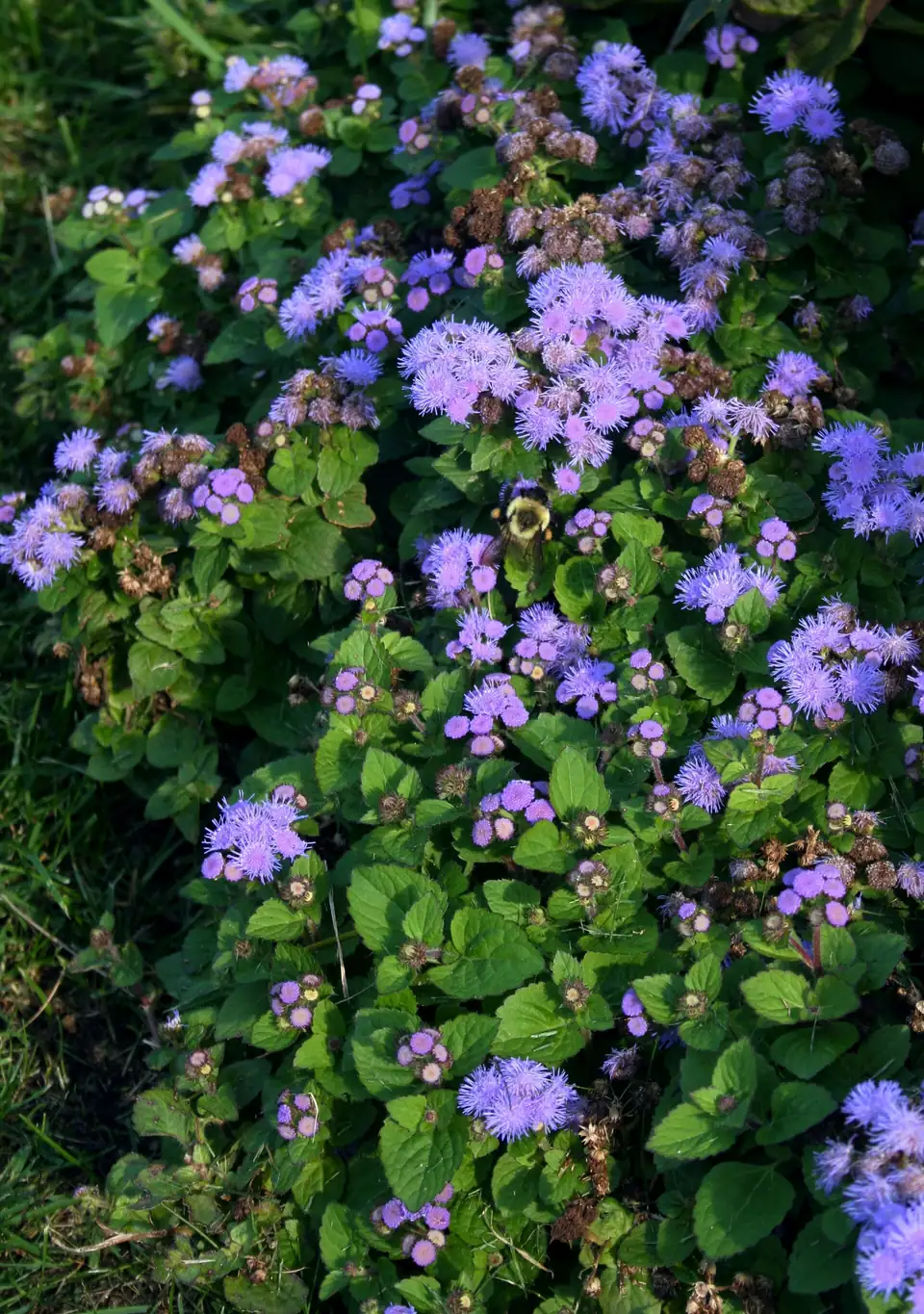


How to Grow and Care for Ageratum
Ageratum houstonianum
Written by Emilio Marruso · last checked
At a glance
Ageratum is an easy annual to start from seed: sow it indoors 8 to 10 weeks before the last spring frost, barely covering the seeds, and they sprout in 7 to 21 days. Plant it out once all danger of frost is past, in full sun or partial shade. It handles dry spells, grows happily in containers, and stays a tidy 10 to 12 inches wide.
- Sun
Full sun to partial shade
What the sources say (2)
Light: Full sun to partial shade
Full sun (6 or more hours of direct sunlight a day) Partial Shade (Direct sunlight only part of the day, 2-6 hours)
— Ageratum houstonianum (Ageratum, Blue Billygoatweed, Bluemink, Floss Flower, Mexican Ageratum) | North Carolina Extension Gardener Plant Toolbox [1] Prefers full sun, but tolerates very light shade. Likes soil that is moist yet well-drained.
— Ageratum (Ageratum houstonianum)-Hort Answers - University of Illinois Extension [2] - Water
Likes moist soil but handles dry spells
What the sources say (2)
Watering: Prefers moist, well-drained soil; moderately drought tolerant, tolerates dry conditions
This plant is moderately drought tolerance but prefers rich, moist, well-drained soil as well as full sun.
— Ageratum houstonianum (Ageratum, Blue Billygoatweed, Bluemink, Floss Flower, Mexican Ageratum) | North Carolina Extension Gardener Plant Toolbox [1] Ageratum prefers a moist, well drained soil but tolerates dry conditions.
— Ageratum, Ageratum houstonianum – Wisconsin Horticulture [3] - Cold
Survives winters down to −50 °F (−45.6 °C)
Very hardy · USDA 2a · RHS H7 · Z2
What the sources say (2)
Hardiness, coldest zone: 2a [winter low −45.6 to −42.8 °C (−50 to −45 °F)]
USDA Plant Hardiness Zone: 2a, 2b, 3a, 3b, 4a, 4b, 5a, 5b, 6a, 6b, 7a, 7b, 8a, 8b, 9a, 9b, 10a, 10b, 11a, 11b
— Ageratum houstonianum (Ageratum, Blue Billygoatweed, Bluemink, Floss Flower, Mexican Ageratum) | North Carolina Extension Gardener Plant Toolbox [1] Hardiness, warmest zone: 11b [winter low 7.2 to 10 °C (45 to 50 °F)]
USDA Plant Hardiness Zone: 2a, 2b, 3a, 3b, 4a, 4b, 5a, 5b, 6a, 6b, 7a, 7b, 8a, 8b, 9a, 9b, 10a, 10b, 11a, 11b
— Ageratum houstonianum (Ageratum, Blue Billygoatweed, Bluemink, Floss Flower, Mexican Ageratum) | North Carolina Extension Gardener Plant Toolbox [1] - Soil
Moist soil that drains well
What the sources say (2)
Watering: Prefers moist, well-drained soil; moderately drought tolerant, tolerates dry conditions
This plant is moderately drought tolerance but prefers rich, moist, well-drained soil as well as full sun.
— Ageratum houstonianum (Ageratum, Blue Billygoatweed, Bluemink, Floss Flower, Mexican Ageratum) | North Carolina Extension Gardener Plant Toolbox [1] Ageratum prefers a moist, well drained soil but tolerates dry conditions.
— Ageratum, Ageratum houstonianum – Wisconsin Horticulture [3] - Planting
Plant out once all danger of frost has passed
What the sources say (2)
Planting: After all danger of frost is past
Move outside to harden off and transplant into the garden when all risk of frost has passed.
— Ageratum, Ageratum houstonianum – Wisconsin Horticulture [3] Plant after all danger of frost is past. Needs fertile soils to continue to bloom through the summer.
— Ageratum (Ageratum houstonianum)-Hort Answers - University of Illinois Extension [2] - Pruning
Remove faded flowers to help keep diseases away
- Pests
Powdery mildew, gray mold and spider mites; give it good air flow
What the sources say (4)
Pests: spider mites
Ageratum generally do not have serious insect or disease problems , although sometimes spider mites can affect the plants, especially in hot, dry weather.
— Ageratum, Ageratum houstonianum – Wisconsin Horticulture [3] Diseases: powdery mildew, botrytis (gray mold), root rots, crown rot
Additional pests and problems that may affect this plant: None that are destructive. Powdery mildew, botrytis, root rots.
— Ageratum (Ageratum houstonianum)-Hort Answers - University of Illinois Extension [2] Mulching too close to the stem can cause crown rots to develop.
— Ageratum (Ageratum houstonianum)-Hort Answers - University of Illinois Extension [2] Insect Pests, Diseases, and Other Plant Problems: susceptible to powdery mildew. Some cultivars have shown excellent resistance to phytophthora.
— Ageratum houstonianum (Ageratum, Blue Billygoatweed, Bluemink, Floss Flower, Mexican Ageratum) | North Carolina Extension Gardener Plant Toolbox [1] - Watch out
Keep mulch away from the stem, or the base can rot
- Size
10–12 in wide
What the sources say (1)
Mature width: 25-30 cm (10-12 in)
Height: 0 ft. 6 in. - 1 ft. 0 in. Width: 0 ft. 10 in. - 1 ft. 0 in.
— Ageratum houstonianum (Ageratum, Blue Billygoatweed, Bluemink, Floss Flower, Mexican Ageratum) | North Carolina Extension Gardener Plant Toolbox [1] - Propagation
Grows from seed
What the sources say (1)
Propagation: Seed
Start ageratum seeds indoors 8 to 10 weeks before the last expected spring frost. Surface sow, barely covering with media or vermiculite
— Ageratum, Ageratum houstonianum – Wisconsin Horticulture [3] - Sowing
Sow indoors 8–10 weeks before the last spring frost, barely covered; sprouts in 7–21 days
What the sources say (3)
Sowing: Indoors, 8 to 10 weeks before the last expected spring frost
Start ageratum seeds indoors 8 to 10 weeks before the last expected spring frost.
— Ageratum, Ageratum houstonianum – Wisconsin Horticulture [3] Sowing depth: 0 cm [0 in] (surface sown, barely covered)
Surface sow, barely covering with media or vermiculite or just gently firm seeds into the potting mix, as light aids germination.
— Ageratum, Ageratum houstonianum – Wisconsin Horticulture [3] Days to germination: 7-21
Surface sow, barely covering with media or vermiculite or just gently firm seeds into the potting mix, as light aids germination. Germination usually takes 7 to 21 days.
— Ageratum, Ageratum houstonianum – Wisconsin Horticulture [3] - Containers
Grows in containers too
What the sources say (2)
In containers: Yes
It is good for beds and containers, blooming from spring to frost.
— Ageratum houstonianum (Ageratum, Blue Billygoatweed, Bluemink, Floss Flower, Mexican Ageratum) | North Carolina Extension Gardener Plant Toolbox [1] it is best used for edging or borders of beds, in rock gardens, and in containers .
— Ageratum, Ageratum houstonianum – Wisconsin Horticulture [3]
Overview
Ageratum houstonianum is a frost-tender herbaceous annual forming low mounds of fluffy, mostly blue flowers. [1][3] It prefers full sun and moist, well-drained soil, and tolerates dry conditions. [2][3] It is used for edging, beds and containers, and the seeds are started indoors before the last spring frost. [3]
This record is incomplete: the sources we read do not cover every field yet.
Not yet covered by our sources: Pruning
Ageratum care
How to water Ageratum
Prefers moist, well-drained soil; moderately drought tolerant, tolerates dry conditions
What the sources say (2)
This plant is moderately drought tolerance but prefers rich, moist, well-drained soil as well as full sun.Ageratum prefers a moist, well drained soil but tolerates dry conditions.How much light Ageratum needs
Full sun to partial shade
What the sources say (2)
Full sun (6 or more hours of direct sunlight a day) Partial Shade (Direct sunlight only part of the day, 2-6 hours)Prefers full sun, but tolerates very light shade. Likes soil that is moist yet well-drained.How much cold Ageratum can take
Hardiness, coldest zone
2a [winter low −45.6 to −42.8 °C (−50 to −45 °F)]
What the sources say (1)
USDA Plant Hardiness Zone: 2a, 2b, 3a, 3b, 4a, 4b, 5a, 5b, 6a, 6b, 7a, 7b, 8a, 8b, 9a, 9b, 10a, 10b, 11a, 11bHardiness, warmest zone
11b [winter low 7.2 to 10 °C (45 to 50 °F)]
What the sources say (1)
USDA Plant Hardiness Zone: 2a, 2b, 3a, 3b, 4a, 4b, 5a, 5b, 6a, 6b, 7a, 7b, 8a, 8b, 9a, 9b, 10a, 10b, 11a, 11bWhere to grow Ageratum
In containers
Yes
What the sources say (2)
It is good for beds and containers, blooming from spring to frost.it is best used for edging or borders of beds, in rock gardens, and in containers .Spacing
The sources give different values depending on region, zone or growing conditions.
What each source says
According to NC State Extension: 25.4-30.5 cm (10-12 in)
According to University of Wisconsin-Madison Extension: 15.2-20.3 cm (6-8 in)
What the sources say (2)
According to NC State Extension: flowers that should be planted with 10-12 inches of space. Genus name comes from the GreekAccording to University of Wisconsin-Madison Extension: transplant into the garden when all risk of frost has passed. Plant 6 to 8 inches apart in a sunny spot.How to propagate Ageratum
Seed
What the sources say (1)
Start ageratum seeds indoors 8 to 10 weeks before the last expected spring frost. Surface sow, barely covering with media or vermiculiteHow to grow Ageratum
The plant
Life cycle
annual
What the sources say (2)
A frost-tender herbaceous annual to 1/2-1' tall, mounding with clusters of fluffy, aster-like flowers that should be planted with 10-12 inches of space.One species, A. houstonianum from Mexico, named for William Houston (1695-1733), a Scottish physician who collected the first plants, is commonly used as a bedding plant. The flowers on this tender annual come mostly in shades of blueFamily
Asteraceae
What the sources say (1)
These annual or tender perennial herbaceous plants and shrubs are in the plant family Compositae (Asteraceae) are all native to Central and South America.Mature height
Mature width
25-30 cm (10-12 in)
What the sources say (1)
Height: 0 ft. 6 in. - 1 ft. 0 in.
Width: 0 ft. 10 in. - 1 ft. 0 in.Sowing and growth
Days to germination
7-21
What the sources say (1)
Surface sow, barely covering with media or vermiculite or just gently firm seeds into the potting mix, as light aids germination. Germination usually takes 7 to 21 days.Sowing depth
0 cm [0 in] (surface sown, barely covered)
What the sources say (1)
Surface sow, barely covering with media or vermiculite or just gently firm seeds into the potting mix, as light aids germination.Days to maturity
The sources give different values depending on region, zone or growing conditions.
What each source says
cultivar 'Blue Horizon': 12-15 weeks from sowing to flowering
What the sources say (1)
cultivar 'Blue Horizon': is a vigorous, triploid F1 hybrid that is suitable for landscape or cut flower use. Purplish-blue 3 inch flower clusters are produced on 30 inch tall stems. Plants flower 12 to 15 weeks from sowing.Pests and diseases
Pests
spider mites
What the sources say (1)
Ageratum generally do not have serious insect or disease problems , although sometimes spider mites can affect the plants, especially in hot, dry weather.Diseases
powdery mildew, botrytis (gray mold), root rots, crown rot
What the sources say (3)
Additional pests and problems that may affect this plant:
None that are destructive. Powdery mildew, botrytis, root rots.Mulching too close to the stem can cause crown rots to develop.Insect Pests, Diseases, and Other Plant Problems: susceptible to powdery mildew. Some cultivars have shown excellent resistance to phytophthora.Ageratum pests and problems
Powdery mildew and other fungal disease
Symptom: Susceptible to powdery mildew; botrytis and root rots also listed.
What to do: Needs good air circulation to prevent fungal disease problems; removing spent flowers aids disease reduction.
What the sources say (2)
Insect Pests, Diseases, and Other Plant Problems: susceptible to powdery mildew. Some cultivars have shown excellent resistance to phytophthora.
— Ageratum houstonianum (Ageratum, Blue Billygoatweed, Bluemink, Floss Flower, Mexican Ageratum) | North Carolina Extension Gardener Plant Toolbox [1] Needs good air circulation to prevent fungal disease problems
— Ageratum (Ageratum houstonianum)-Hort Answers - University of Illinois Extension [2] Crown rot from mulch
Symptom: Crown rots can develop when mulch is placed too close to the stem.
What to do: Do not mulch too close to the stem.
What the sources say (1)
Mulching too close to the stem can cause crown rots to develop.
— Ageratum (Ageratum houstonianum)-Hort Answers - University of Illinois Extension [2]
Remedies
Each remedy shows what official sources say about it; traditional remedies without an official source are marked as such. Harmful ones are listed so you know to avoid them.
Treating the plant
powdery mildew
baking soda spray Not verified
Traditional remedy, not verified by an official source.
Test homemade sprays on a small portion of the plant before applying it to the entire surface. Monitor the plant’s response for a couple of days to check for burning.
— finegardening.com [6] How: Mix 2 teaspoons of baking soda and 1/2 teaspoon of liquid soap or [nome commerciale] oil soap in 2 quarts of water; the source applies it to roses.
aspirin spray Not verified
Traditional remedy, not verified by an official source.
Test homemade sprays on a small portion of the plant before applying it to the entire surface. Monitor the plant’s response for a couple of days to check for burning.
— finegardening.com [6] How: Two uncoated aspirin tablets (325 milligrams each) dissolved in 1 quart of water, used as a foliar spray.
fungal disease
garlic spray Not verified
Traditional remedy, not verified by an official source.
Test homemade sprays on a small portion of the plant before applying it to the entire surface. Monitor the plant’s response for a couple of days to check for burning.
— finegardening.com [6] How: Puree two cloves of garlic, slowly add 1 quart of water and keep blending about six minutes, strain, and add 1/8 teaspoon of liquid soap.
spider mites
buttermilk and flour spray Not verified
Traditional remedy, not verified by an official source.
Test homemade sprays on a small portion of the plant before applying it to the entire surface. Monitor the plant’s response for a couple of days to check for burning.
— finegardening.com [6] How: Combine 1/4 cup of buttermilk and 2 cups of wheat flour in 2-1/2 gallons of water and spray on the plants.
dish soap spray Harmful
Test homemade sprays on a small portion of the plant before applying it to the entire surface. Monitor the plant’s response for a couple of days to check for burning.
— finegardening.com [6] How: Mix 1 tablespoon of dish washing liquid with 1 gallon of water.
is the one remedy that works 100% of the time on mites – those pesky insects that were mentioned earlier in the article. Mix 1 Tblsp. of the dish washing liquid with 1 gallon of water.
— fransorin.com [7] What the evidence says Most dish soaps are not naturally occurring substances nor are they biodegradable. They can contain detergents and degreasers that are harmful to groundwater and aquatic and soil organisms.
— ucanr.edu [8] rubbing alcohol Not verified
Traditional remedy, not verified by an official source.
Wear rubber gloves when using any sprays containing peppers, alcohol, citrus concentrates, mint oils, or anything else that could irritate your skin. And when spraying outdoors in breezy conditions, wear eye and nose protection.
— finegardening.com [6] How: Rub the infected area with cotton balls and rubbing alcohol.
aphids
strong water blast Not verified
Traditional remedy, not verified by an official source.
How: Dislodge aphids, mites and similar pests with a strong blast of water.
Calendar
Sowing
Indoors, 8 to 10 weeks before the last expected spring frost
What the sources say (1)
Start ageratum seeds indoors 8 to 10 weeks before the last expected spring frost.Planting
After all danger of frost is past
What the sources say (2)
Move outside to harden off and transplant into the garden when all risk of frost has passed.Plant after all danger of frost is past. Needs fertile soils to continue to bloom through the summer.Pruning
Not stated in the sources we read.
Months as given by the sources, which are mostly from the United States (northern hemisphere). In the southern hemisphere they shift by about six months.
Relative to frost
Less precise estimate: there is no weather station within 300 km.
Find frost dates by ZIP code or city
Sow indoors: 8 to 10 weeks before the last frost
Start ageratum seeds indoors 8 to 10 weeks before the last expected spring frost.
— Ageratum, Ageratum houstonianum – Wisconsin Horticulture [3] Transplant: around the last frost
Move outside to harden off and transplant into the garden when all risk of frost has passed.
— Ageratum, Ageratum houstonianum – Wisconsin Horticulture [3] Plant: around the last frost
Plant after all danger of frost is past. Needs fertile soils to continue to bloom through the summer.
— Ageratum (Ageratum houstonianum)-Hort Answers - University of Illinois Extension [2]
Count from the average frost dates where you live.
Indicative values
Values from a secondary source, not checked word for word like the rest of this page. Use them as a starting point.
- Hours of sun
- 4-6 hoursIndicative value, adapt it to your climate · Secondary source
- Drought tolerant
- yesIndicative value, adapt it to your climate · Secondary source
- Soil
- Well-drainedIndicative value, adapt it to your climate · Secondary source
- Soil pH
- 6-7Indicative value, adapt it to your climate · Secondary source
- Care level
- MediumIndicative value, adapt it to your climate · Secondary source
- Growth rate
- LowIndicative value, adapt it to your climate · Secondary source
- Pruning
- May, June, JulyIndicative value, adapt it to your climate · Secondary source
Similar plants
- African Daisy Dimorphotheca pluvialis
- African Marigold Tagetes erecta
- Alpine aster Aster alpinus
- Appalachian Blazing Star Liatris squarrulosa
- Appalachian Ironweed Vernonia glauca
- Appalachian Sunflower Helianthus atrorubens
- Aromatic Aster Symphyotrichum oblongifolium
- Aspen Fleabane Erigeron speciosus
Sources
Every value above is quoted from these documents. Links lead to the original publisher.
- Ageratum houstonianum (Ageratum, Blue Billygoatweed, Bluemink, Floss Flower, Mexican Ageratum) | North Carolina Extension Gardener Plant Toolbox · plants.ces.ncsu.edu, consulted
- Ageratum (Ageratum houstonianum)-Hort Answers - University of Illinois Extension · web.extension.illinois.edu, consulted
- Ageratum, Ageratum houstonianum – Wisconsin Horticulture · hort.extension.wisc.edu, consulted
- Ageratum - Ageratum houstonianum | North Carolina Extension Gardener Plant Toolbox · plants.ces.ncsu.edu, consulted
- Mexican Ageratum - Ageratum houstonianum | North Carolina Extension Gardener Plant Toolbox · plants.ces.ncsu.edu, consulted
- finegardening.com · finegardening.com
- fransorin.com · fransorin.com
- ucanr.edu · ucanr.edu
Written by Emilio Marruso · last checked