

How to Grow and Care for Aspen Fleabane
Erigeron speciosus
Written by Emilio Marruso · last checked
Toxic to: Cats, Dogs, Horses, People · Why
At a glance
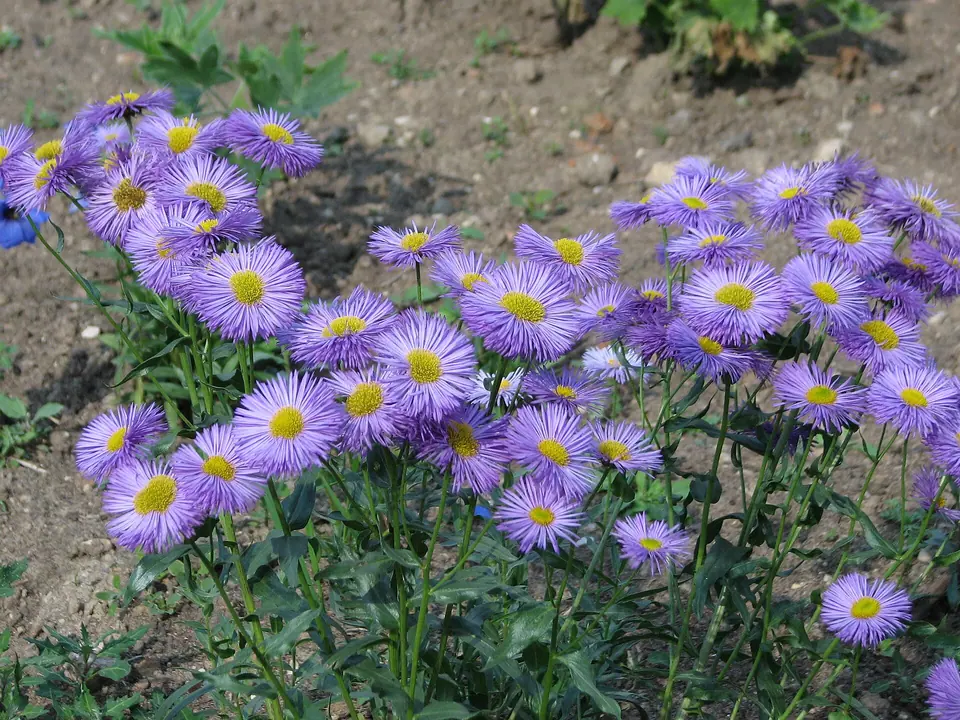
This perennial brings violet and blue daisy-like flowers back year after year. Give it full sun and fertile soil that stays evenly moist but drains well, and it will forgive the occasional dry spell. At 1 to 2 feet tall and wide, it fits easily into a sunny border, and you can make more plants by dividing clumps or sowing seed.
- Sun
Full sun
What the sources say (1)
Light: Full sun
Light: Full sun (6 or more hours of direct sunlight a day)
— Erigeron speciosus (Aspen Fleabane, Fleabane, Garden Fleabane, Horseweed, Oregon Fleabane, Oregon Wild-daisy, Seaside Daisy, Showy Daisy, Showy Fleabane) | North Carolina Extension Gardener Plant Toolbox [1] - Water
Keep the soil evenly moist, not soggy or bone dry; it handles occasional dry spells
What the sources say (2)
Watering: Consistent soil moisture, not extremely wet or dry
It does its best when the soil moisture is consistent, not going to extremely wet or dry.
— Erigeron speciosus (Aspen Fleabane, Fleabane, Garden Fleabane, Horseweed, Oregon Fleabane, Oregon Wild-daisy, Seaside Daisy, Showy Daisy, Showy Fleabane) | North Carolina Extension Gardener Plant Toolbox [1] Watering notes: Fertile, well-drained soil; tolerates occasional dry soils
Performing at its best in fertile, well-drained soil, it will tolerate occasional dry soils.
— Erigeron speciosus (Aspen Fleabane, Fleabane, Garden Fleabane, Horseweed, Oregon Fleabane, Oregon Wild-daisy, Seaside Daisy, Showy Daisy, Showy Fleabane) | North Carolina Extension Gardener Plant Toolbox [1] - Cold
Survives winters down to −20 °F (−28.9 °C)
Very hardy · USDA 5a · RHS H7 · Z5
What the sources say (2)
Hardiness, coldest zone: 5a [winter low −28.9 to −26.1 °C (−20 to −15 °F)]
USDA Plant Hardiness Zone: 5a, 5b, 6a, 6b, 7a, 7b
— Erigeron speciosus (Aspen Fleabane, Fleabane, Garden Fleabane, Horseweed, Oregon Fleabane, Oregon Wild-daisy, Seaside Daisy, Showy Daisy, Showy Fleabane) | North Carolina Extension Gardener Plant Toolbox [1] Hardiness, warmest zone: 7b [winter low −15 to −12.2 °C (5 to 10 °F)]
USDA Plant Hardiness Zone: 5a, 5b, 6a, 6b, 7a, 7b
— Erigeron speciosus (Aspen Fleabane, Fleabane, Garden Fleabane, Horseweed, Oregon Fleabane, Oregon Wild-daisy, Seaside Daisy, Showy Daisy, Showy Fleabane) | North Carolina Extension Gardener Plant Toolbox [1] - Soil
Fertile soil that drains well
What the sources say (1)
Watering notes: Fertile, well-drained soil; tolerates occasional dry soils
Performing at its best in fertile, well-drained soil, it will tolerate occasional dry soils.
— Erigeron speciosus (Aspen Fleabane, Fleabane, Garden Fleabane, Horseweed, Oregon Fleabane, Oregon Wild-daisy, Seaside Daisy, Showy Daisy, Showy Fleabane) | North Carolina Extension Gardener Plant Toolbox [1] - Pests
Can get powdery mildew
What the sources say (1)
Diseases: powdery mildew
No serious insect or diseases issues. Occasionally powdery mildew can occur.
— Erigeron speciosus (Aspen Fleabane, Fleabane, Garden Fleabane, Horseweed, Oregon Fleabane, Oregon Wild-daisy, Seaside Daisy, Showy Daisy, Showy Fleabane) | North Carolina Extension Gardener Plant Toolbox [1] - Size
1–2 ft tall and 1–2 ft wide
What the sources say (2)
Mature height: 30-61 cm (1-2 ft)
Height: 1 ft. 0 in. - 2 ft. 0 in.
— Erigeron speciosus (Aspen Fleabane, Fleabane, Garden Fleabane, Horseweed, Oregon Fleabane, Oregon Wild-daisy, Seaside Daisy, Showy Daisy, Showy Fleabane) | North Carolina Extension Gardener Plant Toolbox [1] Mature width: 30-61 cm (1-2 ft)
Width: 1 ft. 0 in. - 2 ft. 0 in.
— Erigeron speciosus (Aspen Fleabane, Fleabane, Garden Fleabane, Horseweed, Oregon Fleabane, Oregon Wild-daisy, Seaside Daisy, Showy Daisy, Showy Fleabane) | North Carolina Extension Gardener Plant Toolbox [1] - Propagation
Divide the clumps or sow seed
What the sources say (2)
Propagation: Division; seed
Recommended Propagation Strategy: Division
— Erigeron speciosus (Aspen Fleabane, Fleabane, Garden Fleabane, Horseweed, Oregon Fleabane, Oregon Wild-daisy, Seaside Daisy, Showy Daisy, Showy Fleabane) | North Carolina Extension Gardener Plant Toolbox [1] Collection of seed is a method of reproduction.
— Erigeron speciosus (Aspen Fleabane, Fleabane, Garden Fleabane, Horseweed, Oregon Fleabane, Oregon Wild-daisy, Seaside Daisy, Showy Daisy, Showy Fleabane) | North Carolina Extension Gardener Plant Toolbox [1] - Safety
Mildly toxic to people; harmful to dogs, cats and horses
Overview
Aspen fleabane is a clump-forming perennial wildflower with blue-purple daisy-like flowers. [1] It prefers fertile, well-drained soil with consistent moisture and full sun. [1] It is listed as a low-severity poison for humans and as a problem for cats, dogs and horses. [1]
This record is incomplete: the sources we read do not cover every field yet.
Not yet covered by our sources: Pruning
Aspen Fleabane care
How to water Aspen Fleabane
Watering
Consistent soil moisture, not extremely wet or dry
What the sources say (1)
It does its best when the soil moisture is consistent, not going to extremely wet or dry.Watering notes
Fertile, well-drained soil; tolerates occasional dry soils
What the sources say (1)
Performing at its best in fertile, well-drained soil, it will tolerate occasional dry soils.How much light Aspen Fleabane needs
Full sun
What the sources say (1)
Light:
Full sun (6 or more hours of direct sunlight a day)How much cold Aspen Fleabane can take
Hardiness, coldest zone
5a [winter low −28.9 to −26.1 °C (−20 to −15 °F)]
What the sources say (1)
USDA Plant Hardiness Zone:
5a, 5b, 6a, 6b, 7a, 7bHardiness, warmest zone
7b [winter low −15 to −12.2 °C (5 to 10 °F)]
What the sources say (1)
USDA Plant Hardiness Zone:
5a, 5b, 6a, 6b, 7a, 7bHow to propagate Aspen Fleabane
Division; seed
What the sources say (2)
Recommended Propagation Strategy:
DivisionCollection of seed is a method of reproduction.How to grow Aspen Fleabane
The plant
Life cycle
perennial
What the sources say (1)
Aspen Fleabane is a clump forming perennial wildflower in the daisy family with showy blue-purple flowers that can have 100+ petals surrounding a yellow disk center.Family
Asteraceae
What the sources say (1)
Species: speciosus Family: Asteraceae Uses (Ethnobotany): Beneficial plant for wildlife and pollinators.Mature height
30-61 cm (1-2 ft)
What the sources say (1)
Height: 1 ft. 0 in. - 2 ft. 0 in.Mature width
30-61 cm (1-2 ft)
What the sources say (1)
Width: 1 ft. 0 in. - 2 ft. 0 in.Pests and diseases
Diseases
powdery mildew
What the sources say (1)
No serious insect or diseases issues. Occasionally powdery mildew can occur.Fertilizing
When
The sources give different values depending on region, zone or growing conditions.
What each source says
Erigeron in general, in containers: Only during the growing season, starting at the beginning of the season
What the sources say (1)
Erigeron in general, in containers: use a liquid seaweed feed every 14 days, diluted to half strength, to keep your erigerons performing well. Feed only during the growing seasonHow often
The sources give different values depending on region, zone or growing conditions.
What each source says
Erigeron in general, in containers: Every 14 days with a liquid feed
What the sources say (1)
Erigeron in general, in containers: use a liquid seaweed feed every 14 days, diluted to half strength, to keep your erigerons performing well. Feed only during the growing seasonNatural fertilizers
The sources give different values depending on region, zone or growing conditions.
What each source says
Erigeron in general, in containers: Liquid seaweed feed diluted to half strength
What the sources say (1)
Erigeron in general, in containers: Either add some slow-release fertiliser at the beginning of the season (according to the manufacturer’s instructions), or use a liquid seaweed feed every 14 days, diluted to half strength, to keep your erigerons performing well.Mineral fertilizers
The sources give different values depending on region, zone or growing conditions.
What each source says
Erigeron in general, in containers: Slow-release fertiliser at the beginning of the season, at the rate on the label
What the sources say (1)
Erigeron in general, in containers: Either add some slow-release fertiliser at the beginning of the season (according to the manufacturer’s instructions), or use a liquid seaweed feed every 14 days, diluted to half strength, to keep your erigerons performing well.Remedies
Each remedy shows what official sources say about it; traditional remedies without an official source are marked as such. Harmful ones are listed so you know to avoid them.
Treating the plant
powdery mildew
baking soda and horticultural oil spray Not proven
Applications of one tablespoon baking soda plus 2.5 tablespoons of [nome commerciale] oil in 1 gallon of water are still experimental. Use it at your own risk.
— extension.colostate.edu [6] How: Baking soda combined with a lightweight horticultural oil: one tablespoon baking soda plus 2.5 tablespoons of [nome commerciale] oil in 1 gallon of water.
An alternative nontoxic control for mildew is baking soda (similar to the potassium bicarbonate listed above) combined with a lightweight horticultural oil such as [nome commerciale].
— extension.colostate.edu [6] What the evidence says Applications of one tablespoon baking soda plus 2.5 tablespoons of [nome commerciale] oil in 1 gallon of water are still experimental. Use it at your own risk.
— extension.colostate.edu [6]
Is Aspen Fleabane toxic to pets?
Reported by the source, quoted verbatim. This is not medical or veterinary advice: if a person or an animal may have eaten this plant, contact a poison control centre or a veterinarian.
Animals
#violet flowers #daisy-like #blue flowers #problem for dogs #problem for horses #problem for cats
[1]The source flags the risk for this animal but does not explain why.
People
Calendar
Pruning
Not stated in the sources we read.
Months as given by the sources, which are mostly from the United States (northern hemisphere). In the southern hemisphere they shift by about six months.
Similar plants
- Bitter Fleabane Erigeron acris
- Hairy Fleabane Erigeron bonariensis
- Horseweed Erigeron canadensis
- Robin's Plantain Erigeron pulchellus
- Mexican fleabane Erigeron karvinskianus
- Seaside fleabane Erigeron glaucus
- African Daisy Dimorphotheca pluvialis
- African Marigold Tagetes erecta
Sources
Every value above is quoted from these documents. Links lead to the original publisher.
- Erigeron speciosus (Aspen Fleabane, Fleabane, Garden Fleabane, Horseweed, Oregon Fleabane, Oregon Wild-daisy, Seaside Daisy, Showy Daisy, Showy Fleabane) | North Carolina Extension Gardener Plant Toolbox · plants.ces.ncsu.edu, consulted
- Showy Fleabane - Erigeron speciosus | North Carolina Extension Gardener Plant Toolbox · plants.ces.ncsu.edu, consulted
- Seaside Daisy - Erigeron speciosus | North Carolina Extension Gardener Plant Toolbox · plants.ces.ncsu.edu, consulted
- Erigeron (Common Fleabane, Daisy Fleabane, Fleabane) | North Carolina Extension Gardener Plant Toolbox · plants.ces.ncsu.edu, consulted
- rhs.org.uk · rhs.org.uk
- extension.colostate.edu · extension.colostate.edu
Written by Emilio Marruso · last checked