

How to Grow and Care for Seaside fleabane
Erigeron glaucus
Written by Emilio Marruso · last checked
At a glance
Seaside daisy is an easygoing plant for sunny spots, and it even accepts light shade where summers are hot. Water it once a week during dry weather, and a 3-inch layer of mulch keeps its soil cool and moist. It grows happily in containers too, and you can make new plants from stem cuttings or by dividing it in early spring.
- Sun
Full sun; light shade is fine in hot climates
What the sources say (1)
Light: Full sun; tolerates light shade, especially in hot climates
Growing seaside daisies prefer well-draining soil and full sun , but the plants will tolerate light shade, especially in hot climates.
— Seaside Daisy Care - Tips On Seaside Daisy Planting In Gardens | Gardening Know How [2] - Water
Once a week in dry weather; 3 inches of mulch keeps the soil cool and moist
What the sources say (2)
Watering: About once a week during dry weather
Otherwise, just water the plant about once a week during dry weather.
— Seaside Daisy Care - Tips On Seaside Daisy Planting In Gardens | Gardening Know How [2] Watering notes: A 3-inch (7.5 cm) layer of mulch keeps the soil cool and moist
A 3-inch (7.5 cm.) layer of mulch keeps the soil cool and moist.
— Seaside Daisy Care - Tips On Seaside Daisy Planting In Gardens | Gardening Know How [2] - Cold
Survives winters down to 10 °F (−12.2 °C)
Hardy in cold winters · USDA 8 · RHS H5 · Z8
What the sources say (2)
Hardiness, coldest zone: 8 [winter low −12.2 to −6.7 °C (10 to 20 °F)]
This plant is suitable for growing in USDA plant hardiness zones 8 through 10.
— Seaside Daisy Care - Tips On Seaside Daisy Planting In Gardens | Gardening Know How [2] Hardiness, warmest zone: 10 [winter low −1.1 to 4.4 °C (30 to 40 °F)]
This plant is suitable for growing in USDA plant hardiness zones 8 through 10.
— Seaside Daisy Care - Tips On Seaside Daisy Planting In Gardens | Gardening Know How [2] - Pruning
Trim it in late summer if it looks leggy
What the sources say (1)
Pruning: Late summer, if the plant looks leggy
Trim the plant down if it looks leggy in late summer; you’ll be rewarded with a rejuvenated plant and another flush of colorful blooms.
— Seaside Daisy Care - Tips On Seaside Daisy Planting In Gardens | Gardening Know How [2] - Propagation
Stem cuttings, or divide the plant in early spring
What the sources say (1)
Propagation: Stem cuttings; division in early spring
Seaside daisy plants are easily propagated by stem cuttings , or by dividing the plants in early spring.
— Seaside Daisy Care - Tips On Seaside Daisy Planting In Gardens | Gardening Know How [2] - Containers
Grows in containers too
What the sources say (1)
In containers: Yes
The plant is well suited for xeriscaping , and also works well in rock gardens , borders , flower beds , in containers , and on slopes .
— Seaside Daisy Care - Tips On Seaside Daisy Planting In Gardens | Gardening Know How [2]
Overview
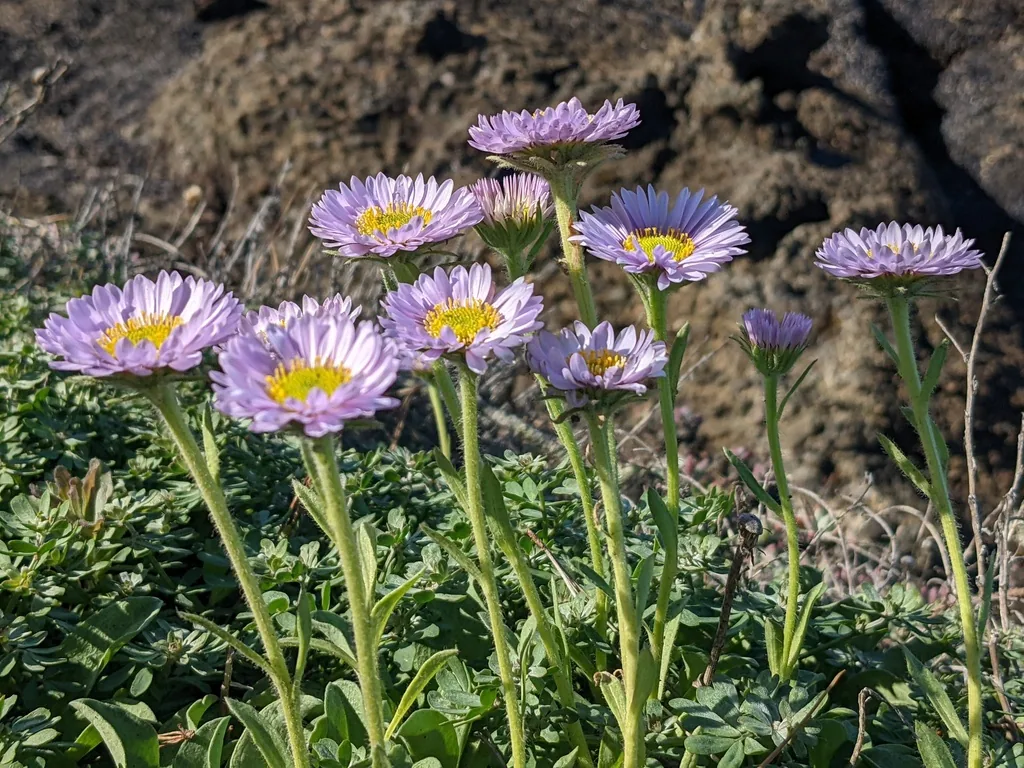
Seaside daisy is a low-growing evergreen perennial with ice blue daisy-like flowers around a bright yellow center. [2] It prefers well-draining soil and full sun, tolerates light shade, and suits rock gardens, borders and containers. [2]
Seaside fleabane care
How to water Seaside fleabane
Watering
About once a week during dry weather
What the sources say (1)
Otherwise, just water the plant about once a week during dry weather.Watering notes
A 3-inch (7.5 cm) layer of mulch keeps the soil cool and moist
What the sources say (1)
A 3-inch (7.5 cm.) layer of mulch keeps the soil cool and moist.How much light Seaside fleabane needs
Full sun; tolerates light shade, especially in hot climates
What the sources say (1)
Growing seaside daisies prefer well-draining soil and full sun , but the plants will tolerate light shade, especially in hot climates.How much cold Seaside fleabane can take
Hardiness, coldest zone
8 [winter low −12.2 to −6.7 °C (10 to 20 °F)]
What the sources say (1)
This plant is suitable for growing in USDA plant hardiness zones 8 through 10.Hardiness, warmest zone
10 [winter low −1.1 to 4.4 °C (30 to 40 °F)]
What the sources say (1)
This plant is suitable for growing in USDA plant hardiness zones 8 through 10.Where to grow Seaside fleabane
Yes
What the sources say (1)
The plant is well suited for xeriscaping , and also works well in rock gardens , borders , flower beds , in containers , and on slopes .How to propagate Seaside fleabane
Stem cuttings; division in early spring
What the sources say (1)
Seaside daisy plants are easily propagated by stem cuttings , or by dividing the plants in early spring.How to grow Seaside fleabane
Fertilizing
When
The sources give different values depending on region, zone or growing conditions.
What each source says
Erigeron in general, in containers: Only during the growing season, starting at the beginning of the season
What the sources say (1)
Erigeron in general, in containers: use a liquid seaweed feed every 14 days, diluted to half strength, to keep your erigerons performing well. Feed only during the growing seasonHow often
The sources give different values depending on region, zone or growing conditions.
What each source says
Erigeron in general, in containers: Every 14 days with a liquid feed
What the sources say (1)
Erigeron in general, in containers: use a liquid seaweed feed every 14 days, diluted to half strength, to keep your erigerons performing well. Feed only during the growing seasonNatural fertilizers
The sources give different values depending on region, zone or growing conditions.
What each source says
Erigeron in general, in containers: Liquid seaweed feed diluted to half strength
What the sources say (1)
Erigeron in general, in containers: Either add some slow-release fertiliser at the beginning of the season (according to the manufacturer’s instructions), or use a liquid seaweed feed every 14 days, diluted to half strength, to keep your erigerons performing well.Mineral fertilizers
The sources give different values depending on region, zone or growing conditions.
What each source says
Erigeron in general, in containers: Slow-release fertiliser at the beginning of the season, at the rate on the label
What the sources say (1)
Erigeron in general, in containers: Either add some slow-release fertiliser at the beginning of the season (according to the manufacturer’s instructions), or use a liquid seaweed feed every 14 days, diluted to half strength, to keep your erigerons performing well.Remedies
Each remedy shows what official sources say about it; traditional remedies without an official source are marked as such. Harmful ones are listed so you know to avoid them.
Treating the plant
powdery mildew
annual or biennial division Official source, not independently tested
How: Divide the tight, woody crowns with a spade every year or two and replant the single rooted shoots.
Beach asters benefit from annual or biennial division, which makes them less susceptible to mildew.
— ucanr.edu [5]
Calendar
Pruning
Late summer, if the plant looks leggy
What the sources say (1)
Trim the plant down if it looks leggy in late summer; you’ll be rewarded with a rejuvenated plant and another flush of colorful blooms.Months as given by the sources, which are mostly from the United States (northern hemisphere). In the southern hemisphere they shift by about six months.
Indicative values
Values from a secondary source, not checked word for word like the rest of this page. Use them as a starting point.
- Life cycle
- Herbaceous PerennialIndicative value, adapt it to your climate · Secondary source
- Hours of sun
- 6-8 hoursIndicative value, adapt it to your climate · Secondary source
- Drought tolerant
- yesIndicative value, adapt it to your climate · Secondary source
- Soil
- Well-drainedIndicative value, adapt it to your climate · Secondary source
- Soil pH
- 6-7.5Indicative value, adapt it to your climate · Secondary source
- Growth rate
- LowIndicative value, adapt it to your climate · Secondary source
- Pests
- Drought resistantIndicative value, adapt it to your climate · Secondary source
Similar plants
- Aspen Fleabane Erigeron speciosus
- Bitter Fleabane Erigeron acris
- Mexican fleabane Erigeron karvinskianus
- Robin's Plantain Erigeron pulchellus
- Hairy Fleabane Erigeron bonariensis
- Horseweed Erigeron canadensis
- Abies grandis Abies grandis
- Abraham Trachystemon orientalis
Sources
Every value above is quoted from these documents. Links lead to the original publisher.
- Erigeron glaucus - FNA · floranorthamerica.org, consulted
- Seaside Daisy Care - Tips On Seaside Daisy Planting In Gardens | Gardening Know How · gardeningknowhow.com, consulted
- Erigeron glaucus | Beach Fleabane | Wildflowers of the Pacific Northwest · pnwflowers.com, consulted
- rhs.org.uk · rhs.org.uk
- ucanr.edu · ucanr.edu
Written by Emilio Marruso · last checked