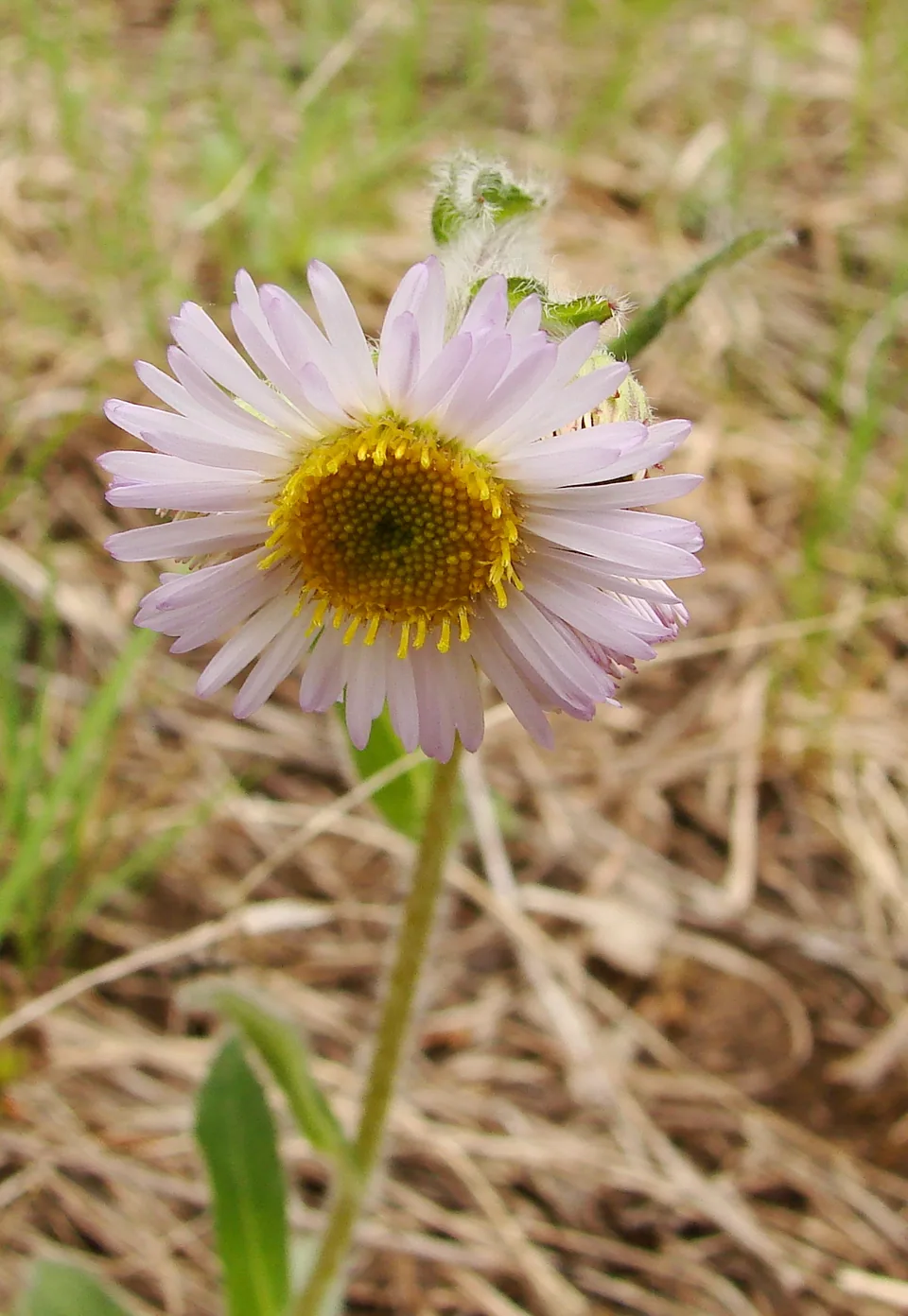


How to Grow and Care for Robin's Plantain
Erigeron pulchellus
Written by Emilio Marruso · last checked
At a glance
Robin's plantain is an easygoing plant that thrives in full sun to partial shade and is happy in rocky or sandy soil on the dry side. It grows just 1 to 2 feet tall and has no serious problems. You can start new plants from seed, division, or root and stem cuttings, so it's easy to share with friends.
- Sun
Full sun to partial shade
What the sources say (2)
Light: Full sun to partial shade
Light: Full sun (6 or more hours of direct sunlight a day) Partial Shade (Direct sunlight only part of the day, 2-6 hours)
— Erigeron pulchellus (Robin's Plantain) | North Carolina Extension Gardener Plant Toolbox [1] This plant will do best with some shade
— Erigeron pulchellus (Robin's Plantain) | North Carolina Extension Gardener Plant Toolbox [1] - Water
Likes average to dry soil: don't overwater
What the sources say (1)
Watering: Average to dry conditions in rocky and sandy soils
Rocky and sandy soils are best in average to dry conditions.
— Erigeron pulchellus (Robin's Plantain) | North Carolina Extension Gardener Plant Toolbox [1] - Cold
Survives winters down to −40 °F (−40 °C)
Very hardy · USDA 3a · RHS H7 · Z3
What the sources say (2)
Hardiness, coldest zone: 3a [winter low −40 to −37.2 °C (−40 to −35 °F)]
USDA Plant Hardiness Zone: 3a, 3b, 4a, 4b, 5a, 5b, 6a, 6b, 7a, 7b, 8a, 8b
— Erigeron pulchellus (Robin's Plantain) | North Carolina Extension Gardener Plant Toolbox [1] Hardiness, warmest zone: 8b [winter low −9.4 to −6.7 °C (15 to 20 °F)]
USDA Plant Hardiness Zone: 3a, 3b, 4a, 4b, 5a, 5b, 6a, 6b, 7a, 7b, 8a, 8b
— Erigeron pulchellus (Robin's Plantain) | North Carolina Extension Gardener Plant Toolbox [1] - Soil
Rocky or sandy soil suits it well
What the sources say (1)
Watering: Average to dry conditions in rocky and sandy soils
Rocky and sandy soils are best in average to dry conditions.
— Erigeron pulchellus (Robin's Plantain) | North Carolina Extension Gardener Plant Toolbox [1] - Pests
No serious problems; sometimes rust, leaf spots or powdery mildew
What the sources say (1)
Diseases: rust, leaf spots, powdery mildew
Insects, Diseases, and Other Plant Problems: No serious problems though occasionally suffer from rust, leaf spots and powdery mildew.
— Erigeron pulchellus (Robin's Plantain) | North Carolina Extension Gardener Plant Toolbox [1] - Size
1 to 2 feet tall and 1.5 to 2 feet wide
What the sources say (2)
Mature height: 30-61 cm (1 to 2 feet)
Dimensions: Height: 1 ft. 0 in. - 2 ft. 0 in. Width: 1 ft. 6 in. - 2 ft. 0 in.
— Erigeron pulchellus (Robin's Plantain) | North Carolina Extension Gardener Plant Toolbox [1] Mature width: 46-61 cm (1.5 to 2 feet)
Dimensions: Height: 1 ft. 0 in. - 2 ft. 0 in. Width: 1 ft. 6 in. - 2 ft. 0 in.
— Erigeron pulchellus (Robin's Plantain) | North Carolina Extension Gardener Plant Toolbox [1] - Propagation
From seed, division, root cuttings or stem cuttings
What the sources say (2)
Propagation: Seed, division, root cutting, stem cutting
Propagate by seed or division. Each plant will
— Erigeron pulchellus (Robin's Plantain) | North Carolina Extension Gardener Plant Toolbox [1] Recommended Propagation Strategy: Division Root Cutting Stem Cutting
— Erigeron pulchellus (Robin's Plantain) | North Carolina Extension Gardener Plant Toolbox [1]
Overview
Robin's plantain is a biennial or short-lived perennial wildflower or groundcover native to eastern and central USA. [1] It does best with some shade and well-drained soils, and is adaptable to various soils. [1] It is used in mass plantings, rock gardens, as a ground cover and in naturalized areas. [1]
This record is incomplete: the sources we read do not cover every field yet.
Not yet covered by our sources: Pruning
Robin's Plantain care
How to water Robin's Plantain
Average to dry conditions in rocky and sandy soils
What the sources say (1)
Rocky and sandy soils are best in average to dry conditions.How much light Robin's Plantain needs
Full sun to partial shade
What the sources say (2)
Light:
Full sun (6 or more hours of direct sunlight a day)
Partial Shade (Direct sunlight only part of the day, 2-6 hours)This plant will do best with some shadeHow much cold Robin's Plantain can take
Hardiness, coldest zone
3a [winter low −40 to −37.2 °C (−40 to −35 °F)]
What the sources say (1)
USDA Plant Hardiness Zone:
3a, 3b, 4a, 4b, 5a, 5b, 6a, 6b, 7a, 7b, 8a, 8bHardiness, warmest zone
8b [winter low −9.4 to −6.7 °C (15 to 20 °F)]
What the sources say (1)
USDA Plant Hardiness Zone:
3a, 3b, 4a, 4b, 5a, 5b, 6a, 6b, 7a, 7b, 8a, 8bHow to propagate Robin's Plantain
Seed, division, root cutting, stem cutting
What the sources say (2)
Propagate by seed or division. Each plant willRecommended Propagation Strategy:
Division
Root Cutting
Stem CuttingHow to grow Robin's Plantain
The plant
Life cycle
biennial or short-lived perennial
What the sources say (1)
is a biennial or short-lived perennial wildflower or groundcover in the aster (Asteraceae) family.Family
Asteraceae
What the sources say (1)
is a biennial or short-lived perennial wildflower or groundcover in the aster (Asteraceae) family.Mature height
30-61 cm (1 to 2 feet)
What the sources say (1)
Dimensions: Height: 1 ft. 0 in. - 2 ft. 0 in. Width: 1 ft. 6 in. - 2 ft. 0 in.Mature width
46-61 cm (1.5 to 2 feet)
What the sources say (1)
Dimensions: Height: 1 ft. 0 in. - 2 ft. 0 in. Width: 1 ft. 6 in. - 2 ft. 0 in.Pests and diseases
Diseases
rust, leaf spots, powdery mildew
What the sources say (1)
Insects, Diseases, and Other Plant Problems: No serious problems though occasionally suffer from rust, leaf spots and powdery mildew.Fertilizing
When
The sources give different values depending on region, zone or growing conditions.
What each source says
Erigeron in general, in containers: Only during the growing season, starting at the beginning of the season
What the sources say (1)
Erigeron in general, in containers: use a liquid seaweed feed every 14 days, diluted to half strength, to keep your erigerons performing well. Feed only during the growing seasonHow often
The sources give different values depending on region, zone or growing conditions.
What each source says
Erigeron in general, in containers: Every 14 days with a liquid feed
What the sources say (1)
Erigeron in general, in containers: use a liquid seaweed feed every 14 days, diluted to half strength, to keep your erigerons performing well. Feed only during the growing seasonNatural fertilizers
The sources give different values depending on region, zone or growing conditions.
What each source says
Erigeron in general, in containers: Liquid seaweed feed diluted to half strength
What the sources say (1)
Erigeron in general, in containers: Either add some slow-release fertiliser at the beginning of the season (according to the manufacturer’s instructions), or use a liquid seaweed feed every 14 days, diluted to half strength, to keep your erigerons performing well.Mineral fertilizers
The sources give different values depending on region, zone or growing conditions.
What each source says
Erigeron in general, in containers: Slow-release fertiliser at the beginning of the season, at the rate on the label
What the sources say (1)
Erigeron in general, in containers: Either add some slow-release fertiliser at the beginning of the season (according to the manufacturer’s instructions), or use a liquid seaweed feed every 14 days, diluted to half strength, to keep your erigerons performing well.Robin's Plantain pests and problems
Rust, leaf spots and powdery mildew
Symptom: No serious problems though occasionally suffers from rust, leaf spots and powdery mildew
What the sources say (1)
No serious problems though occasionally suffer from rust, leaf spots and powdery mildew.
— Erigeron pulchellus (Robin's Plantain) | North Carolina Extension Gardener Plant Toolbox [1]
Remedies
Each remedy shows what official sources say about it; traditional remedies without an official source are marked as such. Harmful ones are listed so you know to avoid them.
Treating the plant
powdery mildew
removing and destroying infected plant parts Partly works
How: Remove and destroy all infected plant parts (leaves, etc.); do not compost infected debris.
Remove and destroy all infected plant parts (leaves, etc.). For infected vegetables and other annuals, remove as much of the plant and its debris in the fall as possible.
— extension.colostate.edu [4] What the evidence says Many insect and disease issues can be solved in the home garden by hand-picking insects or clipping and disposing of diseased plant parts.
— extension.unh.edu [5] pruning overcrowded plants for air circulation Official source, not independently tested
How: Selectively prune overcrowded plant material to help increase air circulation.
Selectively prune overcrowded plant material to help increase air circulation. This helps reduce relative humidity and infection.
— extension.colostate.edu [4] avoiding overhead watering Official source, not independently tested
How: Avoid overhead watering to help reduce the relative humidity.
Avoid overhead watering to help reduce the relative humidity.
— extension.colostate.edu [4] baking soda and horticultural oil spray Not proven
Applications of one tablespoon baking soda plus 2.5 tablespoons of [nome commerciale] oil in 1 gallon of water are still experimental. Use it at your own risk.
— extension.colostate.edu [4] How: One tablespoon baking soda plus 2.5 tablespoons of a lightweight horticultural oil in 1 gallon of water; the source calls it experimental.
An alternative nontoxic control for mildew is baking soda (similar to the potassium bicarbonate listed above) combined with a lightweight horticultural oil such as [nome commerciale].
— extension.colostate.edu [4] What the evidence says Applications of one tablespoon baking soda plus 2.5 tablespoons of [nome commerciale] oil in 1 gallon of water are still experimental. Use it at your own risk.
— extension.colostate.edu [4]
rust
neem oil Partly works
How: Rusts are sensitive to some contact materials including neem oil.
Rusts are sensitive to some contact materials including neem oil and mancozebs, and to systemic materials in FRAC groups 11 and 3, similarly to powdery mildews.
— hortibiz.com [6] What the evidence says However, neem oil is not effective against every insect and disease, and often must be frequently reapplied to reach the desired outcome.
— extension.unh.edu [5] reducing leaf wetness Not verified
Traditional remedy, not verified by an official source.
How: Reducing leaf wetness duration helps with rust control.
Calendar
Pruning
Not stated in the sources we read.
Months as given by the sources, which are mostly from the United States (northern hemisphere). In the southern hemisphere they shift by about six months.
Indicative values
Values from a secondary source, not checked word for word like the rest of this page. Use them as a starting point.
- Drought tolerant
- yesIndicative value, adapt it to your climate · Secondary source
- Soil pH
- 6-7.5Indicative value, adapt it to your climate · Secondary source
- Growth rate
- LowIndicative value, adapt it to your climate · Secondary source
- Pruning
- March, April, August, MayIndicative value, adapt it to your climate · Secondary source
Similar plants
- Aspen Fleabane Erigeron speciosus
- Bitter Fleabane Erigeron acris
- Hairy Fleabane Erigeron bonariensis
- Horseweed Erigeron canadensis
- Mexican fleabane Erigeron karvinskianus
- Seaside fleabane Erigeron glaucus
- African Daisy Dimorphotheca pluvialis
- African Marigold Tagetes erecta
Sources
Every value above is quoted from these documents. Links lead to the original publisher.
- Erigeron pulchellus (Robin's Plantain) | North Carolina Extension Gardener Plant Toolbox · plants.ces.ncsu.edu, consulted
- Erigeron (Common Fleabane, Daisy Fleabane, Fleabane) | North Carolina Extension Gardener Plant Toolbox · plants.ces.ncsu.edu, consulted
- rhs.org.uk · rhs.org.uk
- extension.colostate.edu · extension.colostate.edu
- extension.unh.edu · extension.unh.edu
- hortibiz.com · hortibiz.com
Written by Emilio Marruso · last checked