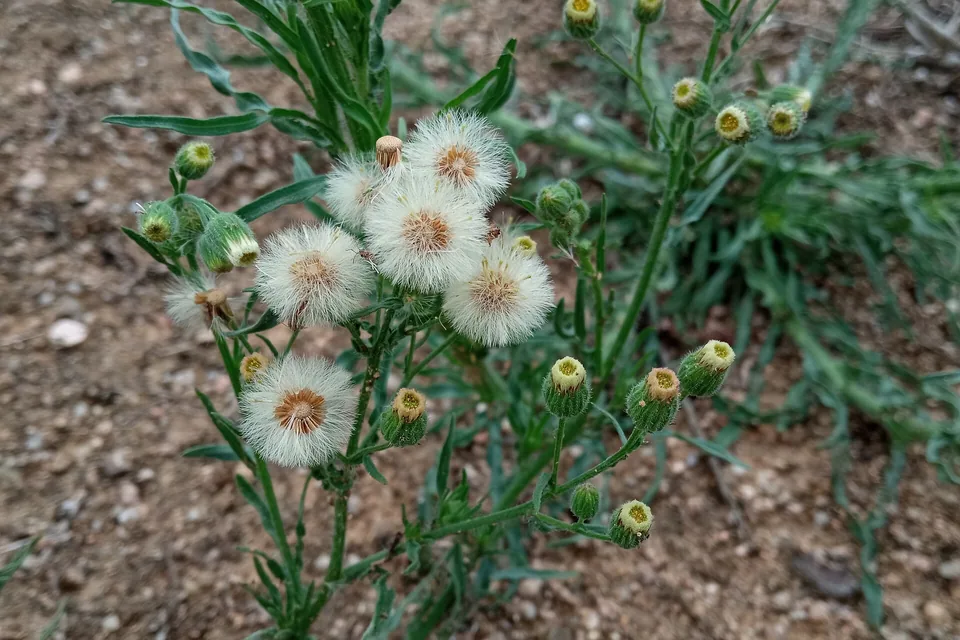


How to Grow and Care for Hairy Fleabane
Erigeron bonariensis
Written by Emilio Marruso · last checked
Toxic to: People · Why
At a glance
Hairy fleabane is a tough annual that asks for very little: full sun and soil that stays dry, even very dry, are all it needs. It grows from seed and travels easily on the wind, so it needs almost no care. Grow it thoughtfully and keep an eye on it, though, because it can turn weedy and some weed killers won't stop it.
- Sun
Full sun
What the sources say (1)
Light: Full sun
Light: Full sun (6 or more hours of direct sunlight a day)
— Erigeron bonariensis (Flaxleaf Fleabane, Flax Leaved Horseweed, Hairy Fleabane, Small Horseweed) | North Carolina Extension Gardener Plant Toolbox [1] - Water
Little water: it grows in dry to very dry soil
What the sources say (1)
Watering notes: Grows in occasionally dry to very dry soil
Soil Drainage: Occasionally Dry Very Dry
— Erigeron bonariensis (Flaxleaf Fleabane, Flax Leaved Horseweed, Hairy Fleabane, Small Horseweed) | North Carolina Extension Gardener Plant Toolbox [1] - Pests
It can carry lettuce mosaic virus, which harms lettuce crops
- Watch out
Can become a weed: its seeds blow on the wind and some weed killers don't work on it
- Propagation
An annual that grows from seed
What the sources say (2)
Propagation: Seed
Recommended Propagation Strategy: Seed
— Erigeron bonariensis (Flaxleaf Fleabane, Flax Leaved Horseweed, Hairy Fleabane, Small Horseweed) | North Carolina Extension Gardener Plant Toolbox [1] Life cycle: annual
Uses (Ethnobotany): weed Life Cycle: Annual
— Erigeron bonariensis (Flaxleaf Fleabane, Flax Leaved Horseweed, Hairy Fleabane, Small Horseweed) | North Carolina Extension Gardener Plant Toolbox [1] - Safety
Mildly poisonous to people: don't eat it
Overview
Hairy fleabane is a rapidly growing summer annual or biennial weed native to tropical America. [1] It spreads by wind-blown seeds that remain viable for up to 3 years, and it is not recommended for gardens. [1] Contact with any part of the plant can cause dermatitis. [1]
This record is incomplete: the sources we read do not cover every field yet.
Not yet covered by our sources: Hardiness, coldest zone, Hardiness, warmest zone
Hairy Fleabane care
How to water Hairy Fleabane
Grows in occasionally dry to very dry soil
What the sources say (1)
Soil Drainage:
Occasionally Dry
Very DryHow much light Hairy Fleabane needs
Full sun
What the sources say (1)
Light:
Full sun (6 or more hours of direct sunlight a day)How much cold Hairy Fleabane can take
Hardiness, coldest zone
Not stated in the sources we read.
Hardiness, warmest zone
Not stated in the sources we read.
How to propagate Hairy Fleabane
Seed
What the sources say (1)
Recommended Propagation Strategy:
SeedHow to grow Hairy Fleabane
The plant
Life cycle
annual
What the sources say (1)
Uses (Ethnobotany):
weed
Life Cycle:
AnnualFamily
Asteraceae
What the sources say (1)
It is a rapidly growing summer annual or biennial weed in the Asteraceae (daisy) family.Hairy Fleabane pests and problems
Weediness and herbicide resistance
Symptom: Considered weedy; spreads by wind-blown seeds and resists some herbicides.
What to do: Elimination is curtailed by the plant's resistance to some herbicides.
What the sources say (1)
Considered weedy, it spreads when its fluffy seeds are blown by the wind, washed into the surrounding area by rainwater and by human activity.
— Erigeron bonariensis (Flaxleaf Fleabane, Flax Leaved Horseweed, Hairy Fleabane, Small Horseweed) | North Carolina Extension Gardener Plant Toolbox [1] Host of lettuce mosaic virus
Symptom: In South America it is a host for the lettuce mosaic virus, affecting yield.
What the sources say (1)
In South America, it is a host for the lettuce mosaic virus, affecting the yield produced.
— Erigeron bonariensis (Flaxleaf Fleabane, Flax Leaved Horseweed, Hairy Fleabane, Small Horseweed) | North Carolina Extension Gardener Plant Toolbox [1]
Remedies
Each remedy shows what official sources say about it; traditional remedies without an official source are marked as such. Harmful ones are listed so you know to avoid them.
First aid
First aid: not a substitute for a doctor
contact dermatitis
rinse skin with warm water and an emollient Official source, not independently tested
See a GP if you have persistent, recurrent or severe symptoms of contact dermatitis.
— nhs.uk [5] How: After contact with an allergen or irritant, rinse the affected skin with warm water and an emollient as soon as possible.
if you come into contact with an allergen or irritant, rinse the affected skin with warm water and an emollient as soon as possible
— nhs.uk [5]
Getting rid of it
weeds
bag the seed head before pulling mature plants Not verified
Traditional remedy, not verified by an official source.
Dispose of the weeds by burning or place them in the garbage. Never add them to a compost pile.
— gardeningknowhow.com [6] How: Place a plastic bag over the seed head before pulling or cutting; burn the weeds or put them in the garbage.
water the soil before pulling Not verified
Traditional remedy, not verified by an official source.
How: Water the soil to remove the entire taproot of older, larger plants more easily.
tilling before flowering Not verified
Traditional remedy, not verified by an official source.
How: Till or harrow dense infestations before flowering.
Is Hairy Fleabane poisonous?
Reported by the source, quoted verbatim. This is not medical or veterinary advice: if a person or an animal may have eaten this plant, contact a poison control centre or a veterinarian.
Similar plants
- Aspen Fleabane Erigeron speciosus
- Horseweed Erigeron canadensis
- Bitter Fleabane Erigeron acris
- Robin's Plantain Erigeron pulchellus
- Mexican fleabane Erigeron karvinskianus
- Seaside fleabane Erigeron glaucus
- African Marigold Tagetes erecta
- American Burnweed Erechtites hieraciifolius
Sources
Every value above is quoted from these documents. Links lead to the original publisher.
- Erigeron bonariensis (Flaxleaf Fleabane, Flax Leaved Horseweed, Hairy Fleabane, Small Horseweed) | North Carolina Extension Gardener Plant Toolbox · plants.ces.ncsu.edu, consulted
- Erigeron (Common Fleabane, Daisy Fleabane, Fleabane) | North Carolina Extension Gardener Plant Toolbox · plants.ces.ncsu.edu, consulted
- Hairy Fleabane - Erigeron bonariensis | North Carolina Extension Gardener Plant Toolbox · plants.ces.ncsu.edu, consulted
- Flaxleaf Fleabane - Erigeron bonariensis | North Carolina Extension Gardener Plant Toolbox · plants.ces.ncsu.edu, consulted
- nhs.uk · nhs.uk
- gardeningknowhow.com · gardeningknowhow.com
Written by Emilio Marruso · last checked