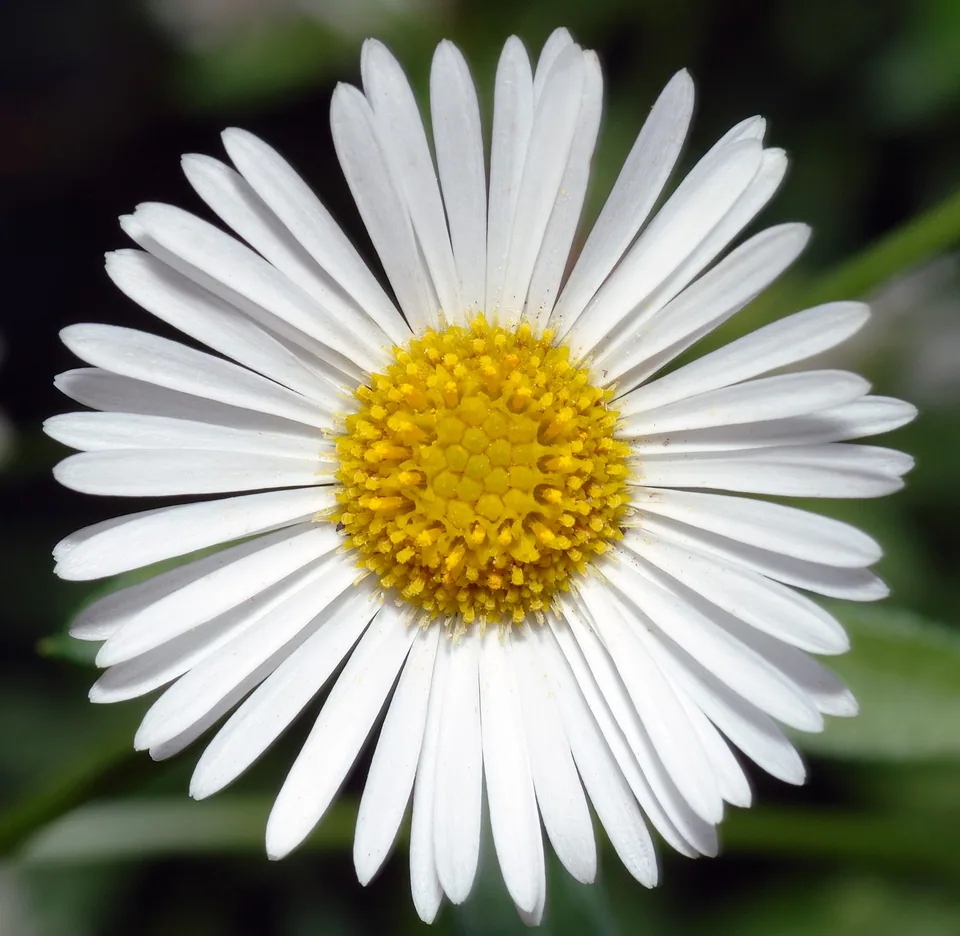
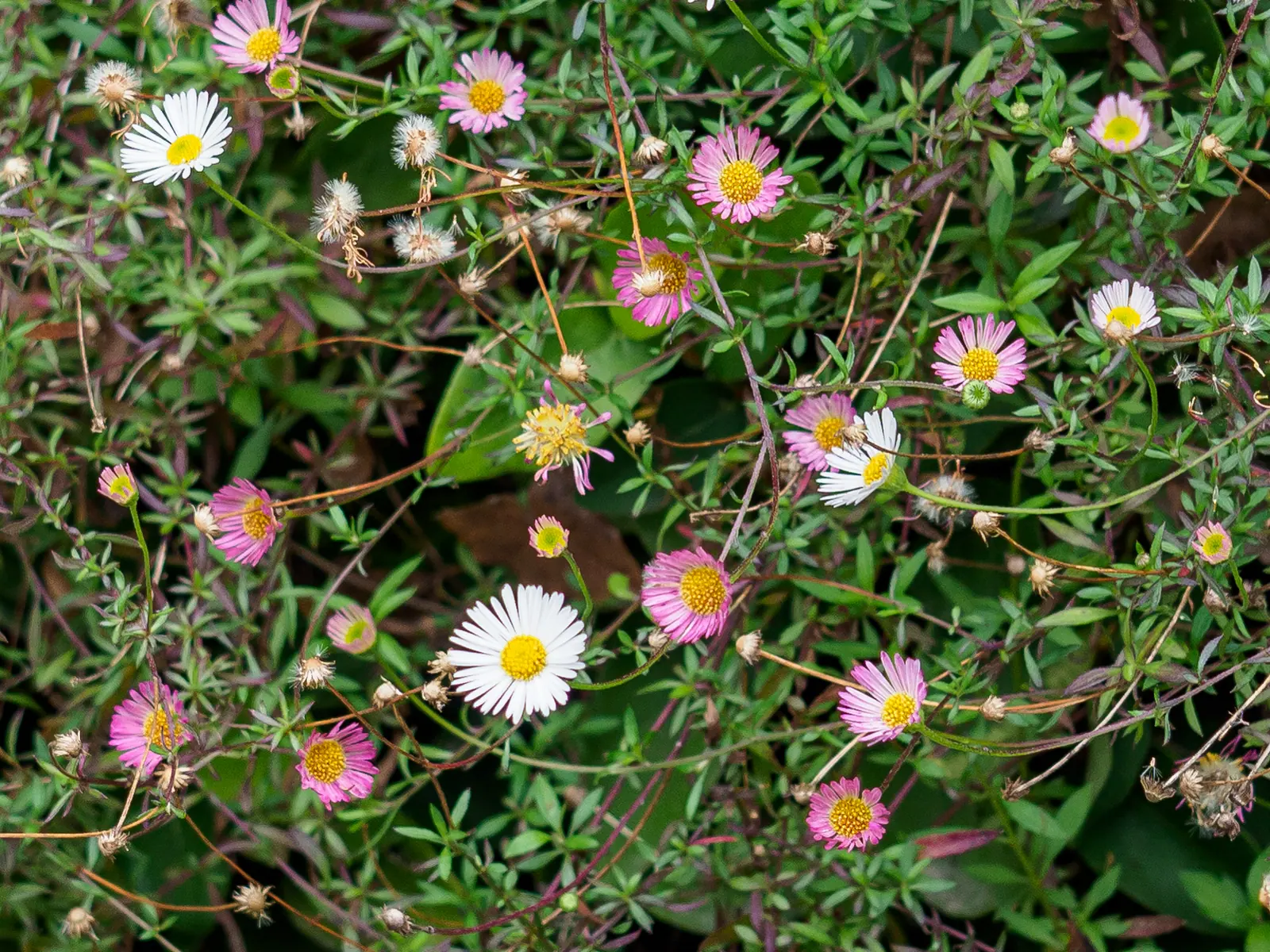
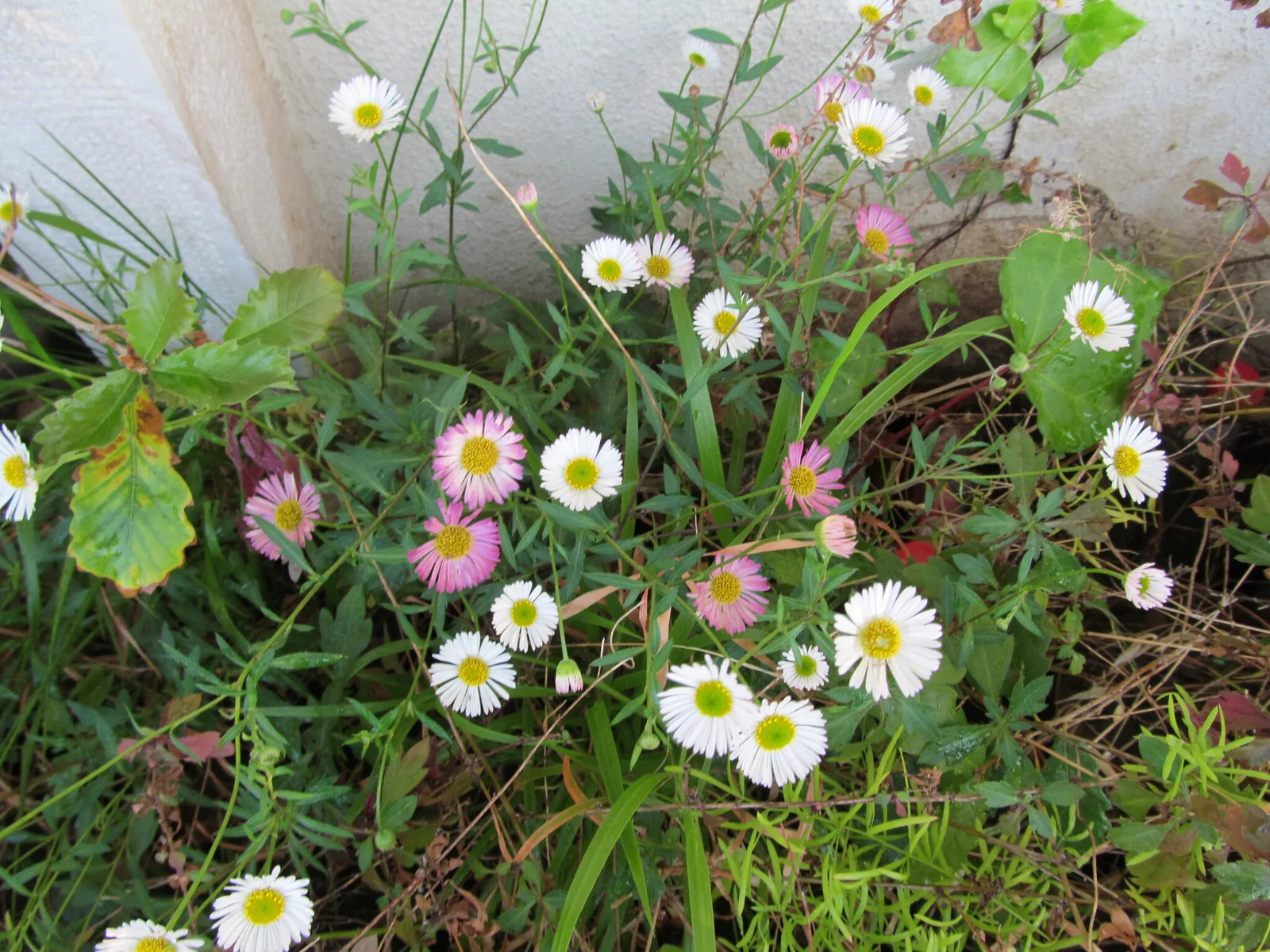

How to Grow and Care for Mexican fleabane
Erigeron karvinskianus
Written by Emilio Marruso · last checked
Toxic to: Cats · Why
At a glance
This easygoing plant loves full sun, takes a little shade, and grows happily in pots too. Plant it any time from May to September in free-draining soil, water it steadily through summer, letting it dry out in between, and cut it back in autumn. Established clumps divide easily in spring, so you'll soon have plenty to share.
- Sun
Full sun, with a little midday shade in very hot spots; handles some shade
What the sources say (2)
Light: Full sun, with a little midday shade in scorching spots; tolerates moderate shade
The plant prefers full sun but in particularly scorching spots, it will love a little midday shade.
— Growing Mexican Fleabane - A Mat-Forming Perennial Ideal For Dry Gardens | Horticulture.co.uk [6] Tolerates moderate shade to full sun, damp to drought, high to low temperature and almost any surface.
— Erigeron karvinskianus • New Zealand Plant Conservation Network [4] - Water
Water steadily in summer, letting it dry out between waterings; pots need water more often
What the sources say (3)
Watering: Water consistently through the summer, letting the plant dry out between waterings
Let the plant dry out between waterings, but if there is a prolonged dry period, be sure not to let it go thirsty for too long or it may wilt.
— Growing Mexican Fleabane - A Mat-Forming Perennial Ideal For Dry Gardens | Horticulture.co.uk [6] Watering notes: Does best where soil does not entirely dry out in summer; plants in pots need more frequent watering
Although the plant is great for drier locations, it will do best in soil or another position that does not entirely dry out in summer.
— Growing Mexican Fleabane - A Mat-Forming Perennial Ideal For Dry Gardens | Horticulture.co.uk [6] Remember that when growing in pots you will likely have to water more frequently.
— Growing Mexican Fleabane - A Mat-Forming Perennial Ideal For Dry Gardens | Horticulture.co.uk [6] - Soil
Free-draining soil: it dies in soggy or waterlogged ground, especially in winter
- Planting
Plant from May to September
What the sources say (1)
Planting: May-September
E. karvinskianus can be purchased and planted out any time between May and September.
— Growing Mexican Fleabane - A Mat-Forming Perennial Ideal For Dry Gardens | Horticulture.co.uk [6] - Pruning
In autumn, cut straggly stems back to just above the ground; trim big clumps in early spring
What the sources say (2)
Pruning: Autumn (cut straggly stems back to just above ground); large clumps can be trimmed in early spring
In autumn, if the plants are looking straggly, you can also cut back the stems to just above the ground if they do not die back naturally themselves.
— Growing Mexican Fleabane - A Mat-Forming Perennial Ideal For Dry Gardens | Horticulture.co.uk [6] Large clumps can be trimmed in early spring to shape and control their growth.
— Growing Mexican Fleabane - A Mat-Forming Perennial Ideal For Dry Gardens | Horticulture.co.uk [6] - Propagation
From seed, or by dividing established clumps in spring
What the sources say (2)
Propagation: Seed; division of established clumps in spring; rhizomes
you can easily propagate new plants, either by collecting and sowing the seed or by dividing established clumps.
— Growing Mexican Fleabane - A Mat-Forming Perennial Ideal For Dry Gardens | Horticulture.co.uk [6] It also propagates vegetatively from rhizomes
— Erigeron karvinskianus | Invasive plant species in Portugal [2] - Containers
Grows in containers too; water it more often there
What the sources say (3)
In containers: Yes
Mexican fleabane is great for free-draining containers or window boxes in a sunny spot.
— Growing Mexican Fleabane - A Mat-Forming Perennial Ideal For Dry Gardens | Horticulture.co.uk [6] Watering notes: Does best where soil does not entirely dry out in summer; plants in pots need more frequent watering
Although the plant is great for drier locations, it will do best in soil or another position that does not entirely dry out in summer.
— Growing Mexican Fleabane - A Mat-Forming Perennial Ideal For Dry Gardens | Horticulture.co.uk [6] Remember that when growing in pots you will likely have to water more frequently.
— Growing Mexican Fleabane - A Mat-Forming Perennial Ideal For Dry Gardens | Horticulture.co.uk [6]
Overview
Mexican fleabane is a mat-forming perennial grown in dry gardens, walls and containers. [6] It prefers full sun and free-draining soil, and is listed as an invasive species in Portugal. [6][2]
This record is incomplete: the sources we read do not cover every field yet.
Not yet covered by our sources: Hardiness, coldest zone, Hardiness, warmest zone
Mexican fleabane care
How to water Mexican fleabane
Watering
Water consistently through the summer, letting the plant dry out between waterings
What the sources say (1)
Let the plant dry out between waterings, but if there is a prolonged dry period, be sure not to let it go thirsty for too long or it may wilt.Watering notes
Does best where soil does not entirely dry out in summer; plants in pots need more frequent watering
What the sources say (2)
Although the plant is great for drier locations, it will do best in soil or another position that does not entirely dry out in summer.Remember that when growing in pots you will likely have to water more frequently.How much light Mexican fleabane needs
Full sun, with a little midday shade in scorching spots; tolerates moderate shade
What the sources say (2)
The plant prefers full sun but in particularly scorching spots, it will love a little midday shade.Tolerates moderate shade to full sun, damp to drought, high to low temperature and almost any surface.How much cold Mexican fleabane can take
Hardiness, coldest zone
Not stated in the sources we read.
Hardiness, warmest zone
Not stated in the sources we read.
Where to grow Mexican fleabane
Yes
What the sources say (1)
Mexican fleabane is great for free-draining containers or window boxes in a sunny spot.How to propagate Mexican fleabane
Seed; division of established clumps in spring; rhizomes
What the sources say (2)
you can easily propagate new plants, either by collecting and sowing the seed or by dividing established clumps.It also propagates vegetatively from rhizomesHow to grow Mexican fleabane
Fertilizing
When
The sources give different values depending on region, zone or growing conditions.
What each source says
Erigeron in general, in containers: Only during the growing season, starting at the beginning of the season
What the sources say (1)
Erigeron in general, in containers: use a liquid seaweed feed every 14 days, diluted to half strength, to keep your erigerons performing well. Feed only during the growing seasonHow often
The sources give different values depending on region, zone or growing conditions.
What each source says
Erigeron in general, in containers: Every 14 days with a liquid feed
What the sources say (1)
Erigeron in general, in containers: use a liquid seaweed feed every 14 days, diluted to half strength, to keep your erigerons performing well. Feed only during the growing seasonNatural fertilizers
The sources give different values depending on region, zone or growing conditions.
What each source says
Erigeron in general, in containers: Liquid seaweed feed diluted to half strength
What the sources say (1)
Erigeron in general, in containers: Either add some slow-release fertiliser at the beginning of the season (according to the manufacturer’s instructions), or use a liquid seaweed feed every 14 days, diluted to half strength, to keep your erigerons performing well.Mineral fertilizers
The sources give different values depending on region, zone or growing conditions.
What each source says
Erigeron in general, in containers: Slow-release fertiliser at the beginning of the season, at the rate on the label
What the sources say (1)
Erigeron in general, in containers: Either add some slow-release fertiliser at the beginning of the season (according to the manufacturer’s instructions), or use a liquid seaweed feed every 14 days, diluted to half strength, to keep your erigerons performing well.Mexican fleabane pests and problems
Die-off from damp or waterlogged soil
Symptom: Plants die off where the spot is too damp or winter waterlogging occurs
What to do: Plant in free-draining soil
What the sources say (1)
Most problems with die-offs arise because the spot is too damp, or winter waterlogging has occurred.
— Growing Mexican Fleabane - A Mat-Forming Perennial Ideal For Dry Gardens | Horticulture.co.uk [6]
Remedies
Each remedy shows what official sources say about it; traditional remedies without an official source are marked as such. Harmful ones are listed so you know to avoid them.
Getting rid of it
invasive spread
digging out Not verified
Traditional remedy, not verified by an official source.
Easy to dig or pull out, but ensure you get all the roots or it will regrow.
— pfwra.org.nz [10] How: Dig out small infestations and leave on site to rot down or bag all plant material carefully and dispose of at an approved land fill facility.
Is Mexican fleabane toxic to pets?
Reported by the source, quoted verbatim. This is not medical or veterinary advice: if a person or an animal may have eaten this plant, contact a poison control centre or a veterinarian.
Toxic to: Is known to attract Cats
[5]The source flags the risk for this animal but does not explain why.
Calendar
The sources give different values depending on region, zone or growing conditions.
What each source says
According to Horticulture.co.uk: March-April
According to BBC Gardeners' World: April-May
What the sources say (2)
According to Horticulture.co.uk: Scatter the seeds in March or April into the areas of soil between gravel, stones, rocks or paving where you would like them to grow.According to BBC Gardeners' World: | Sow | | | | yes | yes | | | | | | |May-September
What the sources say (1)
E. karvinskianus can be purchased and planted out any time between May and September.Autumn (cut straggly stems back to just above ground); large clumps can be trimmed in early spring
What the sources say (2)
In autumn, if the plants are looking straggly, you can also cut back the stems to just above the ground if they do not die back naturally themselves.Large clumps can be trimmed in early spring to shape and control their growth.Months as given by the sources, which are mostly from the United States (northern hemisphere). In the southern hemisphere they shift by about six months.
Similar plants
- Aspen Fleabane Erigeron speciosus
- Bitter Fleabane Erigeron acris
- Hairy Fleabane Erigeron bonariensis
- Horseweed Erigeron canadensis
- Robin's Plantain Erigeron pulchellus
- Seaside fleabane Erigeron glaucus
- Abies grandis Abies grandis
- Abraham Trachystemon orientalis
Sources
Every value above is quoted from these documents. Links lead to the original publisher.
- Daisy Fleabane - Erigeron | North Carolina Extension Gardener Plant Toolbox · plants.ces.ncsu.edu, consulted
- Erigeron karvinskianus | Invasive plant species in Portugal · invasoras.pt, consulted
- GISD · iucngisd.org, consulted
- Erigeron karvinskianus • New Zealand Plant Conservation Network · nzpcn.org.nz, consulted
- Erigeron karvinskianus | BBC Gardeners World Magazine · gardenersworld.com, consulted
- Growing Mexican Fleabane - A Mat-Forming Perennial Ideal For Dry Gardens | Horticulture.co.uk · horticulture.co.uk, consulted
- Flora of New Zealand | Taxon Profile | Erigeron karvinskianus · nzflora.info, consulted
- HortFlora · hortflora.rbg.vic.gov.au, consulted
- rhs.org.uk · rhs.org.uk
- pfwra.org.nz · pfwra.org.nz
Written by Emilio Marruso · last checked