

Cómo cultivar y cuidar Cape Marigold
Dimorphotheca sinuata
Escrito por Emilio Marruso · última revisión
De un vistazo
Esta pequeña planta anual está hecha para rincones soleados y sin complicaciones: dale sol pleno, al menos 6 horas al día, y un suelo arenoso que drene bien. Una vez asentada, aguanta la sequía, mide de 10 a 30 cm y crece también en maceta. Mezcla un poco de compost en el bancal antes de sembrar y se resembrará sola.
- Sol
Sol pleno: 6 horas o más al día
Qué dicen las fuentes (1)
Luz: Pleno sol (6 o más horas de luz solar directa al día)
Light: Full sun (6 or more hours of direct sunlight a day)
— Dimorphotheca sinuata (African Daisy, Cape Marigold, Glandular Cape Marigold, Namaqualand Daisy) | North Carolina Extension Gardener Plant Toolbox [1] - Riego
Aguanta la sequía una vez asentada
Qué dicen las fuentes (1)
Riego: Tolerante a la sequía una vez establecido
Prefers full sun and needs well-drained, sandy soils. Once it is established, it is drought-tolerant.
— Dimorphotheca sinuata (African Daisy, Cape Marigold, Glandular Cape Marigold, Namaqualand Daisy) | North Carolina Extension Gardener Plant Toolbox [1] - Frío
Aguanta inviernos de hasta −45,6 °C (−50 °F)
Muy rústica · USDA 2a · RHS H7 · Z2
Qué dicen las fuentes (2)
Rusticidad, zona más fría: 2a [mínima invernal de −45,6 a −42,8 °C (de −50 a −45 °F)]
USDA Plant Hardiness Zone: 2a, 2b, 3a, 3b, 4a, 4b, 5a, 5b, 6a, 6b, 7a, 7b, 8a, 8b, 9a, 9b, 10a, 10b, 11a, 11b
— Dimorphotheca sinuata (African Daisy, Cape Marigold, Glandular Cape Marigold, Namaqualand Daisy) | North Carolina Extension Gardener Plant Toolbox [1] Rusticidad, zona más cálida: 11b [mínima invernal de 7,2 a 10 °C (de 45 a 50 °F)]
USDA Plant Hardiness Zone: 2a, 2b, 3a, 3b, 4a, 4b, 5a, 5b, 6a, 6b, 7a, 7b, 8a, 8b, 9a, 9b, 10a, 10b, 11a, 11b
— Dimorphotheca sinuata (African Daisy, Cape Marigold, Glandular Cape Marigold, Namaqualand Daisy) | North Carolina Extension Gardener Plant Toolbox [1] - Suelo
Suelo arenoso y con buen drenaje
Qué dicen las fuentes (1)
Notas sobre el riego: Necesita suelos arenosos y bien drenados
Prefers full sun and needs well-drained, sandy soils.
— Dimorphotheca sinuata (African Daisy, Cape Marigold, Glandular Cape Marigold, Namaqualand Daisy) | North Carolina Extension Gardener Plant Toolbox [1] - Abonado
Mezcla compost en el bancal antes de sembrar
Qué dicen las fuentes (1)
Abonos naturales: Compost incorporado a los canteros antes de sembrar
For best results, prepare the beds with compost and remove clods and stones to make a fine bed. They also grow very well in poor, sandy soils.
— [2] - Atención
Se resiembra y se extiende sola; en algunos lugares se considera mala hierba o invasora
Qué dicen las fuentes (1)
Propagación: Semilla (se resiembra y coloniza)
Propagated by seeds and will reseed and colonize, thus producing a colorful display year after year.
— Dimorphotheca sinuata (African Daisy, Cape Marigold, Glandular Cape Marigold, Namaqualand Daisy) | North Carolina Extension Gardener Plant Toolbox [1] - Tamaño
De 10 a 30 cm de alto
Qué dicen las fuentes (1)
Altura adulta: 10-30 cm (4-12 in)
The cape marigold measures 4 to 12 inches tall, with an upright, sprawling habit, reddish stems, light green foliage,
— Dimorphotheca sinuata (African Daisy, Cape Marigold, Glandular Cape Marigold, Namaqualand Daisy) | North Carolina Extension Gardener Plant Toolbox [1] - Multiplicación
Planta anual que se multiplica por semilla; a menudo se resiembra sola
Qué dicen las fuentes (2)
Propagación: Semilla (se resiembra y coloniza)
Propagated by seeds and will reseed and colonize, thus producing a colorful display year after year.
— Dimorphotheca sinuata (African Daisy, Cape Marigold, Glandular Cape Marigold, Namaqualand Daisy) | North Carolina Extension Gardener Plant Toolbox [1] Ciclo de vida: anual
Family: Asteraceae Uses (Ethnobotany): No known medical uses. Life Cycle: Annual Recommended Propagation Strategy: Seed
— Dimorphotheca sinuata (African Daisy, Cape Marigold, Glandular Cape Marigold, Namaqualand Daisy) | North Carolina Extension Gardener Plant Toolbox [1] - Maceta
Crece también en maceta
Qué dicen las fuentes (1)
En maceta: Sí
#drought tolerant garden #pollinator garden #colonizing #patio #container plant #green leaves
— Dimorphotheca sinuata (African Daisy, Cape Marigold, Glandular Cape Marigold, Namaqualand Daisy) | North Carolina Extension Gardener Plant Toolbox [1]
Resumen
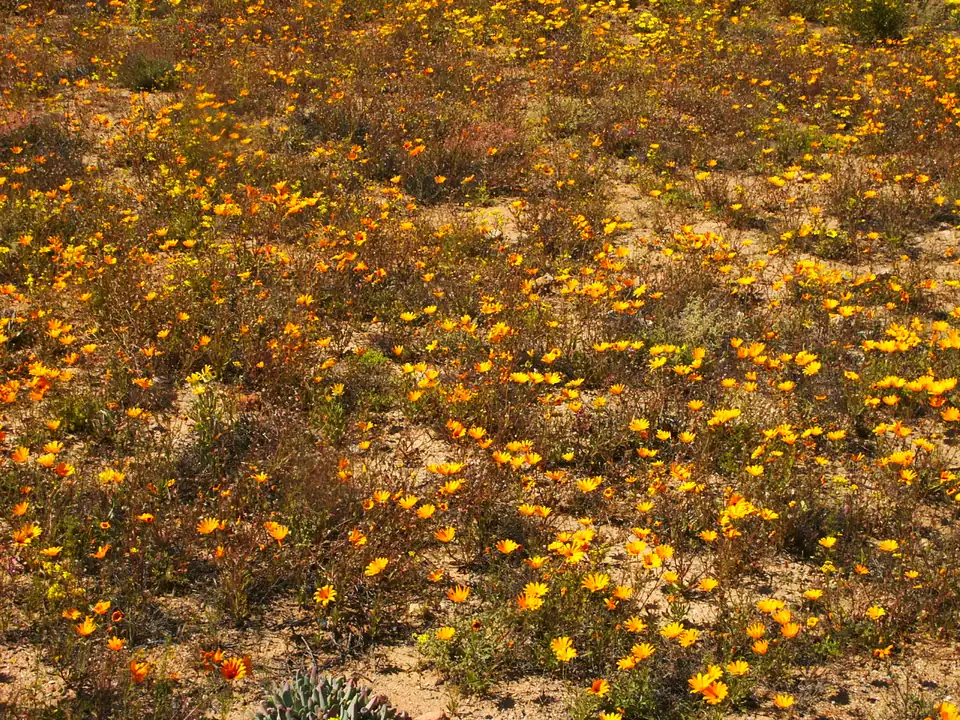
La maravilla del Cabo es una anual ornamental, parecida a una margarita, originaria de Sudáfrica, con flores anaranjadas o amarillas. [1] Prefiere pleno sol y suelos arenosos y bien drenados, y es tolerante a la sequía una vez establecida. [1] Se considera maleza en California y Australia y está catalogada como invasiva en la República Dominicana. [1]
Citado en inglés, como en la fuente.
Esta ficha está incompleta: las fuentes consultadas aún no cubren todos los campos.
Aún no cubierto por nuestras fuentes: Poda
Cuidados
Riego
Riego
Tolerante a la sequía una vez establecido
Qué dicen las fuentes (1)
Prefers full sun and needs well-drained, sandy soils. Once it is established, it is drought-tolerant.Notas sobre el riego
Necesita suelos arenosos y bien drenados
Qué dicen las fuentes (1)
Prefers full sun and needs well-drained, sandy soils.Luz
Pleno sol (6 o más horas de luz solar directa al día)
Qué dicen las fuentes (1)
Light:
Full sun (6 or more hours of direct sunlight a day)Clima y frío
Rusticidad, zona más fría
2a [mínima invernal de −45,6 a −42,8 °C (de −50 a −45 °F)]
Qué dicen las fuentes (1)
USDA Plant Hardiness Zone:
2a, 2b, 3a, 3b, 4a, 4b, 5a, 5b, 6a, 6b, 7a, 7b, 8a, 8b, 9a, 9b, 10a, 10b, 11a, 11bRusticidad, zona más cálida
11b [mínima invernal de 7,2 a 10 °C (de 45 a 50 °F)]
Qué dicen las fuentes (1)
USDA Plant Hardiness Zone:
2a, 2b, 3a, 3b, 4a, 4b, 5a, 5b, 6a, 6b, 7a, 7b, 8a, 8b, 9a, 9b, 10a, 10b, 11a, 11bDónde cultivarla
Sí
Qué dicen las fuentes (1)
#drought tolerant garden #pollinator garden #colonizing #patio #container plant #green leavesPropagación
Semilla (se resiembra y coloniza)
Qué dicen las fuentes (1)
Propagated by seeds and will reseed and colonize, thus producing a colorful display year after year.Cultivo
La planta
Ciclo de vida
anual
Qué dicen las fuentes (1)
Family: Asteraceae Uses (Ethnobotany): No known medical uses. Life Cycle: Annual Recommended Propagation Strategy: SeedFamilia
Asteraceae
Qué dicen las fuentes (1)
Family: Asteraceae Uses (Ethnobotany): No known medical uses. Life Cycle: Annual Recommended Propagation Strategy: SeedAltura adulta
10-30 cm (4-12 in)
Qué dicen las fuentes (1)
The cape marigold measures 4 to 12 inches tall, with an upright, sprawling habit, reddish stems, light green foliage,Abonado
Abonos naturales
Compost incorporado a los canteros antes de sembrar
Qué dicen las fuentes (1)
For best results, prepare the beds with compost and remove clods and stones to make a fine bed. They also grow very well in poor, sandy soils.Problemas
Maleza e invasividad
Síntoma: Se resiembra y coloniza; catalogada como invasiva en la República Dominicana y considerada maleza en California y Australia
Qué hacer: No se indica manejo en la fuente
Qué dicen las fuentes (1)
The Cape Marigold is listed as invasive in the Dominican Republic. In California and Australia, this plant is considered a weed.
— Dimorphotheca sinuata (African Daisy, Cape Marigold, Glandular Cape Marigold, Namaqualand Daisy) | North Carolina Extension Gardener Plant Toolbox [1]
Remedios
Cada remedio indica qué dicen las fuentes oficiales; los remedios tradicionales sin fuente oficial aparecen marcados. Los perjudiciales están para que sepas evitarlos.
Cuidar la planta
pulgones
quitándolos con la manguera de jardín Funciona
Cómo: Aleja el enjambre de las plantas con un chorro de la manguera de jardín.
If you see a swarm in that area of your plants, blast them off with the garden hose.
— gardeningknowhow.com [3] Qué dicen las pruebas You can physically knock aphids off plants with a strong spray of water from a garden hose. This will also help wash off any honeydew or sooty mold that may be present.
— extension.umn.edu [4] spray de jabón insecticida Funciona
Cómo: Si las plantas son demasiado delicadas para la manguera, rocía con jabón insecticida.
If plants are too tender for this treatment, spray with insecticidal soap, or neem oil .
— gardeningknowhow.com [3] Qué dicen las pruebas Insecticidal soap, horticultural oil and pyrethrins can be effective at controlling aphids.
— extension.umn.edu [4] spray de aceite de neem Funciona en parte
Cómo: Si las plantas son demasiado delicadas para la manguera, rocía con aceite de neem.
If plants are too tender for this treatment, spray with insecticidal soap, or neem oil .
— gardeningknowhow.com [3] Qué dicen las pruebas Neem (azadirachtin) is a plant based pesticide that discourages aphid feeding. Insects are not killed quickly, but it makes them stop feeding and they slowly die.
— extension.umn.edu [4] liberar mariquitas No verificado
Remedio tradicional, no verificado por una fuente oficial.
Cómo: Libera un grupo de mariquitas en los canteros de flores.
mildiu polvoriento
spray de jabón hortícola No verificado
Remedio tradicional, no verificado por una fuente oficial.
Cómo: Trata el mildiu polvoriento en las hojas con un spray de jabón hortícola; riega por las raíces, no por el follaje.
Cómo eliminarla
resembrar y propagar
Elimina las flores marchitas No verificado
Remedio tradicional, no verificado por una fuente oficial.
Cómo: Quita el tallo floral gastado antes de que la flor pierda todo su color.
Calendario
Poda
No figura en las fuentes consultadas.
Meses tal como los dan las fuentes, en su mayoría de Estados Unidos (hemisferio norte). En el hemisferio sur se desplazan unos seis meses.
Plantas similares
- African Daisy Dimorphotheca pluvialis
- Matacabras Dimorphotheca ecklonis
- Cempasúchil Tagetes erecta
- Ageratum Ageratum houstonianum
- Alpine aster Aster alpinus
- American Burnweed Erechtites hieraciifolius
- Appalachian Blazing Star Liatris squarrulosa
- Appalachian Ironweed Vernonia glauca
Fuentes
Cada valor anterior se cita de estos documentos. Los enlaces llevan al editor original.
- Dimorphotheca sinuata (African Daisy, Cape Marigold, Glandular Cape Marigold, Namaqualand Daisy) | North Carolina Extension Gardener Plant Toolbox · plants.ces.ncsu.edu, consultado
- pza.sanbi.org · pza.sanbi.org
- gardeningknowhow.com · gardeningknowhow.com
- extension.umn.edu · extension.umn.edu
Escrito por Emilio Marruso · última revisión