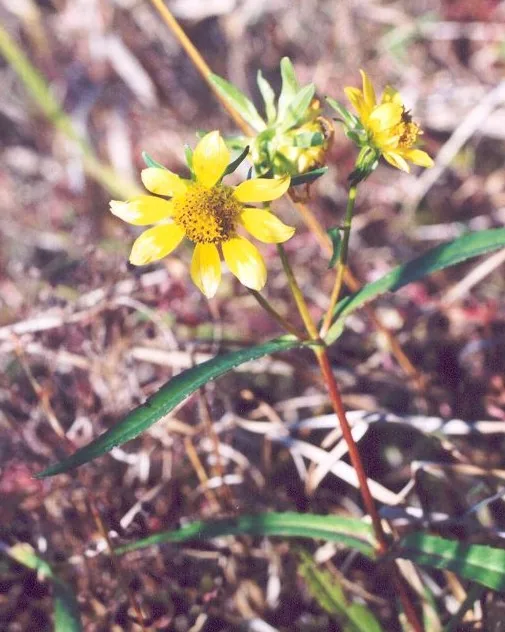


How to Grow and Care for Bur Marigold
Bidens laevis
Written by Emilio Marruso · last checked
At a glance
This easygoing annual loves wet feet: it grows along bogs, marshes, ponds and streams, in full sun to partial shade. It can reach 6 ft tall, and its leaves are edible. Give it moist to occasionally wet soil and keep an eye on it in small gardens, where it may crowd out its neighbors, and it will bring life to your pond edge.
- Sun
Full sun to partial shade
What the sources say (2)
Light: Full sun to partial shade
Light: Full sun (6 or more hours of direct sunlight a day) Partial Shade (Direct sunlight only part of the day, 2-6 hours)
— Bidens laevis (Begger's Tick, Bur Marigold) | North Carolina Extension Gardener Plant Toolbox [1] This plant will grow in sandy to clay soils with neutral, slightly acidic pH in full sun along bogs
— Bidens laevis (Begger's Tick, Bur Marigold) | North Carolina Extension Gardener Plant Toolbox [1] - Water
Keep the soil moist, even wet at times; it loves pond and stream edges
What the sources say (2)
Watering: Moist to occasionally wet soil; grows along bogs, marshes, ponds or streams
Soil Drainage: Moist Occasionally Wet USDA Plant Hardiness
— Bidens laevis (Begger's Tick, Bur Marigold) | North Carolina Extension Gardener Plant Toolbox [1] This plant will grow in sandy to clay soils with neutral, slightly acidic pH in full sun along bogs, marshes, ponds or streams. Attracts bees and butterflies and will self-seed.
— Bidens laevis (Begger's Tick, Bur Marigold) | North Carolina Extension Gardener Plant Toolbox [1] - Cold
Survives winters down to −5 °F (−20.6 °C)
Very hardy · USDA 6b · RHS H7 · Z6
What the sources say (2)
Hardiness, coldest zone: 6b [winter low −20.6 to −17.8 °C (−5 to 0 °F)]
USDA Plant Hardiness Zone: 6b, 7a, 7b, 8a, 8b, 9a, 9b, 10a, 10b, 11a, 11b
— Bidens laevis (Begger's Tick, Bur Marigold) | North Carolina Extension Gardener Plant Toolbox [1] Hardiness, warmest zone: 11b [winter low 7.2 to 10 °C (45 to 50 °F)]
USDA Plant Hardiness Zone: 6b, 7a, 7b, 8a, 8b, 9a, 9b, 10a, 10b, 11a, 11b
— Bidens laevis (Begger's Tick, Bur Marigold) | North Carolina Extension Gardener Plant Toolbox [1] - Harvest
The leaves are edible
- Pests
Watch for aphids, spider mites, whiteflies, powdery mildew and gray mold
What the sources say (2)
Pests: aphids, spider mites, whiteflies
Watch for aphids, spider mites, whiteflies, and fungal diseases such as powdery mildew and botrytis.
— Bidens laevis (Begger's Tick, Bur Marigold) | North Carolina Extension Gardener Plant Toolbox [1] Diseases: powdery mildew, botrytis
Watch for aphids, spider mites, whiteflies, and fungal diseases such as powdery mildew and botrytis.
— Bidens laevis (Begger's Tick, Bur Marigold) | North Carolina Extension Gardener Plant Toolbox [1] - Watch out
Grows aggressively and may take over small gardens: check on it often
- Size
Up to 6 ft tall
What the sources say (1)
Mature height: 182.88 cm (6 ft)
It grows in wet sites along estuaries and rivers and can reach as high as 6 feet tall.
— Bidens laevis (Begger's Tick, Bur Marigold) | North Carolina Extension Gardener Plant Toolbox [1] - Propagation
Grows from seed
What the sources say (1)
Propagation: Seed
Recommended Propagation Strategy: Seed Country Or Region Of
— Bidens laevis (Begger's Tick, Bur Marigold) | North Carolina Extension Gardener Plant Toolbox [1]
Overview
Bur marigold is a native annual that grows in wet sites along estuaries and rivers and can reach 6 feet [1.8 m] tall, with bright yellow flowers that bloom until frost. [1] It grows in full sun along bogs, marshes, ponds or streams, self-seeds, and has an aggressive growth habit that may need monitoring. [1]
This record is incomplete: the sources we read do not cover every field yet.
Not yet covered by our sources: Pruning
Bur Marigold care
Measurements in square brackets are our conversion into the other unit system; the quoted text is unchanged.
How to water Bur Marigold
Moist to occasionally wet soil; grows along bogs, marshes, ponds or streams
What the sources say (2)
Soil Drainage:
Moist
Occasionally Wet
USDA Plant HardinessThis plant will grow in sandy to clay soils with neutral, slightly acidic pH in full sun along bogs, marshes, ponds or streams. Attracts bees and butterflies and will self-seed.How much light Bur Marigold needs
Full sun to partial shade
What the sources say (2)
Light:
Full sun (6 or more hours of direct sunlight a day)
Partial Shade (Direct sunlight only part of the day, 2-6 hours)This plant will grow in sandy to clay soils with neutral, slightly acidic pH in full sun along bogsHow much cold Bur Marigold can take
Hardiness, coldest zone
6b [winter low −20.6 to −17.8 °C (−5 to 0 °F)]
What the sources say (1)
USDA Plant Hardiness Zone:
6b, 7a, 7b, 8a, 8b, 9a, 9b, 10a, 10b, 11a, 11bHardiness, warmest zone
11b [winter low 7.2 to 10 °C (45 to 50 °F)]
What the sources say (1)
USDA Plant Hardiness Zone:
6b, 7a, 7b, 8a, 8b, 9a, 9b, 10a, 10b, 11a, 11bHow to propagate Bur Marigold
Seed
What the sources say (1)
Recommended Propagation Strategy:
Seed
Country Or Region OfHow to grow Bur Marigold
The plant
Life cycle
annual
What the sources say (1)
Bur Marigold is a native annual in the Asteraceae (aster) family found in the coastal areas of NC as well as other wet areas in eastern and mid-western US.Family
Asteraceae
What the sources say (1)
Bur Marigold is a native annual in the Asteraceae (aster) family found in the coastal areas of NC as well as other wet areas in eastern and mid-western US.Mature height
182.88 cm (6 ft)
What the sources say (1)
It grows in wet sites along estuaries and rivers and can reach as high as 6 feet tall.Pests and diseases
Pests
aphids, spider mites, whiteflies
What the sources say (1)
Watch for aphids, spider mites, whiteflies, and fungal diseases such as powdery mildew and botrytis.Diseases
powdery mildew, botrytis
What the sources say (1)
Watch for aphids, spider mites, whiteflies, and fungal diseases such as powdery mildew and botrytis.Bur Marigold pests and problems
Aggressive growth
Symptom: Aggressive growth habit; may overtake other plants in smaller gardens
What to do: Regular monitoring may be necessary
What the sources say (1)
gardeners should be cautious of its aggressive growth habit. Regular monitoring may be necessary to prevent it from overtaking other plants in smaller gardens.
— Bidens laevis (Begger's Tick, Bur Marigold) | North Carolina Extension Gardener Plant Toolbox [1] Pests and fungal diseases
Symptom: Aphids, spider mites, whiteflies, and fungal diseases such as powdery mildew and botrytis
What to do: Not specified in sources
What the sources say (1)
Watch for aphids, spider mites, whiteflies, and fungal diseases such as powdery mildew and botrytis.
— Bidens laevis (Begger's Tick, Bur Marigold) | North Carolina Extension Gardener Plant Toolbox [1]
Remedies
Each remedy shows what official sources say about it; traditional remedies without an official source are marked as such. Harmful ones are listed so you know to avoid them.
Getting rid of it
beggarticks
frequent mowing Not verified
Traditional remedy, not verified by an official source.
How: Frequent mowing is the best way to prevent the plant from going to seed and stop the rampant spread.
hand pulling Not verified
Traditional remedy, not verified by an official source.
How: The plant is easy to pull from moist soil, but dispose of the plants securely, especially if the plant is in flower.
Calendar
Pruning
Not stated in the sources we read.
Months as given by the sources, which are mostly from the United States (northern hemisphere). In the southern hemisphere they shift by about six months.
Edibility
Reported by the source, quoted verbatim. Do not eat a plant on the basis of this page alone: identification mistakes can be dangerous.
#pond #edible leaves CC BY-NC 2.0 " data-downloadurl="https://eit-planttoolbox-prod.s3.amazonaws.com/media/images/Bidens-laevis--Kerry-Wixted--CC-BY-NC.jpg?response-content-disposition=attachment%3Bfilename%3Dflowers%2520flowers%2520Kerry%2520Wixted%2520CC%2520BY-NC%25202.0.jpg&AWSAccessKeyId=AKIAILRBSC3CQKL5NNSQ&Signature=Jcv%2F2kWFg%2BT%2BnIXkkzcpQrNLKGU%3D&Expires=1793971988"
[1]
Similar plants
- Long-Bracted Tickseed Sunflower Bidens aristosa
- African Daisy Dimorphotheca pluvialis
- African Marigold Tagetes erecta
- Ageratum Ageratum houstonianum
- Alpine aster Aster alpinus
- American Burnweed Erechtites hieraciifolius
- Appalachian Blazing Star Liatris squarrulosa
- Appalachian Ironweed Vernonia glauca
Sources
Every value above is quoted from these documents. Links lead to the original publisher.
- Bidens laevis (Begger's Tick, Bur Marigold) | North Carolina Extension Gardener Plant Toolbox · plants.ces.ncsu.edu, consulted
Written by Emilio Marruso · last checked