
How to Grow and Care for Long-Bracted Tickseed Sunflower
Bidens aristosa
Written by Emilio Marruso · last checked
At a glance
This member of the daisy family grows from seed and lives for one or two years. It is happy in full sun or partial shade and feels right at home in moist spots, just like the ditches, marshes and wet meadows where it grows wild. Give it room to shine: it reaches 2–4 ft tall and 1–2 ft wide.
- Sun
Full sun to partial shade
What the sources say (1)
Light: Full sun to partial shade
It grows and flowers best in full sun, but is also adapted to partial shade.
— Bidens aristosa (Bearded Beggarticks,, Bur Marigold, Long-Bracted Beggarticks, Long-Bracted Tickseed Sunflower, Sticktight, Swamp Marigold, Tick Seed, Tickseed Beggarticks, Tickseed Sunflower, Western Tickseed, Yankee Lice) | North Carolina Extension Gardener Plant Toolbox [1] - Water
Likes moist spots: in the wild it grows in ditches, marshes and wet meadows
What the sources say (1)
Watering notes: Natural stands are generally found on moist sites such as ditches, marshes and wet meadows
Natural stands are generally found on moist sites such as in ditches, marshes, and wet meadows.
— Bidens aristosa (Bearded Beggarticks,, Bur Marigold, Long-Bracted Beggarticks, Long-Bracted Tickseed Sunflower, Sticktight, Swamp Marigold, Tick Seed, Tickseed Beggarticks, Tickseed Sunflower, Western Tickseed, Yankee Lice) | North Carolina Extension Gardener Plant Toolbox [1] - Soil
Slightly acidic to alkaline soil, pH 6.0–8.0
What the sources say (2)
Soil pH, minimum: 6.0
Soil pH: Neutral (6.0-8.0) Soil Drainage: Good Drainage
— Bidens aristosa (Bearded Beggarticks,, Bur Marigold, Long-Bracted Beggarticks, Long-Bracted Tickseed Sunflower, Sticktight, Swamp Marigold, Tick Seed, Tickseed Beggarticks, Tickseed Sunflower, Western Tickseed, Yankee Lice) | North Carolina Extension Gardener Plant Toolbox [1] Soil pH, maximum: 8.0
Soil pH: Neutral (6.0-8.0) Soil Drainage: Good Drainage
— Bidens aristosa (Bearded Beggarticks,, Bur Marigold, Long-Bracted Beggarticks, Long-Bracted Tickseed Sunflower, Sticktight, Swamp Marigold, Tick Seed, Tickseed Beggarticks, Tickseed Sunflower, Western Tickseed, Yankee Lice) | North Carolina Extension Gardener Plant Toolbox [1] - Size
2–4 ft tall and 1–2 ft wide
What the sources say (2)
Mature height: 60.96-121.92 cm (2-4 ft)
Height: 2 ft. 0 in. - 4 ft. 0 in. Width: 1 ft. 0 in. - 2 ft. 0 in.
— Bidens aristosa (Bearded Beggarticks,, Bur Marigold, Long-Bracted Beggarticks, Long-Bracted Tickseed Sunflower, Sticktight, Swamp Marigold, Tick Seed, Tickseed Beggarticks, Tickseed Sunflower, Western Tickseed, Yankee Lice) | North Carolina Extension Gardener Plant Toolbox [1] Mature width: 30.48-60.96 cm (1-2 ft)
Height: 2 ft. 0 in. - 4 ft. 0 in. Width: 1 ft. 0 in. - 2 ft. 0 in.
— Bidens aristosa (Bearded Beggarticks,, Bur Marigold, Long-Bracted Beggarticks, Long-Bracted Tickseed Sunflower, Sticktight, Swamp Marigold, Tick Seed, Tickseed Beggarticks, Tickseed Sunflower, Western Tickseed, Yankee Lice) | North Carolina Extension Gardener Plant Toolbox [1] - Propagation
Grows from seed; each plant lives one or two years
What the sources say (2)
Propagation: Seed
Recommended Propagation Strategy: Seed Country Or Region Of
— Bidens aristosa (Bearded Beggarticks,, Bur Marigold, Long-Bracted Beggarticks, Long-Bracted Tickseed Sunflower, Sticktight, Swamp Marigold, Tick Seed, Tickseed Beggarticks, Tickseed Sunflower, Western Tickseed, Yankee Lice) | North Carolina Extension Gardener Plant Toolbox [1] Life cycle: annual, biennial
Long-Bracted Tickseed Sunflower is a herbaceous annual or biennial herb with a deep taproot
— Bidens aristosa (Bearded Beggarticks,, Bur Marigold, Long-Bracted Beggarticks, Long-Bracted Tickseed Sunflower, Sticktight, Swamp Marigold, Tick Seed, Tickseed Beggarticks, Tickseed Sunflower, Western Tickseed, Yankee Lice) | North Carolina Extension Gardener Plant Toolbox [1]
Overview
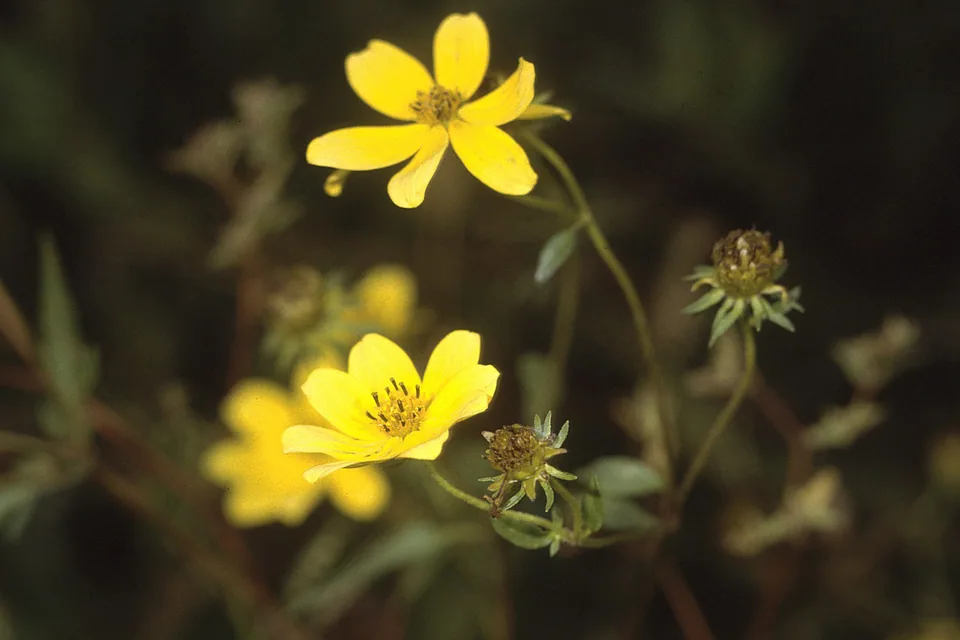
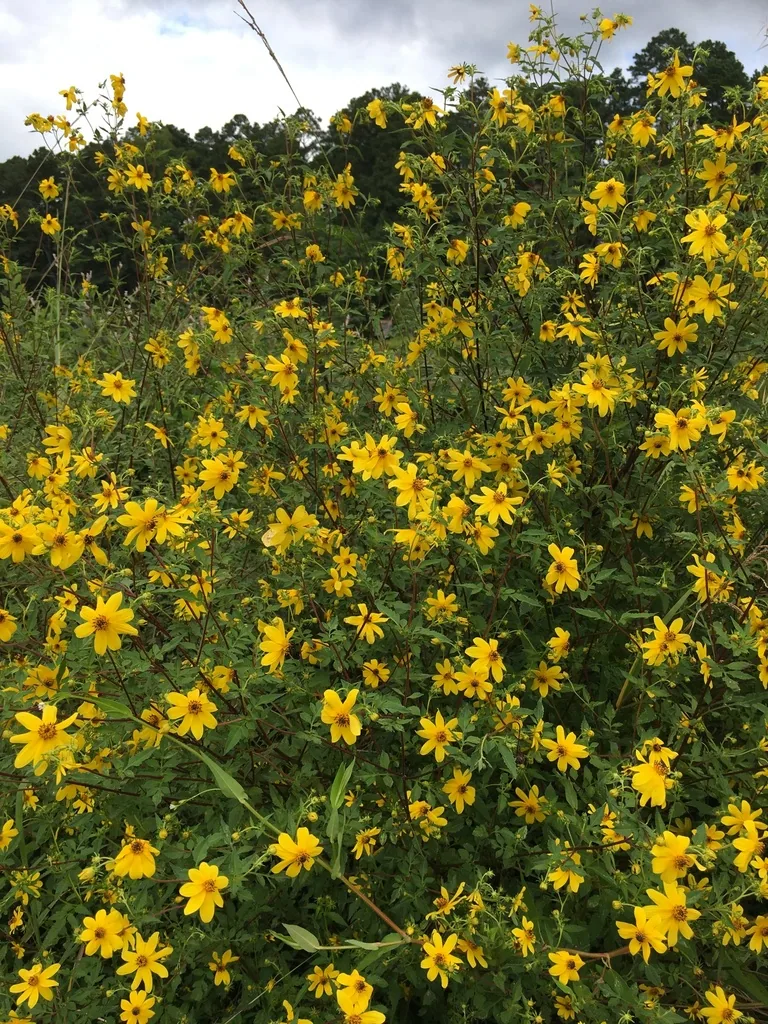
Long-bracted tickseed sunflower is a herbaceous annual or biennial herb with large yellow flowers in late summer and early fall. [1] It grows and flowers best in full sun, is adapted to partial shade, and suits most soil types except very sandy soils. [1]
This record is incomplete: the sources we read do not cover every field yet.
Not yet covered by our sources: Watering, Hardiness, coldest zone, Hardiness, warmest zone, Pruning
Long-Bracted Tickseed Sunflower care
How to water Long-Bracted Tickseed Sunflower
Watering
Not stated in the sources we read.
Watering notes
Natural stands are generally found on moist sites such as ditches, marshes and wet meadows
What the sources say (1)
Natural stands are generally found on moist sites such as in ditches, marshes, and wet meadows.How much light Long-Bracted Tickseed Sunflower needs
Full sun to partial shade
What the sources say (1)
It grows and flowers best in full sun, but is also adapted to partial shade.How much cold Long-Bracted Tickseed Sunflower can take
Hardiness, coldest zone
Not stated in the sources we read.
Hardiness, warmest zone
Not stated in the sources we read.
Best soil for Long-Bracted Tickseed Sunflower
Soil pH, minimum
6.0
What the sources say (1)
Soil pH:
Neutral (6.0-8.0)
Soil Drainage:
Good DrainageSoil pH, maximum
8.0
What the sources say (1)
Soil pH:
Neutral (6.0-8.0)
Soil Drainage:
Good DrainageHow to propagate Long-Bracted Tickseed Sunflower
Seed
What the sources say (1)
Recommended Propagation Strategy:
Seed
Country Or Region OfHow to grow Long-Bracted Tickseed Sunflower
The plant
Life cycle
annual, biennial
What the sources say (1)
Long-Bracted Tickseed Sunflower is a herbaceous annual or biennial herb with a deep taprootFamily
Asteraceae
What the sources say (1)
Genus:
Bidens
Species:
aristosa
Family:
Asteraceae
Life Cycle:Mature height
60.96-121.92 cm (2-4 ft)
What the sources say (1)
Height: 2 ft. 0 in. - 4 ft. 0 in.
Width: 1 ft. 0 in. - 2 ft. 0 in.Mature width
30.48-60.96 cm (1-2 ft)
What the sources say (1)
Height: 2 ft. 0 in. - 4 ft. 0 in.
Width: 1 ft. 0 in. - 2 ft. 0 in.Remedies
Each remedy shows what official sources say about it; traditional remedies without an official source are marked as such. Harmful ones are listed so you know to avoid them.
Getting rid of it
beggarticks
frequent mowing Not verified
Traditional remedy, not verified by an official source.
How: Mow frequently to prevent the plant from going to seed and stop its spread.
hand pulling Not verified
Traditional remedy, not verified by an official source.
How: Pull the plants from moist soil and dispose of them securely, especially if in flower.
healthy turf Not verified
Traditional remedy, not verified by an official source.
How: In a lawn, keep the turf healthy so the plant does not take over.
Calendar
Pruning
Not stated in the sources we read.
Months as given by the sources, which are mostly from the United States (northern hemisphere). In the southern hemisphere they shift by about six months.
Indicative values
Values from a secondary source, not checked word for word like the rest of this page. Use them as a starting point.
- Hours of sun
- 5-6 hoursIndicative value, adapt it to your climate · Secondary source
- Watering
- MinimalIndicative value, adapt it to your climate · Secondary source
- Drought tolerant
- yesIndicative value, adapt it to your climate · Secondary source
- Growth rate
- LowIndicative value, adapt it to your climate · Secondary source
- Pruning
- March, April, March, April, May, June, July, August, SeptemberIndicative value, adapt it to your climate · Secondary source
Similar plants
- Bur Marigold Bidens laevis
- African Daisy Dimorphotheca pluvialis
- African Marigold Tagetes erecta
- Ageratum Ageratum houstonianum
- Alpine aster Aster alpinus
- Appalachian Blazing Star Liatris squarrulosa
- Appalachian Ironweed Vernonia glauca
- Appalachian Sunflower Helianthus atrorubens
Sources
Every value above is quoted from these documents. Links lead to the original publisher.
- Bidens aristosa (Bearded Beggarticks,, Bur Marigold, Long-Bracted Beggarticks, Long-Bracted Tickseed Sunflower, Sticktight, Swamp Marigold, Tick Seed, Tickseed Beggarticks, Tickseed Sunflower, Western Tickseed, Yankee Lice) | North Carolina Extension Gardener Plant Toolbox · plants.ces.ncsu.edu, consulted
Written by Emilio Marruso · last checked