
Cómo cultivar y cuidar Canary Island Marguerite
Argyranthemum foeniculaceum
Escrito por Emilio Marruso · última revisión
Tóxica para: Gatos, Perros, Caballos · Por qué
De un vistazo
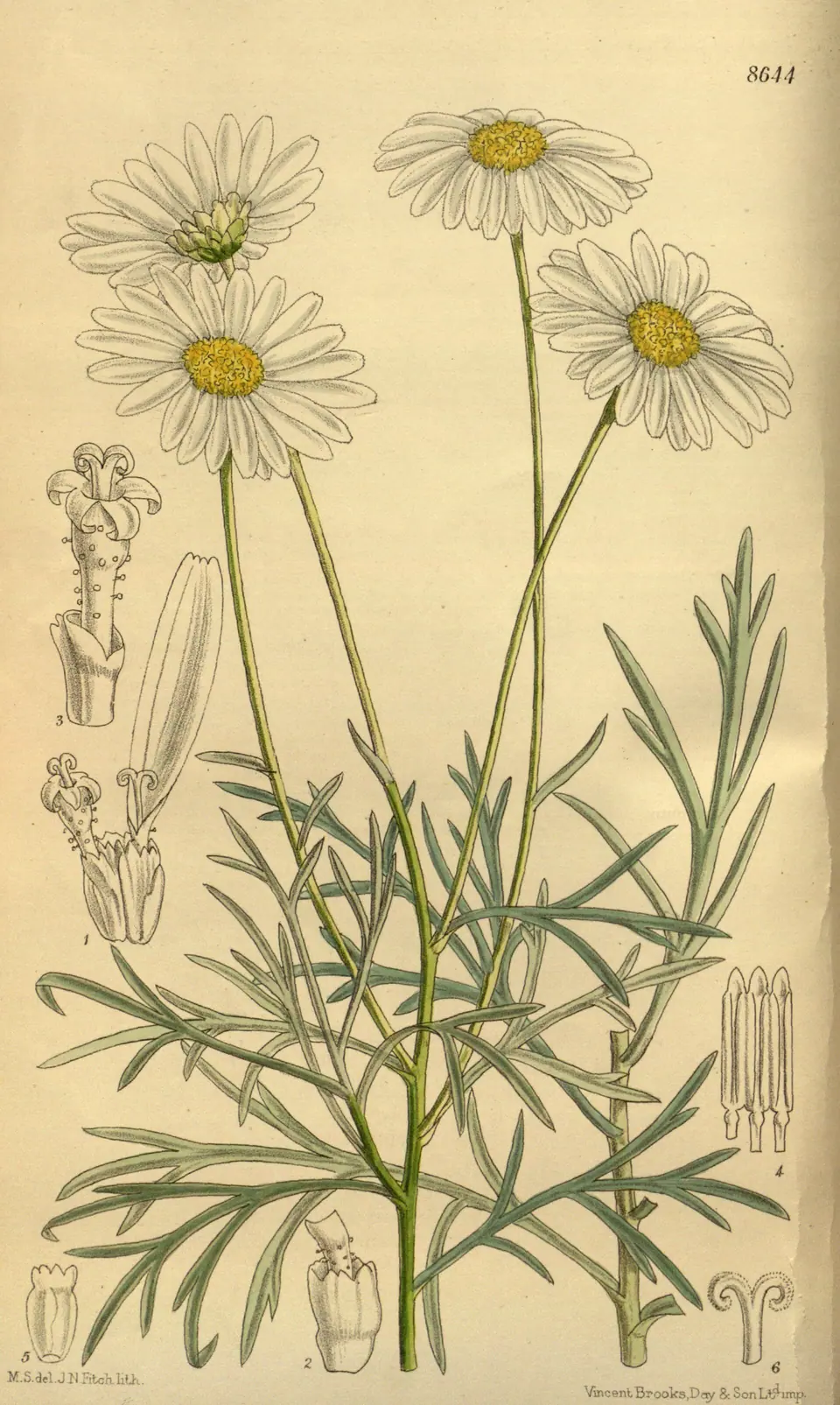
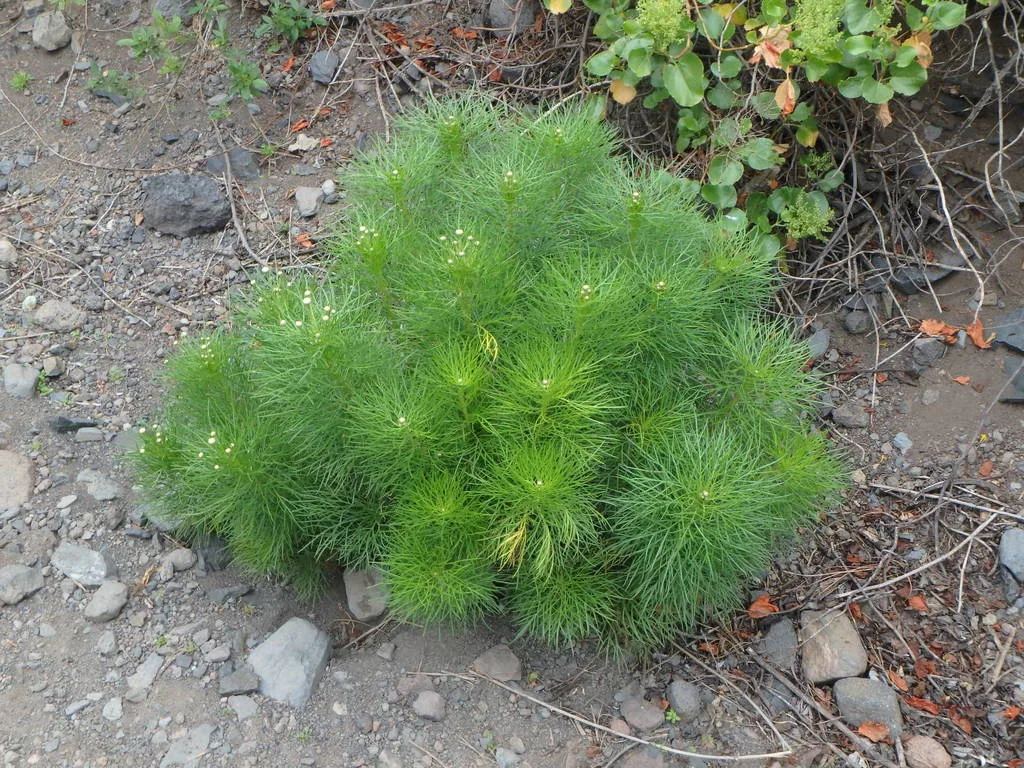
Esta alegre planta de la familia de las margaritas adora el sol pleno y aguanta bien la sequía, así que es ideal si estás empezando. Forma una mata de 60–90 cm de alto y de ancho, y crece igual de feliz en maceta que en el jardín. Dale un suelo que drene bien y te lo agradecerá temporada tras temporada.
- Sol
Sol pleno
Qué dicen las fuentes (1)
Luz: Pleno sol
Light: Full sun (6 or more hours of direct sunlight a day)
— Argyranthemum foeniculaceum (Canary Island Marguerite, Dill Daisy, Lance-Leaf Marguerite, Lance-Leaf Marguerite Daisy, Marguerite, Paris Daisy, Summer Daisy, Tenerife Daisy, White Marguerite) | North Carolina Extension Gardener Plant Toolbox [1] - Riego
Resiste la sequía; va bien en sitios secos o húmedos, pero sufre con mucha humedad ambiental
Qué dicen las fuentes (2)
Riego: Tolerante a la sequía; adecuada tanto para lugares secos como húmedos, decae con alta humedad
It is suitable for both dry and moist locations, however, it will decline when high humidity is present.
— Argyranthemum foeniculaceum (Canary Island Marguerite, Dill Daisy, Lance-Leaf Marguerite, Lance-Leaf Marguerite Daisy, Marguerite, Paris Daisy, Summer Daisy, Tenerife Daisy, White Marguerite) | North Carolina Extension Gardener Plant Toolbox [1] This drought-tolerant plant cannot grow in shade, full sun is ideal.
— Argyranthemum foeniculaceum (Canary Island Marguerite, Dill Daisy, Lance-Leaf Marguerite, Lance-Leaf Marguerite Daisy, Marguerite, Paris Daisy, Summer Daisy, Tenerife Daisy, White Marguerite) | North Carolina Extension Gardener Plant Toolbox [1] - Frío
Aguanta inviernos de hasta −12,2 °C (10 °F)
Rústica en inviernos fríos · USDA 8a · RHS H5 · Z8
Qué dicen las fuentes (2)
Rusticidad, zona más fría: 8a [mínima invernal de −12,2 a −9,4 °C (de 10 a 15 °F)]
USDA Plant Hardiness Zone: 8a, 8b, 9a, 9b, 10a, 10b, 11a, 11b
— Argyranthemum foeniculaceum (Canary Island Marguerite, Dill Daisy, Lance-Leaf Marguerite, Lance-Leaf Marguerite Daisy, Marguerite, Paris Daisy, Summer Daisy, Tenerife Daisy, White Marguerite) | North Carolina Extension Gardener Plant Toolbox [1] Rusticidad, zona más cálida: 11b [mínima invernal de 7,2 a 10 °C (de 45 a 50 °F)]
USDA Plant Hardiness Zone: 8a, 8b, 9a, 9b, 10a, 10b, 11a, 11b
— Argyranthemum foeniculaceum (Canary Island Marguerite, Dill Daisy, Lance-Leaf Marguerite, Lance-Leaf Marguerite Daisy, Marguerite, Paris Daisy, Summer Daisy, Tenerife Daisy, White Marguerite) | North Carolina Extension Gardener Plant Toolbox [1] - Suelo
Necesita un suelo que drene bien: el encharcamiento trae problemas de hongos
Qué dicen las fuentes (1)
Notas sobre el riego: El mal drenaje puede provocar problemas fúngicos
Aphids and leaf-mining sawflies are common insects. Poor drainage may lead to fungal problems.
— Argyranthemum foeniculaceum (Canary Island Marguerite, Dill Daisy, Lance-Leaf Marguerite, Lance-Leaf Marguerite Daisy, Marguerite, Paris Daisy, Summer Daisy, Tenerife Daisy, White Marguerite) | North Carolina Extension Gardener Plant Toolbox [1] - Poda
Pódala cuando haya terminado toda la floración
Qué dicen las fuentes (1)
Poda: Después de que toda la floración haya terminado
This plant can be reshaped by pruning after all flowering has completed.
— Argyranthemum foeniculaceum (Canary Island Marguerite, Dill Daisy, Lance-Leaf Marguerite, Lance-Leaf Marguerite Daisy, Marguerite, Paris Daisy, Summer Daisy, Tenerife Daisy, White Marguerite) | North Carolina Extension Gardener Plant Toolbox [1] - Cosecha
Las hojas son comestibles
- Plagas
Vigila el pulgón y las moscas sierra minadoras de hojas
Qué dicen las fuentes (1)
Plagas: pulgones, moscas sierra minadoras de hojas
Aphids and leaf-mining sawflies are common insects. Poor drainage may lead to fungal problems.
— Argyranthemum foeniculaceum (Canary Island Marguerite, Dill Daisy, Lance-Leaf Marguerite, Lance-Leaf Marguerite Daisy, Marguerite, Paris Daisy, Summer Daisy, Tenerife Daisy, White Marguerite) | North Carolina Extension Gardener Plant Toolbox [1] - Tamaño
60–90 cm de alto y 60–90 cm de ancho
Qué dicen las fuentes (2)
Altura adulta: 60.96-91.44 cm (2-3 pies)
Dimensions: Height: 2 ft. 0 in. - 3 ft. 0 in. Width: 2 ft. 0 in. - 3 ft. 0 in.
— Argyranthemum foeniculaceum (Canary Island Marguerite, Dill Daisy, Lance-Leaf Marguerite, Lance-Leaf Marguerite Daisy, Marguerite, Paris Daisy, Summer Daisy, Tenerife Daisy, White Marguerite) | North Carolina Extension Gardener Plant Toolbox [1] Anchura adulta: 60.96-91.44 cm (2-3 pies)
Dimensions: Height: 2 ft. 0 in. - 3 ft. 0 in. Width: 2 ft. 0 in. - 3 ft. 0 in.
— Argyranthemum foeniculaceum (Canary Island Marguerite, Dill Daisy, Lance-Leaf Marguerite, Lance-Leaf Marguerite Daisy, Marguerite, Paris Daisy, Summer Daisy, Tenerife Daisy, White Marguerite) | North Carolina Extension Gardener Plant Toolbox [1] - Multiplicación
Multiplícala por semillas o por esquejes de tallo
Qué dicen las fuentes (1)
Propagación: Semilla, esqueje de tallo
Recommended Propagation Strategy: Seed Stem Cutting Country Or Region Of Origin:
— Argyranthemum foeniculaceum (Canary Island Marguerite, Dill Daisy, Lance-Leaf Marguerite, Lance-Leaf Marguerite Daisy, Marguerite, Paris Daisy, Summer Daisy, Tenerife Daisy, White Marguerite) | North Carolina Extension Gardener Plant Toolbox [1] - Maceta
Crece también en maceta
Qué dicen las fuentes (1)
En maceta: Sí
Landscape Location: Container Patio Slope/Bank Walkways Landscape Theme:
— Argyranthemum foeniculaceum (Canary Island Marguerite, Dill Daisy, Lance-Leaf Marguerite, Lance-Leaf Marguerite Daisy, Marguerite, Paris Daisy, Summer Daisy, Tenerife Daisy, White Marguerite) | North Carolina Extension Gardener Plant Toolbox [1] - Seguridad
Es dañina para gatos, perros y caballos: mantén a tus animales lejos de ella
Resumen
Argyranthemum foeniculaceum es una planta arbustiva, similar a una margarita, que es una perenne de hoja perenne en su área nativa y puede cultivarse como anual en otros lugares. [1] Es tolerante a la sequía, necesita pleno sol y decae en alta humedad o mal drenaje. [1] En algunos lugares se ha declarado maleza ambiental. [1]
Citado en inglés, como en la fuente.
Cuidados
Riego
Riego
Tolerante a la sequía; adecuada tanto para lugares secos como húmedos, decae con alta humedad
Qué dicen las fuentes (2)
It is suitable for both dry and moist locations, however, it will decline when high humidity is present.This drought-tolerant plant cannot grow in shade, full sun is ideal.Notas sobre el riego
El mal drenaje puede provocar problemas fúngicos
Qué dicen las fuentes (1)
Aphids and leaf-mining sawflies are common insects.
Poor drainage may lead to fungal problems.Luz
Pleno sol
Qué dicen las fuentes (1)
Light:
Full sun (6 or more hours of direct sunlight a day)Clima y frío
Rusticidad, zona más fría
8a [mínima invernal de −12,2 a −9,4 °C (de 10 a 15 °F)]
Qué dicen las fuentes (1)
USDA Plant Hardiness Zone:
8a, 8b, 9a, 9b, 10a, 10b, 11a, 11bRusticidad, zona más cálida
11b [mínima invernal de 7,2 a 10 °C (de 45 a 50 °F)]
Qué dicen las fuentes (1)
USDA Plant Hardiness Zone:
8a, 8b, 9a, 9b, 10a, 10b, 11a, 11bDónde cultivarla
Sí
Qué dicen las fuentes (1)
Landscape Location:
Container
Patio
Slope/Bank
Walkways
Landscape Theme:Propagación
Semilla, esqueje de tallo
Qué dicen las fuentes (1)
Recommended Propagation Strategy:
Seed
Stem Cutting
Country Or Region Of Origin:Cultivo
La planta
Ciclo de vida
perenne en su hábitat nativo; se puede cultivar como anual en otros lugares
Qué dicen las fuentes (1)
grown as an evergreen herbaceous perennial in its native habitat, which includes North Africa and the Canary Islands, primarily on dry cliffs in rock crevices. In other locations, it can be grown as an annual.Familia
Asteraceae
Qué dicen las fuentes (1)
Attributes:
Genus:
Argyranthemum
Species:
foeniculaceum
Family:
Asteraceae
Life Cycle:
AnnualAltura adulta
60.96-91.44 cm (2-3 pies)
Qué dicen las fuentes (1)
Dimensions:
Height: 2 ft. 0 in. - 3 ft. 0 in.
Width: 2 ft. 0 in. - 3 ft. 0 in.Anchura adulta
60.96-91.44 cm (2-3 pies)
Qué dicen las fuentes (1)
Dimensions:
Height: 2 ft. 0 in. - 3 ft. 0 in.
Width: 2 ft. 0 in. - 3 ft. 0 in.Plagas y enfermedades
Plagas
pulgones, moscas sierra minadoras de hojas
Qué dicen las fuentes (1)
Aphids and leaf-mining sawflies are common insects.
Poor drainage may lead to fungal problems.Problemas
Pulgones y tentredinos minadores de hojas
Síntoma: Plagas de insectos comunes en la planta.
Qué hacer: No se proporciona manejo.
Qué dicen las fuentes (1)
Aphids and leaf-mining sawflies are common insects. Poor drainage may lead to fungal problems.
— Argyranthemum foeniculaceum (Canary Island Marguerite, Dill Daisy, Lance-Leaf Marguerite, Lance-Leaf Marguerite Daisy, Marguerite, Paris Daisy, Summer Daisy, Tenerife Daisy, White Marguerite) | North Carolina Extension Gardener Plant Toolbox [1] Problemas fúngicos por mal drenaje
Síntoma: Problemas fúngicos.
Qué hacer: Evita el mal drenaje.
Qué dicen las fuentes (1)
Aphids and leaf-mining sawflies are common insects. Poor drainage may lead to fungal problems.
— Argyranthemum foeniculaceum (Canary Island Marguerite, Dill Daisy, Lance-Leaf Marguerite, Lance-Leaf Marguerite Daisy, Marguerite, Paris Daisy, Summer Daisy, Tenerife Daisy, White Marguerite) | North Carolina Extension Gardener Plant Toolbox [1]
Remedios
Cada remedio indica qué dicen las fuentes oficiales; los remedios tradicionales sin fuente oficial aparecen marcados. Los perjudiciales están para que sepas evitarlos.
Cuidar la planta
pulgones
chorro de agua fuerte Funciona
Cómo: Una fuerte corriente de agua desaloja los pulgones de la planta y enjuaga la melaza; hazlo temprano en el día para permitir que las hojas se sequen.
Water spray: A strong blast of water knocks aphids from the plant, and most will not return. Water also helps rinse off the honeydew. Do this early in the day to allow leaves to dry and minimize fungal diseases.
— depts.washington.edu [5] Qué dicen las pruebas A strong blast of water knocks aphids from the plant, and most will not return.
— depts.washington.edu [5] jabón insecticida Fuente oficial, sin prueba independiente
Although readily biodegradable, soaps are highly toxic to fish, so avoid runoff or direct application to water.
— depts.washington.edu [5] Cómo: El jabón solo funciona por contacto directo con los insectos; cubre ambos lados de las hojas y repite dentro de unos días si es necesario.
Insecticidal soap is widely recognized as the least-toxic chemical aphid control. Although its effect is temporary, it can help to bring aphid numbers down so that natural enemies can take care of them.
— depts.washington.edu [5] poda los brotes infestados y sumérgelos en agua jabonosa Fuente oficial, sin prueba independiente
Cómo: Cuando los pulgones estén localizados en unas pocas hojas rizadas o brotes nuevos, poda esas áreas y sumérgelas en agua jabonosa.
Where high aphid populations are localized on a few curled leaves or new shoots, prune these areas out and drop in soapy water to kill the aphids.
— depts.washington.edu [5]
Venenosa para los animales
Según la fuente, citada textualmente. No es un consejo médico ni veterinario: si una persona o un animal pudo haber ingerido esta planta, contacta con un centro de toxicología o con un veterinario.
#problem for dogs #problem for horses #problem for cats
[1]La fuente señala el riesgo para este animal pero no explica por qué.
Calendario
Poda
Después de que toda la floración haya terminado
Qué dicen las fuentes (1)
This plant can be reshaped by pruning after all flowering has completed.Meses tal como los dan las fuentes, en su mayoría de Estados Unidos (hemisferio norte). En el hemisferio sur se desplazan unos seis meses.
Comestibilidad
Según la fuente, citada textualmente. No comas una planta basándote solo en esta página: los errores de identificación pueden ser peligrosos.
Edibility: The leaves are edible. Dimensions: Height: 2 ft.
[1]
Plantas similares
- O magarza Argyranthemum frutescens
- African Daisy Dimorphotheca pluvialis
- Cempasúchil Tagetes erecta
- Ageratum Ageratum houstonianum
- Alpine aster Aster alpinus
- American Burnweed Erechtites hieraciifolius
- Appalachian Blazing Star Liatris squarrulosa
- Appalachian Ironweed Vernonia glauca
Fuentes
Cada valor anterior se cita de estos documentos. Los enlaces llevan al editor original.
- Argyranthemum foeniculaceum (Canary Island Marguerite, Dill Daisy, Lance-Leaf Marguerite, Lance-Leaf Marguerite Daisy, Marguerite, Paris Daisy, Summer Daisy, Tenerife Daisy, White Marguerite) | North Carolina Extension Gardener Plant Toolbox · plants.ces.ncsu.edu, consultado
- White Marguerite - Argyranthemum foeniculaceum | North Carolina Extension Gardener Plant Toolbox · plants.ces.ncsu.edu, consultado
- Canary Island Marguerite - Argyranthemum foeniculaceum | North Carolina Extension Gardener Plant Toolbox · plants.ces.ncsu.edu, consultado
- Find a Plant | North Carolina Extension Gardener Plant Toolbox · plants.ces.ncsu.edu, consultado
- depts.washington.edu · depts.washington.edu
Escrito por Emilio Marruso · última revisión