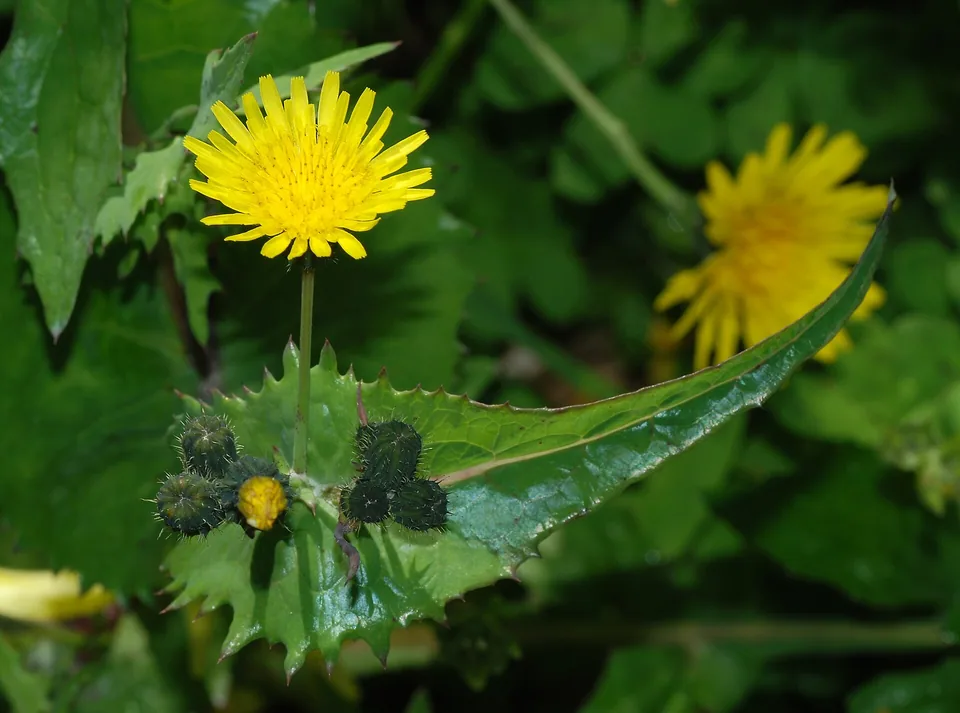

How to Grow and Care for Common sowthistle
Sonchus oleraceus
Written by Emilio Marruso · last checked
Toxic to: Horses · Why
At a glance
Common sowthistle is an annual that grows happily in full sun or partial shade and reaches 1 to 4 feet tall. Its tender leaves can go straight into a salad, and the peeled stems cook up just like asparagus. Keep an eye on it, though: its seeds travel on wind and water, so it can spread quickly.
- Sun
Full sun to partial shade
What the sources say (1)
Light: Full sun to partial shade
Light: Full sun (6 or more hours of direct sunlight a day) Partial Shade (Direct sunlight only part of the day, 2-6 hours)
— Common Sowthistle - Sonchus | North Carolina Extension Gardener Plant Toolbox [2] - Cold
Survives winters down to −5 °F (−20.6 °C)
Very hardy · USDA 6b · RHS H7 · Z6
What the sources say (2)
Hardiness, coldest zone: 6b [winter low −20.6 to −17.8 °C (−5 to 0 °F)]
USDA Plant Hardiness Zone: 6b, 7a, 7b, 8a, 8b, 9a, 9b
— Common Sowthistle - Sonchus | North Carolina Extension Gardener Plant Toolbox [2] Hardiness, warmest zone: 9b [winter low −3.9 to −1.1 °C (25 to 30 °F)]
USDA Plant Hardiness Zone: 6b, 7a, 7b, 8a, 8b, 9a, 9b
— Common Sowthistle - Sonchus | North Carolina Extension Gardener Plant Toolbox [2] - Harvest
Tender leaves in salads; peel the stems and cook them like asparagus
- Pests
Watch for aphids
What the sources say (1)
Pests: aphids
Sowthistles are common host plants for aphids. This can be a blessing or a curse; aphids may spread from Sowthistle to other plants
— Common Sowthistle - Sonchus | North Carolina Extension Gardener Plant Toolbox [2] - Watch out
Spreads fast by wind-blown seed; mowing keeps it in check, as it doesn't regrow from root pieces
- Size
1 to 4 ft tall
What the sources say (1)
Mature height: 30-122 cm (1 to 4 feet)
An erect fleshy annual 1 to 4 feet high. The Latin name Sonchus refers to the hollow stem
— Sonchus oleraceus - common sowthistle | Yavapai County Native and Naturalized Plants [1] - Propagation
Grows from seed
What the sources say (1)
Propagation: Seed
Recommended Propagation Strategy: Seed Country Or Region Of Origin:
— Common Sowthistle - Sonchus | North Carolina Extension Gardener Plant Toolbox [2] - Safety
Its white sap may be mildly poisonous; rare poisonings in horses and lambs
Overview
Common sowthistle is an annual weed that spreads aggressively by wind- and water-dispersed seed. [2] It is listed for full sun to partial shade. [2] Its leaves can be added to salad and the peeled stems can be cooked like asparagus. [2]
Common sowthistle care
How much light Common sowthistle needs
Full sun to partial shade
What the sources say (1)
Light:
Full sun (6 or more hours of direct sunlight a day)
Partial Shade (Direct sunlight only part of the day, 2-6 hours)How much cold Common sowthistle can take
Hardiness, coldest zone
6b [winter low −20.6 to −17.8 °C (−5 to 0 °F)]
What the sources say (1)
USDA Plant Hardiness Zone:
6b, 7a, 7b, 8a, 8b, 9a, 9bHardiness, warmest zone
9b [winter low −3.9 to −1.1 °C (25 to 30 °F)]
What the sources say (1)
USDA Plant Hardiness Zone:
6b, 7a, 7b, 8a, 8b, 9a, 9bHow to propagate Common sowthistle
Seed
What the sources say (1)
Recommended Propagation Strategy:
Seed
Country Or Region Of Origin:How to grow Common sowthistle
The plant
Life cycle
annual
What the sources say (1)
An erect fleshy annual 1 to 4 feet high. The Latin name Sonchus refers to the hollow stemFamily
Asteraceae
What the sources say (1)
Scientific Family
Asteraceae
Other common names
annual sowthistle
Plant typeMature height
30-122 cm (1 to 4 feet)
What the sources say (1)
An erect fleshy annual 1 to 4 feet high. The Latin name Sonchus refers to the hollow stemPests and diseases
Pests
aphids
What the sources say (1)
Sowthistles are common host plants for aphids. This can be a blessing or a curse; aphids may spread from Sowthistle to other plantsCommon sowthistle pests and problems
Aggressive spread by seed
Symptom: Seeds have a pappus that aids wind and water dispersal and the plant can spread aggressively.
What to do: This plant can often be controlled by mowing, because it does not regrow from root fragments.
What the sources say (2)
Seeds have a pappus that aids wind and water dispersal and the plant can spread aggressively.
— Common Sowthistle - Sonchus | North Carolina Extension Gardener Plant Toolbox [2] This plant can often be controlled by mowing, because it does not regrow from root fragments.
— Common Sowthistle - Sonchus | North Carolina Extension Gardener Plant Toolbox [2]
Remedies
Each remedy shows what official sources say about it; traditional remedies without an official source are marked as such. Harmful ones are listed so you know to avoid them.
Getting rid of it
unwanted weed spread
mowing Partly works
How: Mow the plants; it does not regrow from root fragments.
This plant can often be controlled by mowing, because it does not regrow from root fragments
— Common Sowthistle - Sonchus | North Carolina Extension Gardener Plant Toolbox [2] What the evidence says This plant can often be controlled by mowing, because it does not regrow from root fragments
— Common Sowthistle - Sonchus | North Carolina Extension Gardener Plant Toolbox [2] hand removal Works
How: Pull the plants by hand in landscape settings, using the shallow taproot.
Annual sowthistle has a shallow taproot. This allows for easy hand removal in landscape settings if practical
— Annual Sowthistle [3] What the evidence says Annual sowthistle has a shallow taproot. This allows for easy hand removal in landscape settings if practical
— Annual Sowthistle [3] removal before flowering Not verified
Traditional remedy, not verified by an official source.
How: Prevent flowering; the plant reproduces only by seed.
Is Common sowthistle toxic to pets?
Reported by the source, quoted verbatim. This is not medical or veterinary advice: if a person or an animal may have eaten this plant, contact a poison control centre or a veterinarian.
Edibility
Reported by the source, quoted verbatim. Do not eat a plant on the basis of this page alone: identification mistakes can be dangerous.
Similar plants
- Field sowthistle Sonchus arvensis
- Slender sowthistle Sonchus tenerrimus
- Prickly Sowthistle Sonchus asper
- American Burnweed Erechtites hieraciifolius
- Autumn Goldenrod Solidago sphacelata
- Blue Wood Aster Symphyotrichum cordifolium
- Bull Thistle Cirsium vulgare
- Bur Marigold Bidens laevis
Sources
Every value above is quoted from these documents. Links lead to the original publisher.
- Sonchus oleraceus - common sowthistle | Yavapai County Native and Naturalized Plants · yavapaiplants.extension.arizona.edu, consulted
- Common Sowthistle - Sonchus | North Carolina Extension Gardener Plant Toolbox · plants.ces.ncsu.edu, consulted
- Annual Sowthistle · extension.psu.edu, consulted
- Sonchus oleraceus - Useful Temperate Plants · temperate.theferns.info, consulted
- Sonchus oleraceus L. - Herbari Virtual del Mediterrani Occidental · herbarivirtual.uib.cat, consulted
- Sonchus oleraceus (PROTA) - Pl@ntUse · uses.plantnet-project.org, consulted
Written by Emilio Marruso · last checked