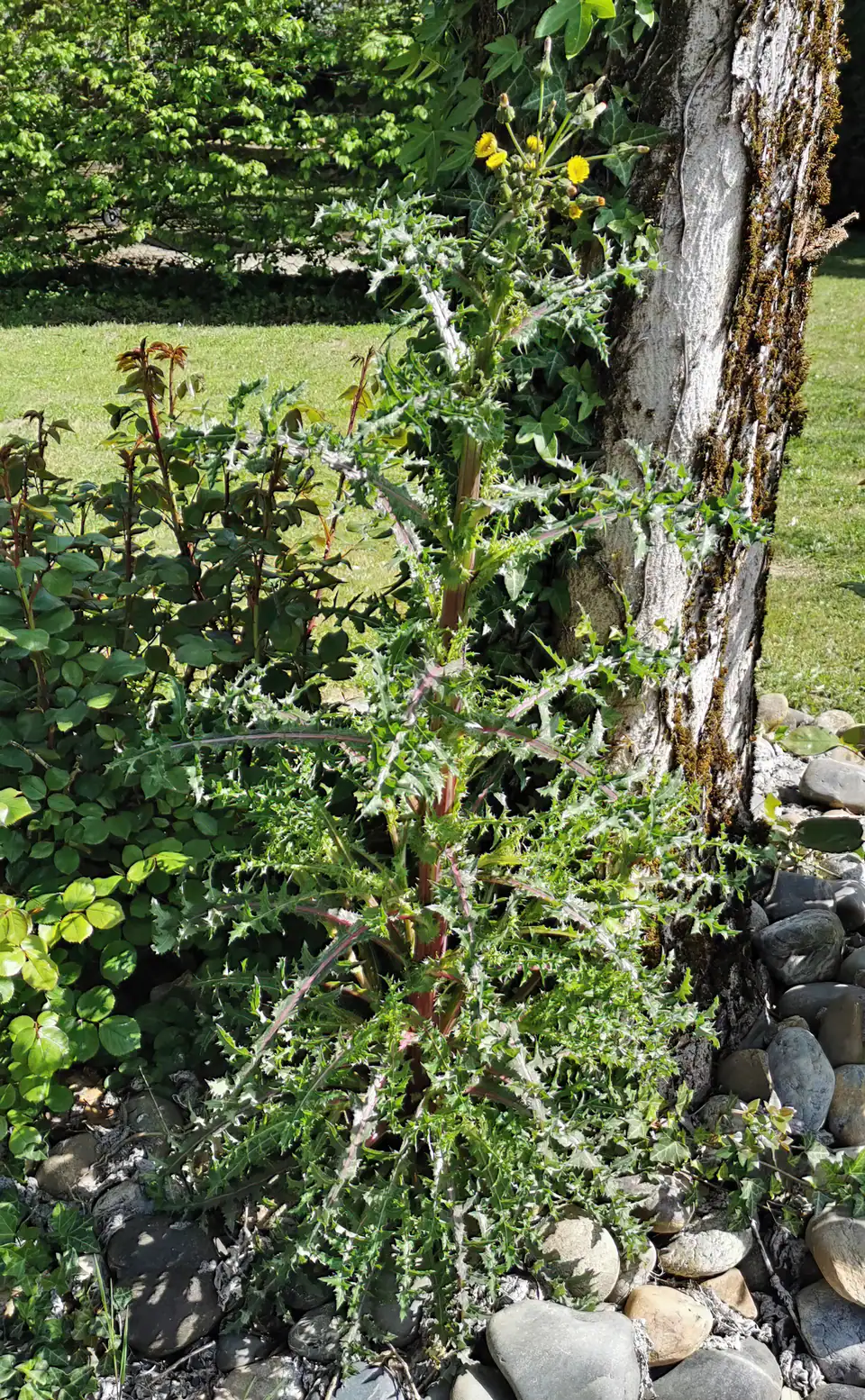
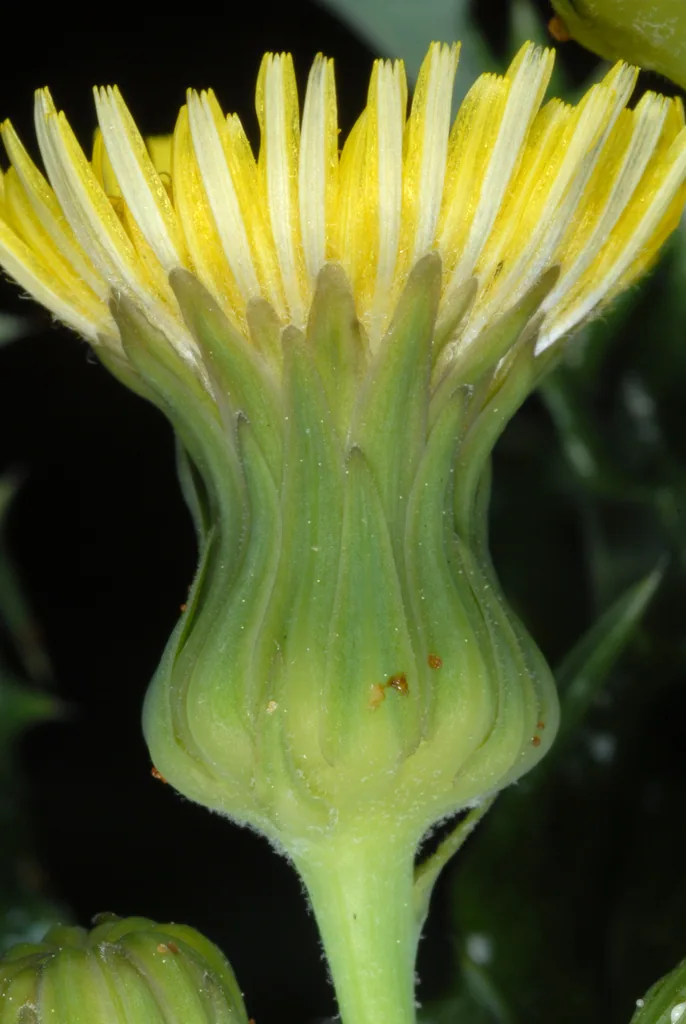

How to Grow and Care for Prickly Sowthistle
Sonchus asper
Written by Emilio Marruso · last checked
Toxic to: People · Why
At a glance
Spiny sow thistle is a very common annual that's easy to recognize, and wild food fans seek out its young leaves. Pick them tender, before the flower stalk forms, trim off the prickles, and enjoy them in salads or cooked like spinach. Give it full sun and soil that's moist to slightly dry, and it grows happily from seed.
- Sun
Full sun
What the sources say (1)
Light: Full sun
Light: Full sun (6 or more hours of direct sunlight a day)
— Sonchus asper (Prickly Sowthistle, Spiney Sowthistle, Spiny-leaved Sow-thistle) | North Carolina Extension Gardener Plant Toolbox [1] - Water
Handles soil from moist to slightly dry
What the sources say (1)
Watering notes: Tolerates moist to slightly dry conditions
Prickly Sowthistle typically grows in full sun, moist to slightly dry conditions, and different kinds of soil, including loam, clay-loam, and shallow gravelly soil.
— Sonchus asper (Prickly Sowthistle, Spiney Sowthistle, Spiny-leaved Sow-thistle) | North Carolina Extension Gardener Plant Toolbox [1] - Harvest
Pick young leaves before the flower stalk forms; trim the prickles and eat raw or cooked
What the sources say (1)
Harvest: Young and tender leaves, picked before the flowering stalk forms
the key to enjoying them is to pick them young and tender (before they send up a flowering stalk)
— Prickly Sow Thistle | Missouri Department of Conservation [3] - Watch out
Seeds spread by wind and water and it can take over: don't let it go to seed
- Propagation
Grows from seed
What the sources say (1)
Propagation: Seed
Recommended Propagation Strategy: Seed Country Or Region Of Origin:
— Sonchus asper (Prickly Sowthistle, Spiney Sowthistle, Spiny-leaved Sow-thistle) | North Carolina Extension Gardener Plant Toolbox [1] - Safety
The spines can cause a red, burning or itchy rash
Overview
Prickly sowthistle is a spring or summer annual that is often considered a weed because of its aggressive spread. [1] Seeds spread by wind and water, so plants should not be allowed to go to seed in a garden. [1] The young leaves are edible. [5][3] It grows in full sun and tolerates loam, clay-loam and shallow gravelly soil. [1]
This record is incomplete: the sources we read do not cover every field yet.
Not yet covered by our sources: Hardiness, coldest zone, Hardiness, warmest zone
Prickly Sowthistle care
How to water Prickly Sowthistle
Tolerates moist to slightly dry conditions
What the sources say (1)
Prickly Sowthistle typically grows in full sun, moist to slightly dry conditions, and different kinds of soil, including loam, clay-loam, and shallow gravelly soil.How much light Prickly Sowthistle needs
Full sun
What the sources say (1)
Light:
Full sun (6 or more hours of direct sunlight a day)How much cold Prickly Sowthistle can take
Hardiness, coldest zone
Not stated in the sources we read.
Hardiness, warmest zone
Not stated in the sources we read.
How to propagate Prickly Sowthistle
Seed
What the sources say (1)
Recommended Propagation Strategy:
Seed
Country Or Region Of Origin:How to grow Prickly Sowthistle
The plant
Life cycle
annual
What the sources say (1)
Sonchus asper , or Prickly Sowthistle, is a spring or summer annual herbaceous wildflowerPrickly Sowthistle pests and problems
Aggressive spread by seed
Symptom: The seeds spread by wind and water and the plant can tend to take over a site.
What to do: In a garden setting, be careful not to let this plant go to seed.
What the sources say (1)
In a garden setting, be careful not to let this plant go to seed. The seeds spread by wind and water and the plant can tend to take over a site.
— Sonchus asper (Prickly Sowthistle, Spiney Sowthistle, Spiny-leaved Sow-thistle) | North Carolina Extension Gardener Plant Toolbox [1]
Remedies
Each remedy shows what official sources say about it; traditional remedies without an official source are marked as such. Harmful ones are listed so you know to avoid them.
First aid
First aid: not a substitute for a doctor
skin irritation from spines
cool compress Official source, not independently tested
How: Plant dermatitis general measures: minimise contact, avoid irritating topical applications, cool compress.
Avoid aggravating the problem with potentially irritating or allergenic topical applications - Cool compress
— dermnetnz.org [7]
Getting rid of it
unwanted weed spread
dense turf Official source, not independently tested
How: Maintain dense, actively growing turf through proper mowing, fertilizing and watering.
Maintain a dense, actively growing turf through proper mowing, fertilizing, and watering practices.
— turffiles.ncsu.edu [8]
Is Prickly Sowthistle poisonous?
Reported by the source, quoted verbatim. This is not medical or veterinary advice: if a person or an animal may have eaten this plant, contact a poison control centre or a veterinarian.
Calendar
Harvest
Young and tender leaves, picked before the flowering stalk forms
What the sources say (1)
the key to enjoying them is to pick them young and tender (before they send up a flowering stalk)Months as given by the sources, which are mostly from the United States (northern hemisphere). In the southern hemisphere they shift by about six months.
Edibility
Reported by the source, quoted verbatim. Do not eat a plant on the basis of this page alone: identification mistakes can be dangerous.
A very common plant and easy to recognise, the ‘prickles’ need to be cut off this plant to make it edible.
[4]Wild edibles enthusiasts seek out the leaves of young sow thistle plants.
[3]A rather thin and woody tap root but they can still be roasted and eaten.
[4]It does not invade pastures because it is eaten by livestock.
[5]young leaves eaten as salad (less appreciated than Sonchus oleraceus ) - eaten cooked as spinach
[6]
Similar plants
- Common sowthistle Sonchus oleraceus
- Field sowthistle Sonchus arvensis
- Slender sowthistle Sonchus tenerrimus
- Abraham Trachystemon orientalis
- Acacia longifolia Acacia longifolia
- African Blue Lily Agapanthus praecox
- African lily Dietes bicolor
- African lovegrass Eragrostis curvula
Sources
Every value above is quoted from these documents. Links lead to the original publisher.
- Sonchus asper (Prickly Sowthistle, Spiney Sowthistle, Spiny-leaved Sow-thistle) | North Carolina Extension Gardener Plant Toolbox · plants.ces.ncsu.edu, consulted
- Spiny sowthistle - Cooperative Extension: Maine Wild Blueberries - University of Maine Cooperative Extension · extension.umaine.edu, consulted
- Prickly Sow Thistle | Missouri Department of Conservation · mdc.mo.gov, consulted
- Prickly Sowthistle - Wild Food UK · wildfooduk.com, consulted
- Sonchus asper (spiny-leaved sow-thistle): Go Botany · gobotany.nativeplanttrust.org, consulted
- Sonchus asper - Pl@ntUse · uses.plantnet-project.org, consulted
- dermnetnz.org · dermnetnz.org
- turffiles.ncsu.edu · turffiles.ncsu.edu
Written by Emilio Marruso · last checked