
How to Grow and Care for Field sowthistle
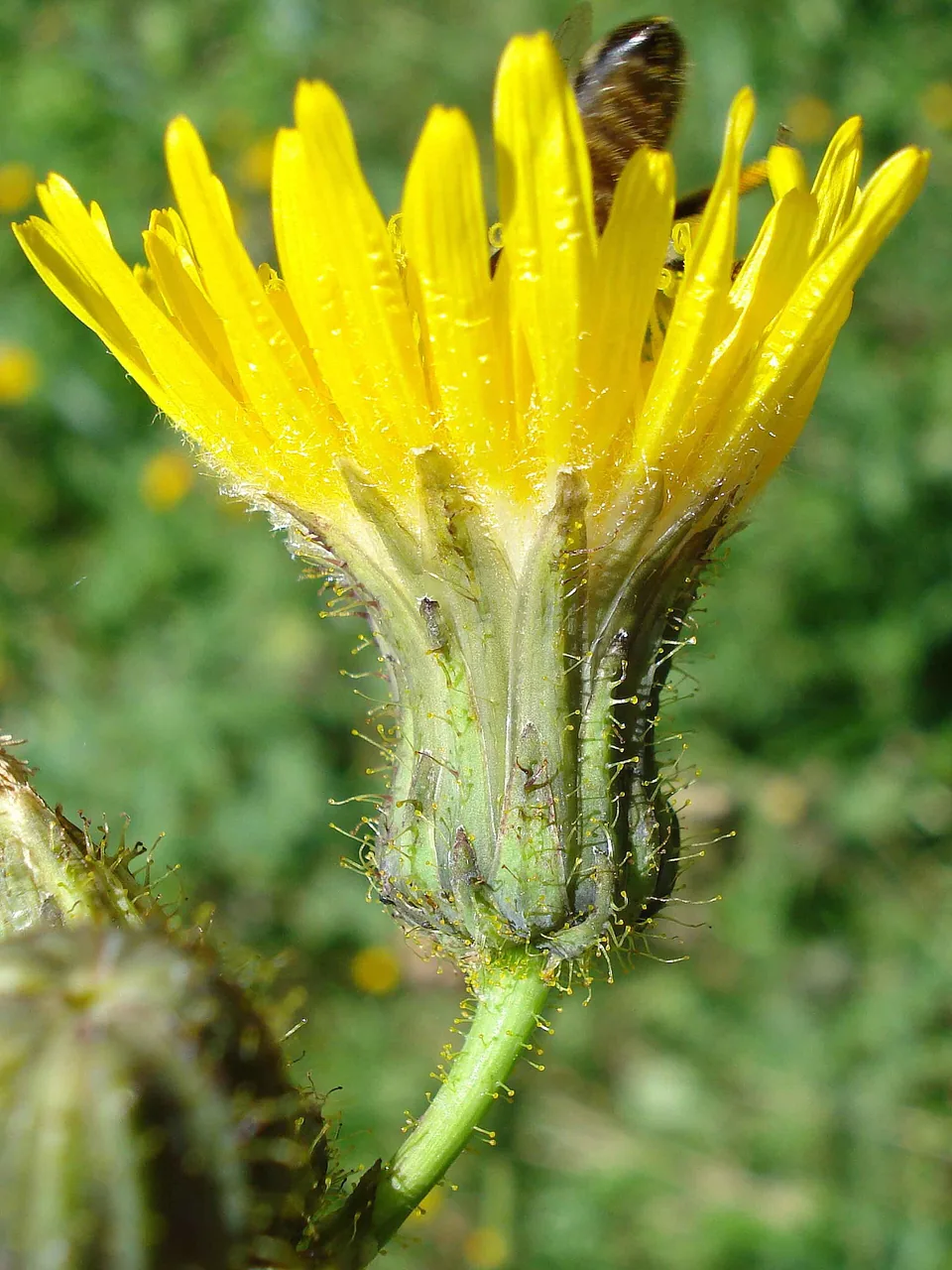
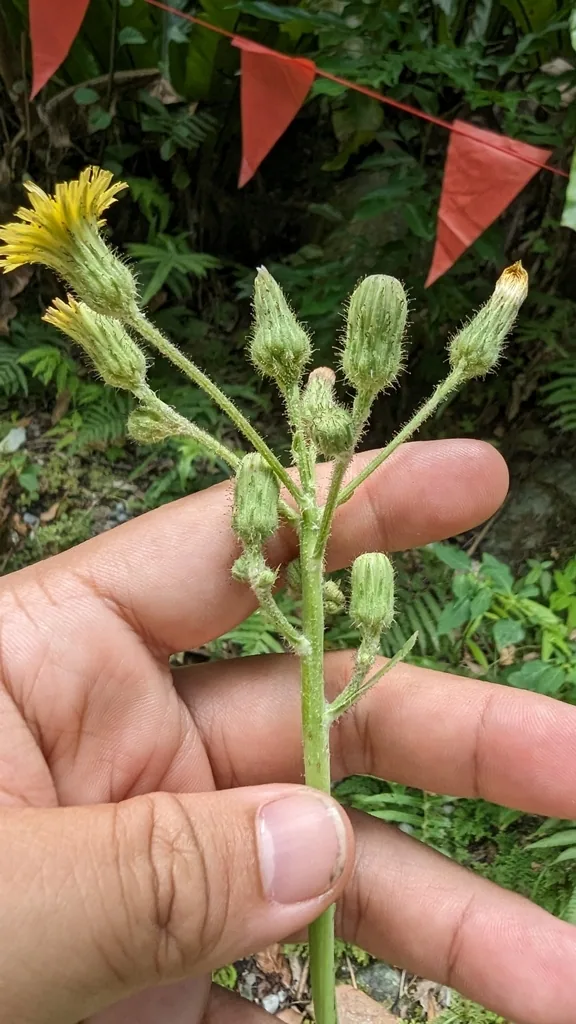
Sonchus arvensis
Written by Emilio Marruso · last checked
At a glance
Perennial sowthistle is a tough perennial whose young leaves you can eat raw in salads or cook like spinach, with a pleasant, slightly bitter taste. Sow it in spring right where it will grow, keep the soil moist while the seedlings settle in, and its deep roots will soon carry it through dry spells on its own.
- Water
Moderate watering; never let seedlings dry out. Grown plants get through dry spells
What the sources say (4)
Watering: Moderate
Water moderate Soil textures sandy, loamy, clay Soil pH
— Field Milk Thistle (Sonchus arvensis) — Practical Plants [8] Watering notes: Seedlings are highly sensitive to drying and establish mainly in wet spots or where cover keeps the soil moist; drought intolerant
Perennial sowthistle seedlings are highly sensitive to drying, and generally only establish in wet spots or in areas where crop residues or cover of other plants keep the soil moist.
— Perennial sowthistle | CALS [6] Drought: Seedlings are highly sensitive to drying and establish only where the soil stays moist; well-established plants have deep roots that help them survive dry periods.
Drought tolerance: Perennial sowthistle seedlings are highly sensitive to drying, and generally only establish in wet spots or in areas where crop residues or cover of other plants keep the soil moist.
— Perennial sowthistle | CALS [6] Well established plants, however, often have deep roots that help the plant survive dry periods.
— Perennial sowthistle | CALS [6] - Harvest
Eat the young leaves raw in salads or cooked like spinach; slightly bitter
- Pests
Root-knot and cyst nematodes; it can also get a bacterial wilt
What the sources say (2)
Pests: root-knot nematode, cyst nematode
Perennial sowthistle is susceptible to several nematodes including root-knot nematode ( Meloidogyne incognita ) and cyst nematode ( Heterodera sonchophila ).
— Perennial sowthistle | CALS [6] Diseases: Pseudomonas solanacearum wilt
It also is susceptible to Pseudomonas solanacearum wilt, but plants typically recover from wilting symptoms in the evening.
— Perennial sowthistle | CALS [6] - Watch out
Roots reach 10 ft deep and 9 ft wide, and root pieces grow into new plants
What the sources say (4)
Root system: Extensive root system of shallow, thickened storage roots; it can reach 3 m [9.8 ft] in depth and spread over 2.8 m [9.2 ft] horizontally.
Erect, mostly unbranched, perennial herb arising from a basal rosette and spreading by shallow, thickened storage roots.
— Perennial sowthistle | CALS [6] The root system is extensive, and can reach up to 10 ft (3 m) in depth and spread over 9 ft (2.8 m) horizontally.
— Perennial sowthistle | CALS [6] Propagation: Seed; root fragments (vegetative spread)
Seed - sow spring in situ. A common garden weed, this species should not normally need any assistance.
— Field Milk Thistle (Sonchus arvensis) — Practical Plants [8] Widely spreading white brittle roots penetrating five to ten feet, produces new plants from small root pieces.
— Perennial sowthistle [1] - Propagation
From seed or from pieces of root
What the sources say (2)
Propagation: Seed; root fragments (vegetative spread)
Seed - sow spring in situ. A common garden weed, this species should not normally need any assistance.
— Field Milk Thistle (Sonchus arvensis) — Practical Plants [8] Widely spreading white brittle roots penetrating five to ten feet, produces new plants from small root pieces.
— Perennial sowthistle [1] - Sowing
Sow in spring where it will grow; barely cover the seeds, they need light and 77–86 °F
What the sources say (5)
Sowing: Spring, in situ
Seed - sow spring in situ. A common garden weed, this species should not normally need any assistance.
— Field Milk Thistle (Sonchus arvensis) — Practical Plants [8] Germination: Seeds germinate best at 25-30 °C [77–86 °F], with little or no innate dormancy; light increases germination; seedlings emerge best from the top 0.5 cm [0.2 in] of soil.
Seeds germinate best at 77-86 °F (25-30 °C).
— Perennial sowthistle | CALS [6] Seeds have little or no innate dormancy and will readily germinate immediately after dispersal
— Perennial sowthistle | CALS [6] Many perennial sowthistle seeds will germinate in the dark, but exposure to light increases the germination
— Perennial sowthistle | CALS [6] Emergence depth: Seedlings emerge best from the top 0.2” (0.5 cm) of soil
— Perennial sowthistle | CALS [6]
Overview
Perennial sowthistle (Sonchus arvensis) is a perennial herbaceous plant that spreads vegetatively and by wind-borne seed. [1] It is listed as a noxious weed in Minnesota, and its young leaves are recorded as edible raw or cooked. [3][8] Seedlings establish mainly in wet spots or where other cover keeps the soil moist. [6]
This record is incomplete: the sources we read do not cover every field yet.
Not yet covered by our sources: Light, Hardiness, coldest zone, Hardiness, warmest zone
Field sowthistle care
How to water Field sowthistle
Watering
Moderate
What the sources say (1)
Water
moderate
Soil textures
sandy, loamy, clay
Soil pHWatering notes
Seedlings are highly sensitive to drying and establish mainly in wet spots or where cover keeps the soil moist; drought intolerant
What the sources say (1)
Perennial sowthistle seedlings are highly sensitive to drying, and generally only establish in wet spots or in areas where crop residues or cover of other plants keep the soil moist.How much light Field sowthistle needs
Not stated in the sources we read.
How much cold Field sowthistle can take
Hardiness, coldest zone
Not stated in the sources we read.
Hardiness, warmest zone
Not stated in the sources we read.
How to propagate Field sowthistle
Seed; root fragments (vegetative spread)
What the sources say (2)
Seed - sow spring in situ. A common garden weed, this species should not normally need any assistance.Widely spreading white brittle roots penetrating five to ten feet, produces new plants from small root pieces.How to grow Field sowthistle
The plant
Life cycle
perennial
What the sources say (2)
Perennial sowthistle ( Sonchus arvensis ) is a perennial herbaceous plant, reaches heights of two to five feet.Habit: Erect, mostly unbranched, perennial herb arising from a basal rosette and spreading by shallow, thickened storage roots.Family
Asteraceae
Pests and diseases
Pests
root-knot nematode, cyst nematode
What the sources say (1)
Perennial sowthistle is susceptible to several nematodes including root-knot nematode ( Meloidogyne incognita ) and cyst nematode ( Heterodera sonchophila ).Diseases
Pseudomonas solanacearum wilt
What the sources say (1)
It also is susceptible to Pseudomonas solanacearum wilt, but plants typically recover from wilting symptoms in the evening.Roots
Root system
Extensive root system of shallow, thickened storage roots; it can reach 3 m [9.8 ft] in depth and spread over 2.8 m [9.2 ft] horizontally.
What the sources say (2)
Erect, mostly unbranched, perennial herb arising from a basal rosette and spreading by shallow, thickened storage roots.The root system is extensive, and can reach up to 10 ft (3 m) in depth and spread over 9 ft (2.8 m) horizontally.Propagation
Germination
Seeds germinate best at 25-30 °C [77–86 °F], with little or no innate dormancy; light increases germination; seedlings emerge best from the top 0.5 cm [0.2 in] of soil.
What the sources say (4)
Seeds germinate best at 77-86 °F (25-30 °C).Seeds have little or no innate dormancy and will readily germinate immediately after dispersalMany perennial sowthistle seeds will germinate in the dark, but exposure to light increases the germinationEmergence depth: Seedlings emerge best from the top 0.2” (0.5 cm) of soilHeat and drought
Drought
Seedlings are highly sensitive to drying and establish only where the soil stays moist; well-established plants have deep roots that help them survive dry periods.
What the sources say (2)
Drought tolerance: Perennial sowthistle seedlings are highly sensitive to drying, and generally only establish in wet spots or in areas where crop residues or cover of other plants keep the soil moist.Well established plants, however, often have deep roots that help the plant survive dry periods.Remedies
Each remedy shows what official sources say about it; traditional remedies without an official source are marked as such. Harmful ones are listed so you know to avoid them.
Getting rid of it
invasive spread
digging out roots Partly works
Always wear long pants, closed-toe shoes, a long-sleeved shirt, work gloves and eye protection when handling sow thistle or any other noxious weed.
— gardenguides.com [10] How: Dig up small patches, taking care to get all of the roots.
Small patches can be dug up. Take care to get all of the roots.
— cd10-prod.kingcounty.gov [9] What the evidence says Small patches can be dug up. Take care to get all of the roots.
— cd10-prod.kingcounty.gov [9] sheet mulching Partly works
How: Sheet mulch the area, after tilling or digging before the mulch is applied.
Sheet mulching can also be effective if combined with tilling or digging before the mulch is applied.
— cd10-prod.kingcounty.gov [9] What the evidence says Sheet mulching can also be effective if combined with tilling or digging before the mulch is applied.
— cd10-prod.kingcounty.gov [9] cutting shoots at the 4-6 leaf stage Works
How: Remove the shoots repeatedly when they have 4-6 leaves, so the underground roots run out of reserves.
Regular defoliation of plants at the 4-6 leaf stage is reported to have killed plants within a season.
— gardenorganic.org.uk [11] What the evidence says cutting the shoots off just below soil level when they reached the 6-leaf stage eliminated the storage roots in three operations
— Perennial sowthistle | CALS [6] repeated tillage Works
How: Till repeatedly early in the growing season: breaking up the roots makes more buds sprout and uses up the food reserves.
Perennial sow-thistle is susceptible to repeated tillage in the early part of the growing season. Fragmentation induces more buds on the root pieces to grow, using up food reserves.
— gardenorganic.org.uk [11] What the evidence says In general, a well-planned tillage fallow period can eliminate the weed in time to plant a winter grain or late season vegetable crop.
— Perennial sowthistle | CALS [6] improving soil drainage Partly works
How: Improve soil drainage, since the plant thrives best in wet soils.
Because perennial sowthistle thrives best in wet soils, improving soil drainage can improve control.
— Perennial sowthistle | CALS [6] What the evidence says Because perennial sowthistle thrives best in wet soils, improving soil drainage can improve control.
— Perennial sowthistle | CALS [6] boiling water Partly works
Plus, how safe is it to carry big pans of boiling water out the door to your garden?
— extension.illinois.edu [12] How: Pour a teakettle full of boiling water on the plant each day before it flowers, then dig out each plant after it dies.
Pour a teakettle full of boiling water on the plant each day before it flowers. Dig out each plant after it dies from the boiling water
— gardenguides.com [10] What the evidence says Take boiling water, for example. Pouring it on green leaves would mean certain death, but the roots underground are still protected.
— extension.illinois.edu [12] diluted white vinegar Not proven
How: Pour diluted white vinegar around the root area, and again into the hole after digging out the plant.
Discourage perennial sow thistle expansion by pouring diluted white vinegar around the plant root area; perennial sow thistle thrives in an alkaline environment.
— gardenguides.com [10] What the evidence says Vinegar can treat and kill weeds, but it must be herbicidal vinegar or acetic acid, not household vinegar
— extension.illinois.edu [13] binning roots and seeds Official source, not independently tested
How: Put roots and seeds in the garbage; stems and leaves can be composted.
Perennial sowthistle can spread by both seeds and roots. Dispose of these plant parts in the garbage. It is ok to compost stems and leaves.
— cd10-prod.kingcounty.gov [9]
Calendar
Sowing
Spring, in situ
What the sources say (1)
Seed - sow spring in situ. A common garden weed, this species should not normally need any assistance.Months as given by the sources, which are mostly from the United States (northern hemisphere). In the southern hemisphere they shift by about six months.
Edibility
Reported by the source, quoted verbatim. Do not eat a plant on the basis of this page alone: identification mistakes can be dangerous.
Similar plants
- Common sowthistle Sonchus oleraceus
- Slender sowthistle Sonchus tenerrimus
- Prickly Sowthistle Sonchus asper
- American Burnweed Erechtites hieraciifolius
- Autumn Goldenrod Solidago sphacelata
- Blessed milkthistle Silybum marianum
- Blue Wood Aster Symphyotrichum cordifolium
- Brown knapweed Centaurea jacea
Sources
Every value above is quoted from these documents. Links lead to the original publisher.
- Perennial sowthistle · extension.umn.edu, consulted
- Perennial Sowthistle · u.osu.edu, consulted
- Is this plant a weed? : Garden : University of Minnesota Extension · apps.extension.umn.edu, consulted
- Sonchus arvensis - Useful Temperate Plants · temperate.theferns.info, consulted
- Sonchus arvensis (field sow-thistle): Go Botany · gobotany.nativeplanttrust.org, consulted
- Perennial sowthistle | CALS · cals.cornell.edu, consulted
- British Wild Plant: Sonchus arvensis Perennial Sow-thistle · ukwildflowers.com, consulted
- Field Milk Thistle (Sonchus arvensis) — Practical Plants · practicalplants.org, consulted
- cd10-prod.kingcounty.gov · cd10-prod.kingcounty.gov
- gardenguides.com · gardenguides.com
- gardenorganic.org.uk · gardenorganic.org.uk
- extension.illinois.edu · extension.illinois.edu
- extension.illinois.edu · extension.illinois.edu
Written by Emilio Marruso · last checked