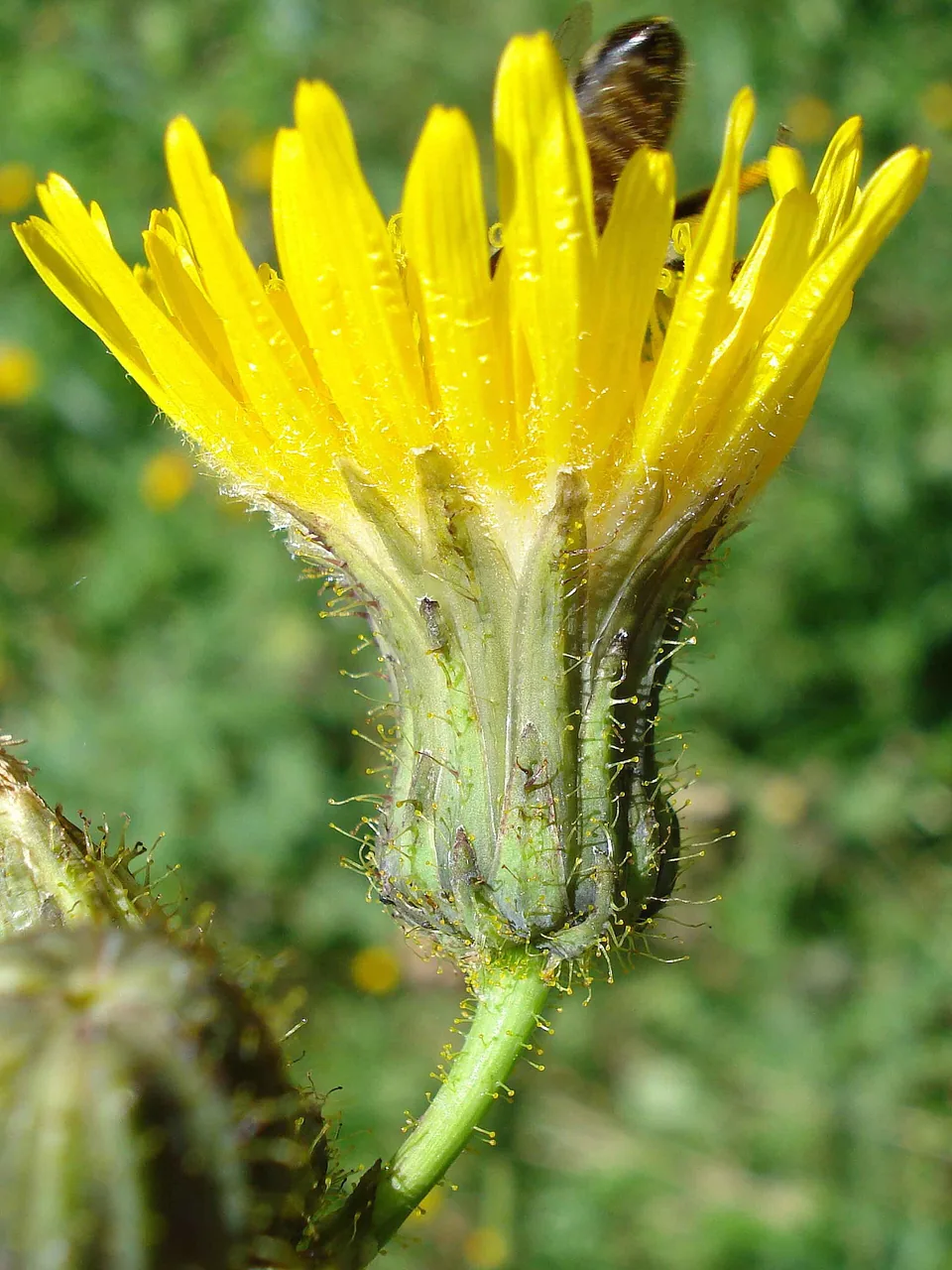
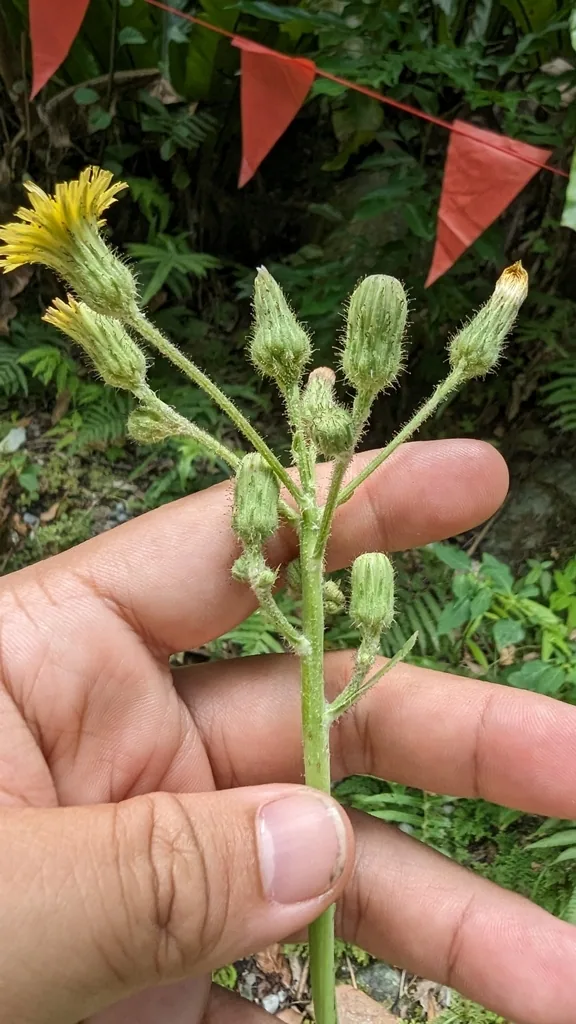

Cómo cultivar y cuidar Cerraja
Sonchus arvensis
Escrito por Emilio Marruso · última revisión
De un vistazo
La cerraja perenne es una planta vivaz y resistente cuyas hojas jóvenes puedes comer crudas en ensalada o cocinadas como las espinacas, con un agradable sabor ligeramente amargo. Siémbrala en primavera directamente en su sitio, mantén la tierra húmeda mientras las plántulas arraigan y pronto sus raíces profundas la ayudarán a superar sola las épocas secas.
- Riego
Riego moderado; no dejes que las plántulas se sequen. Las plantas adultas aguantan la sequía
Qué dicen las fuentes (4)
Riego: Moderado
Water moderate Soil textures sandy, loamy, clay Soil pH
— Field Milk Thistle (Sonchus arvensis) — Practical Plants [8] Notas sobre el riego: Las plántulas son muy sensibles a la sequía y se establecen principalmente en zonas húmedas o donde la cobertura mantiene el suelo húmedo; intolerante a la sequía
Perennial sowthistle seedlings are highly sensitive to drying, and generally only establish in wet spots or in areas where crop residues or cover of other plants keep the soil moist.
— Perennial sowthistle | CALS [6] Sequía: Las plántulas son muy sensibles a la desecación y se establecen solo donde el suelo permanece húmedo; las plantas bien establecidas tienen raíces profundas que les ayudan a sobrevivir períodos secos.
Drought tolerance: Perennial sowthistle seedlings are highly sensitive to drying, and generally only establish in wet spots or in areas where crop residues or cover of other plants keep the soil moist.
— Perennial sowthistle | CALS [6] Well established plants, however, often have deep roots that help the plant survive dry periods.
— Perennial sowthistle | CALS [6] - Cosecha
Come las hojas jóvenes crudas en ensalada o cocinadas como espinacas; algo amargas
- Plagas
Nematodos de las raíces y de quistes; también puede sufrir una marchitez bacteriana
Qué dicen las fuentes (2)
Plagas: nematodo de la raíz, nematodo del quiste
Perennial sowthistle is susceptible to several nematodes including root-knot nematode ( Meloidogyne incognita ) and cyst nematode ( Heterodera sonchophila ).
— Perennial sowthistle | CALS [6] Enfermedades: marchitez por Pseudomonas solanacearum
It also is susceptible to Pseudomonas solanacearum wilt, but plants typically recover from wilting symptoms in the evening.
— Perennial sowthistle | CALS [6] - Atención
Sus raíces llegan a 3 m de hondo y 2,8 m de ancho, y cada trozo de raíz da una planta nueva
Qué dicen las fuentes (4)
Sistema radicular: Sistema radicular extenso de raíces de almacenamiento superficiales y engrosadas; puede alcanzar 3 m [9,8 ft] de profundidad y extenderse más de 2.8 m [9,2 ft] horizontalmente.
Erect, mostly unbranched, perennial herb arising from a basal rosette and spreading by shallow, thickened storage roots.
— Perennial sowthistle | CALS [6] The root system is extensive, and can reach up to 10 ft (3 m) in depth and spread over 9 ft (2.8 m) horizontally.
— Perennial sowthistle | CALS [6] Propagación: Semilla; fragmentos de raíz (propagación vegetativa)
Seed - sow spring in situ. A common garden weed, this species should not normally need any assistance.
— Field Milk Thistle (Sonchus arvensis) — Practical Plants [8] Widely spreading white brittle roots penetrating five to ten feet, produces new plants from small root pieces.
— Perennial sowthistle [1] - Multiplicación
Por semilla o por trozos de raíz
Qué dicen las fuentes (2)
Propagación: Semilla; fragmentos de raíz (propagación vegetativa)
Seed - sow spring in situ. A common garden weed, this species should not normally need any assistance.
— Field Milk Thistle (Sonchus arvensis) — Practical Plants [8] Widely spreading white brittle roots penetrating five to ten feet, produces new plants from small root pieces.
— Perennial sowthistle [1] - Siembra
Siembra en primavera en su sitio; cubre apenas las semillas, necesitan luz y 25–30 °C
Qué dicen las fuentes (5)
Siembra: Primavera, in situ
Seed - sow spring in situ. A common garden weed, this species should not normally need any assistance.
— Field Milk Thistle (Sonchus arvensis) — Practical Plants [8] Germinación: Las semillas germinan mejor a 25-30 °C [77–86 °F], con poca o ninguna dormancia innata; la luz aumenta la germinación; las plántulas emergen mejor desde los 0.5 cm [0,2 in] superiores del suelo.
Seeds germinate best at 77-86 °F (25-30 °C).
— Perennial sowthistle | CALS [6] Seeds have little or no innate dormancy and will readily germinate immediately after dispersal
— Perennial sowthistle | CALS [6] Many perennial sowthistle seeds will germinate in the dark, but exposure to light increases the germination
— Perennial sowthistle | CALS [6] Emergence depth: Seedlings emerge best from the top 0.2” (0.5 cm) of soil
— Perennial sowthistle | CALS [6]
Resumen
La cerraja perenne (Sonchus arvensis) es una planta herbácea perenne que se propaga vegetativamente y por semilla dispersada por el viento. [1] Está catalogada como maleza nociva en Minnesota, y sus hojas jóvenes se registran como comestibles crudas o cocidas. [3][8] Las plántulas se establecen principalmente en zonas húmedas o donde otra cobertura mantiene el suelo húmedo. [6]
Citado en inglés, como en la fuente.
Esta ficha está incompleta: las fuentes consultadas aún no cubren todos los campos.
Aún no cubierto por nuestras fuentes: Luz, Rusticidad, zona más fría, Rusticidad, zona más cálida
Cuidados
Riego
Riego
Moderado
Qué dicen las fuentes (1)
Water
moderate
Soil textures
sandy, loamy, clay
Soil pHNotas sobre el riego
Las plántulas son muy sensibles a la sequía y se establecen principalmente en zonas húmedas o donde la cobertura mantiene el suelo húmedo; intolerante a la sequía
Qué dicen las fuentes (1)
Perennial sowthistle seedlings are highly sensitive to drying, and generally only establish in wet spots or in areas where crop residues or cover of other plants keep the soil moist.Luz
No figura en las fuentes consultadas.
Clima y frío
Rusticidad, zona más fría
No figura en las fuentes consultadas.
Rusticidad, zona más cálida
No figura en las fuentes consultadas.
Propagación
Semilla; fragmentos de raíz (propagación vegetativa)
Qué dicen las fuentes (2)
Seed - sow spring in situ. A common garden weed, this species should not normally need any assistance.Widely spreading white brittle roots penetrating five to ten feet, produces new plants from small root pieces.Cultivo
La planta
Ciclo de vida
perenne
Qué dicen las fuentes (2)
Perennial sowthistle ( Sonchus arvensis ) is a perennial herbaceous plant, reaches heights of two to five feet.Habit: Erect, mostly unbranched, perennial herb arising from a basal rosette and spreading by shallow, thickened storage roots.Familia
Asteraceae
Plagas y enfermedades
Plagas
nematodo de la raíz, nematodo del quiste
Qué dicen las fuentes (1)
Perennial sowthistle is susceptible to several nematodes including root-knot nematode ( Meloidogyne incognita ) and cyst nematode ( Heterodera sonchophila ).Enfermedades
marchitez por Pseudomonas solanacearum
Qué dicen las fuentes (1)
It also is susceptible to Pseudomonas solanacearum wilt, but plants typically recover from wilting symptoms in the evening.Raíces
Sistema radicular
Sistema radicular extenso de raíces de almacenamiento superficiales y engrosadas; puede alcanzar 3 m [9,8 ft] de profundidad y extenderse más de 2.8 m [9,2 ft] horizontalmente.
Qué dicen las fuentes (2)
Erect, mostly unbranched, perennial herb arising from a basal rosette and spreading by shallow, thickened storage roots.The root system is extensive, and can reach up to 10 ft (3 m) in depth and spread over 9 ft (2.8 m) horizontally.Propagación
Germinación
Las semillas germinan mejor a 25-30 °C [77–86 °F], con poca o ninguna dormancia innata; la luz aumenta la germinación; las plántulas emergen mejor desde los 0.5 cm [0,2 in] superiores del suelo.
Qué dicen las fuentes (4)
Seeds germinate best at 77-86 °F (25-30 °C).Seeds have little or no innate dormancy and will readily germinate immediately after dispersalMany perennial sowthistle seeds will germinate in the dark, but exposure to light increases the germinationEmergence depth: Seedlings emerge best from the top 0.2” (0.5 cm) of soilCalor y sequía
Sequía
Las plántulas son muy sensibles a la desecación y se establecen solo donde el suelo permanece húmedo; las plantas bien establecidas tienen raíces profundas que les ayudan a sobrevivir períodos secos.
Qué dicen las fuentes (2)
Drought tolerance: Perennial sowthistle seedlings are highly sensitive to drying, and generally only establish in wet spots or in areas where crop residues or cover of other plants keep the soil moist.Well established plants, however, often have deep roots that help the plant survive dry periods.Remedios
Cada remedio indica qué dicen las fuentes oficiales; los remedios tradicionales sin fuente oficial aparecen marcados. Los perjudiciales están para que sepas evitarlos.
Cómo eliminarla
propagación invasiva
excavando las raíces Funciona en parte
Always wear long pants, closed-toe shoes, a long-sleeved shirt, work gloves and eye protection when handling sow thistle or any other noxious weed.
— gardenguides.com [10] Cómo: Excava los parches pequeños, cuidando de extraer todas las raíces.
Small patches can be dug up. Take care to get all of the roots.
— cd10-prod.kingcounty.gov [9] Qué dicen las pruebas Small patches can be dug up. Take care to get all of the roots.
— cd10-prod.kingcounty.gov [9] acolchado en láminas Funciona en parte
Cómo: Cubre el área con mantillo en láminas, después de labrar o cavar antes de aplicar el mantillo.
Sheet mulching can also be effective if combined with tilling or digging before the mulch is applied.
— cd10-prod.kingcounty.gov [9] Qué dicen las pruebas Sheet mulching can also be effective if combined with tilling or digging before the mulch is applied.
— cd10-prod.kingcounty.gov [9] corte de los brotes en la etapa de 4-6 hojas Funciona
Cómo: Retira los brotes repetidamente cuando tengan 4-6 hojas, para que las raíces subterráneas agoten sus reservas.
Regular defoliation of plants at the 4-6 leaf stage is reported to have killed plants within a season.
— gardenorganic.org.uk [11] Qué dicen las pruebas cutting the shoots off just below soil level when they reached the 6-leaf stage eliminated the storage roots in three operations
— Perennial sowthistle | CALS [6] labranza repetida Funciona
Cómo: Labra repetidamente al inicio de la temporada de crecimiento: romper las raíces hace que broten más yemas y agota las reservas.
Perennial sow-thistle is susceptible to repeated tillage in the early part of the growing season. Fragmentation induces more buds on the root pieces to grow, using up food reserves.
— gardenorganic.org.uk [11] Qué dicen las pruebas In general, a well-planned tillage fallow period can eliminate the weed in time to plant a winter grain or late season vegetable crop.
— Perennial sowthistle | CALS [6] Mejora el drenaje del suelo. Funciona en parte
Cómo: Mejora el drenaje del suelo, ya que la planta prospera mejor en suelos húmedos.
Because perennial sowthistle thrives best in wet soils, improving soil drainage can improve control.
— Perennial sowthistle | CALS [6] Qué dicen las pruebas Because perennial sowthistle thrives best in wet soils, improving soil drainage can improve control.
— Perennial sowthistle | CALS [6] agua hirviendo Funciona en parte
Plus, how safe is it to carry big pans of boiling water out the door to your garden?
— extension.illinois.edu [12] Cómo: Vierte una tetera llena de agua hirviendo sobre la planta cada día antes de que florezca; luego desentierra cada planta después de que muera.
Pour a teakettle full of boiling water on the plant each day before it flowers. Dig out each plant after it dies from the boiling water
— gardenguides.com [10] Qué dicen las pruebas Take boiling water, for example. Pouring it on green leaves would mean certain death, but the roots underground are still protected.
— extension.illinois.edu [12] vinagre blanco diluido No demostrado
Cómo: Vierte vinagre blanco diluido alrededor de la zona de las raíces y también dentro del hoyo después de desenterrar la planta.
Discourage perennial sow thistle expansion by pouring diluted white vinegar around the plant root area; perennial sow thistle thrives in an alkaline environment.
— gardenguides.com [10] Qué dicen las pruebas Vinegar can treat and kill weeds, but it must be herbicidal vinegar or acetic acid, not household vinegar
— extension.illinois.edu [13] descarte de raíces y semillas Fuente oficial, sin prueba independiente
Cómo: Pon las raíces y las semillas en la basura; los tallos y las hojas se pueden compostar.
Perennial sowthistle can spread by both seeds and roots. Dispose of these plant parts in the garbage. It is ok to compost stems and leaves.
— cd10-prod.kingcounty.gov [9]
Calendario
Siembra
Primavera, in situ
Qué dicen las fuentes (1)
Seed - sow spring in situ. A common garden weed, this species should not normally need any assistance.Meses tal como los dan las fuentes, en su mayoría de Estados Unidos (hemisferio norte). En el hemisferio sur se desplazan unos seis meses.
Comestibilidad
Según la fuente, citada textualmente. No comas una planta basándote solo en esta página: los errores de identificación pueden ser peligrosos.
Plantas similares
- Cerrajón Sonchus oleraceus
- Cerraja tierna Sonchus tenerrimus
- Prickly Sowthistle Sonchus asper
- American Burnweed Erechtites hieraciifolius
- Autumn Goldenrod Solidago sphacelata
- Cardo mariano Silybum marianum
- Blue Wood Aster Symphyotrichum cordifolium
- Brown knapweed Centaurea jacea
Fuentes
Cada valor anterior se cita de estos documentos. Los enlaces llevan al editor original.
- Perennial sowthistle · extension.umn.edu, consultado
- Perennial Sowthistle · u.osu.edu, consultado
- Is this plant a weed? : Garden : University of Minnesota Extension · apps.extension.umn.edu, consultado
- Sonchus arvensis - Useful Temperate Plants · temperate.theferns.info, consultado
- Sonchus arvensis (field sow-thistle): Go Botany · gobotany.nativeplanttrust.org, consultado
- Perennial sowthistle | CALS · cals.cornell.edu, consultado
- British Wild Plant: Sonchus arvensis Perennial Sow-thistle · ukwildflowers.com, consultado
- Field Milk Thistle (Sonchus arvensis) — Practical Plants · practicalplants.org, consultado
- cd10-prod.kingcounty.gov · cd10-prod.kingcounty.gov
- gardenguides.com · gardenguides.com
- gardenorganic.org.uk · gardenorganic.org.uk
- extension.illinois.edu · extension.illinois.edu
- extension.illinois.edu · extension.illinois.edu
Escrito por Emilio Marruso · última revisión