
How to Grow and Care for African lily
Dietes bicolor
Written by Emilio Marruso · last checked
At a glance
This perennial from the iris family grows 2 to 4 feet tall and is happy anywhere from nearly full sun to partial shade. It loves rich, moist soil but tolerates some dryness, needs only one or two light feedings a year and grows in containers too. In mild climates you can plant it any time of year and enjoy it season after season.
- Sun
Nearly full sun to partial shade
What the sources say (3)
Light: Nearly full sun to partial shade
According to Southern Nevada Water Authority (our area): Does best with partial or dappled shade in our area.
— Find plants - Fortnight Lily [5] growing in nearly full sun to partial shade.
— FPS178 [1] Light : Full sun to partial shade
— yellowafricaniris - Valdosta State University [3] - Water
Likes moist soil but handles some dryness; water often in full sun
What the sources say (2)
Watering: Rich, moist soil preferred; tolerates moderately dry soil; frequent irrigation in full sun
Iris will bloom best on rich, moist soil but will tolerate moderately dry soil conditions, growing in nearly full sun to partial shade. Plants in the full sun appear to do best with frequent irrigation.
— FPS178 [1] Water 2 times a week with 1 glass of water per specimen, waiting for the substrate to dry.
— Dietes bicolor or Butterfly flag | Care and Growing [7] - Cold
Leaves turn brown below 25 °F (-4 °C); cut off the brown leaves in spring
- Soil
Prefers rich, moist soil
What the sources say (2)
Watering: Rich, moist soil preferred; tolerates moderately dry soil; frequent irrigation in full sun
Iris will bloom best on rich, moist soil but will tolerate moderately dry soil conditions, growing in nearly full sun to partial shade. Plants in the full sun appear to do best with frequent irrigation.
— FPS178 [1] Water 2 times a week with 1 glass of water per specimen, waiting for the substrate to dry.
— Dietes bicolor or Butterfly flag | Care and Growing [7] - Spacing
2–3 ft between plants
What the sources say (1)
Spacing: 61.0-91.4 cm (24-36 in)
Plant spacing: 24 to 36 inches
— FPS178 [1] - Planting
In mild climates, plant any time of year
What the sources say (1)
Planting: Year round (zones 8-11)
Planting month for zone 8: year round Planting month for zone 9: year round
— FPS178 [1] - Feeding
One or two light feedings a year
What the sources say (1)
How often: One or two light applications a year
Otherwise, this iris requires no maintenance except for a light fertilization or two each year.
— FPS178 [1] - Pruning
Cut flower stalks to the ground after blooming; cut back all the leaves in fall or winter
What the sources say (2)
Pruning: Cut flower stalks to the ground after flowering; full foliage renewal cut in autumn or winter
Cut flower stalks to the ground after they have finished blooming.
— Find plants - Fortnight Lily [5] it is acceptable to cut all the foliage off close to the ground in autumn or winter to renew the plant
— Find plants - Fortnight Lily [5] - Pests
Watch for nematodes, its main pest, and scale insects
What the sources say (1)
Pests: nematodes, scales
Nematodes are the main pest problem. Scales can cover the foliage and cause a severe problem.
— FPS178 [1] - Size
2 to 4 ft tall and 2 to 3 ft wide
- Propagation
Grow new plants from seed or by dividing the clumps
What the sources say (2)
- Sowing
Sow in spring or fall
What the sources say (1)
Sowing: Spring or autumn
Fortnight lily propagates by seeds sown in spring or autumn and by division of rhizomes after flowering.
— Dietes bicolor or Butterfly flag | Care and Growing [7] - Containers
Grows in containers too
What the sources say (1)
In containers: Yes
Uses: border; mass planting; container or above-ground planter; edging; naturalizing; water garden; accent
— FPS178 [1]
Overview
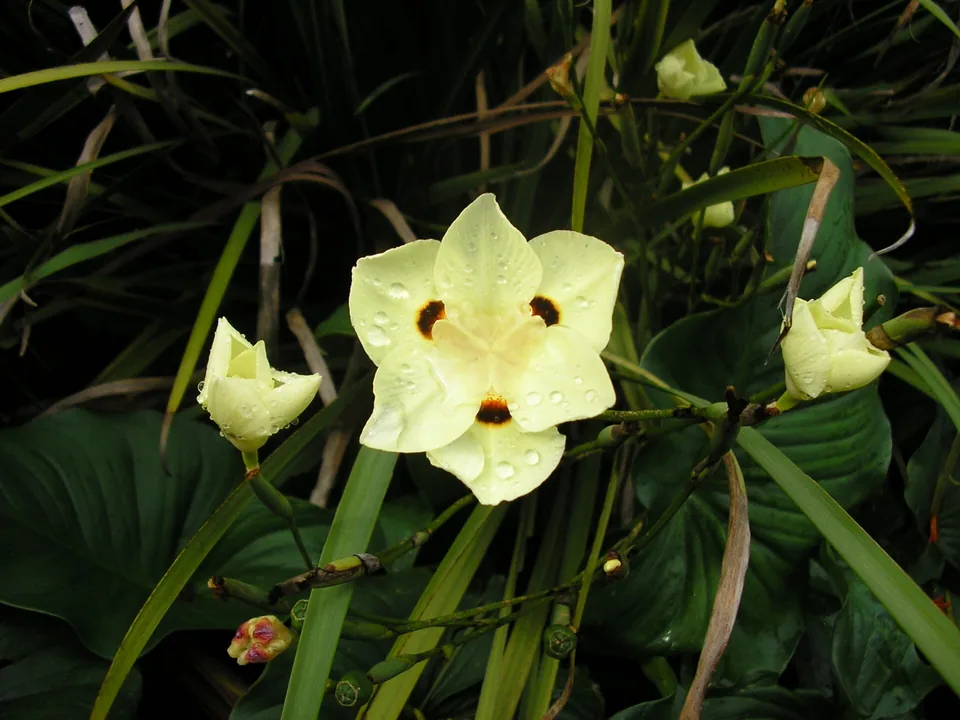
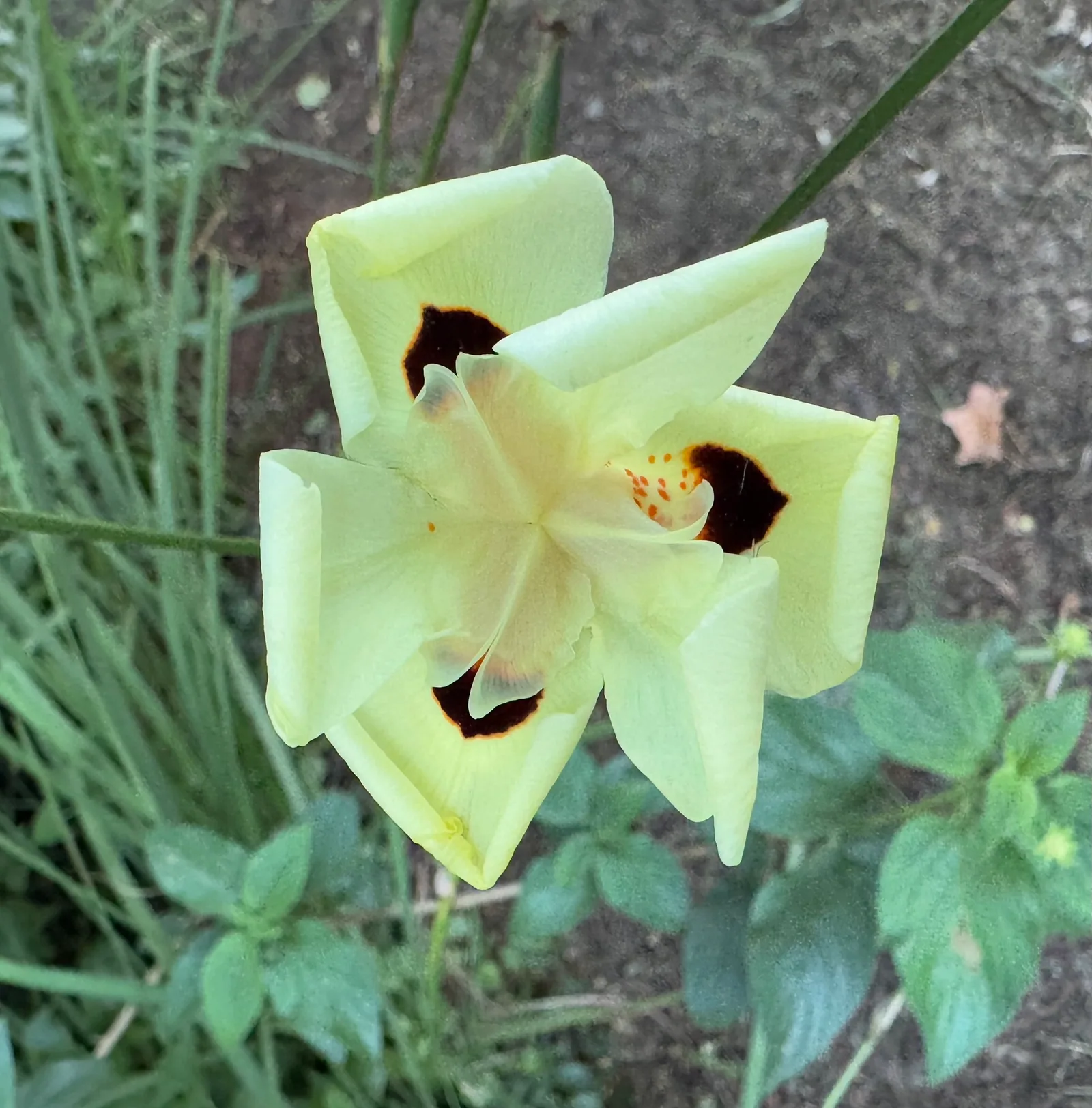
Dietes bicolor (evergreen iris) is a clumping perennial with yellow flowers marked with black or orange. [1] It blooms best on rich, moist soil, tolerates moderately dry soil, and grows in nearly full sun to partial shade. [1] It is propagated by seed or by division of the matted clumps. [1]
This record is incomplete: the sources we read do not cover every field yet.
Not yet covered by our sources: Hardiness, warmest zone
African lily care
How to water African lily
Rich, moist soil preferred; tolerates moderately dry soil; frequent irrigation in full sun
What the sources say (2)
Iris will bloom best on rich, moist soil but will tolerate moderately dry soil conditions, growing in nearly full sun to partial shade. Plants in the full sun appear to do best with frequent irrigation.Water 2 times a week with 1 glass of water per specimen, waiting for the substrate to dry.How much light African lily needs
Nearly full sun to partial shade
What each source says
According to Southern Nevada Water Authority (our area): Partial or dappled shade
What the sources say (3)
According to Southern Nevada Water Authority (our area): Does best with partial or dappled shade in our area.growing in nearly full sun to partial shade.Light : Full sun to partial shadeHow much cold African lily can take
Hardiness, coldest zone
The sources give different values depending on region, zone or growing conditions.
What each source says
According to UF/IFAS Extension: 8b [winter low −9.4 to −6.7 °C (15 to 20 °F)]
According to Valdosta State University: 9 [winter low −6.7 to −1.1 °C (20 to 30 °F)]
According to Gardening Know How: 8 [winter low −12.2 to −6.7 °C (10 to 20 °F)]
According to Southern Nevada Water Authority: 8a [winter low −12.2 to −9.4 °C (10 to 15 °F)]
What the sources say (4)
According to UF/IFAS Extension: USDA hardiness zones: 8B through 11 (Figure 3)According to Valdosta State University: USDA Plants Hardiness Zones : 9-11According to Gardening Know How: Dietes iris is hardy in zones 8-11According to Southern Nevada Water Authority: USDA hardiness zone:
8a, 8b, 9a, 9bHardiness, warmest zone
Not stated in the sources we read.
Where to grow African lily
In containers
Yes
What the sources say (1)
Uses: border; mass planting; container or above-ground planter; edging; naturalizing; water garden; accentHow to propagate African lily
How to grow African lily
The plant
Life cycle
perennial
What the sources say (1)
This clumping, robust perennial has floppy leaves radiating up and out in a weeping pattern.Family
Iridaceae
What the sources say (1)
Common name(s): evergreen iris Family: Iridaceae Plant type: herbaceous; ornamental grassMature height
61-122 cm (2 to 4 feet)
What the sources say (1)
Height: 2 to 4 feet Spread: 2 to 3 feet Plant habit: uprightMature width
61-91 cm (2 to 3 feet)
What the sources say (1)
Height: 2 to 4 feet Spread: 2 to 3 feet Plant habit: uprightPests and diseases
Pests
nematodes, scales
What the sources say (1)
Nematodes are the main pest problem. Scales can cover the foliage and cause a severe problem.Fertilizing
How often
One or two light applications a year
What the sources say (1)
Otherwise, this iris requires no maintenance except for a light fertilization or two each year.African lily pests and problems
Nematodes
Symptom: Main pest problem
What the sources say (1)
Nematodes are the main pest problem. Scales can cover the foliage and cause a severe problem.
— FPS178 [1] Cold damage
Symptom: Leaf browning below 25 F
What to do: Browned leaves can be removed in the spring
What the sources say (1)
Cold temperatures (below 25°F) cause leaf browning. These leaves can be removed in the spring to clean up the plant.
— FPS178 [1]
Remedies
The sources we checked give no remedies for this plant.
Calendar
Sowing
Spring or autumn
What the sources say (1)
Fortnight lily propagates by seeds sown in spring or autumn and by division of rhizomes after flowering.Planting
Year round (zones 8-11)
What the sources say (1)
Planting month for zone 8: year round Planting month for zone 9: year roundPruning
Cut flower stalks to the ground after flowering; full foliage renewal cut in autumn or winter
Months as given by the sources, which are mostly from the United States (northern hemisphere). In the southern hemisphere they shift by about six months.
Indicative values
Values from a secondary source, not checked word for word like the rest of this page. Use them as a starting point.
- Hours of sun
- 6-8 hoursIndicative value, adapt it to your climate · Secondary source
- Drought tolerant
- yesIndicative value, adapt it to your climate · Secondary source
- Soil pH
- 6-7.5Indicative value, adapt it to your climate · Secondary source
- Care level
- MediumIndicative value, adapt it to your climate · Secondary source
- Growth rate
- LowIndicative value, adapt it to your climate · Secondary source
Similar plants
- Dietes iridioides Dietes iridioides
- Algerian Iris Iris unguicularis
- Angel's Fishing Rod Dierama pulcherrimum
- Baboon Flower Babiana nervosa
- Blackberry Lily Iris domestica
- Blood Iris Iris sanguinea
- Blue Iris Iris spuria
- Blue-eyed Grass Sisyrinchium angustifolium
Sources
Every value above is quoted from these documents. Links lead to the original publisher.
- FPS178 · edis.ifas.ufl.edu, consulted
- Dietes bicolor | Plant Pono · plantpono.org, consulted
- yellowafricaniris - Valdosta State University · valdosta.edu, consulted
- Iris – Gardening Solutions · gardeningsolutions.ifas.ufl.edu, consulted
- Find plants - Fortnight Lily · snwa.com, consulted
- Evergreen Iris Care - Tips On Growing An Evergreen Iris Plant | Gardening Know How · gardeningknowhow.com, consulted
- Dietes bicolor or Butterfly flag | Care and Growing · consultaplantas.com, consulted
Written by Emilio Marruso · last checked