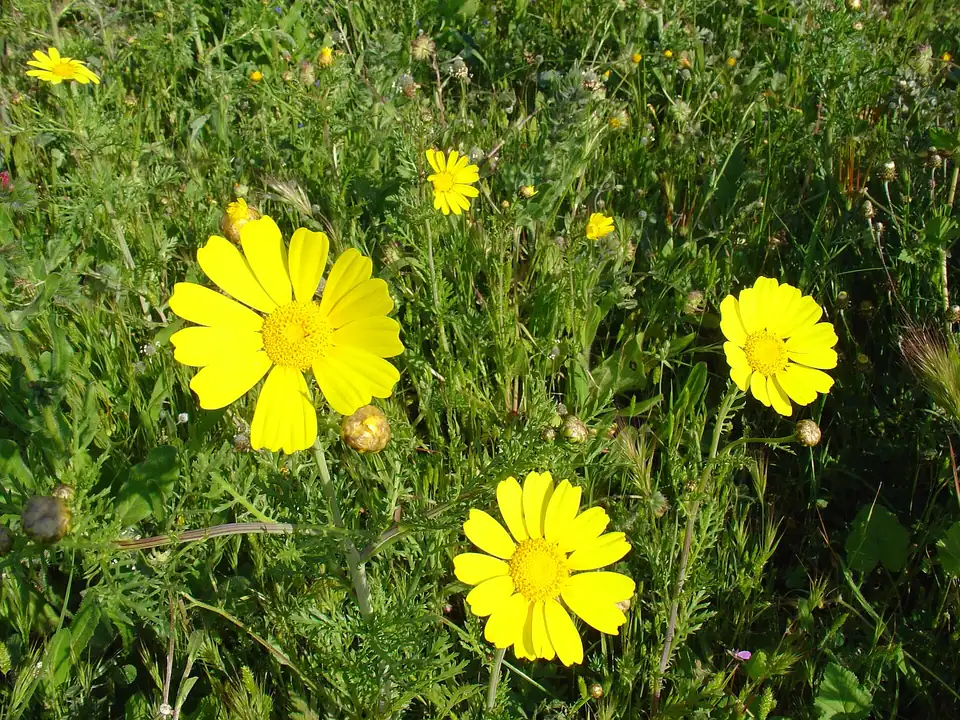
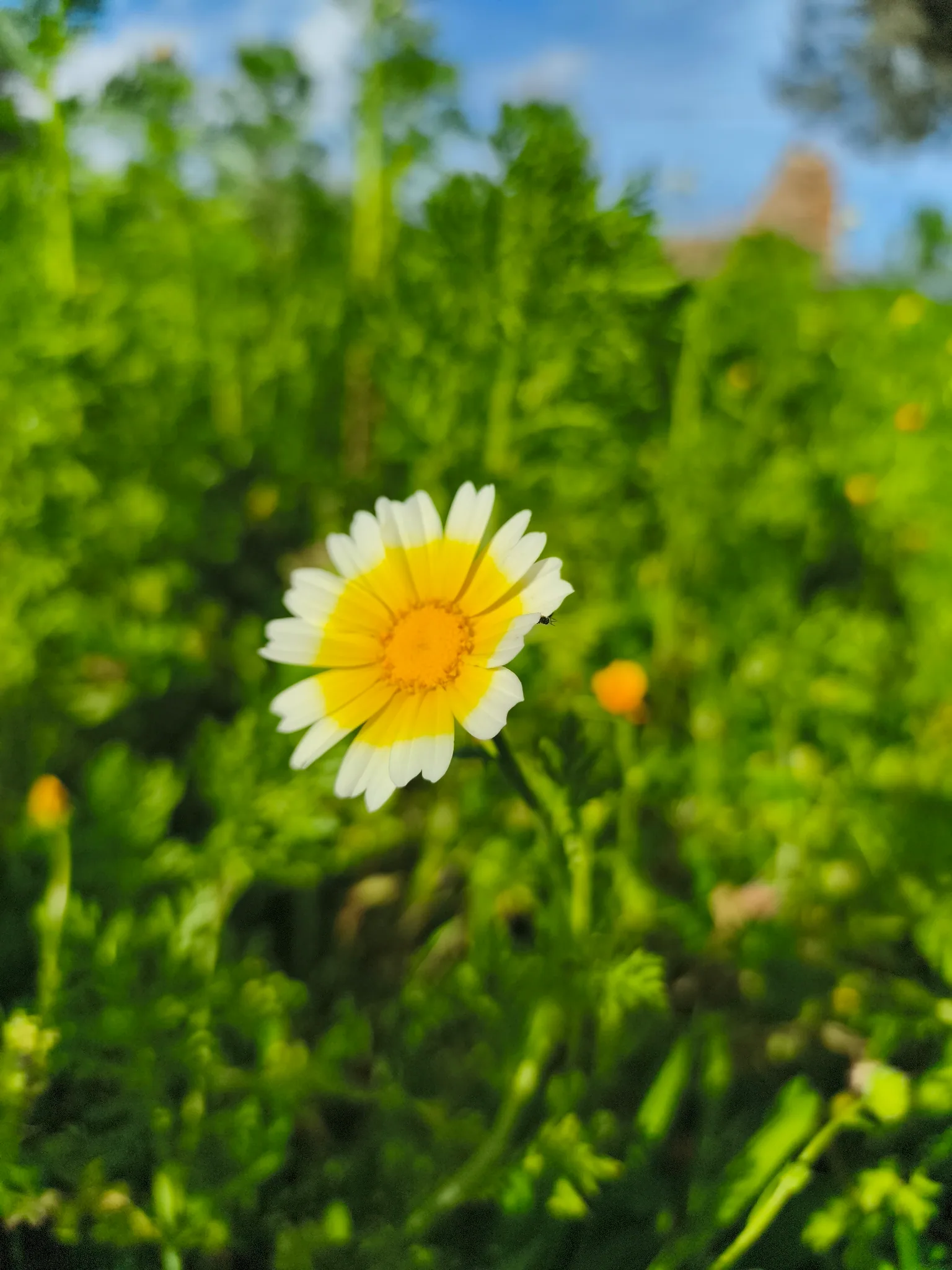

How to Grow and Care for Crown daisy
Glebionis coronaria
Written by Emilio Marruso · last checked
At a glance
Garland chrysanthemum gives you two harvests in one: tender leaves loved in Asian cooking and edible flowers with an even more intense taste. Sow it in early spring while the soil is still cool, give it full sun with a little afternoon shade when it's warm, and water deeply. Pick the leaves young and tender so they never turn bitter.
- Sun
Full sun; some afternoon shade in warmer months
What the sources say (1)
Light: Full sun; some afternoon shade is appreciated in warmer months
The garland chrysanthemum is essentially a full sun plant, although some afternoon shade is highly appreciated in the warmer months.
— Garland Chrysanthemum: the Flowering Vegetable - Laidback Gardener [2] - Water
Water deeply when the soil is dry 2 inches (5 cm) down
What the sources say (1)
Watering: Water deeply when the soil is dry about 5 cm [2 in] below the surface
After germination, water when the soil begins to dry out. Also weed as necessary.
— Garland Chrysanthemum: the Flowering Vegetable - Laidback Gardener [2] - Planting
Plant out once there is no more risk of frost
What the sources say (1)
Planting: When there is no further risk of frost
Provide normal indoor temperatures and good lighting, then, when there is no further risk of frost, acclimatize the seedlings to outdoor conditions before transplanting into the garden.
— Garland Chrysanthemum: the Flowering Vegetable - Laidback Gardener [2] - Harvest
Eat the leaves and the flowers; pick leaves young and tender so they don't turn bitter
- Watch out
Heat and dry soil make it flower and go to seed early: water deeply in hot weather
- Propagation
Grows from seed
What the sources say (1)
Propagation: Seed
Crown chrysanthemum is also an easy-to-grow annual that can be sown directly outdoors where you want it to grow.
— Garland Chrysanthemum: the Flowering Vegetable - Laidback Gardener [2] - Sowing
Sow in early spring, while the soil is still cool and frost risk is low
What the sources say (1)
Sowing: Early spring, when the soil is still cool but there is little risk of frost
However, most gardeners sow them in early in spring, outdoors where they are to bloom. Ideally, this would be when the soil is still cool, but there is little risk of frost.
— Garland Chrysanthemum: the Flowering Vegetable - Laidback Gardener [2]
Overview
Garland chrysanthemum is an annual grown mostly as a vegetable and also as an ornamental. [2] It is rated as invasive in coastal California. [4]
This record is incomplete: the sources we read do not cover every field yet.
Not yet covered by our sources: Harvest, Spacing
Crown daisy care
Measurements in square brackets are our conversion into the other unit system; the quoted text is unchanged.
How to water Crown daisy
Water deeply when the soil is dry about 5 cm [2 in] below the surface
What the sources say (1)
After germination, water when the soil begins to dry out. Also weed as necessary.How much light Crown daisy needs
Full sun; some afternoon shade is appreciated in warmer months
What the sources say (1)
The garland chrysanthemum is essentially a full sun plant, although some afternoon shade is highly appreciated in the warmer months.Where to grow Crown daisy
The sources give different values depending on region, zone or growing conditions.
What each source says
vegetable crop (laidbackgardener): 10 cm (4 in)
What the sources say (1)
vegetable crop (laidbackgardener): Thin to about 4 inches (10 cm), cutting them at the base. Where possible, keep the strongest ones.How to propagate Crown daisy
Seed
What the sources say (1)
Crown chrysanthemum is also an easy-to-grow annual that can be sown directly outdoors where you want it to grow.How to grow Crown daisy
The plant
Family
Asteraceae
What the sources say (1)
Asteraceae Bercht. & J.Presl
Asterales Link
Asteranae Takht.
Magnoliidae Novák ex Takht.Remedies
The sources we checked give no remedies for this plant.
Calendar
Sowing
Early spring, when the soil is still cool but there is little risk of frost
What the sources say (1)
However, most gardeners sow them in early in spring, outdoors where they are to bloom. Ideally, this would be when the soil is still cool, but there is little risk of frost.Planting
When there is no further risk of frost
What the sources say (1)
Provide normal indoor temperatures and good lighting, then, when there is no further risk of frost, acclimatize the seedlings to outdoor conditions before transplanting into the garden.Harvest
Not stated in the sources we read.
Months as given by the sources, which are mostly from the United States (northern hemisphere). In the southern hemisphere they shift by about six months.
Edibility
Reported by the source, quoted verbatim. Do not eat a plant on the basis of this page alone: identification mistakes can be dangerous.
Similar plants
- Corn daisy Glebionis segetum
- African Daisy Dimorphotheca pluvialis
- African Marigold Tagetes erecta
- Ageratum Ageratum houstonianum
- Alpine aster Aster alpinus
- American Burnweed Erechtites hieraciifolius
- Appalachian Blazing Star Liatris squarrulosa
- Appalachian Ironweed Vernonia glauca
Sources
Every value above is quoted from these documents. Links lead to the original publisher.
- Glebionis coronaria (L.) Cass. ex Spach - Portale della Flora d'Italia / Portal to the Flora of Italy · dryades.units.it, consulted
- Garland Chrysanthemum: the Flowering Vegetable - Laidback Gardener · laidbackgardener.blog, consulted
- Garland Chrysanthemum (Glebionis coronaria) - Garden.org · garden.org, consulted
- Glebionis coronaria Profile – California Invasive Plant Council · cal-ipc.org, consulted
- Online Flora of the Maltese Islands - Plant Family Index · maltawildplants.com, consulted
Written by Emilio Marruso · last checked