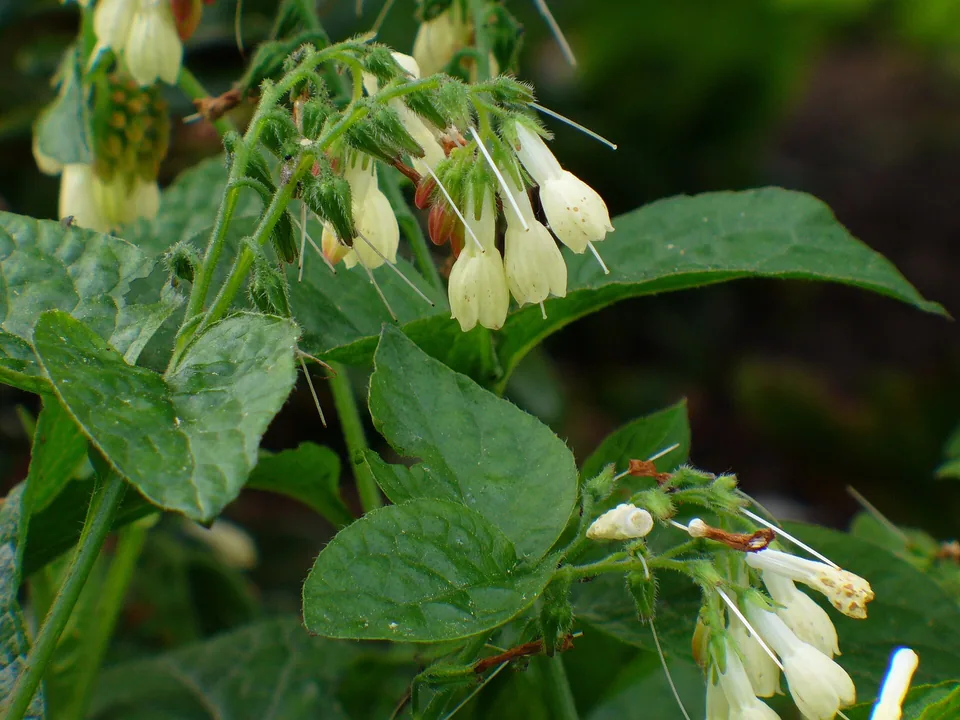


How to Grow and Care for Comfrey
Symphytum grandiflorum
Written by Emilio Marruso · last checked
Toxic to: People · Why
At a glance
Large-flowered comfrey is an easygoing perennial that comes back year after year and grows happily anywhere from full sun to partial shade. It stays compact, 1 to 1½ feet tall, and even grows in containers. Want more plants? Simply divide a clump or take a root cutting, and keep an eye out for slugs and snails.
- Sun
Full sun to partial shade
What the sources say (1)
Light: Full sun to partial shade
It is best grown in a location providing full sun to part shade and good drainage.
— Symphytum grandiflorum (Comfrey, Dwarf Comfrey, Iberium Comfrey, Large Flowered Comfrey, Ornamental Comfrey, Symphytum ibericum, Yellow Comfrey) | North Carolina Extension Gardener Plant Toolbox [1] - Cold
Survives winters down to −20 °F (−28.9 °C)
Very hardy · USDA 5a · RHS H7 · Z5
What the sources say (2)
Hardiness, coldest zone: 5a [winter low −28.9 to −26.1 °C (−20 to −15 °F)]
USDA Plant Hardiness Zone: 5a, 5b, 6a, 6b, 7a, 7b, 8a, 8b
— Symphytum grandiflorum (Comfrey, Dwarf Comfrey, Iberium Comfrey, Large Flowered Comfrey, Ornamental Comfrey, Symphytum ibericum, Yellow Comfrey) | North Carolina Extension Gardener Plant Toolbox [1] Hardiness, warmest zone: 8b [winter low −9.4 to −6.7 °C (15 to 20 °F)]
USDA Plant Hardiness Zone: 5a, 5b, 6a, 6b, 7a, 7b, 8a, 8b
— Symphytum grandiflorum (Comfrey, Dwarf Comfrey, Iberium Comfrey, Large Flowered Comfrey, Ornamental Comfrey, Symphytum ibericum, Yellow Comfrey) | North Carolina Extension Gardener Plant Toolbox [1] - Pests
Slugs and snails, usually a minor problem
What the sources say (1)
Pests: slugs, snails
No serious insect or disease issues. Slugs and snails can be a minor problem.
— Symphytum grandiflorum (Comfrey, Dwarf Comfrey, Iberium Comfrey, Large Flowered Comfrey, Ornamental Comfrey, Symphytum ibericum, Yellow Comfrey) | North Carolina Extension Gardener Plant Toolbox [1] - Watch out
Spreads by underground stems; root bits left when you dig sprout new plants
- Size
1 to 1½ ft tall and 1½ to 2 ft wide
What the sources say (2)
Mature height: 30-46 cm (1 ft - 1 ft 6 in)
Dimensions: Height: 1 ft. 0 in. - 1 ft. 6 in. Width: 1 ft. 6 in. - 2 ft. 0 in.
— Symphytum grandiflorum (Comfrey, Dwarf Comfrey, Iberium Comfrey, Large Flowered Comfrey, Ornamental Comfrey, Symphytum ibericum, Yellow Comfrey) | North Carolina Extension Gardener Plant Toolbox [1] Mature width: 46-61 cm (1 ft 6 in - 2 ft)
Dimensions: Height: 1 ft. 0 in. - 1 ft. 6 in. Width: 1 ft. 6 in. - 2 ft. 0 in.
— Symphytum grandiflorum (Comfrey, Dwarf Comfrey, Iberium Comfrey, Large Flowered Comfrey, Ornamental Comfrey, Symphytum ibericum, Yellow Comfrey) | North Carolina Extension Gardener Plant Toolbox [1] - Propagation
Divide a clump or take root cuttings
What the sources say (1)
Propagation: Division; root cutting
Life Cycle: Perennial Recommended Propagation Strategy: Division Root Cutting
— Symphytum grandiflorum (Comfrey, Dwarf Comfrey, Iberium Comfrey, Large Flowered Comfrey, Ornamental Comfrey, Symphytum ibericum, Yellow Comfrey) | North Carolina Extension Gardener Plant Toolbox [1] - Containers
Grows in containers too
What the sources say (1)
In containers: Yes
Landscape Location: Container Meadow Naturalized Area Slope/Bank Woodland
— Symphytum grandiflorum (Comfrey, Dwarf Comfrey, Iberium Comfrey, Large Flowered Comfrey, Ornamental Comfrey, Symphytum ibericum, Yellow Comfrey) | North Carolina Extension Gardener Plant Toolbox [1] - Safety
Don't eat it: large amounts over time can harm the liver
Overview
Symphytum grandiflorum is a perennial groundcover grown in borders or shade gardens for its dense foliage and spring flowers. [1] It spreads by creeping rhizomes that can be aggressive, and roots left in the ground after digging can sprout new plants. [1] It grows best in full sun to part shade with good drainage. [1]
This record is incomplete: the sources we read do not cover every field yet.
Not yet covered by our sources: Watering, Pruning
Comfrey care
How to water Comfrey
Not stated in the sources we read.
How much light Comfrey needs
Full sun to partial shade
What the sources say (1)
It is best grown in a location providing full sun to part shade and good drainage.How much cold Comfrey can take
Hardiness, coldest zone
5a [winter low −28.9 to −26.1 °C (−20 to −15 °F)]
What the sources say (1)
USDA Plant Hardiness Zone:
5a, 5b, 6a, 6b, 7a, 7b, 8a, 8bHardiness, warmest zone
8b [winter low −9.4 to −6.7 °C (15 to 20 °F)]
What the sources say (1)
USDA Plant Hardiness Zone:
5a, 5b, 6a, 6b, 7a, 7b, 8a, 8bWhere to grow Comfrey
Yes
What the sources say (1)
Landscape Location:
Container
Meadow
Naturalized Area
Slope/Bank
WoodlandHow to propagate Comfrey
Division; root cutting
What the sources say (1)
Life Cycle:
Perennial
Recommended Propagation Strategy:
Division
Root CuttingHow to grow Comfrey
The plant
Life cycle
perennial
What the sources say (1)
Comfrey is a perennial groundcover in the Boraginaceae (borage) family native to Europe.Family
Boraginaceae
What the sources say (1)
Comfrey is a perennial groundcover in the Boraginaceae (borage) family native to Europe.Mature height
30-46 cm (1 ft - 1 ft 6 in)
What the sources say (1)
Dimensions:
Height: 1 ft. 0 in. - 1 ft. 6 in.
Width: 1 ft. 6 in. - 2 ft. 0 in.Mature width
46-61 cm (1 ft 6 in - 2 ft)
What the sources say (1)
Dimensions:
Height: 1 ft. 0 in. - 1 ft. 6 in.
Width: 1 ft. 6 in. - 2 ft. 0 in.Pests and diseases
Pests
slugs, snails
What the sources say (1)
No serious insect or disease issues. Slugs and snails can be a minor problem.Comfrey pests and problems
Slugs and snails
Symptom: Minor pest problem
What to do: No management given in the source
What the sources say (1)
No serious insect or disease issues. Slugs and snails can be a minor problem.
— Symphytum grandiflorum (Comfrey, Dwarf Comfrey, Iberium Comfrey, Large Flowered Comfrey, Ornamental Comfrey, Symphytum ibericum, Yellow Comfrey) | North Carolina Extension Gardener Plant Toolbox [1] Aggressive rhizomes
Symptom: Spreads by rhizomes; digging leaves roots that sprout new plants
What to do: No management given in the source
What the sources say (1)
Attempting to dig plant up for transplanting or removal can leave some roots that will sprout new plants.
— Symphytum grandiflorum (Comfrey, Dwarf Comfrey, Iberium Comfrey, Large Flowered Comfrey, Ornamental Comfrey, Symphytum ibericum, Yellow Comfrey) | North Carolina Extension Gardener Plant Toolbox [1]
Remedies
Each remedy shows what official sources say about it; traditional remedies without an official source are marked as such. Harmful ones are listed so you know to avoid them.
First aid
First aid: not a substitute for a doctor
Treating the plant
slugs and snails
beer trap Works
How: Sink shallow pans of stale beer so the lip of the container is even with the soil surface; replace the beer when it dries up or is diluted by rain.
Trap snails and slugs in shallow pans of stale beer sunken so that the lip of the container is even with the soil surface. Replace beer as necessary when it dries up or becomes diluted by rainfall.
— hgic.clemson.edu [6] What the evidence says or by making simple, effective traps. Trap snails and slugs in shallow pans of stale beer sunken so that the lip of the container is even with the soil surface.
— hgic.clemson.edu [6] handpicking Official source, not independently tested
How: Remove them by hand when found.
When found, these pests can be removed by handpicking or by making simple, effective traps.
— hgic.clemson.edu [6] potato or cabbage under a board Official source, not independently tested
How: Place pieces of potato or cabbage under a board, then collect and destroy the slugs and snails during the day.
Snails and slugs can also be attracted with pieces of potato or cabbage placed underneath a board and then collected and destroyed during the day.
— hgic.clemson.edu [6] diatomaceous earth Partly works
How: Sprinkle around young seedlings; reapply after rain or watering.
Protect young seedlings by sprinkling diatomaceous earth around the plants. Diatomaceous earth is very sharp and scratches the skin of these soft-bodied critters, resulting in dehydration and death. It must be reapplied after rain or watering.
— hgic.clemson.edu [6] What the evidence says Protect young seedlings by sprinkling diatomaceous earth around the plants. Diatomaceous earth is very sharp and scratches the skin of these soft-bodied critters, resulting in dehydration and death. It must be reapplied after rain or watering.
— hgic.clemson.edu [6]
Getting rid of it
aggressive rhizomes
dig out the roots by hand Official source, not independently tested
Any bits of root left in the soil can produce new plants.
— depts.washington.edu [7] Attempting to dig plant up for transplanting or removal can leave some roots that will sprout new plants.
— Symphytum grandiflorum (Comfrey, Dwarf Comfrey, Iberium Comfrey, Large Flowered Comfrey, Ornamental Comfrey, Symphytum ibericum, Yellow Comfrey) | North Carolina Extension Gardener Plant Toolbox [1] How: Do not rototill, wear gloves, dig carefully and remove as much of the roots as you can, then dispose of them.
Do not rototill this plant, and always wear gloves when handling it. Dig carefully and remove as much as you can of the roots, and then dispose of them.
— depts.washington.edu [7] thick mulch of arborist wood chips Official source, not independently tested
Any bits of root left in the soil can produce new plants.
— depts.washington.edu [7] How: Mulch with a thick layer of arborist wood chips over weedy areas.
If you have large swathes of your garden which are weedy, you can also try mulching with a thick layer of arborist wood chips (free from arborists and websites like Chip Drop ) as a solution.
— depts.washington.edu [7]
Is Comfrey poisonous?
Reported by the source, quoted verbatim. This is not medical or veterinary advice: if a person or an animal may have eaten this plant, contact a poison control centre or a veterinarian.
Although this plant contains small quantities of alkaloids that can cause liver damage over time, most individuals would have to consume large quantities of the plant in order for it to be harmful.
[1]
Calendar
Pruning
Not stated in the sources we read.
Months as given by the sources, which are mostly from the United States (northern hemisphere). In the southern hemisphere they shift by about six months.
Indicative values
Values from a secondary source, not checked word for word like the rest of this page. Use them as a starting point.
- Hours of sun
- 6-8 hoursIndicative value, adapt it to your climate · Secondary source
- Watering
- AverageIndicative value, adapt it to your climate · Secondary source
- Soil pH
- 6-7Indicative value, adapt it to your climate · Secondary source
- Growth rate
- LowIndicative value, adapt it to your climate · Secondary source
- Pruning
- June, JulyIndicative value, adapt it to your climate · Secondary source
Similar plants
- Comfrey Symphytum officinale
- Prickly comfrey Symphytum asperum
- Abraham Trachystemon orientalis
- Alkanet Anchusa azurea
- Blue Showers Cynoglossum amabile
- Blueweed Echium vulgare
- Borage Borago officinalis
- Broad-leaf Waterleaf Hydrophyllum canadense
Sources
Every value above is quoted from these documents. Links lead to the original publisher.
- Symphytum grandiflorum (Comfrey, Dwarf Comfrey, Iberium Comfrey, Large Flowered Comfrey, Ornamental Comfrey, Symphytum ibericum, Yellow Comfrey) | North Carolina Extension Gardener Plant Toolbox · plants.ces.ncsu.edu, consulted
- Large Flowered Comfrey - Symphytum grandiflorum | North Carolina Extension Gardener Plant Toolbox · plants.ces.ncsu.edu, consulted
- Comfrey - Symphytum grandiflorum | North Carolina Extension Gardener Plant Toolbox · plants.ces.ncsu.edu, consulted
- Dwarf Comfrey - Symphytum grandiflorum | North Carolina Extension Gardener Plant Toolbox · plants.ces.ncsu.edu, consulted
- poison.org · poison.org
- hgic.clemson.edu · hgic.clemson.edu
- depts.washington.edu · depts.washington.edu
Written by Emilio Marruso · last checked