
How to Grow and Care for Broad-leaf Waterleaf
Hydrophyllum canadense
Written by Emilio Marruso · last checked
At a glance
Canada waterleaf is a perennial made for the shady corners where other plants struggle, from dappled sunlight to deep shade. It loves moist soil and even tolerates wet ground, so a damp spot suits it well. Keep it watered and the leaves at its base stay on the plant, filling a space 22 inches to 2 feet tall.
- Sun
From dappled sunlight to deep shade
What the sources say (1)
Light: Dappled sunlight to deep shade
Light: Dappled Sunlight (Shade through upper canopy all day) Deep shade (Less than 2 hours to no direct sunlight)
— Hydrophyllum canadense (Bluntleaf Waterleaf, Broad-leaf Waterleaf, Canada Waterleaf, Mapleleaf Waterleaf) | North Carolina Extension Gardener Plant Toolbox [1] - Water
Keep the soil moist so the leaves at the base stay on; wet soil is fine too
What the sources say (3)
Watering: Moist soil; basal leaves remain on the plant if adequate moisture is provided
The basal leaves often remain on the plant if adequate moisture is provided
— Hydrophyllum canadense (Bluntleaf Waterleaf, Broad-leaf Waterleaf, Canada Waterleaf, Mapleleaf Waterleaf) | North Carolina Extension Gardener Plant Toolbox [1] Soil Texture: High Organic Matter Shallow Rocky Soil pH: Alkaline (>8.0) Neutral (6.0-8.0) Soil Drainage: Moist
— Hydrophyllum canadense (Bluntleaf Waterleaf, Broad-leaf Waterleaf, Canada Waterleaf, Mapleleaf Waterleaf) | North Carolina Extension Gardener Plant Toolbox [1] Watering notes: Tolerates wet soil
Attracts: Bees Pollinators Resistance To Challenges: Wet Soil
— Hydrophyllum canadense (Bluntleaf Waterleaf, Broad-leaf Waterleaf, Canada Waterleaf, Mapleleaf Waterleaf) | North Carolina Extension Gardener Plant Toolbox [1] - Size
22 in to 2 ft tall and 12 to 16 in wide
What the sources say (2)
Mature height: 55.88-60.96 cm (1 ft 10 in-2 ft)
Dimensions: Height: 1 ft. 10 in. - 2 ft. 0 in. Width: 1 ft. 0 in. - 1 ft. 4 in.
— Hydrophyllum canadense (Bluntleaf Waterleaf, Broad-leaf Waterleaf, Canada Waterleaf, Mapleleaf Waterleaf) | North Carolina Extension Gardener Plant Toolbox [1] Mature width: 30.48-40.64 cm (1 ft-1 ft 4 in)
Dimensions: Height: 1 ft. 10 in. - 2 ft. 0 in. Width: 1 ft. 0 in. - 1 ft. 4 in.
— Hydrophyllum canadense (Bluntleaf Waterleaf, Broad-leaf Waterleaf, Canada Waterleaf, Mapleleaf Waterleaf) | North Carolina Extension Gardener Plant Toolbox [1]
Overview
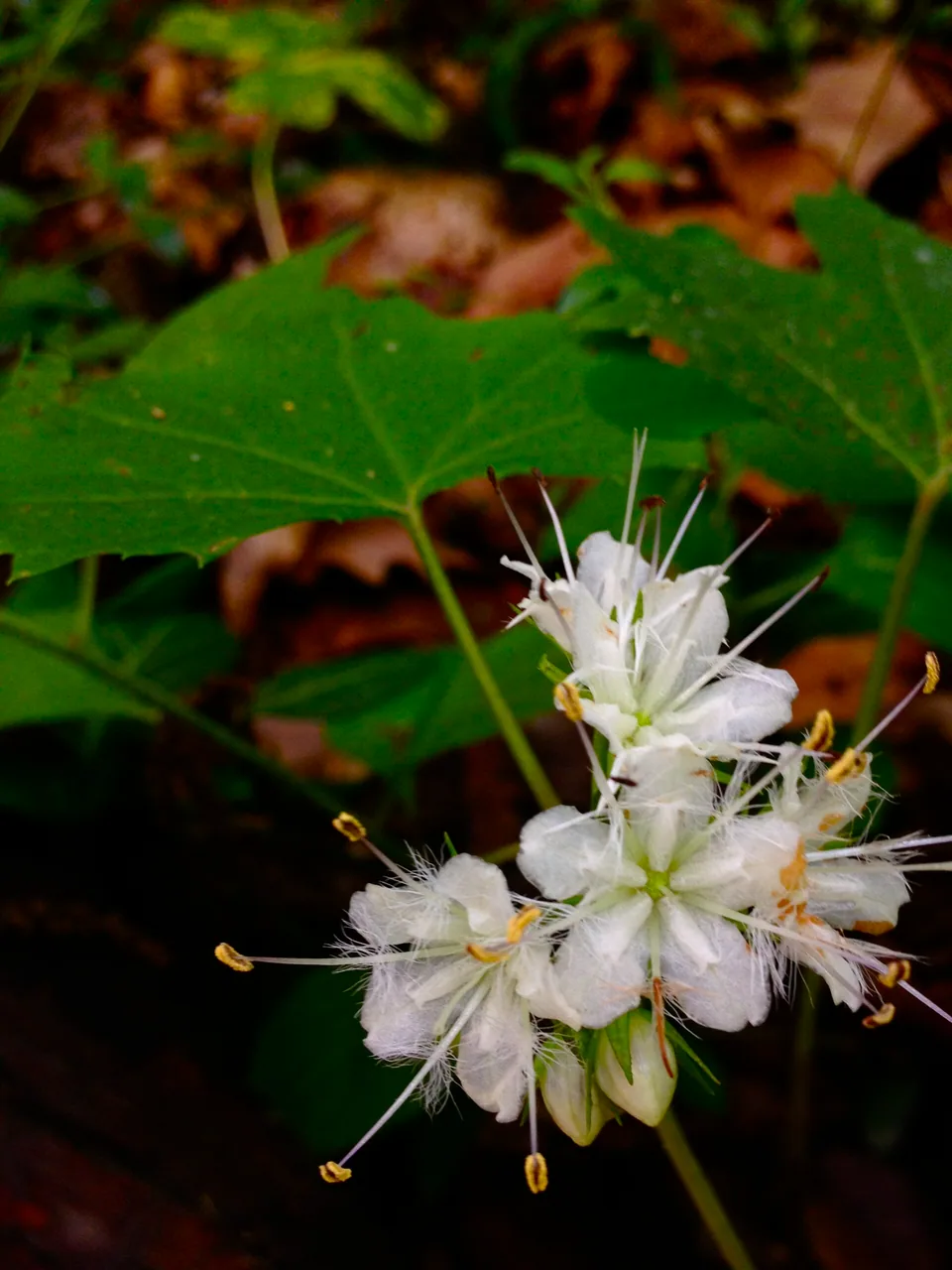
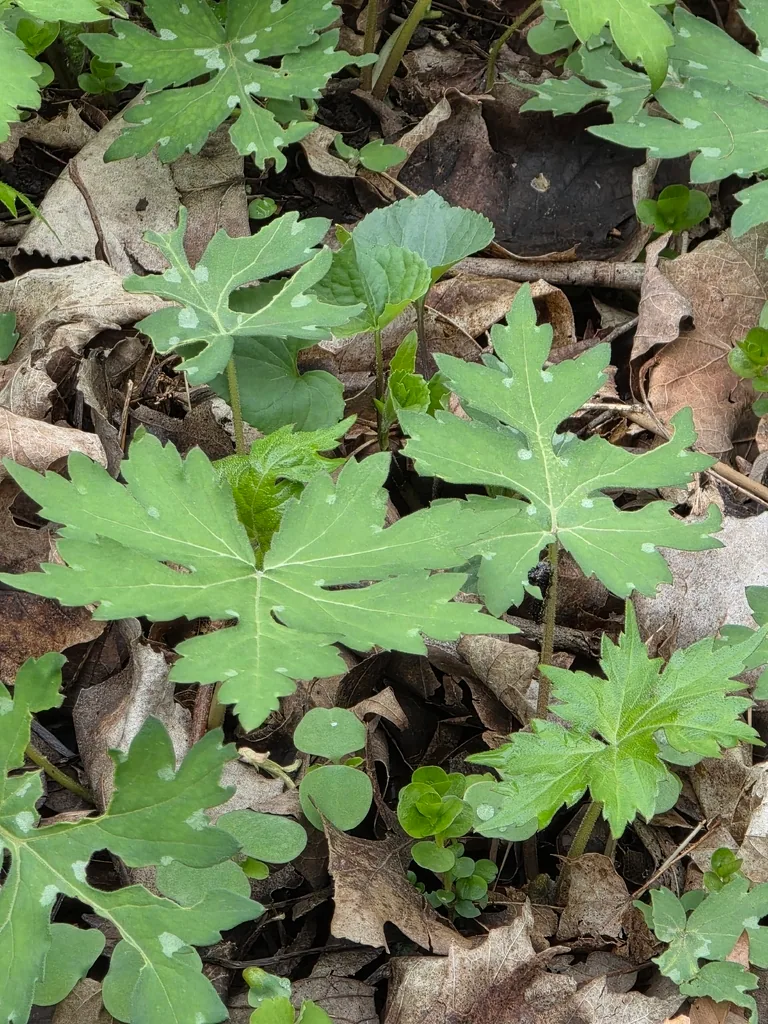
Broad-leaf waterleaf is a woodland perennial found in moist, high organic matter forests, bottom lands, thickets and along rocky stream banks. [1] It is suggested as a groundcover for a shady spot in a native garden. [1]
This record is incomplete: the sources we read do not cover every field yet.
Not yet covered by our sources: Hardiness, coldest zone, Hardiness, warmest zone, Pruning, Propagation
Broad-leaf Waterleaf care
How to water Broad-leaf Waterleaf
Watering
Moist soil; basal leaves remain on the plant if adequate moisture is provided
What the sources say (2)
The basal leaves often remain on the plant if adequate moisture is providedSoil Texture:
High Organic Matter
Shallow Rocky
Soil pH:
Alkaline (>8.0)
Neutral (6.0-8.0)
Soil Drainage:
MoistWatering notes
Tolerates wet soil
What the sources say (1)
Attracts:
Bees
Pollinators
Resistance To Challenges:
Wet SoilHow much light Broad-leaf Waterleaf needs
Dappled sunlight to deep shade
What the sources say (1)
Light:
Dappled Sunlight (Shade through upper canopy all day)
Deep shade (Less than 2 hours to no direct sunlight)How much cold Broad-leaf Waterleaf can take
Hardiness, coldest zone
Not stated in the sources we read.
Hardiness, warmest zone
Not stated in the sources we read.
How to propagate Broad-leaf Waterleaf
Not stated in the sources we read.
How to grow Broad-leaf Waterleaf
The plant
Life cycle
perennial
What the sources say (1)
Genus:
Hydrophyllum
Species:
canadense
Family:
Boraginaceae
Uses (Ethnobotany):
Native Americans used the root medicinally.
Life Cycle:
PerennialFamily
Boraginaceae
What the sources say (1)
Genus:
Hydrophyllum
Species:
canadense
Family:
Boraginaceae
Uses (Ethnobotany):
Native Americans used the root medicinally.
Life Cycle:
PerennialMature height
55.88-60.96 cm (1 ft 10 in-2 ft)
What the sources say (1)
Dimensions:
Height: 1 ft. 10 in. - 2 ft. 0 in.
Width: 1 ft. 0 in. - 1 ft. 4 in.Mature width
30.48-40.64 cm (1 ft-1 ft 4 in)
What the sources say (1)
Dimensions:
Height: 1 ft. 10 in. - 2 ft. 0 in.
Width: 1 ft. 0 in. - 1 ft. 4 in.Remedies
Each remedy shows what official sources say about it; traditional remedies without an official source are marked as such. Harmful ones are listed so you know to avoid them.
Treating the plant
slugs
handpicking Works
How: Remove the slugs and snails by handpicking when found.
When found, these pests can be removed by handpicking or by making simple, effective traps.
— hgic.clemson.edu [5] What the evidence says When found, these pests can be removed by handpicking or by making simple, effective traps.
— hgic.clemson.edu [5] beer trap Official source, not independently tested
How: Trap snails and slugs in shallow pans of stale beer sunken so that the lip of the container is even with the soil surface; replace the beer when it dries up or is diluted by rain.
Trap snails and slugs in shallow pans of stale beer sunken so that the lip of the container is even with the soil surface.
— hgic.clemson.edu [5] removing mulch and leaf litter Partly works
How: Remove mulch and leaf litter near plants to discourage snails and slugs.
Discourage snails and slugs by removing mulch and leaf litter near plants.
— hgic.clemson.edu [5] What the evidence says Discourage snails and slugs by removing mulch and leaf litter near plants.
— hgic.clemson.edu [5] diatomaceous earth Partly works
How: Sprinkle diatomaceous earth around young seedlings; reapply after rain or watering.
Protect young seedlings by sprinkling diatomaceous earth around the plants. Diatomaceous earth is very sharp and scratches the skin of these soft-bodied critters, resulting in dehydration and death. It must be reapplied after rain or watering.
— hgic.clemson.edu [5] What the evidence says Protect young seedlings by sprinkling diatomaceous earth around the plants. Diatomaceous earth is very sharp and scratches the skin of these soft-bodied critters, resulting in dehydration and death. It must be reapplied after rain or watering.
— hgic.clemson.edu [5]
Calendar
Pruning
Not stated in the sources we read.
Months as given by the sources, which are mostly from the United States (northern hemisphere). In the southern hemisphere they shift by about six months.
Similar plants
- Eastern Waterleaf Hydrophyllum virginianum
- Abraham Trachystemon orientalis
- Blue Showers Cynoglossum amabile
- Bugloss Anchusa capensis
- Clasping Heliotrope Heliotropium amplexicaule
- Comfrey Symphytum grandiflorum
- Comfrey Symphytum officinale
- Creeping navelwort Omphalodes verna
Sources
Every value above is quoted from these documents. Links lead to the original publisher.
- Hydrophyllum canadense (Bluntleaf Waterleaf, Broad-leaf Waterleaf, Canada Waterleaf, Mapleleaf Waterleaf) | North Carolina Extension Gardener Plant Toolbox · plants.ces.ncsu.edu, consulted
- Canada Waterleaf - Hydrophyllum canadense | North Carolina Extension Gardener Plant Toolbox · plants.ces.ncsu.edu, consulted
- Broad-leaf Waterleaf - Hydrophyllum canadense | North Carolina Extension Gardener Plant Toolbox · plants.ces.ncsu.edu, consulted
- Mapleleaf Waterleaf - Hydrophyllum canadense | North Carolina Extension Gardener Plant Toolbox · plants.ces.ncsu.edu, consulted
- hgic.clemson.edu · hgic.clemson.edu
Written by Emilio Marruso · last checked