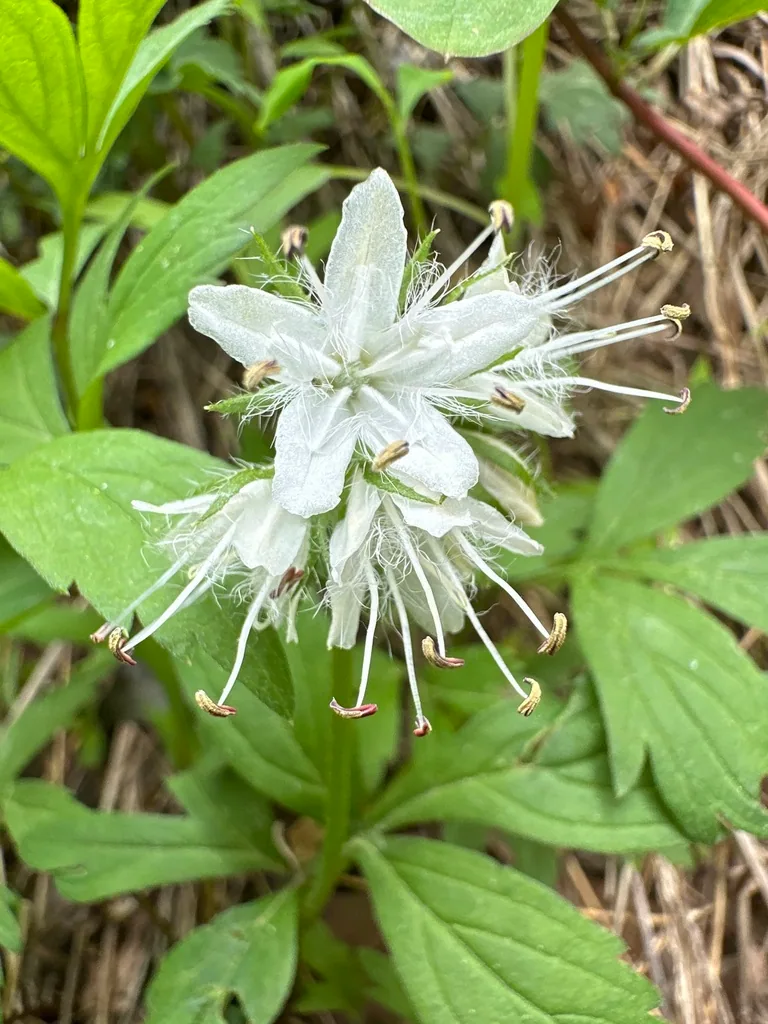
How to Grow and Care for Eastern Waterleaf
Hydrophyllum virginianum
Written by Emilio Marruso · last checked
At a glance
Virginia waterleaf is an easygoing perennial for partial sun to light shade, happy in consistently moist soil and even tolerant of wet spots. Its young leaves and shoots are edible and make a fresh addition to salads. Just give it room: it spreads readily by underground stems and seeds, quickly filling a shady corner of the garden.
- Sun
Partial sun to light shade
What the sources say (2)
Light: Partial sun to light shade
Eastern Waterleaf prefers fertile, consistently moist, well-drained soil in partial sun to light shade.
— Hydrophyllum virginianum (Eastern Waterleaf, John's Cabbage, Shawnee Salad, Virginia Waterleaf) | North Carolina Extension Gardener Plant Toolbox [1] Culture Light shade; moist, well drained sites.
— Virginia Waterleaf (Hydrophyllum virginianum)-Hort Answers - University of Illinois Extension [3] - Water
Keep the soil moist all the time; it handles wet soil too
What the sources say (2)
Watering: Consistently moist, well-drained soil
Eastern Waterleaf prefers fertile, consistently moist, well-drained soil in partial sun to light shade.
— Hydrophyllum virginianum (Eastern Waterleaf, John's Cabbage, Shawnee Salad, Virginia Waterleaf) | North Carolina Extension Gardener Plant Toolbox [1] Watering notes: Tolerates wet soil
It will tolerate wet soil and can spread aggressively under ideal conditions.
— Hydrophyllum virginianum (Eastern Waterleaf, John's Cabbage, Shawnee Salad, Virginia Waterleaf) | North Carolina Extension Gardener Plant Toolbox [1] - Soil
Well-drained soil, pH 6–8
What the sources say (3)
Watering: Consistently moist, well-drained soil
Eastern Waterleaf prefers fertile, consistently moist, well-drained soil in partial sun to light shade.
— Hydrophyllum virginianum (Eastern Waterleaf, John's Cabbage, Shawnee Salad, Virginia Waterleaf) | North Carolina Extension Gardener Plant Toolbox [1] Soil pH, minimum: 6.0
Soil pH: Neutral (6.0-8.0)
— Hydrophyllum virginianum (Eastern Waterleaf, John's Cabbage, Shawnee Salad, Virginia Waterleaf) | North Carolina Extension Gardener Plant Toolbox [1] Soil pH, maximum: 8.0
Soil pH: Neutral (6.0-8.0)
— Hydrophyllum virginianum (Eastern Waterleaf, John's Cabbage, Shawnee Salad, Virginia Waterleaf) | North Carolina Extension Gardener Plant Toolbox [1] - Harvest
Young leaves and shoots are edible; add them to salads
- Watch out
Spreads fast by roots and seeds; dig it out carefully, as bits left behind regrow
- Size
1–2 ft wide
What the sources say (1)
Mature width: 30.48-60.96 cm (1-2 ft)
Dimensions: Height: 1 ft. 0 in. - 2 ft. 0 in. Width: 1 ft. 0 in. - 2 ft. 0 in.
— Hydrophyllum virginianum (Eastern Waterleaf, John's Cabbage, Shawnee Salad, Virginia Waterleaf) | North Carolina Extension Gardener Plant Toolbox [1] - Propagation
Divide the roots in fall or while the plant is resting, or grow from fresh seed
What the sources say (2)
Propagation: Division of the rhizome when dormant or in the fall; seed (fresh seed with cold, moist stratification)
The plant can be propagated by dividing the rhizome in the fall when the plant is dormant
— Hydrophyllum virginianum (Eastern Waterleaf, John's Cabbage, Shawnee Salad, Virginia Waterleaf) | North Carolina Extension Gardener Plant Toolbox [1] It is relatively easy to grow from seed , as long as fresh seed is used and cold, moist stratification is provided.
— Virginia waterleaf, Hydrophyllum virginianum – Wisconsin Horticulture [2] - Sowing
Sow fresh seed right in the garden; it sprouts the following spring
What the sources say (3)
Sowing: Fresh seed sown directly in the garden, to germinate the following spring
Fresh seed can be sown directly in the garden for germination the following spring
— Virginia waterleaf, Hydrophyllum virginianum – Wisconsin Horticulture [2] Propagation: Division of the rhizome when dormant or in the fall; seed (fresh seed with cold, moist stratification)
The plant can be propagated by dividing the rhizome in the fall when the plant is dormant
— Hydrophyllum virginianum (Eastern Waterleaf, John's Cabbage, Shawnee Salad, Virginia Waterleaf) | North Carolina Extension Gardener Plant Toolbox [1] It is relatively easy to grow from seed , as long as fresh seed is used and cold, moist stratification is provided.
— Virginia waterleaf, Hydrophyllum virginianum – Wisconsin Horticulture [2]
Overview
Eastern waterleaf is a herbaceous perennial wildflower native to moist woodlands of eastern Canada and the United States. [1] It prefers fertile, consistently moist, well-drained soil in partial sun to light shade and can spread aggressively. [1] Young leaves and shoots are edible. [1]
This record is incomplete: the sources we read do not cover every field yet.
Not yet covered by our sources: Pruning
Eastern Waterleaf care
How to water Eastern Waterleaf
Watering
Consistently moist, well-drained soil
What the sources say (1)
Eastern Waterleaf prefers fertile, consistently moist, well-drained soil in partial sun to light shade.Watering notes
Tolerates wet soil
What the sources say (1)
It will tolerate wet soil and can spread aggressively under ideal conditions.How much light Eastern Waterleaf needs
Partial sun to light shade
What the sources say (2)
Eastern Waterleaf prefers fertile, consistently moist, well-drained soil in partial sun to light shade.Culture
Light shade; moist, well drained sites.How much cold Eastern Waterleaf can take
Hardiness, coldest zone
The sources give different values depending on region, zone or growing conditions.
What each source says
According to NC State Extension: 4a [winter low −34.4 to −31.7 °C (−30 to −25 °F)]
According to University of Wisconsin Extension: 4a [winter low −34.4 to −31.7 °C (−30 to −25 °F)]
According to University of Illinois Extension: 3 [winter low −40 to −34.4 °C (−40 to −30 °F)]
What the sources say (3)
According to NC State Extension: USDA Plant Hardiness Zone:
4a, 4b, 5a, 5b, 6a, 6b, 7a, 8a, 8bAccording to University of Wisconsin Extension: It is found in moist to wet wooded areas of eastern North America from eastern Canada to the eastern Dakotas and south to Missouri and North Carolina in Zones 4a to 8bAccording to University of Illinois Extension: USDA Hardiness Zone
3 - 6Hardiness, warmest zone
The sources give different values depending on region, zone or growing conditions.
What each source says
According to NC State Extension: 8b [winter low −9.4 to −6.7 °C (15 to 20 °F)]
According to University of Wisconsin Extension: 8b [winter low −9.4 to −6.7 °C (15 to 20 °F)]
According to University of Illinois Extension: 6 [winter low −23.3 to −17.8 °C (−10 to 0 °F)]
What the sources say (3)
According to NC State Extension: USDA Plant Hardiness Zone:
4a, 4b, 5a, 5b, 6a, 6b, 7a, 8a, 8bAccording to University of Wisconsin Extension: It is found in moist to wet wooded areas of eastern North America from eastern Canada to the eastern Dakotas and south to Missouri and North Carolina in Zones 4a to 8bAccording to University of Illinois Extension: USDA Hardiness Zone
3 - 6Best soil for Eastern Waterleaf
Soil pH, minimum
6.0
What the sources say (1)
Soil pH:
Neutral (6.0-8.0)Soil pH, maximum
8.0
What the sources say (1)
Soil pH:
Neutral (6.0-8.0)How to propagate Eastern Waterleaf
Division of the rhizome when dormant or in the fall; seed (fresh seed with cold, moist stratification)
What the sources say (2)
The plant can be propagated by dividing the rhizome in the fall when the plant is dormantIt is relatively easy to grow from seed , as long as fresh seed is used and cold, moist stratification is provided.How to grow Eastern Waterleaf
The plant
Life cycle
perennial
What the sources say (1)
Eastern Waterleaf is a tall (1 to 2 feet), upright, herbaceous perennial, wildflower in the waterleaf family that is native to the moist woodlands of eastern Canada and the United States,Family
Boraginaceae (sometimes still listed as Hydrophyllaceae)
What the sources say (1)
Virginia waterleaf, Hydrophyllum virginianum , is a Wisconsin native herbaceous perennial in the Boraginaceae (borage family), but sometimes still listed in the Hydrophyllaceae (waterleaf family).Mature height
The sources disagree:
Mature width
30.48-60.96 cm (1-2 ft)
What the sources say (1)
Dimensions:
Height: 1 ft. 0 in. - 2 ft. 0 in.
Width: 1 ft. 0 in. - 2 ft. 0 in.Eastern Waterleaf pests and problems
Aggressive spreading
Symptom: Spreads aggressively by rhizomes and seeds and self-seeds readily
What to do: Plants can be dug out, but the fragile stems break easily and the root system can regrow if not done carefully
What the sources say (2)
Its aggressive spreading habit does not make this an ideal planting in a small garden.
— Hydrophyllum virginianum (Eastern Waterleaf, John's Cabbage, Shawnee Salad, Virginia Waterleaf) | North Carolina Extension Gardener Plant Toolbox [1] Plants can be dug out but the relatively fragile green or reddish green stems break easily, leaving the extensive root system intact to regrow if not done carefully.
— Virginia waterleaf, Hydrophyllum virginianum – Wisconsin Horticulture [2]
Remedies
Each remedy shows what official sources say about it; traditional remedies without an official source are marked as such. Harmful ones are listed so you know to avoid them.
Getting rid of it
aggressive spreading
dig it out Official source, not independently tested
How: Plants can be dug out, but the fragile stems break easily, leaving the extensive root system intact to regrow if not done carefully.
Plants can be dug out but the relatively fragile green or reddish green stems break easily, leaving the extensive root system intact to regrow if not done carefully.
— Virginia waterleaf, Hydrophyllum virginianum – Wisconsin Horticulture [2] removing flower clusters before seed set Not verified
Traditional remedy, not verified by an official source.
How: Remove the flower clusters before the plant goes to seed to limit the spread.
Calendar
Sowing
Fresh seed sown directly in the garden, to germinate the following spring
What the sources say (1)
Fresh seed can be sown directly in the garden for germination the following springPruning
Not stated in the sources we read.
Months as given by the sources, which are mostly from the United States (northern hemisphere). In the southern hemisphere they shift by about six months.
Edibility
Reported by the source, quoted verbatim. Do not eat a plant on the basis of this page alone: identification mistakes can be dangerous.
Edibility: Young leaves and shoots are edible and can be added to salads.
[1]
Indicative values
Values from a secondary source, not checked word for word like the rest of this page. Use them as a starting point.
- Hours of sun
- 4-6 hoursIndicative value, adapt it to your climate · Secondary source
- Soil
- LoamyIndicative value, adapt it to your climate · Secondary source
- Care level
- MediumIndicative value, adapt it to your climate · Secondary source
- Growth rate
- LowIndicative value, adapt it to your climate · Secondary source
- Pruning
- February, March, AprilIndicative value, adapt it to your climate · Secondary source
Similar plants
- Broad-leaf Waterleaf Hydrophyllum canadense
- Abies grandis Abies grandis
- Acanthus hungaricus Acanthus hungaricus
- Achlys triphylla Achlys triphylla
- Afghan Redbud Cercis griffithii
- African Blood Lily Scadoxus multiflorus
- African lily Dietes bicolor
- African Living Rock Pleiospilos bolusii
Sources
Every value above is quoted from these documents. Links lead to the original publisher.
- Hydrophyllum virginianum (Eastern Waterleaf, John's Cabbage, Shawnee Salad, Virginia Waterleaf) | North Carolina Extension Gardener Plant Toolbox · plants.ces.ncsu.edu, consulted
- Virginia waterleaf, Hydrophyllum virginianum – Wisconsin Horticulture · hort.extension.wisc.edu, consulted
- Virginia Waterleaf (Hydrophyllum virginianum)-Hort Answers - University of Illinois Extension · web.extension.illinois.edu, consulted
- Eastern Waterleaf - Hydrophyllum virginianum | North Carolina Extension Gardener Plant Toolbox · plants.ces.ncsu.edu, consulted
- Virginia Waterleaf - Hydrophyllum virginianum | North Carolina Extension Gardener Plant Toolbox · plants.ces.ncsu.edu, consulted
Written by Emilio Marruso · last checked