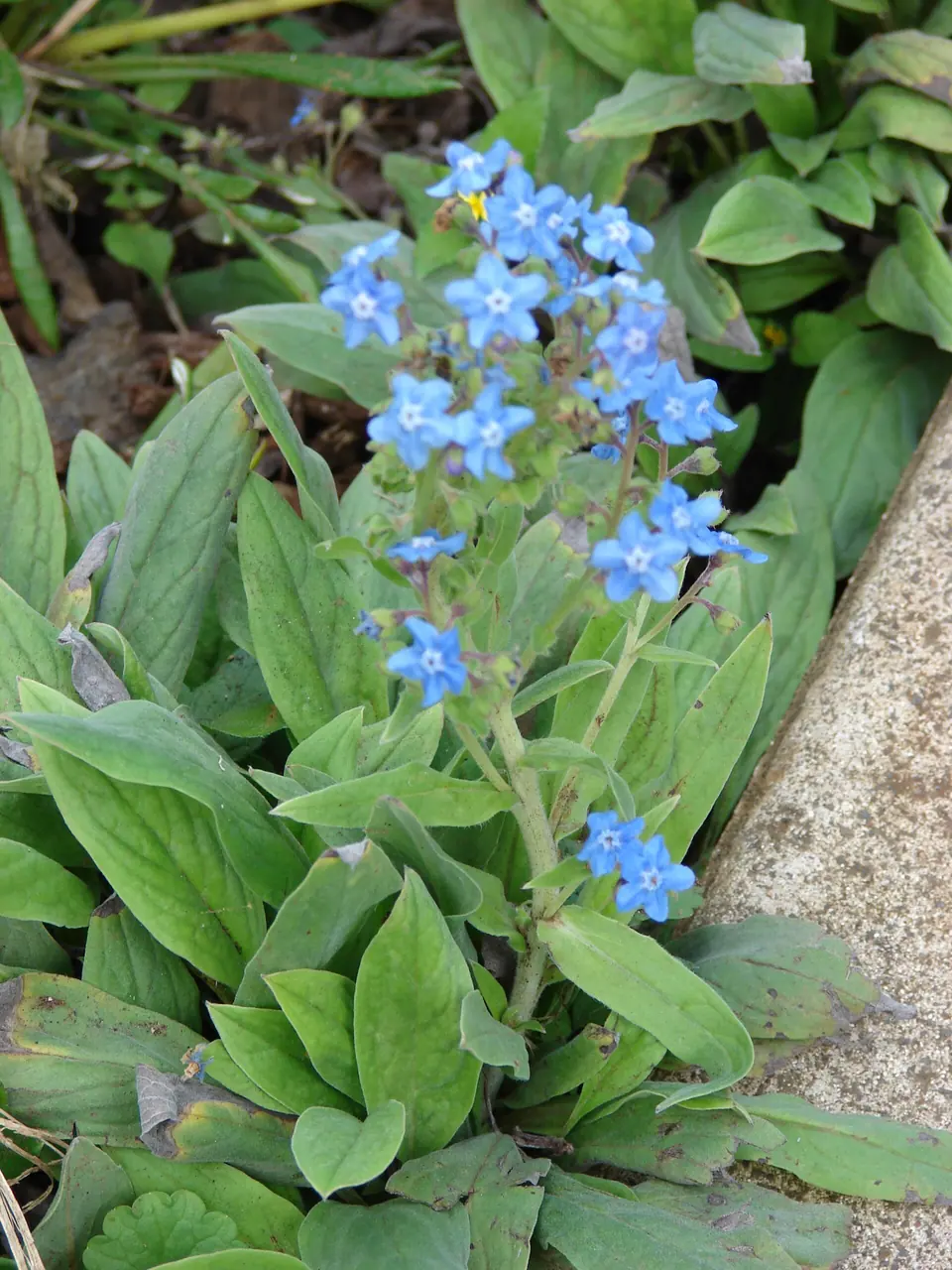


How to Grow and Care for Blue Showers
Cynoglossum amabile
Written by Emilio Marruso · last checked
Toxic to: Horses · Why
At a glance
You can grow Chinese forget-me-not from seed, and it is happy in full sun or partial shade, with some afternoon shade in warmer climates. It stays compact, 1–2 ft tall and 8 in–1 ft wide, so it fits in garden beds and containers alike. Just go easy on the water: too much invites fungal problems.
- Sun
Full sun to partial shade; afternoon shade in warmer climates
What the sources say (2)
Light: Full sun to partial shade
warmer climates: In warmer climates, planting should be done in an area that receives shade in the afternoon.
— Cynoglossum amabile (Blue Showers, Chinese Forget-me Not, Hound's Tongue) | North Carolina Extension Gardener Plant Toolbox [1] Light: Full sun (6 or more hours of direct sunlight a day) Partial Shade (Direct sunlight only part of the day, 2-6 hours)
— Cynoglossum amabile (Blue Showers, Chinese Forget-me Not, Hound's Tongue) | North Carolina Extension Gardener Plant Toolbox [1] - Water
Don't overwater: too much water leads to fungal growth
What the sources say (1)
Watering notes: Overwatering can lead to fungal growth
Overwatering can lead to fungal growth.
— Cynoglossum amabile (Blue Showers, Chinese Forget-me Not, Hound's Tongue) | North Carolina Extension Gardener Plant Toolbox [1] - Cold
Survives winters down to −10 °F (−23.3 °C)
Very hardy · USDA 6a · RHS H7 · Z6
What the sources say (2)
Hardiness, coldest zone: 6a [winter low −23.3 to −20.6 °C (−10 to −5 °F)]
USDA Plant Hardiness Zone: 6a, 6b, 7a, 7b, 8a, 8b, 9a, 9b
— Cynoglossum amabile (Blue Showers, Chinese Forget-me Not, Hound's Tongue) | North Carolina Extension Gardener Plant Toolbox [1] Hardiness, warmest zone: 9b [winter low −3.9 to −1.1 °C (25 to 30 °F)]
USDA Plant Hardiness Zone: 6a, 6b, 7a, 7b, 8a, 8b, 9a, 9b
— Cynoglossum amabile (Blue Showers, Chinese Forget-me Not, Hound's Tongue) | North Carolina Extension Gardener Plant Toolbox [1] - Pests
Powdery mildew can show up; leave space between plants so air moves well
What the sources say (1)
Diseases: powdery mildew
Powdery mildew can be an issue. Allowing adequate space between plants will provide good airflow, thereby alleviating the powdery mildew issues. Overwatering can lead to fungal growth.
— Cynoglossum amabile (Blue Showers, Chinese Forget-me Not, Hound's Tongue) | North Carolina Extension Gardener Plant Toolbox [1] - Watch out
It can become weedy
- Size
1–2 ft tall and 8 in–1 ft wide
What the sources say (2)
Mature height: 30.48-60.96 cm (1-2 ft)
Dimensions: Height: 1 ft. 0 in. - 2 ft. 0 in. Width: 0 ft. 8 in. - 1 ft. 0 in.
— Cynoglossum amabile (Blue Showers, Chinese Forget-me Not, Hound's Tongue) | North Carolina Extension Gardener Plant Toolbox [1] Mature width: 20.32-30.48 cm (8 in-1 ft)
Dimensions: Height: 1 ft. 0 in. - 2 ft. 0 in. Width: 0 ft. 8 in. - 1 ft. 0 in.
— Cynoglossum amabile (Blue Showers, Chinese Forget-me Not, Hound's Tongue) | North Carolina Extension Gardener Plant Toolbox [1] - Propagation
Grows from seed
What the sources say (1)
Propagation: Seed
Recommended Propagation Strategy: Seed
— Cynoglossum amabile (Blue Showers, Chinese Forget-me Not, Hound's Tongue) | North Carolina Extension Gardener Plant Toolbox [1] - Containers
Grows in containers too
What the sources say (1)
In containers: Yes
Use in the border of rock, cutting or cottage gardens or in a container.
— Cynoglossum amabile (Blue Showers, Chinese Forget-me Not, Hound's Tongue) | North Carolina Extension Gardener Plant Toolbox [1] - Safety
Can be a problem for horses
Overview
Cynoglossum amabile is a cool weather annual (or biennial or perennial depending on where grown) with sky blue flowers. [1] It is easily grown from seed and self-seeds, which makes some consider it weedy. [1] It is listed as a low severity poison and a problem for horses. [1]
This record is incomplete: the sources we read do not cover every field yet.
Not yet covered by our sources: Watering, Pruning
Blue Showers care
How to water Blue Showers
Watering
Not stated in the sources we read.
Watering notes
Overwatering can lead to fungal growth
What the sources say (1)
Overwatering can lead to fungal growth.How much light Blue Showers needs
Full sun to partial shade
What each source says
warmer climates: Afternoon shade
What the sources say (2)
warmer climates: In warmer climates, planting should be done in an area that receives shade in the afternoon.Light:
Full sun (6 or more hours of direct sunlight a day)
Partial Shade (Direct sunlight only part of the day, 2-6 hours)How much cold Blue Showers can take
Hardiness, coldest zone
6a [winter low −23.3 to −20.6 °C (−10 to −5 °F)]
What the sources say (1)
USDA Plant Hardiness Zone:
6a, 6b, 7a, 7b, 8a, 8b, 9a, 9bHardiness, warmest zone
9b [winter low −3.9 to −1.1 °C (25 to 30 °F)]
What the sources say (1)
USDA Plant Hardiness Zone:
6a, 6b, 7a, 7b, 8a, 8b, 9a, 9bWhere to grow Blue Showers
Yes
What the sources say (1)
Use in the border of rock, cutting or cottage gardens or in a container.How to propagate Blue Showers
Seed
What the sources say (1)
Recommended Propagation Strategy:
SeedHow to grow Blue Showers
The plant
Life cycle
annual, biennial or perennial depending on where grown
What the sources say (1)
Chinese Forget-me-not is classified as a perennial, biennial and cool weather annual, all depending on where grown.Family
Boraginaceae
What the sources say (1)
Genus:
Cynoglossum
Species:
amabile
Family:
BoraginaceaeMature height
30.48-60.96 cm (1-2 ft)
What the sources say (1)
Dimensions:
Height: 1 ft. 0 in. - 2 ft. 0 in.
Width: 0 ft. 8 in. - 1 ft. 0 in.Mature width
20.32-30.48 cm (8 in-1 ft)
What the sources say (1)
Dimensions:
Height: 1 ft. 0 in. - 2 ft. 0 in.
Width: 0 ft. 8 in. - 1 ft. 0 in.Pests and diseases
Diseases
powdery mildew
What the sources say (1)
Powdery mildew can be an issue. Allowing adequate space between plants will provide good airflow, thereby alleviating the powdery mildew issues. Overwatering can lead to fungal growth.Blue Showers pests and problems
Powdery mildew
Symptom: Powdery mildew can be an issue.
What to do: Allow adequate space between plants for good airflow.
What the sources say (1)
Powdery mildew can be an issue. Allowing adequate space between plants will provide good airflow, thereby alleviating the powdery mildew issues.
— Cynoglossum amabile (Blue Showers, Chinese Forget-me Not, Hound's Tongue) | North Carolina Extension Gardener Plant Toolbox [1] Fungal growth from overwatering
Symptom: Fungal growth.
What to do: Avoid overwatering.
What the sources say (1)
Overwatering can lead to fungal growth.
— Cynoglossum amabile (Blue Showers, Chinese Forget-me Not, Hound's Tongue) | North Carolina Extension Gardener Plant Toolbox [1]
Remedies
Each remedy shows what official sources say about it; traditional remedies without an official source are marked as such. Harmful ones are listed so you know to avoid them.
Treating the plant
powdery mildew
hydrogen peroxide spray Not verified
Traditional remedy, not verified by an official source.
How: Dilute solution of hydrogen peroxide, 9 parts water to 1 part hydrogen peroxide, sprayed thoroughly on the plants about once a week.
baking soda, vegetable oil and dish soap spray Not verified
Traditional remedy, not verified by an official source.
Just be aware that baking soda can burn plants, and it can build up in your soil, potentially causing deficiencies in calcium, magnesium, and iron.
— almanac.com [4] Test these sprays on a small area first to ensure they do not damage your plants.
— almanac.com [4] How: Mix 1 tablespoon baking soda with 1 tablespoon vegetable oil and 1 teaspoon dish soap in 1 gallon of water.
milk spray Not verified
Traditional remedy, not verified by an official source.
How: Mix 1 part milk with 10 parts water.
vinegar spray Not verified
Traditional remedy, not verified by an official source.
Be sure to test this first because vinegar can burn plants.
— almanac.com [4] How: Mix 2 to 3 tablespoons vinegar with 1 gallon of water.
plain water spray Not verified
Traditional remedy, not verified by an official source.
How: Spraying with plain water weekly; the spores cannot germinate or grow if the leaves are wet.
removing infected leaves Not verified
Traditional remedy, not verified by an official source.
How: If the infection starts in the lower leaves, snip them off; do not compost the infected plant parts.
Is Blue Showers toxic to pets?
Reported by the source, quoted verbatim. This is not medical or veterinary advice: if a person or an animal may have eaten this plant, contact a poison control centre or a veterinarian.
Calendar
Pruning
Not stated in the sources we read.
Months as given by the sources, which are mostly from the United States (northern hemisphere). In the southern hemisphere they shift by about six months.
Indicative values
Values from a secondary source, not checked word for word like the rest of this page. Use them as a starting point.
- Watering
- AverageIndicative value, adapt it to your climate · Secondary source
- Drought tolerant
- yesIndicative value, adapt it to your climate · Secondary source
- Soil pH
- 6-7.5Indicative value, adapt it to your climate · Secondary source
- Care level
- MediumIndicative value, adapt it to your climate · Secondary source
- Growth rate
- LowIndicative value, adapt it to your climate · Secondary source
- Pruning
- May, June, JulyIndicative value, adapt it to your climate · Secondary source
Similar plants
- Abraham Trachystemon orientalis
- Alkanet Anchusa azurea
- Blueweed Echium vulgare
- Borage Borago officinalis
- Broad-leaf Waterleaf Hydrophyllum canadense
- Bugloss Anchusa capensis
- Clasping Heliotrope Heliotropium amplexicaule
- Comfrey Symphytum grandiflorum
Sources
Every value above is quoted from these documents. Links lead to the original publisher.
- Cynoglossum amabile (Blue Showers, Chinese Forget-me Not, Hound's Tongue) | North Carolina Extension Gardener Plant Toolbox · plants.ces.ncsu.edu, consulted
- Chinese Forget-me Not - Cynoglossum amabile | North Carolina Extension Gardener Plant Toolbox · plants.ces.ncsu.edu, consulted
- Hound's Tongue - Cynoglossum amabile | North Carolina Extension Gardener Plant Toolbox · plants.ces.ncsu.edu, consulted
- almanac.com · almanac.com
Written by Emilio Marruso · last checked