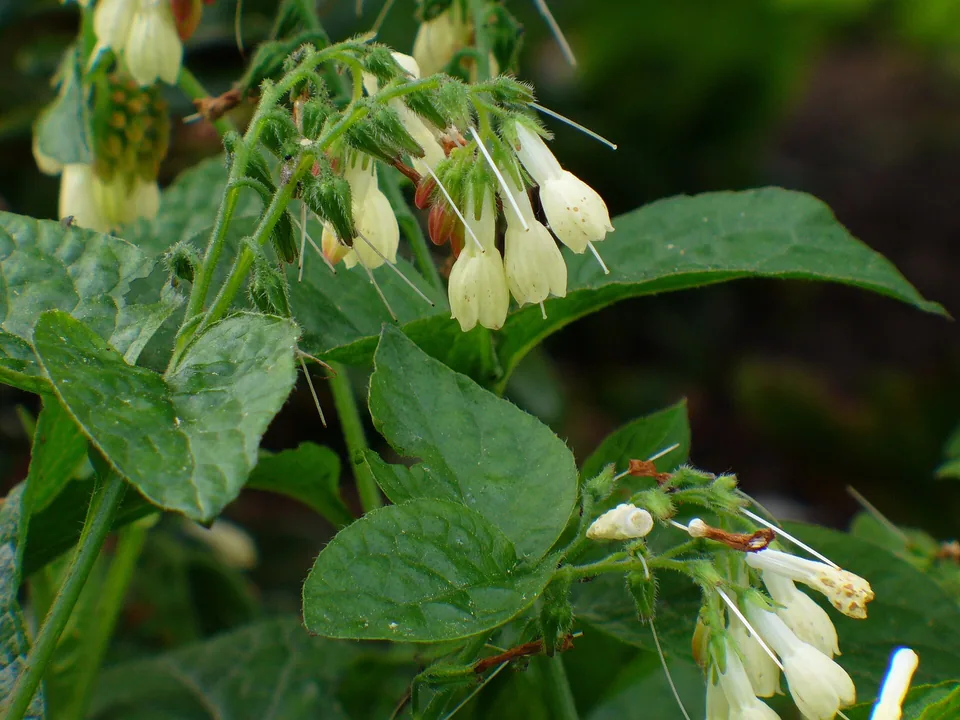


Cómo cultivar y cuidar Comfrey
Symphytum grandiflorum
Escrito por Emilio Marruso · última revisión
Tóxica para: Personas · Por qué
De un vistazo
La consuelda de flor grande es una vivaz agradecida que vuelve año tras año y crece a gusto desde el sol pleno hasta la semisombra. Se mantiene compacta, de 30 a 46 cm de alto, y también crece en maceta. ¿Quieres más plantas? Divide una mata o toma un esqueje de raíz, y vigila las babosas y los caracoles.
- Sol
Del sol pleno a la semisombra
Qué dicen las fuentes (1)
Luz: Pleno sol a semisombra
It is best grown in a location providing full sun to part shade and good drainage.
— Symphytum grandiflorum (Comfrey, Dwarf Comfrey, Iberium Comfrey, Large Flowered Comfrey, Ornamental Comfrey, Symphytum ibericum, Yellow Comfrey) | North Carolina Extension Gardener Plant Toolbox [1] - Frío
Aguanta inviernos de hasta −28,9 °C (−20 °F)
Muy rústica · USDA 5a · RHS H7 · Z5
Qué dicen las fuentes (2)
Rusticidad, zona más fría: 5a [mínima invernal de −28,9 a −26,1 °C (de −20 a −15 °F)]
USDA Plant Hardiness Zone: 5a, 5b, 6a, 6b, 7a, 7b, 8a, 8b
— Symphytum grandiflorum (Comfrey, Dwarf Comfrey, Iberium Comfrey, Large Flowered Comfrey, Ornamental Comfrey, Symphytum ibericum, Yellow Comfrey) | North Carolina Extension Gardener Plant Toolbox [1] Rusticidad, zona más cálida: 8b [mínima invernal de −9,4 a −6,7 °C (de 15 a 20 °F)]
USDA Plant Hardiness Zone: 5a, 5b, 6a, 6b, 7a, 7b, 8a, 8b
— Symphytum grandiflorum (Comfrey, Dwarf Comfrey, Iberium Comfrey, Large Flowered Comfrey, Ornamental Comfrey, Symphytum ibericum, Yellow Comfrey) | North Carolina Extension Gardener Plant Toolbox [1] - Plagas
Babosas y caracoles, normalmente un problema menor
Qué dicen las fuentes (1)
Plagas: babosas, caracoles
No serious insect or disease issues. Slugs and snails can be a minor problem.
— Symphytum grandiflorum (Comfrey, Dwarf Comfrey, Iberium Comfrey, Large Flowered Comfrey, Ornamental Comfrey, Symphytum ibericum, Yellow Comfrey) | North Carolina Extension Gardener Plant Toolbox [1] - Atención
Se extiende con tallos subterráneos; los trozos de raíz que quedan al cavar brotan de nuevo
- Tamaño
De 30 a 46 cm de alto y de 46 a 61 cm de ancho
Qué dicen las fuentes (2)
Altura adulta: 30-46 cm (1 pie - 1 pie 6 pulgadas)
Dimensions: Height: 1 ft. 0 in. - 1 ft. 6 in. Width: 1 ft. 6 in. - 2 ft. 0 in.
— Symphytum grandiflorum (Comfrey, Dwarf Comfrey, Iberium Comfrey, Large Flowered Comfrey, Ornamental Comfrey, Symphytum ibericum, Yellow Comfrey) | North Carolina Extension Gardener Plant Toolbox [1] Anchura adulta: 46-61 cm (1 pie 6 pulgadas - 2 pies)
Dimensions: Height: 1 ft. 0 in. - 1 ft. 6 in. Width: 1 ft. 6 in. - 2 ft. 0 in.
— Symphytum grandiflorum (Comfrey, Dwarf Comfrey, Iberium Comfrey, Large Flowered Comfrey, Ornamental Comfrey, Symphytum ibericum, Yellow Comfrey) | North Carolina Extension Gardener Plant Toolbox [1] - Multiplicación
Divide la mata o toma esquejes de raíz
Qué dicen las fuentes (1)
Propagación: División; esqueje de raíz
Life Cycle: Perennial Recommended Propagation Strategy: Division Root Cutting
— Symphytum grandiflorum (Comfrey, Dwarf Comfrey, Iberium Comfrey, Large Flowered Comfrey, Ornamental Comfrey, Symphytum ibericum, Yellow Comfrey) | North Carolina Extension Gardener Plant Toolbox [1] - Maceta
Crece también en maceta
Qué dicen las fuentes (1)
En maceta: Sí
Landscape Location: Container Meadow Naturalized Area Slope/Bank Woodland
— Symphytum grandiflorum (Comfrey, Dwarf Comfrey, Iberium Comfrey, Large Flowered Comfrey, Ornamental Comfrey, Symphytum ibericum, Yellow Comfrey) | North Carolina Extension Gardener Plant Toolbox [1] - Seguridad
No la comas: en grandes cantidades y con el tiempo puede dañar el hígado
Resumen
Symphytum grandiflorum es una cubierta vegetal perenne cultivada en bordes o jardines de sombra por su follaje denso y flores de primavera. [1] Se extiende por rizomas rastreros que pueden ser agresivos, y las raíces que quedan en el suelo después de cavar pueden brotar nuevas plantas. [1] Crece mejor a pleno sol o semisombra con buen drenaje. [1]
Citado en inglés, como en la fuente.
Esta ficha está incompleta: las fuentes consultadas aún no cubren todos los campos.
Aún no cubierto por nuestras fuentes: Riego, Poda
Cuidados
Riego
No figura en las fuentes consultadas.
Luz
Pleno sol a semisombra
Qué dicen las fuentes (1)
It is best grown in a location providing full sun to part shade and good drainage.Clima y frío
Rusticidad, zona más fría
5a [mínima invernal de −28,9 a −26,1 °C (de −20 a −15 °F)]
Qué dicen las fuentes (1)
USDA Plant Hardiness Zone:
5a, 5b, 6a, 6b, 7a, 7b, 8a, 8bRusticidad, zona más cálida
8b [mínima invernal de −9,4 a −6,7 °C (de 15 a 20 °F)]
Qué dicen las fuentes (1)
USDA Plant Hardiness Zone:
5a, 5b, 6a, 6b, 7a, 7b, 8a, 8bDónde cultivarla
Sí
Qué dicen las fuentes (1)
Landscape Location:
Container
Meadow
Naturalized Area
Slope/Bank
WoodlandPropagación
División; esqueje de raíz
Qué dicen las fuentes (1)
Life Cycle:
Perennial
Recommended Propagation Strategy:
Division
Root CuttingCultivo
La planta
Ciclo de vida
perenne
Qué dicen las fuentes (1)
Comfrey is a perennial groundcover in the Boraginaceae (borage) family native to Europe.Familia
Boraginaceae
Qué dicen las fuentes (1)
Comfrey is a perennial groundcover in the Boraginaceae (borage) family native to Europe.Altura adulta
30-46 cm (1 pie - 1 pie 6 pulgadas)
Qué dicen las fuentes (1)
Dimensions:
Height: 1 ft. 0 in. - 1 ft. 6 in.
Width: 1 ft. 6 in. - 2 ft. 0 in.Anchura adulta
46-61 cm (1 pie 6 pulgadas - 2 pies)
Qué dicen las fuentes (1)
Dimensions:
Height: 1 ft. 0 in. - 1 ft. 6 in.
Width: 1 ft. 6 in. - 2 ft. 0 in.Plagas y enfermedades
Plagas
babosas, caracoles
Qué dicen las fuentes (1)
No serious insect or disease issues. Slugs and snails can be a minor problem.Problemas
Babosas y caracoles
Síntoma: Problema menor de plagas
Qué hacer: No se indica manejo en la fuente
Qué dicen las fuentes (1)
No serious insect or disease issues. Slugs and snails can be a minor problem.
— Symphytum grandiflorum (Comfrey, Dwarf Comfrey, Iberium Comfrey, Large Flowered Comfrey, Ornamental Comfrey, Symphytum ibericum, Yellow Comfrey) | North Carolina Extension Gardener Plant Toolbox [1] Rizomas agresivos
Síntoma: Se extiende por rizomas; al cavar, las raíces que quedan brotan nuevas plantas
Qué hacer: No se indica manejo en la fuente
Qué dicen las fuentes (1)
Attempting to dig plant up for transplanting or removal can leave some roots that will sprout new plants.
— Symphytum grandiflorum (Comfrey, Dwarf Comfrey, Iberium Comfrey, Large Flowered Comfrey, Ornamental Comfrey, Symphytum ibericum, Yellow Comfrey) | North Carolina Extension Gardener Plant Toolbox [1]
Remedios
Cada remedio indica qué dicen las fuentes oficiales; los remedios tradicionales sin fuente oficial aparecen marcados. Los perjudiciales están para que sepas evitarlos.
Primeros auxilios
Primeros auxilios: no sustituyen al médico
Cuidar la planta
babosas y caracoles
trampa de cerveza Funciona
Cómo: Entierra recipientes poco profundos con cerveza rancia de modo que el borde del recipiente quede al nivel de la superficie del suelo; reemplaza la cerveza cuando se seque o se diluya por la lluvia.
Trap snails and slugs in shallow pans of stale beer sunken so that the lip of the container is even with the soil surface. Replace beer as necessary when it dries up or becomes diluted by rainfall.
— hgic.clemson.edu [6] Qué dicen las pruebas or by making simple, effective traps. Trap snails and slugs in shallow pans of stale beer sunken so that the lip of the container is even with the soil surface.
— hgic.clemson.edu [6] recolección manual Fuente oficial, sin prueba independiente
Cómo: Retíralas a mano cuando las encuentres.
When found, these pests can be removed by handpicking or by making simple, effective traps.
— hgic.clemson.edu [6] papa o repollo bajo una tabla Fuente oficial, sin prueba independiente
Cómo: Coloca trozos de papa o repollo bajo una tabla, luego recoge y destruye las babosas y caracoles durante el día.
Snails and slugs can also be attracted with pieces of potato or cabbage placed underneath a board and then collected and destroyed during the day.
— hgic.clemson.edu [6] tierra de diatomeas Funciona en parte
Cómo: Espolvorea alrededor de las plántulas jóvenes; vuelve a aplicar después de la lluvia o el riego.
Protect young seedlings by sprinkling diatomaceous earth around the plants. Diatomaceous earth is very sharp and scratches the skin of these soft-bodied critters, resulting in dehydration and death. It must be reapplied after rain or watering.
— hgic.clemson.edu [6] Qué dicen las pruebas Protect young seedlings by sprinkling diatomaceous earth around the plants. Diatomaceous earth is very sharp and scratches the skin of these soft-bodied critters, resulting in dehydration and death. It must be reapplied after rain or watering.
— hgic.clemson.edu [6]
Cómo eliminarla
rizomas agresivos
excava las raíces a mano Fuente oficial, sin prueba independiente
Any bits of root left in the soil can produce new plants.
— depts.washington.edu [7] Attempting to dig plant up for transplanting or removal can leave some roots that will sprout new plants.
— Symphytum grandiflorum (Comfrey, Dwarf Comfrey, Iberium Comfrey, Large Flowered Comfrey, Ornamental Comfrey, Symphytum ibericum, Yellow Comfrey) | North Carolina Extension Gardener Plant Toolbox [1] Cómo: No uses rotocultivador, usa guantes, excava con cuidado y retira la mayor cantidad de raíces que puedas, luego deséchalas.
Do not rototill this plant, and always wear gloves when handling it. Dig carefully and remove as much as you can of the roots, and then dispose of them.
— depts.washington.edu [7] mantillo grueso de astillas de madera de arborista Fuente oficial, sin prueba independiente
Any bits of root left in the soil can produce new plants.
— depts.washington.edu [7] Cómo: Cubre las zonas con maleza con una capa gruesa de astillas de madera de arborista.
If you have large swathes of your garden which are weedy, you can also try mulching with a thick layer of arborist wood chips (free from arborists and websites like Chip Drop ) as a solution.
— depts.washington.edu [7]
Toxicidad
Según la fuente, citada textualmente. No es un consejo médico ni veterinario: si una persona o un animal pudo haber ingerido esta planta, contacta con un centro de toxicología o con un veterinario.
Although this plant contains small quantities of alkaloids that can cause liver damage over time, most individuals would have to consume large quantities of the plant in order for it to be harmful.
[1]
Calendario
Poda
No figura en las fuentes consultadas.
Meses tal como los dan las fuentes, en su mayoría de Estados Unidos (hemisferio norte). En el hemisferio sur se desplazan unos seis meses.
Valores orientativos
Valores de una fuente secundaria, no comprobados palabra por palabra como el resto de esta página. Úselos como punto de partida.
- Horas de sol
- 6-8 horasValor orientativo, adáptalo a tu clima · Fuente secundaria
- Riego
- PromedioValor orientativo, adáptalo a tu clima · Fuente secundaria
- pH del suelo
- 6-7Valor orientativo, adáptalo a tu clima · Fuente secundaria
- Crecimiento
- BajoValor orientativo, adáptalo a tu clima · Fuente secundaria
- Poda
- Junio, JulioValor orientativo, adáptalo a tu clima · Fuente secundaria
Plantas similares
- Consuelda Symphytum officinale
- Prickly comfrey Symphytum asperum
- Abraham Trachystemon orientalis
- Lengua de vaca Anchusa azurea
- Blue Showers Cynoglossum amabile
- Viperina Echium vulgare
- Borraja Borago officinalis
- Broad-leaf Waterleaf Hydrophyllum canadense
Fuentes
Cada valor anterior se cita de estos documentos. Los enlaces llevan al editor original.
- Symphytum grandiflorum (Comfrey, Dwarf Comfrey, Iberium Comfrey, Large Flowered Comfrey, Ornamental Comfrey, Symphytum ibericum, Yellow Comfrey) | North Carolina Extension Gardener Plant Toolbox · plants.ces.ncsu.edu, consultado
- Large Flowered Comfrey - Symphytum grandiflorum | North Carolina Extension Gardener Plant Toolbox · plants.ces.ncsu.edu, consultado
- Comfrey - Symphytum grandiflorum | North Carolina Extension Gardener Plant Toolbox · plants.ces.ncsu.edu, consultado
- Dwarf Comfrey - Symphytum grandiflorum | North Carolina Extension Gardener Plant Toolbox · plants.ces.ncsu.edu, consultado
- poison.org · poison.org
- hgic.clemson.edu · hgic.clemson.edu
- depts.washington.edu · depts.washington.edu
Escrito por Emilio Marruso · última revisión