How to Grow and Care for Feverfew
Tanacetum parthenium
Written by Emilio Marruso · last checked
Toxic to: Cats, Dogs, Horses, People · Why
At a glance
Feverfew is an easygoing perennial with attractive flowers that draw pollinators to your garden. It grows in full sun to partial shade, tolerates drought, and does well in containers too. Its leaves can be used to make tea, and if you trim off the spent blooms right away, it stays neat instead of seeding itself everywhere.
- Sun
Full sun to partial shade
What the sources say (1)
Light: Full sun to partial shade
Feverfew prefers full sun to partial shade and well-drained, moist soils.
— Tanacetum parthenium (Altamiza, Bachelor's Buttons, Feverfew, Maids, Manzanilla, Mid Summer Daisy, Pale Maids, Pellitory, Wild Chamomile) | North Carolina Extension Gardener Plant Toolbox [1] - Water
Handles dry spells well
What the sources say (1)
Watering: Drought tolerant
Feverfew attracts butterflies, hummingbirds, and bees. They are drought tolerant and deer resistant.
— Tanacetum parthenium (Altamiza, Bachelor's Buttons, Feverfew, Maids, Manzanilla, Mid Summer Daisy, Pale Maids, Pellitory, Wild Chamomile) | North Carolina Extension Gardener Plant Toolbox [1] - Cold
Survives winters down to −20 °F (−28.9 °C)
Very hardy · USDA 5a · RHS H7 · Z5
What the sources say (2)
Hardiness, coldest zone: 5a [winter low −28.9 to −26.1 °C (−20 to −15 °F)]
5a, 5b, 6a, 6b, 7a, 7b, 8a, 8b
— Tanacetum parthenium (Altamiza, Bachelor's Buttons, Feverfew, Maids, Manzanilla, Mid Summer Daisy, Pale Maids, Pellitory, Wild Chamomile) | North Carolina Extension Gardener Plant Toolbox [1] Hardiness, warmest zone: 8b [winter low −9.4 to −6.7 °C (15 to 20 °F)]
5a, 5b, 6a, 6b, 7a, 7b, 8a, 8b
— Tanacetum parthenium (Altamiza, Bachelor's Buttons, Feverfew, Maids, Manzanilla, Mid Summer Daisy, Pale Maids, Pellitory, Wild Chamomile) | North Carolina Extension Gardener Plant Toolbox [1] - Soil
Moist soil that drains well
What the sources say (1)
Watering notes: Well-drained, moist soils
Feverfew prefers full sun to partial shade and well-drained, moist soils.
— Tanacetum parthenium (Altamiza, Bachelor's Buttons, Feverfew, Maids, Manzanilla, Mid Summer Daisy, Pale Maids, Pellitory, Wild Chamomile) | North Carolina Extension Gardener Plant Toolbox [1] - Pruning
Cut off faded flowers right away
- Harvest
The leaves can be used to make tea
- Pests
Watch for spider mites; no serious diseases
What the sources say (1)
Pests: spider mites
There are no serious diseases or pest problems. Please monitor for spider mites.
— Tanacetum parthenium (Altamiza, Bachelor's Buttons, Feverfew, Maids, Manzanilla, Mid Summer Daisy, Pale Maids, Pellitory, Wild Chamomile) | North Carolina Extension Gardener Plant Toolbox [1] - Watch out
It can spread by seed in good conditions and dislikes hot, humid climates
- Size
1 to 3 ft tall and 1 to 2 ft wide
What the sources say (2)
Mature height: 30-91 cm (1 to 3 feet)
They grow in clumping mounds, erect, and about 1-3 feet tall and 1-2 feet wide.
— Tanacetum parthenium (Altamiza, Bachelor's Buttons, Feverfew, Maids, Manzanilla, Mid Summer Daisy, Pale Maids, Pellitory, Wild Chamomile) | North Carolina Extension Gardener Plant Toolbox [1] Mature width: 30-61 cm (1 to 2 feet)
They grow in clumping mounds, erect, and about 1-3 feet tall and 1-2 feet wide.
— Tanacetum parthenium (Altamiza, Bachelor's Buttons, Feverfew, Maids, Manzanilla, Mid Summer Daisy, Pale Maids, Pellitory, Wild Chamomile) | North Carolina Extension Gardener Plant Toolbox [1] - Propagation
Divide the clump or grow it from seed
What the sources say (1)
Propagation: Division, seed
Life Cycle: Perennial Recommended Propagation Strategy: Division Seed
— Tanacetum parthenium (Altamiza, Bachelor's Buttons, Feverfew, Maids, Manzanilla, Mid Summer Daisy, Pale Maids, Pellitory, Wild Chamomile) | North Carolina Extension Gardener Plant Toolbox [1] - Containers
Grows in containers too
What the sources say (1)
In containers: Yes
Consider Feverfew for a patio area or as a container plant.
— Tanacetum parthenium (Altamiza, Bachelor's Buttons, Feverfew, Maids, Manzanilla, Mid Summer Daisy, Pale Maids, Pellitory, Wild Chamomile) | North Carolina Extension Gardener Plant Toolbox [1] - Safety
Harmful to dogs, cats and horses; it can occasionally irritate the skin
Overview
Feverfew is a mounding, aromatic herbaceous perennial that grows 1-3 feet [30–91 cm] tall and 1-2 feet [30–61 cm] wide. [1] It prefers full sun to partial shade and well-drained, moist soils, and is drought tolerant. [1] It is self-seeding and may become aggressive in optimum conditions. [1]
This record is incomplete: the sources we read do not cover every field yet.
Not yet covered by our sources: Pruning
Feverfew care
Measurements in square brackets are our conversion into the other unit system; the quoted text is unchanged.
How to water Feverfew
Watering
Drought tolerant
What the sources say (1)
Feverfew attracts butterflies, hummingbirds, and bees. They are drought tolerant and deer resistant.Watering notes
Well-drained, moist soils
What the sources say (1)
Feverfew prefers full sun to partial shade and well-drained, moist soils.How much light Feverfew needs
Full sun to partial shade
What the sources say (1)
Feverfew prefers full sun to partial shade and well-drained, moist soils.How much cold Feverfew can take
Hardiness, coldest zone
5a [winter low −28.9 to −26.1 °C (−20 to −15 °F)]
What the sources say (1)
5a, 5b, 6a, 6b, 7a, 7b, 8a, 8bHardiness, warmest zone
8b [winter low −9.4 to −6.7 °C (15 to 20 °F)]
What the sources say (1)
5a, 5b, 6a, 6b, 7a, 7b, 8a, 8bWhere to grow Feverfew
Yes
What the sources say (1)
Consider Feverfew for a patio area or as a container plant.How to propagate Feverfew
Division, seed
What the sources say (1)
Life Cycle:
Perennial
Recommended Propagation Strategy:
Division
SeedHow to grow Feverfew
The plant
Life cycle
perennial
What the sources say (1)
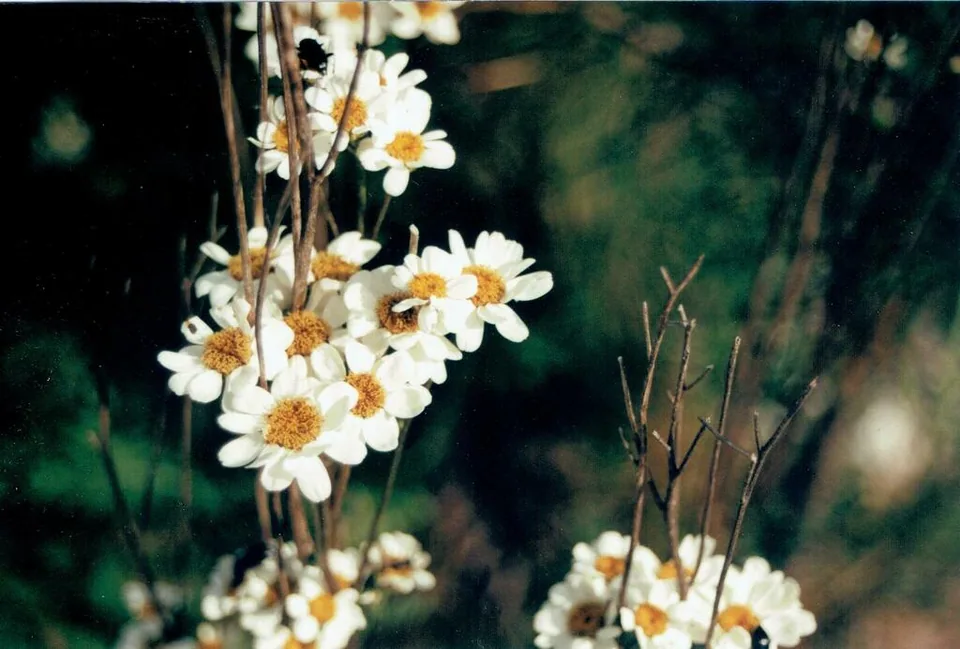
Feverfew is a mounding aromatic herbaceous perennial. The flowers are clusters of white florets with a central yellow disc.Family
Asteraceae
What the sources say (1)
Feverfew is a member of the Asteraceae or Aster family. Other common names include Bachelor's Buttons, Maids, Manzanilla, and Wild Chamomile.Mature height
30-91 cm (1 to 3 feet)
What the sources say (1)
They grow in clumping mounds, erect, and about 1-3 feet tall and 1-2 feet wide.Mature width
30-61 cm (1 to 2 feet)
What the sources say (1)
They grow in clumping mounds, erect, and about 1-3 feet tall and 1-2 feet wide.Pests and diseases
Pests
spider mites
What the sources say (1)
There are no serious diseases or pest problems. Please monitor for spider mites.Feverfew pests and problems
Spider mites
Symptom: Spider mites may appear; no serious diseases or pest problems are listed.
What to do: Monitor for spider mites.
What the sources say (1)
There are no serious diseases or pest problems. Please monitor for spider mites.
— Tanacetum parthenium (Altamiza, Bachelor's Buttons, Feverfew, Maids, Manzanilla, Mid Summer Daisy, Pale Maids, Pellitory, Wild Chamomile) | North Carolina Extension Gardener Plant Toolbox [1] Hot, humid climates
Symptom: Plants are intolerant of the hot and humid climate of the southern United States.
What to do: Not stated in the source.
What the sources say (1)
They are intolerant to the hot and humid climate of the southern United States.
— Tanacetum parthenium (Altamiza, Bachelor's Buttons, Feverfew, Maids, Manzanilla, Mid Summer Daisy, Pale Maids, Pellitory, Wild Chamomile) | North Carolina Extension Gardener Plant Toolbox [1] Aggressive self-seeding
Symptom: Self-seeding can become aggressive in optimum conditions.
What to do: Deadhead or shear off spent blooms immediately.
What the sources say (1)
It is best to deadhead or shear off spent blooms immediately to control self-seeding.
— Tanacetum parthenium (Altamiza, Bachelor's Buttons, Feverfew, Maids, Manzanilla, Mid Summer Daisy, Pale Maids, Pellitory, Wild Chamomile) | North Carolina Extension Gardener Plant Toolbox [1]
Remedies
Each remedy shows what official sources say about it; traditional remedies without an official source are marked as such. Harmful ones are listed so you know to avoid them.
Treating the plant
aphids
strong water spray from the hose Not verified
Traditional remedy, not verified by an official source.
How: spraying off plants with a hard stream of water from the hose
homemade insecticidal soap spray Not proven
Most dish soaps are not naturally occurring substances nor are they biodegradable. They can contain detergents and degreasers that are harmful to groundwater and aquatic and soil organisms.
— ucanr.edu [4] How: one tablespoon of pure liquid soap and two teaspoons of cooking oil in a quart of water, sprayed on foliage whenever signs of aphids appear
For severe infestations, you can try a homemade insecticidal soap by mixing one tablespoon of pure liquid soap and two teaspoons of cooking oil into a quart of water
— gardenerspath.com [2] What the evidence says Despite being made of common household materials like dish soap and vinegar and having seemingly fewer risks, these concoctions may have unforeseen consequences and cannot be relied upon to have the same effectiveness as a registered pesticide.
— extension.unh.edu [3]
slugs
hand-picking slugs at dusk Works
How: removing slugs by hand at dusk or after rain
You can remove them easily by handpicking at dusk or after rain.
— gardenerspath.com [2] What the evidence says Many insect and disease issues can be solved in the home garden by hand-picking insects or clipping and disposing of diseased plant parts.
— extension.unh.edu [3]
Is Feverfew toxic to pets?
Reported by the source, quoted verbatim. This is not medical or veterinary advice: if a person or an animal may have eaten this plant, contact a poison control centre or a veterinarian.
Animals
#problem for dogs #problem for horses #problem for cats #cutting garden
[1]The source flags the risk for this animal but does not explain why.
People
Poison Symptoms: Airborne dermatitis have been occasionally reported.
[1]
Calendar
Pruning
Under review: our second check questioned this value.
Months as given by the sources, which are mostly from the United States (northern hemisphere). In the southern hemisphere they shift by about six months.
Edibility
Reported by the source, quoted verbatim. Do not eat a plant on the basis of this page alone: identification mistakes can be dangerous.
Play Value: Attractive Flowers Attracts Pollinators Edibility: Edible leaves can make tea.
[1]
Indicative values
Values from a secondary source, not checked word for word like the rest of this page. Use them as a starting point.
- Hours of sun
- 6-8 hoursIndicative value, adapt it to your climate · Secondary source
- Soil pH
- 6-7Indicative value, adapt it to your climate · Secondary source
- Care level
- MediumIndicative value, adapt it to your climate · Secondary source
- Growth rate
- HighIndicative value, adapt it to your climate · Secondary source
Similar plants
- Costmary Tanacetum balsamita
- Tansy Tanacetum vulgare
- Dalmatian chrysanthemum Tanacetum cinerariifolium
- African Daisy Dimorphotheca pluvialis
- African Marigold Tagetes erecta
- Ageratum Ageratum houstonianum
- Alpine aster Aster alpinus
- American Burnweed Erechtites hieraciifolius
Sources
Every value above is quoted from these documents. Links lead to the original publisher.
- Tanacetum parthenium (Altamiza, Bachelor's Buttons, Feverfew, Maids, Manzanilla, Mid Summer Daisy, Pale Maids, Pellitory, Wild Chamomile) | North Carolina Extension Gardener Plant Toolbox · plants.ces.ncsu.edu, consulted
- gardenerspath.com · gardenerspath.com
- extension.unh.edu · extension.unh.edu
- ucanr.edu · ucanr.edu
Written by Emilio Marruso · last checked